For a business traveler, the return leg from Kyoto to the airport should be as predictable as your meeting itinerary. Start by deciding whether you need the fastest door-to-door option, the most flexible schedule, or the lowest risk of delays. Identify your arrival airport (Kansai International, Osaka Itami/Itami Airport, or others serving connections) and check flight time, check-in deadline, and how much luggage or presentation equipment you carry. Book or reserve your transfer with those constraints in mind: private car or prebooked taxi for tight schedules and heavy bags; express train or airport limousine bus for consistent timetables; shared shuttle for lower cost with some flexibility. Below you’ll find clear tradeoffs, what to verify on booking pages, and a practical checklist so you can lock in the return without second-guessing.
See current options before you compare the details
Availability and final conditions change. Open Trip.com now or keep reading for the practical comparison.
Decide by priority: speed, flexibility, or cost
Start by ranking what matters most for your return: minimizing travel time to the airport, having flexibility for schedule slips, or keeping costs controlled. Speed favors private cars or a direct express train; flexibility leans toward a private hire or booking a taxi you can call on short notice; cost favors shared shuttles, buses, or standard trains with transfers. Make this tradeoff explicit before you compare providers—knowing whether you accept extra waiting or transfers will narrow viable choices quickly.
When assessing options, also consider luggage and door-to-door convenience. Business travelers with multiple bags, equipment, or time-critical check-ins often save time with a car that drops you at the terminal door. If you travel light and prioritize consistent schedules, an express train with a short taxi transfer at the destination station strikes a good balance. Write down the exact time you need to be at the airport and work backward to include transfer margins and potential traffic or delays.
Compare transfer types and what to verify
Private car or prebooked taxi: ideal for tight schedules and door-to-door comfort. When comparing providers, verify the vehicle size, baggage policy, whether waiting time is included, and cancellation or change fees. On each provider’s final booking page confirm pickup location options in Kyoto (hotel front, station exit), whether drivers accept signage for quick meet-ups, and how they handle flight delays or early check-ins.
Express trains and limousine buses: these offer reliable timetables and can reduce worry about traffic. Confirm the train or bus route requires any transfers, how much walking is needed with luggage, and if services run at your required hour. On booking pages look for platform or terminal arrival details, seasonal schedule changes, and any luggage restrictions that could affect bulky equipment. If a direct service exists, compare its total door-to-door time against a private car during the same departure window.
| Approach | Best for | Tradeoff to check |
|---|---|---|
| Private car or prebooked taxi | Tight schedules, heavy luggage, door-to-door convenience | Higher cost and potential cancellation fees; verify wait-time and luggage policies |
| Express train | Consistent timetable and predictable journey times | May require transfers and handling luggage between platforms |
| Airport limousine bus or shuttle | Direct routing to terminals with no transfers | Stops and traffic can add variable time; check schedules for peak hours |
| Shared shuttle or economy bus | Lower-cost option with moderate door-to-door convenience | Less flexibility and possible extra stops—allow extra buffer time |
Ready to check the option that fits your plan?
Use your exact dates and traveler details so the provider page can show the current total and conditions.
Timing and contingency planning for business schedules
Work back from your flight check-in deadline and include buffers for Kyoto traffic or late meetings. A standard approach is to add extra time beyond the publicized minimum check-in window to cover unforeseeable delays. If your schedule is tight, book a transfer that can be held or adjusted; if you anticipate possible last-minute meeting extensions, prioritize flexible cancellation or on-demand pickup options.
Also prepare a contingency plan: identify a later service or taxi companies you can call if you miss your planned transfer, and keep local transport apps or phone numbers accessible. For international departures, factor in additional time for security and immigration processing at the airport. When booking, note any provider guidance on handling flight delays or missed connections so you know what assistance or refunds to expect and what you must verify on their final booking confirmation.
Before you book
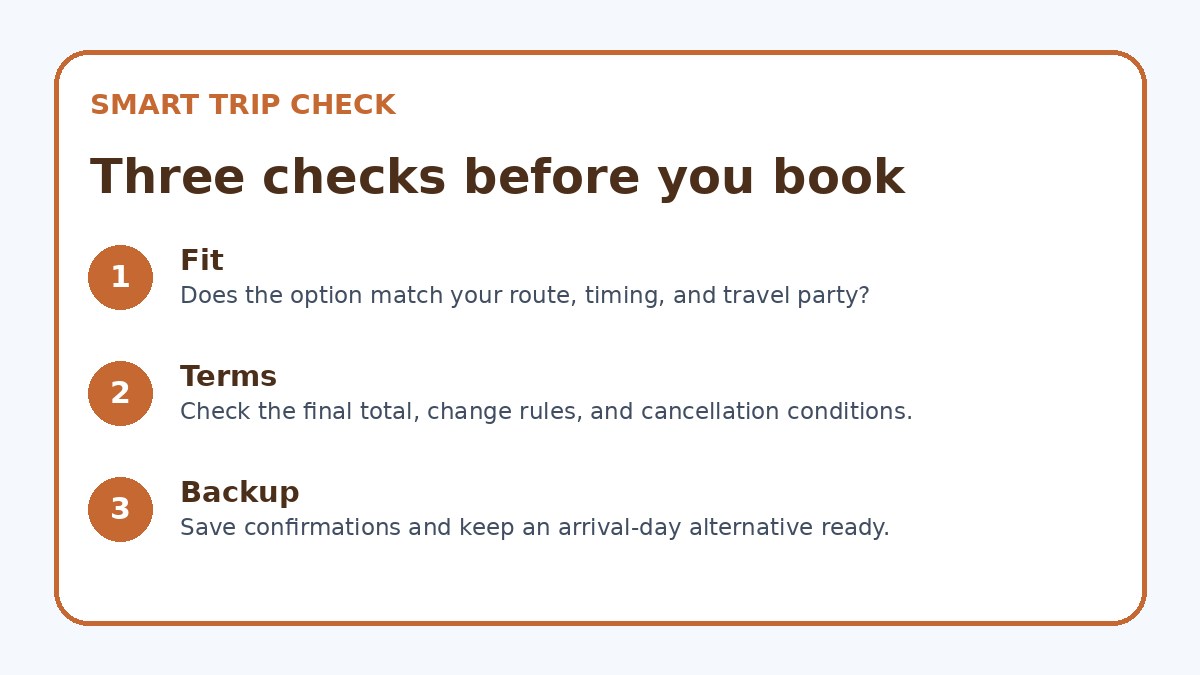
- Confirm which airport your flight uses and the airline's recommended check-in time before selecting a transfer.
- Calculate door-to-door time including walking between pickup point and vehicle, and add at least 30–60 minutes buffer for meetings that run late.
- Check the provider’s final booking page for pickup location details, wait-time policy, and baggage allowances before you pay.
- Request an itemized receipt or invoice at booking if you need to expense the transfer later.
- Save driver contact details and your booking confirmation on your phone and send a copy to your office or travel assistant.
- Identify one alternative transfer (train, taxi company number, or later bus) in case your first option is unavailable.
Booking logistics: confirmations, meet points, and receipts
When you commit to a provider, confirm precise pickup details: full hotel or station exit name, a mobile contact number, and where the driver will wait. Request a written confirmation or printable voucher showing the pickup time and location; this reduces confusion if language or address formats differ. If you need an itemized receipt for expense reports, verify whether the provider issues one automatically or on request and what information it includes.
Double-check on the provider’s booking page for any special instructions: meeting point landmarks, required ID, payment methods accepted on arrival, and procedures for delayed flights or missed pickups. If you use a third-party aggregator to compare options, review the provider’s own terms as the aggregator’s conditions may differ. Trip.com can be used as one place to compare availability, but always verify the final provider page for cancellation rules and specific service details before finalizing payment.
Frequently asked questions
Should I book a private car or rely on public transport for my Kyoto to airport transfer?
If punctuality and luggage handling are top priorities—common for business travel—a private car or prebooked taxi reduces variables like platform changes or crowded trains. However, public transport such as express trains often follow strict schedules and can be faster during peak traffic times; they also avoid road congestion risk. Compare the door-to-door time for both options for your specific pickup location and departure time, and check provider pages for baggage rules and cancellation terms before booking.
How much buffer time should I allow between the end of a meeting in Kyoto and my flight departure?
Allow enough buffer for travel time, security, and unexpected delays—generally more than the airline minimum. Business travelers commonly budget an extra 30–60 minutes beyond the airline’s suggested check-in window to account for last-minute meetings, taxi pickup time, or station transfers. If you rely on scheduled public transport, choose a service that arrives at the airport well before your cutoff, and if using a private car, confirm the provider’s recommended pickup time and their policy for waiting if your meeting runs late.
What should I verify on a transfer provider’s booking page before finalizing?
Check exact pickup and drop-off locations, vehicle type and luggage capacity, wait-time or grace period, cancellation and change fees, and what documentation or confirmation you will receive. For trains and buses verify the terminal/arrival point and any required transfers; for private cars confirm driver contact methods and whether they monitor flight status. If you need an expense receipt, confirm the provider issues it. Always use the provider’s own page for these details rather than relying solely on aggregator summaries.
Final planning note
Planning your return from Kyoto to the airport is about matching priorities to reality: speed, predictability, or cost. Start with your flight’s airport and check-in window, then compare door-to-door times for private cars, express trains, buses, and shared shuttles. Verify pickup details, luggage rules, wait and cancellation policies on the provider’s booking page before paying, and keep a backup option handy if meetings run long. With these checks and a clear timeline, you’ll reduce last-minute stress and ensure your departure from Kyoto fits your business schedule.
Continue planning
Check current options and final conditions
Use the provider page to confirm live availability, the final total, cancellation terms, and every condition that matters to your trip.
This evergreen planning guide was created with AI-assisted drafting and a structured quality review. It does not display live prices, schedules, availability, visa guidance, or provider rankings. Verify current details before booking. Some links are affiliate links; we may earn a commission at no additional cost to you.