If you’re traveling from Seoul to Busan for the first time, the core decision isn’t just which mode of transport but which stations and terminals to use — they shape transfer time, luggage handling, and your first impression of each city. Practically: pick your Seoul departure station and Busan arrival station based on where you’ll stay and how you’ll connect onward. KTX high-speed trains, regular trains, long-distance buses, and flights use different hubs; some are better for late-night arrivals, others for easy subway links. Read this guide to identify the transfer points that match your comfort with walking, luggage, and timing, then see which tradeoffs matter most so you can compare options before booking.
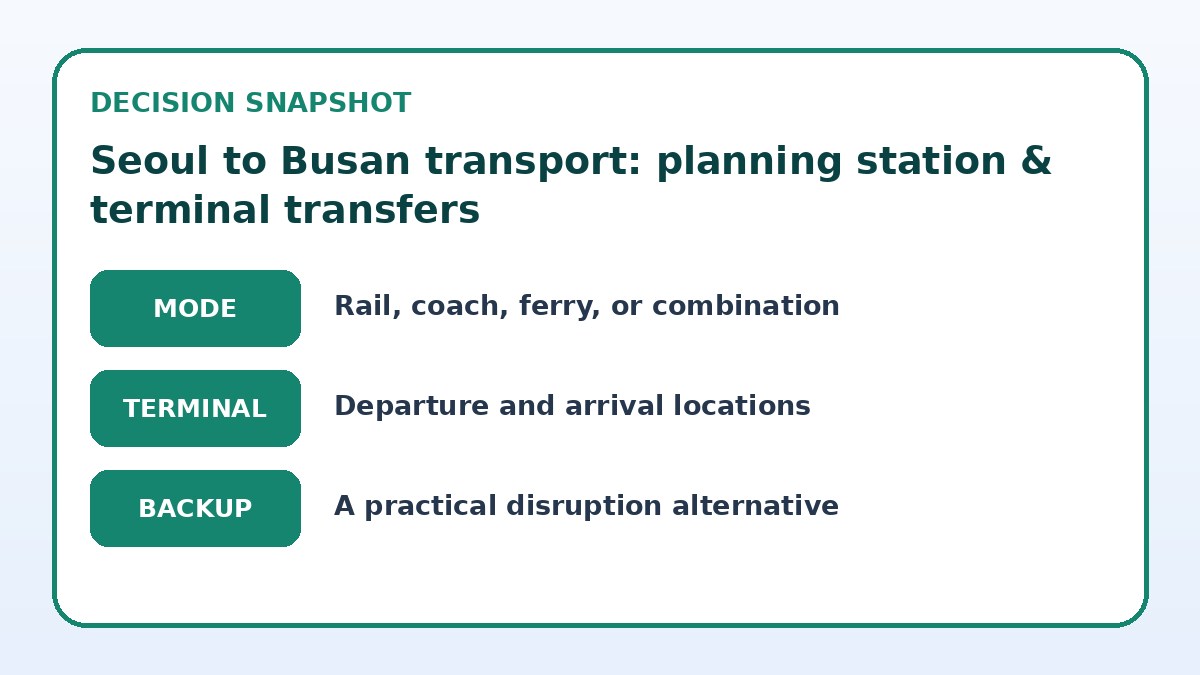
See current options before you compare the details
Availability and final conditions change. Open Trip.com now or keep reading for the practical comparison.
Which Seoul departure stations matter and why
Seoul has several departure points for long-distance travel; the one you choose changes how you leave the city. Major intercity trains and KTX services commonly use big hubs that offer ticket counters, luggage services, and frequent departures but can require extra time to reach from your hotel. If your accommodation is near a particular subway line, choosing the nearest long-distance station can save a domestic transfer or taxi ride. Consider evening and early-morning subway frequencies too — a short taxi from your hotel to a central station might be wise if public transit would be slow or infrequent at your departure time.
For non-rail options like express buses and flights, terminals are often clustered in different neighborhoods with different transit links. Bus terminals can be in commercial districts with easy connections to intercity buses but limited luggage storage spaces; airports and nearby terminals usually have better luggage handling but require extra time to pass security and check-in. Your decision should balance how much time you’re willing to spend transitioning through the city versus in transit, and whether you prefer a single transfer or a potentially faster but multi-step connection.
Arriving in Busan: stations and first connections
Busan’s transport network spreads arrivals across several stations and terminals, each with advantages depending on where you’re staying. Central stations typically offer the most frequent onward subway, bus, and taxi options; smaller stations may be quieter but require a local transfer. When planning, map your arrival station against your hotel or neighborhood: what looks like a marginally longer trip on paper can be simpler in practice if it’s a single taxi or a direct subway line. Also account for the difficulty of hauling luggage across long station corridors, stairs, or narrow pedestrian routes — that makes a difference after a long journey.
If you’re arriving late at night or early morning, verify which stations have 24-hour taxi ranks or night buses; not all terminals maintain full service around the clock. Some arrival points are adjacent to major shopping or restaurant areas where you can eat or pick up essentials immediately; others may be in quieter residential zones. Decide whether you prefer to arrive into a lively area (easier to orient yourself and find amenities) or a quieter station that puts you closer to your final accommodation but with fewer immediate services.
| Approach | Best for | Tradeoff to check |
|---|---|---|
| Pick the nearest major train station | Travelers wanting simple subway or taxi links from their hotel | May sacrifice the absolute fastest route if a direct high-speed train departs elsewhere |
| Choose the fastest high-speed service regardless of station | Those prioritizing shortest in-vehicle travel time | Could require longer or more complex transfers to reach departure or arrival terminals |
| Use long-distance bus terminals | Budget-conscious travelers or those needing direct neighborhood drop-offs | Buses can be slower and terminals may have fewer luggage facilities |
| Fly between airports near Seoul and Busan | Passengers with limited time and light luggage | Air travel adds check-in and security steps and often requires extra transfers to city centers |
Ready to check the option that fits your plan?
Use your exact dates and traveler details so the provider page can show the current total and conditions.
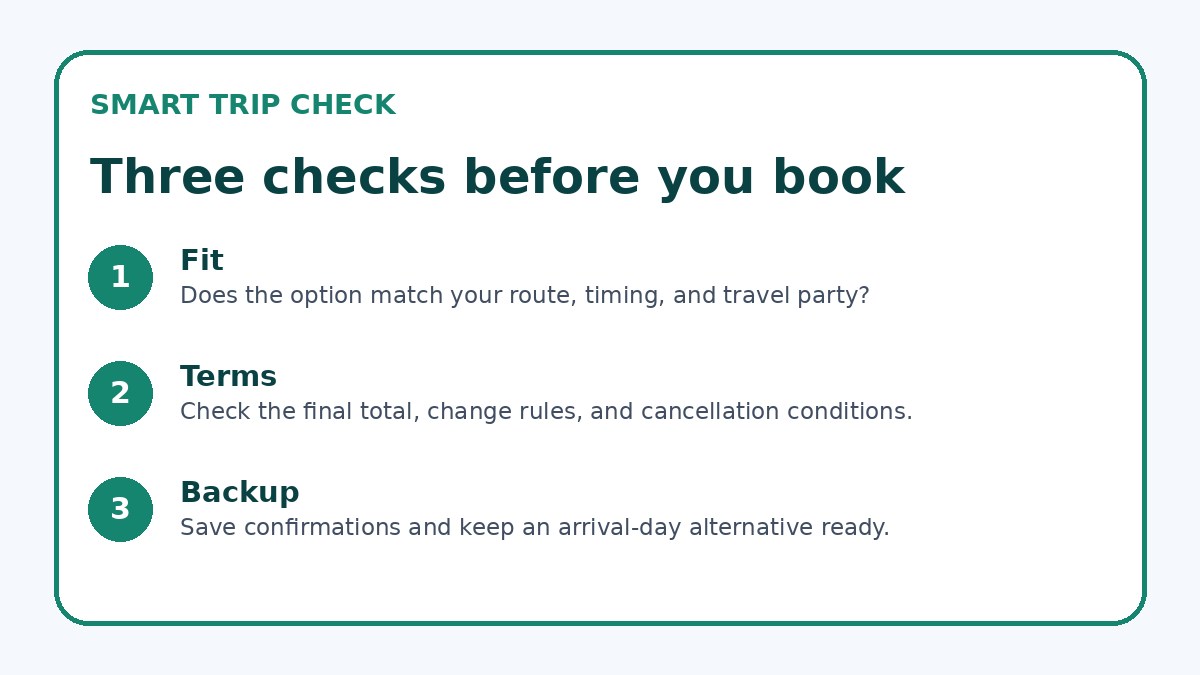
Practical transfer options between terminals
Transfers between Seoul stations or Busan terminals are often straightforward by subway, dedicated airport express, or intercity shuttle, but the practical details matter. When your schedule includes a tight connection, choose options with frequent departures and clear signage. For example, subway transfers are predictable and cheap, but they can involve stairs, long corridors, or multiple platform changes. Taxis provide door-to-door convenience and are best when you’re carrying heavy luggage, traveling in a group, or need to save time — just allow for traffic variability and confirm a working navigation app on your phone.
If you plan to change from train to bus or plane, give yourself buffer time to collect checked luggage, navigate station concourses, and find the correct terminal. Stations sometimes require walking outside between platforms or terminals; check station maps and transfer routes on official websites or your booking page. Even when a transfer looks manageable, account for lines at ticket counters and security checks. Make a realistic plan for worst-case timing so you can relax rather than rush when you arrive.
Before you book
- Identify the exact station or terminal names for both departure and arrival and pin them on a map relative to your accommodation.
- Check official station maps and find elevator/stair locations, pedestrian routes, and the shortest path between platforms you may need.
- Verify current timetables, platform assignments, and baggage rules on the chosen provider’s booking page before buying any ticket.
- Calculate realistic door-to-door travel time including transfer waits, potential taxi rides, and time to collect luggage.
- If you have heavy bags or mobility needs, confirm elevator availability or consider a taxi transfer instead of multiple subway changes.
- Save contact details and location coordinates for your accommodation and major stations in your phone for quick navigation on arrival.
How to compare options before you book
To choose between routes and terminals, list what matters most: overall travel time, simplicity of transfers, luggage handling, cost, and schedule alignment. Create a simple matrix comparing departure and arrival stations across those criteria. Use official station maps, transit apps, and provider booking pages to confirm how to reach each terminal from your accommodation and what facilities (elevators, luggage lockers, ticket kiosks) are available. If you’re deciding between train and bus or between different train services, compare door-to-door time rather than only in-vehicle time — a longer train that stops closer to your hotel can be faster overall.
When provider-specific facts could change, always verify schedules, platform assignments, and baggage rules on the provider’s booking page before purchasing. Trip.com is one place to compare current availability and conditions, but it should not be treated as the only source. If your itinerary involves multiple legs, ensure each leg’s arrival time leaves a comfortable buffer for the next transfer, and consider purchasing flexible tickets or refundable options if your plans are uncertain.
Frequently asked questions
Which Seoul station is best for catching a high-speed train to Busan?
The best departure station depends on where you’re staying in Seoul and how comfortable you are with transfers. Major high-speed services typically leave from central, well-equipped stations with frequent departures and ticketing facilities. If you’re close to that station by subway or taxi, it simplifies your morning or evening transfer. However, if reaching that hub requires a long taxi or multiple subway changes, weigh whether the faster in-vehicle time offsets the additional transfer hassle. Check the provider’s booking page for the specific station they list and study the station map before booking.
How much transfer time should I allow between a train and a bus or flight?
Allow time for baggage retrieval, station walking, ticket queues, and any security checks when planning transfers. A comfortable buffer varies with whether you have checked luggage, the complexity of the stations involved, and the time of day. When transfers involve different terminals or outdoor walks, add extra minutes for navigation and possible delays. If your next leg is a flight, verify the airline’s recommended check-in window on its booking site and build in extra time for urban transfers and traffic. If in doubt, choose a longer buffer so you aren’t rushed.
Are taxis a good option for transfers between Seoul and Busan stations?
Taxis are convenient for door-to-door transfers, especially with heavy luggage, late arrivals, or when subway options are limited. They remove the need to navigate stairs and long corridors and can save time when public transit is slow. The tradeoff is exposure to city traffic variations and potentially higher cost than public transit, so factor that into your planning. Always have your destination address in Korean if possible, and confirm the driver understands the route. For multi-leg journeys, compare taxi door-to-door time against combined public transit times.
Final planning note
Planning Seoul to Busan transport well means thinking beyond in-vehicle speed: focus on station and terminal transfers, luggage handling, and how each arrival point links to your final destination. Start by mapping departure and arrival stations against your accommodation and note elevator availability, night services, and taxi ranks. Compare door-to-door time, not just travel time, and verify schedules and baggage rules on provider booking pages before committing. If you prioritize simplicity, pick stations with the fewest transfer steps; if you prioritize speed, accept a potentially longer local transfer. With a little prep you can choose the option that fits your comfort level and make your first Seoul-to-Busan trip smoother.
Continue planning
Check current options and final conditions
Use the provider page to confirm live availability, the final total, cancellation terms, and every condition that matters to your trip.
This evergreen planning guide was created with AI-assisted drafting and a structured quality review. It does not display live prices, schedules, availability, visa guidance, or provider rankings. Verify current details before booking. Some links are affiliate links; we may earn a commission at no additional cost to you.