Practical answer first: for most first-time visitors to Boston, choose a package if you want a simple, single checkout and are comfortable trading some flexibility for convenience; book separately if you want tighter control over flight times, neighborhoods, or special-interest activities. Packages can be faster to buy and easier to manage when something changes, because one vendor often handles customer service and rebooking. Separate bookings usually let you target specific neighborhoods, select nonstandard itineraries, or mix carriers and boutique hotels, but they demand more time comparing cancellation policies and transfer logistics. This article breaks down the tradeoffs, cost considerations, and the exact things you must verify on booking pages so you can pick the approach that fits your travel style, time constraints, and appetite for planning detail.
See current options before you compare the details
Availability and final conditions change. Open Trip.com now or keep reading for the practical comparison.
What a package typically includes and when it helps
Package deals generally bundle flights, a hotel, and sometimes a car rental or a few tours into one purchase. That makes managing reservations easier—only one confirmation number to store and usually a single vendor to contact if plans shift. For first-time visitors who want to reduce decision fatigue or are traveling in a group, a package reduces the number of separate accounts and passwords you must juggle. It can also be helpful if you value a one-stop check-in process and prefer to let a single operator coordinate accommodations and a transfer from the airport.
Packages are especially useful when your priorities are convenience and predictability rather than tailoring every detail. If you’re traveling with a multi-person family, an elderly companion, or limited time to plan, a package can prevent scheduling conflicts between flight arrival times and hotel check-in or booked tours. But remember that the real benefit depends on the specific package terms: what classes of flights are offered, whether the hotel is centrally located, and if tours are skip-the-line or basic admission. Always review the components carefully before assuming the convenience matches your needs.
Why separate bookings give more control—and more homework
Booking flights, hotels, and activities separately gives you the flexibility to mix carriers, choose boutique hotels in historic neighborhoods like Back Bay or Beacon Hill, and schedule early museum entries or evening harbor cruises. For first-timers who want to prioritize location—walking distance to the Freedom Trail or near public transit—separate bookings let you pick precisely where to stay rather than accepting whatever the package allocates. You can also manage loyalty program benefits, seat selection, and baggage add-ons yourself, which matters if you have airline status or hotel points to apply.
That control comes with responsibilities: you must align arrival times with check-in windows, anticipate transfer needs from Boston Logan International or to Amtrak stations, and understand separate cancellation or change fees. If a flight arrives late and your hotel reservation or an independently booked tour has a strict no-refund rule, you absorb the risk. To reduce friction, create a simple spreadsheet of confirmation numbers, verify change policies for each provider, and read the fine print about missed connections or separate supplier liabilities.
| Approach | Best for | Tradeoff to check |
|---|---|---|
| Package deal (flight + hotel ± extras) | Travelers who want one-vendor convenience and simplified support for changes. | Less flexibility in flight times, hotel choice, and mixed supplier control; verify bundled inclusions on the booking page. |
| Separate flight + hotel + activities | Travelers prioritizing neighborhood, exact flight times, or loyalty benefits. | More planning time and responsibility for aligning schedules and managing multiple cancellation policies. |
| Hybrid approach (package for some parts) | Visitors who want convenience for some elements (e.g., flight + hotel) but custom tours or transfers separately. | Can complicate customer-service claims and require careful syncing of independent bookings. |
| DIY with flexible fare options | Travelers willing to pay slightly more for changeable tickets and refundable accommodations. | Higher upfront cost for flexibility; still needs active management of rebookings and refunds if plans change. |
Ready to check the option that fits your plan?
Use your exact dates and traveler details so the provider page can show the current total and conditions.
How to compare total cost realistically
When comparing packages to separate bookings, don’t base your decision only on the headline price. Add up luggage fees, seat selection charges, city or hotel taxes, and any required resort fees that may not show in early package summaries. If the package includes transfers, check whether they are shared shuttles or private rides; shared services may add time but save money, while private transfers cost more and offer direct routing. Also include optional tours and attraction passes you plan to use—sometimes a package includes a basic city pass that saves money if you visit several paid attractions, but it might not cover the exact museums or experiences you prefer.
Use a consistent comparison method: create line items for flights, lodging, transfers, baggage, attraction tickets, and taxes for both the package and the separate-booking alternative. If using a travel site to compare options, read the provider’s final booking page to confirm what’s included and what’s optional. Trip.com can be used to check live availability and conditions, but always verify cancellation rules, change fees, and supplier contact details on the vendor’s own confirmation and terms pages before booking.
Before you book
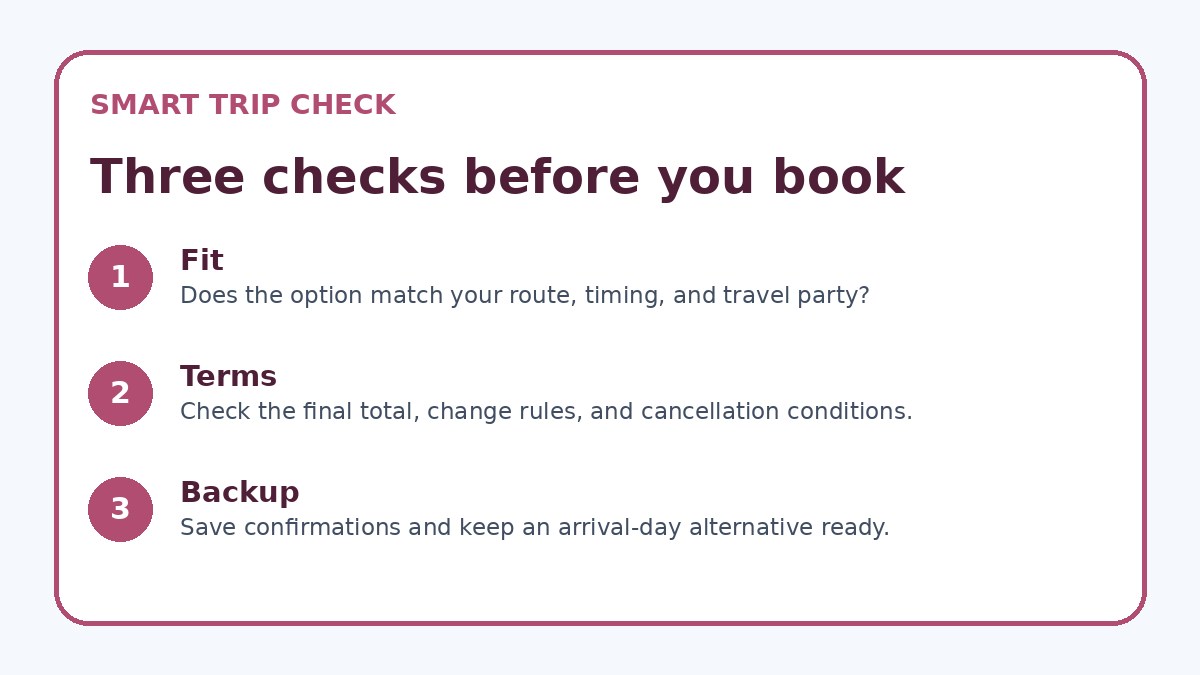
- Confirm exact flight booking class and whether seat selection and checked baggage are included or charged separately on the final booking page.
- Verify the hotel’s neighborhood, room type, check-in/out times, and any mandatory local fees before completing a package or independent hotel reservation.
- Compare cancellation and change policies line-by-line for each included component and note who is responsible for rebooking after disruptions.
- If relying on transfers, confirm whether airport transfer is private or shared, pickup/dropoff locations, and refund rules for missed shuttles.
- List confirmed check-in times for tours or attractions you’ve prebooked and build buffer time around likely delays into your itinerary.
- Save a single document with all confirmation numbers, emergency contacts, and provider help lines, and test that contact information on the vendor’s confirmation page.
Practical checks before you commit to either option
If you’re leaning toward a package, verify exactly which flight inventory class you will receive, whether seat selection is included or extra, and how changes or cancellations are handled—ask whether rebooking is managed by the package vendor or passed through to the airline/hotel. Confirm the hotel neighborhood and room type to ensure it matches your mobility and sightseeing plans, and check whether airport transfers are point-to-point or shared. Always look for contact methods for after-hours support if travel disruptions occur.
For separate bookings, confirm the minimum connection times you’ll need if switching airports or traveling between Logan and regional train stations. Check each provider’s refund, change, and no-show policies and how they interact: a flexible airline fare paired with a nonrefundable hotel may reduce your overall agility. Finally, if you’ll rely on public transit in Boston, verify proximity to T stations or commuter rail and whether your hotel charges any additional local fees that affect the overall cost.
Frequently asked questions
Will a package usually save money compared with booking everything myself?
It depends on the components and your priorities. Packages can offer bundled savings for standard itineraries, especially when they include group transfers or attraction passes that you would otherwise pay for individually. But if you have specific flight timing needs, want a particular neighborhood hotel, or can use loyalty points, separate bookings may be cheaper or deliver more value. Always compare a detailed cost breakdown (fares, taxes, fees, baggage, transfers) and verify inclusions and cancellation terms on the final booking page before deciding.
How should I handle timing if I book a package but my inbound flight is delayed?
Check the package provider’s stated policy for missed connections and late arrivals before you buy. Some vendors will rebook linked services automatically or provide a local support number to assist, while others may expect you to coordinate directly with the airline or hotel. If you’re worried about delays, consider packages that include airport-to-hotel transfers with flexible pickup windows, or buy travel insurance that covers missed connections. Always save and test emergency contact details on the booking confirmation so you can act quickly if disruption occurs.
Can I mix and match—use a package for flights and a separate hotel or tours?
Yes. A hybrid approach is common: travelers sometimes choose a packaged flight plus hotel for convenience, then book specialty tours, dinner reservations, or niche neighborhood stays separately. The key is coordination—ensure arrival and check-in times align with separately booked activities and understand who is liable if schedules clash. When mixing bookings, keep clear records of each provider’s change and refund policies and confirm any necessary transfer logistics between independently arranged elements.
Final planning note
For first-time visitors to Boston, the choice between a package and separate bookings comes down to how much control you want versus how much headache you’re willing to avoid. Packages reduce the number of decisions and provide a single point of contact, which can be useful when time is short or you prefer a simpler purchase process. Separate bookings give you neighborhood choice, exact flight timing, and potential loyalty advantages, but they require more active management of schedules and policies. Run a side-by-side cost and policy comparison before you buy, verify critical details on the provider’s final booking page, and consider Trip.com or other comparison tools to check live availability—then pick the approach that fits your comfort level with planning and change risk.
Continue planning
Check current options and final conditions
Use the provider page to confirm live availability, the final total, cancellation terms, and every condition that matters to your trip.
This evergreen planning guide was created with AI-assisted drafting and a structured quality review. It does not display live prices, schedules, availability, visa guidance, or provider rankings. Verify current details before booking. Some links are affiliate links; we may earn a commission at no additional cost to you.