If you’re moving between Kuala Lumpur and Singapore with more bags than usual, start by deciding whether convenience, cost, or border simplicity matters most. For many, a private transfer or driving yourself (with clear customs planning) beats public transit because it reduces luggage handling; others prefer a train or bus for lower coordination needs if they can manage drops and pickups. Think in terms of total door-to-door time and the number of times you’ll lift or recheck a bag, not just duration on the vehicle. Before booking, compare baggage allowances, transfer points, and luggage handling services on the provider’s final booking page. Trip.com can be used to compare current availability, but always confirm luggage policies, connection details, and border crossing procedures with the operator you choose.
See current options before you compare the details
Availability and final conditions change. Open Trip.com now or keep reading for the practical comparison.
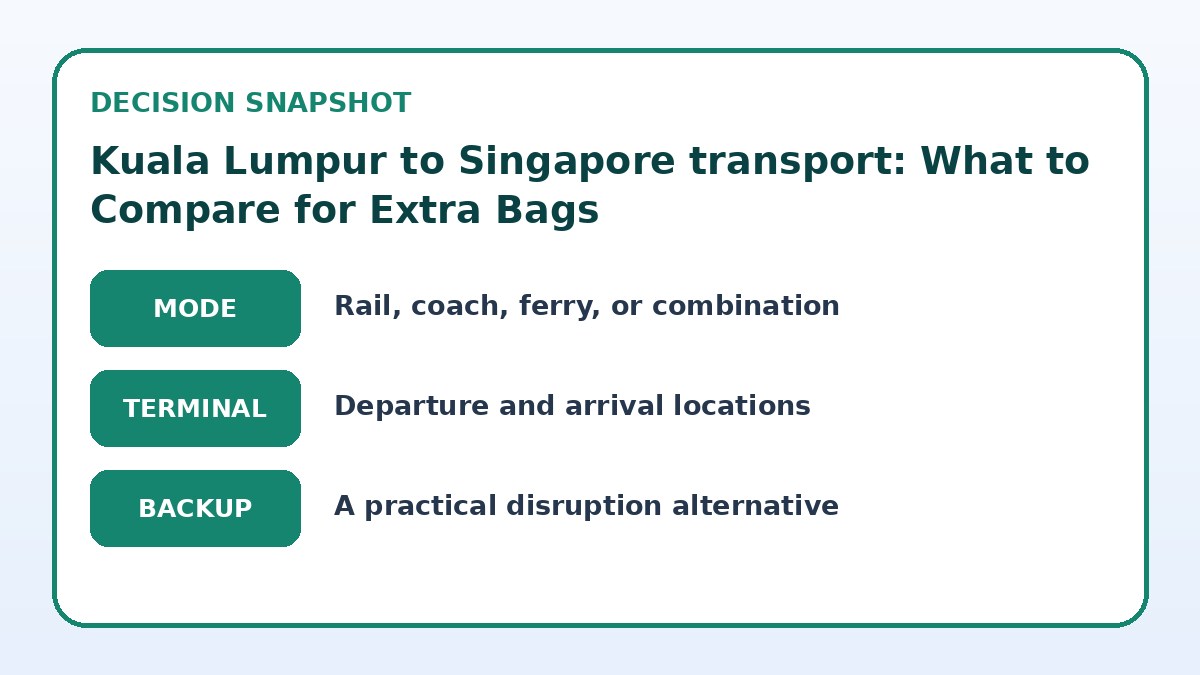
Choose the transport type that fits your luggage and priorities
Start by listing what you are carrying: number of suitcases, fragile items, sporting gear, and anything that won’t compress. If you have bulky items—bicycles, large musical instruments, or multiple heavy suitcases—private road transfer or driving your own vehicle lets you load once and reduces repeated lifting. Consider whether you need door-to-door service; every transfer or modal change (hotel to station, station to terminal) multiplies handling events. For lighter extra loads, buses and trains can work if you’re willing to manage short portage and store bags in luggage bays or racks.
Balance the convenience of fewer handling events against cost and border crossings. Private transfers are convenient but require clear instructions about immigration drop-off and pick-up—some drivers wait while you clear passport control, others may not cross internal checkpoints. Trains and buses usually have explicit luggage spaces, but sizes and staff assistance vary. Flights can be efficient for long distances but often treat oversize or overweight items as special cargo; check airline policy and whether you must recheck bags at connecting airports.
Packing, labeling and equipment to make extra luggage manageable
Invest in practical gear: good spinner wheels, compression straps, a lightweight foldable trolley, and protective covers for fragile pieces. Keep at least one bag organized as a transit kit with essentials—documents, a change of clothes, chargers, basic toiletries—so you can access necessities without opening every suitcase at checkpoints. Use bright, unique tags and a printed itinerary inside a clear pouch attached to a main bag; this helps if a bag is set aside during transfers or security checks. For fragile or oddly shaped items, use reinforced cases or consider partial disassembly to fit into standard luggage dimensions.
Label every item with both contact details and your arrival address in Singapore, plus a note about temporary handling instructions (for example, “fragile—do not stack”). Photograph each bag from multiple angles before departure; those photos speed up recovery if something is mishandled. If shipping items ahead or relying on a courier, prepare customs paperwork and receipts in an organized folder and verify pickup windows. Wherever possible, distribute valuables and fragile parts across bags so one mishap doesn’t ruin your entire kit.
| Approach | Best for | Tradeoff to check |
|---|---|---|
| Private car transfer or self-drive | People prioritizing minimal handling and door-to-door convenience | Usually higher cost and need to confirm driver’s waiting and border procedures |
| Direct flight | Travelers who want fastest door-to-door transit time | Requires checking airline baggage rules and handling for oversized items or connections |
| Long-distance train | Those who prefer steady rides with visible luggage storage | May involve stairs, short portages, and variable staff assistance at stations |
| Coach/bus services | Budget-conscious travelers with manageable extra bags | Often requires loading/unloading at stops and limited space for oversized items |
Ready to check the option that fits your plan?
Use your exact dates and traveler details so the provider page can show the current total and conditions.
Crossing the border: immigration, customs and transfer realities
Cross-border travel between Malaysia and Singapore involves immigration and customs checkpoints you must plan for when traveling with extra luggage. If you drive or take a private transfer, know whether the vehicle will wait for you while you clear passport control or whether you must carry bags across to change vehicles; driver policies differ. For buses and trains, operators normally specify where luggage is stored and whether you keep it with you on the platform. Verify with the operator whether luggage searches or declarations are common for items you’re carrying, and prepare receipts or proof of purchase for high-value goods.
If your route requires changing terminals, modes, or vehicles at the border, factor in realistic extra time and the physical effort of moving bags between points. Some travelers choose to break larger journeys into shorter segments with luggage-friendly stops to avoid rushing through immigration. Always check the provider’s booking page for instructions about which terminal or drop-off point they use, whether staff assist with luggage, and what paperwork you need for items that might be subject to customs checks.
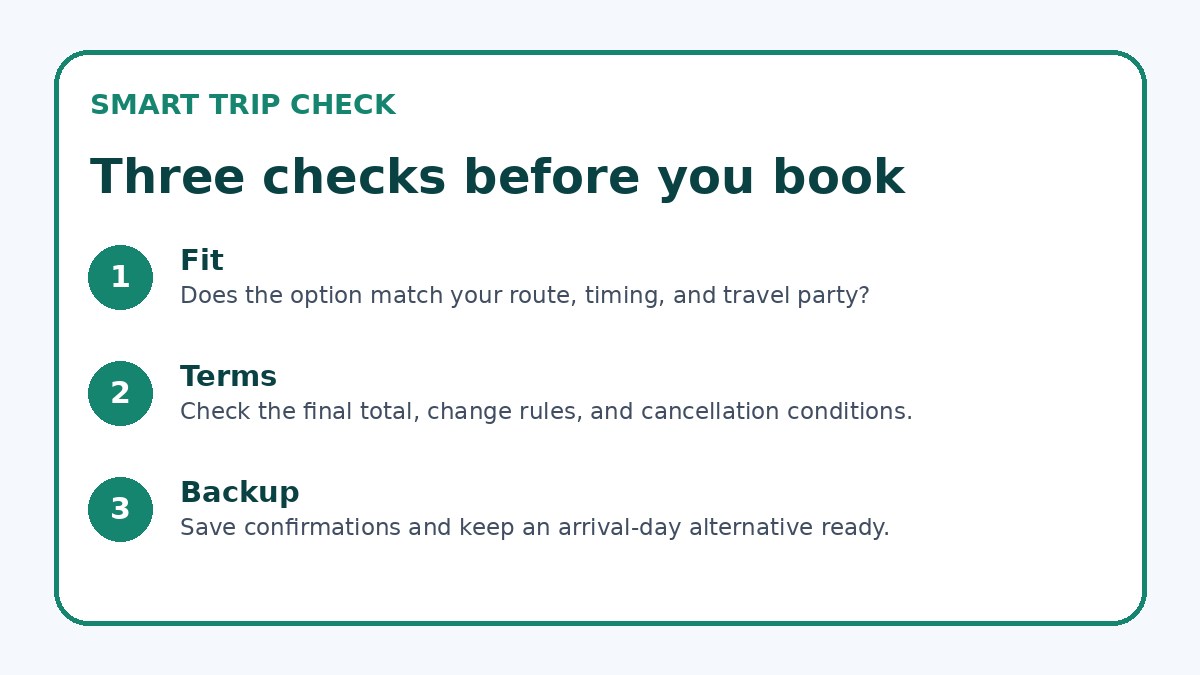
Before you book
- Photograph and label every bag with contact details and arrival address in Singapore before departure.
- Check operator baggage dimensions and weight limits on their final booking page and confirm special handling rules for oversized items.
- Pack a transit kit with documents, chargers, a change of clothes, and medications in a carry-on you keep with you during border crossings.
- Bring compact luggage aids: a folding trolley, straps, and protective covers or padding for fragile items.
- Confirm pickup/drop-off meeting points and the driver or agent phone number; save screenshots of booking confirmations.
- Prepare customs documentation and receipts for high-value items or goods you plan to declare, and store them in an easily accessible folder.
Booking and on-the-ground tips to reduce luggage stress
When comparing booking options, read the baggage rules, vehicle/compartment dimensions, and any notes about fragile or oversized items on the operator’s final page. If the provider lists weight limits, allow a buffer—petrol stations, rest stops, or vehicle capacity constraints may matter. For flights, check whether checked luggage, overweight fees, and special handling for sports equipment need advance purchase. If you rely on third-party booking platforms like Trip.com, use them to view availability but verify baggage rules and pick-up/drop-off details on the operator’s own site or confirmation email.
On travel day, arrive early and coordinate phone numbers for drivers or station agents. Consolidate carry-on valuables and documents in a single bag you keep with you through border crossings. Use straps and luggage locks permitted in both countries, and keep any required permits or receipts for items that might draw customs attention. If hiring local help—porter service at stations, hotel transfer staff, or dedicated luggage movers—get a clear price and meeting point in writing to avoid surprise delays.
Frequently asked questions
Can I take oversized items like a bicycle or surfboard from Kuala Lumpur to Singapore?
You usually can, but handling and rules depend on your transport mode. Airlines and bus or train operators each have specific size and weight limits, and some require advance notice or special cargo booking. For road transfers, confirm the vehicle’s capacity and whether the operator will accept oversized gear without extra charges. If you plan to ship items separately, check customs paperwork needed for export from Malaysia and import into Singapore. Always verify the final conditions and any required declarations on the provider’s booking page before you commit.
Is it better to ship excess luggage ahead or carry it with me?
Shipping can reduce physical strain and simplify your transit, especially for bulky or non-urgent items, but it introduces lead time, pickup coordination, and customs paperwork. Carrying everything keeps you in control and avoids potential courier delays, yet increases handling events and may require larger transport choices. Decide by weighing how soon you need the items at arrival, the complexity of customs for the shipped goods, and whether you can realistically move the bags through terminals and immigration yourself. If you use a courier, confirm pickup and delivery windows and insurance terms on their booking page.
What practical steps reduce the chance of luggage delays or loss on this route?
Use sturdy, distinct luggage and clear external tags, plus an internal contact card with your itinerary. Photograph your bags and contents before travel, and carry a copy of purchase receipts for high-value items. Choose transport options that minimize transfers, and confirm staff assistance at stations or terminals in writing. Keep essential documents and valuables in a single carry-on. If you ship items, select tracked services and insure valuable goods; always check the courier’s tracking, pickup details, and customs requirements on their confirmation page.
Final planning note
Traveling from Kuala Lumpur to Singapore with extra luggage is a practical challenge you can solve with planning: pick the transport mode that minimizes handling for your specific gear, organize bags so essentials are reachable, and verify baggage policies and border procedures on the operator’s final booking page. Private transfers reduce lifts but require clear instructions about crossings; flights and trains can be fast, but each has distinct baggage rules you must check. Use photos, labels, and a transit kit to manage disruptions, and consider shipping non-urgent bulky items where customs and pickup logistics are manageable. With these checks, you’ll reduce stress and make the move between cities smoother for both you and your luggage.
Continue planning
Check current options and final conditions
Use the provider page to confirm live availability, the final total, cancellation terms, and every condition that matters to your trip.
This evergreen planning guide was created with AI-assisted drafting and a structured quality review. It does not display live prices, schedules, availability, visa guidance, or provider rankings. Verify current details before booking. Some links are affiliate links; we may earn a commission at no additional cost to you.