Practical answer first: if you want central convenience and the widest transport links, book in the Kaohsiung Main Station or Formosa Boulevard area; if you care about the harbor, choose Pier-2/Harborfront; for nightlife and street food pick Liuhe/Ruifeng; and for quieter, greener stays look toward Cijin or the Xinzuoying district near the high-speed rail. These choices balance access to transit, sightseeing, and evening atmosphere. Below I outline why each area suits different traveler types, the tradeoffs you’ll face, and the practical checks to make before booking—what to confirm on the hotel’s reservation page, how to evaluate transit connections, and which neighborhood traits really affect your daily plans.
Kaohsiung Main Station & Formosa Boulevard: the transport hub
Staying near Kaohsiung Main Station or Formosa Boulevard puts you at the city’s transit center. From here you can use MRT lines, local buses, and long-distance trains to reach the airport, nearby cities, and major attractions without multiple transfers. Hotels in this area range from basic business rooms to larger chains; they tend to prioritize efficient layouts and are a logical choice if you plan day trips or need frequent station access. For a first-time visitor who values getting around quickly and minimizing travel time between sights, this neighborhood often offers the best practical base.
Tradeoffs include fewer atmospheric waterfront views and a more utilitarian streetscape compared with harborfront areas. Nightlife is present but not always within short walking distance of every hotel; you may still take short rides to markets or riverside promenades. When booking, check whether the hotel lists the nearest MRT exit number and any shuttle services, confirm bed configuration and included amenities, and read recent guest notes for how noisy the street or station can be at night.
Pier-2, Love River, and the harborfront: culture and views
The Pier-2 Art Center, Love River, and the surrounding harborfront neighborhoods are ideal if you prioritize museums, street art, and scenic walks. This part of Kaohsiung has a relaxed daytime rhythm with plenty of galleries, outdoor installations, and cafés. Hotels here often highlight views of the harbor or river, and staying nearby means you can start evenings with a sunset stroll followed by riverside dining or a short bike ride. For couples and photography-minded travelers, the setting is a strong draw and keeps you close to key cultural attractions without long commutes.
The tradeoff is distance from the main long-distance rail hubs; you may need to transfer to reach the main station or the high-speed rail. Some smaller boutique hotels also have fewer on-site services compared with bigger downtown properties. Before booking, verify the exact location relative to Pier-2 or Love River, whether the room faces water, and how the hotel recommends getting to Kaohsiung Main Station or the nearest MRT stop—use those details to judge if the commute meets your tolerance.
| Approach | Best for | Tradeoff to check |
|---|---|---|
| Stay by the main station | Maximizing transit convenience and short transfer times | Less scenic waterfront atmosphere and limited riverside nightlife |
| Choose the harborfront/Pier-2 area | Cultural sightseeing, waterfront views, and relaxed walks | Longer connections to HSR and some train services |
| Book near Liuhe or Ruifeng night markets | Late-night food, bars, and an easy social scene | More noise and busier streets at night |
| Pick Cijin or Xinzuoying | Seaside relaxation (Cijin) or fast HSR links (Xinzuoying) | Ferries or transfer rides needed to reach central Kaohsiung attractions |

Liuhe Night Market, Ruifeng, and nightlife-focused stays
If sampling street food and an active evening scene is part of your travel plan, choose a hotel near Liuhe Night Market or Ruifeng Night Market. These areas put popular stalls, instant snacks, and bars within a few minutes’ walk, so you can eat and wander late without relying on taxis. The neighborhoods pulse after dark and offer practical convenience for solo explorers or small groups who want to socialize and sample local flavors. Many mid-range hotels and guesthouses deliberately market themselves to market-goers and are clustered along easy walking routes to the stalls.
Expect more nighttime noise and busier pedestrian traffic; if you’re a light sleeper, look for hotels with good soundproofing or higher floors. Daytime access to farther sights may require a short MRT or bus ride, and room options vary widely by building age. Check whether the hotel notes noise levels, confirm check-in times if you plan late arrivals after market visits, and verify how they advise reaching airport or train connections late at night.
Before you book
- Confirm the hotel’s exact address and nearest MRT exit or transit stop before booking.
- Verify room type, bed configuration, and whether the room faces the street or water on the provider’s booking page.
- Check recent guest comments for notes on street or market noise, and ask the hotel about soundproofing options if you’re a light sleeper.
- If you need airport or HSR transfers, request directions and typical transfer methods from the hotel (shuttle, taxi estimate, or public transit).
- Compare walking times from your shortlisted hotels to the nearest night market, Pier-2, or Love River to suit your evening plans.
- If parking, late check-in, or luggage storage matters, confirm these services directly with the hotel before finalizing your reservation.
Cijin, Xinzuoying, and quieter or HSR-linked choices
Cijin Island and the Xinzuoying area suit distinct needs: Cijin for relaxed seaside vibes and Xinzuoying for high-speed rail convenience. Cijin requires a short ferry ride from the city and offers beaches, seafood stalls, and bike paths—perfect for travelers who prioritize a slower pace and outdoor time. Xinzuoying, by contrast, is less about local charm and more about efficient onward travel; it’s the high-speed rail gateway and an excellent choice if you plan intercity day trips across Taiwan using the HSR network.
The tradeoffs vary: Cijin’s ferry dependency means you'll plan around boat crossings and fewer evening transport options, while Xinzuoying is practical but a bit removed from Kaohsiung’s harbor attractions and downtown vibes. For either area, confirm the hotel’s transfer suggestions to the nearest MRT or ferry terminal, check the walking distances to key transport nodes, and if you rely on the HSR, verify how long the local transfer takes and what baggage handling options hotels offer.
Frequently asked questions
Which Kaohsiung neighborhood is most convenient for first-time visitors who want to see a bit of everything?
For broad convenience, the area around Kaohsiung Main Station and Formosa Boulevard is a smart pick: it connects to multiple MRT lines, local buses, and nearby train services, reducing travel complexity for first-time visitors. From here you can reach the harborfront, night markets, and cultural sites with straightforward transfers. If you plan HSR day trips to other cities, weigh a night in Xinzuoying on one end of your trip for speedier intercity travel while basing most nights closer to the main station for city exploration.
Is it worth staying on Cijin Island for a couple of nights?
Staying on Cijin is worthwhile if you prioritize quiet sea air, beaches, and a slower pace—ideal for recovery days or scenic relaxation after busy touring. Remember that the island requires a ferry ride to enter and exit, and local transport is limited to bikes, scooters, and buses, so plan carries and transit accordingly. For a mixed itinerary, consider splitting your trip: a night or two on Cijin for seaside time, plus nights in a central neighborhood to ease access to museums, markets, and rail connections.
How should I compare hotels near night markets versus harborfront hotels?
Start by listing priorities: proximity to food and nightlife, noise tolerance, desired scenery, and transit access. Night market hotels win for late-night food and lively atmospheres but can be noisy; check the hotel’s noise policies and guest comments. Harborfront hotels offer scenic walks and cultural draws but may require longer rides to reach major train stations. For each hotel, verify the exact walking distance to your primary points of interest and whether the property provides transit tips or shuttle services—this will reveal the practical difference between convenience and ambiance.
Final planning note
Choosing where to stay in Kaohsiung depends on what you want most from your trip: maximum transit convenience (Kaohsiung Main Station/Formosa Boulevard), waterfront culture and views (Pier-2/Love River), late-night food and energy (Liuhe/Ruifeng), or relaxed seaside days or HSR convenience (Cijin/Xinzuoying). Use the checklist above to confirm address, transport links, noise levels, and services on the hotel’s booking page before committing. If you want to compare current room options and availability, you may check a broad booking site such as Trip.com, but always verify final details and policies on the hotel’s own reservation page to avoid surprises.
Continue planning
Check current options and final conditions
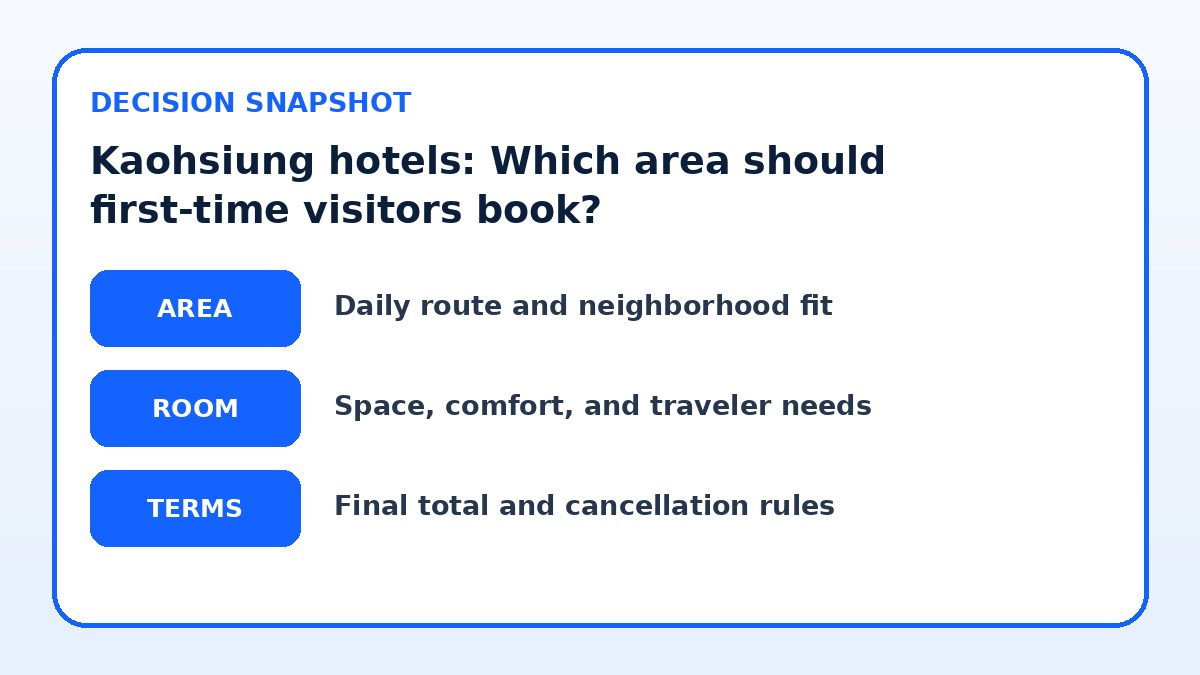
Use the provider page to confirm live availability, the final total, cancellation terms, and every condition that matters to your trip.
This evergreen planning guide was created with AI-assisted drafting and a structured quality review. It does not display live prices, schedules, availability, visa guidance, or provider rankings. Verify current details before booking. Some links are affiliate links; we may earn a commission at no additional cost to you.