If you’re visiting Jeju for the first time, price alerts can save time and surface good options—but they can also push you into impulsive bookings you later regret. The practical approach is simple: set targeted alerts, predefine non-negotiables (dates, neighborhood, cancellation policy), and pair alerts with a short checklist that rules out snap decisions. Alerts are signals, not instructions. Treat a trigger as a prompt to research: check alternate dates, confirm ferry or flight routing, verify luggage or transport options, and read the final cancellation/fee terms on the provider’s booking page before you click purchase. With that discipline, alerts become a planning tool that brings clarity rather than pressure.
See current options before you compare the details
Availability and final conditions change. Open Trip.com now or keep reading for the practical comparison.
Decide what truly matters before you set alerts
Before creating any alerts, clarify the non-negotiables for your Jeju trip. Decide the latest acceptable travel dates, how close you want to stay to a particular town or attraction, whether you need a rental car, and which cancellation or refund terms you accept. For first-time visitors, neighborhoods and transport links are as important as nightly rates; a cheaper hotel far from bus routes or ferry terminals can add time and cost. Write down your thresholds—acceptable change fees, preferred airline or ferry operators, maximum transfer time—and use them to filter which alerts you’ll trust.
Setting alerts without these boundaries makes every price drop feel urgent because you haven’t defined what qualifies as a useful deal. Alerts should only monitor options that meet your baseline criteria. For example, if you need free cancellation, only enable price trackers that allow filtering by refundability. This approach reduces impulse purchases and ensures alerts lead to viable choices that fit your overall plan for exploring Jeju rather than to one-off bargains.
Create focused alerts and avoid alert fatigue
Too many broad alerts produce noise: dozens of notifications that make it harder to notice genuinely relevant changes. Instead, create focused alerts for specific routes (mainland city to Jeju), particular date pairs, or a handful of hotels in chosen neighborhoods. Use a short date range—the exact week you plan to travel or a couple of flexible days—so the alert signals are meaningful. If you plan to compare ferry versus flight, set separate alerts for each mode so you can see how price movements differ and weigh time versus cost.
Consider the cadence and channel of alerts. Use email for slower, reviewable updates and push notifications only for very narrow, high-priority triggers. Many platforms let you set minimum price change thresholds; use those to avoid tiny, inconsequential fluctuations. You can also stagger alerts: begin roughly six to eight weeks out for broad market movement, then tighten them two to three weeks before departure when useful deals often appear but still leave enough time to confirm logistics.
| Approach | Best for | Tradeoff to check |
|---|---|---|
| Strictly follow every alert | Travelers with narrow budgets and high responsiveness | High risk of impulse purchases without verifying logistics or refund terms |
| Use alerts only as research prompts | Travelers who prioritize planning, verification, and flexibility | You may miss fleeting, time-sensitive offers that require quick action |
| Set alerts for flexible dates only | Travelers who can shift arrival or departure by a day or two | Requires extra planning to ensure connections and accommodations still work |
| Focus alerts on refundable or changeable options | Risk-averse travelers who value peace of mind | Often higher upfront cost compared with nonrefundable bargains |
Ready to check the option that fits your plan?
Use your exact dates and traveler details so the provider page can show the current total and conditions.
Turn an alert into a disciplined decision process
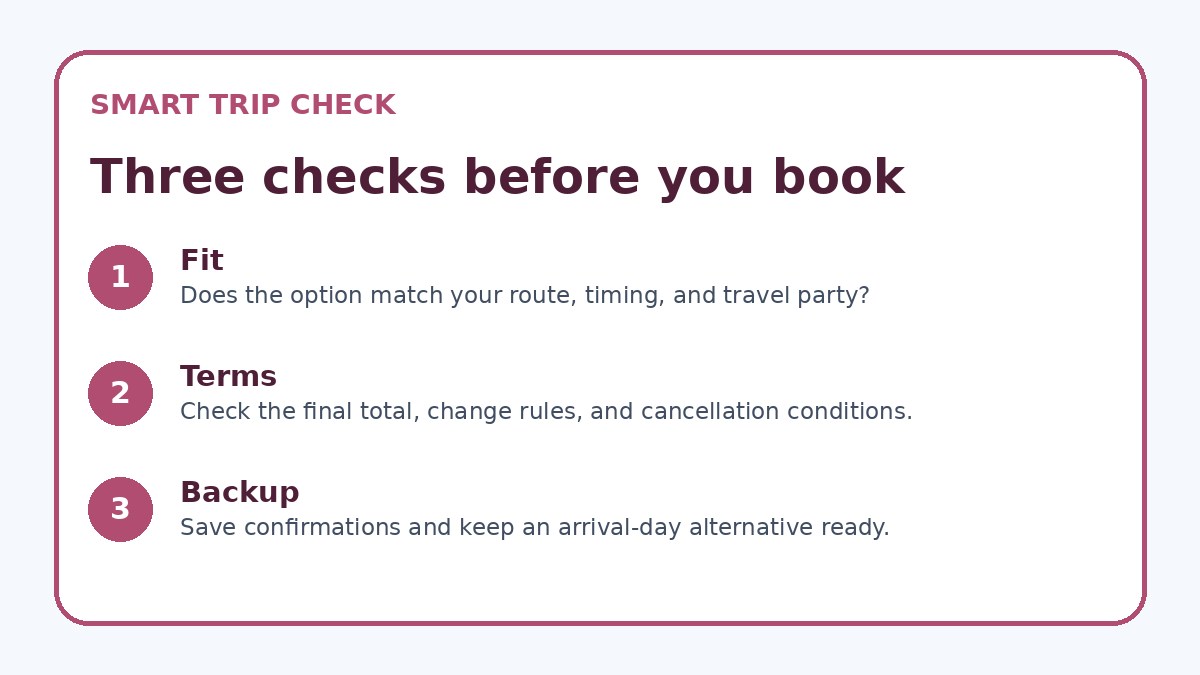
When an alert fires, follow a short decision checklist before booking. First, confirm the final total price on the provider’s booking page—fees, taxes, and baggage or vehicle surcharges can change the picture. Next, compare similar itineraries and nearby hotels for the same dates and consider transport time to the sights you want to visit. If you’re choosing between ferry and flight, look at total door-to-door time and transfer complexity, not only the headline fare. Finally, read the cancellation and change policy on the provider’s final booking page so you know the consequences if plans shift.
If the alert offer meets your pre-set thresholds, proceed—but still allow a brief buffer (an hour or day, depending on how competitive the market is) to avoid emotional responses to sudden notifications. If you need confirmation from travel companions, get that before buying. For peace of mind, take screenshots of the provider’s booking page and confirmation terms before purchase; this helps if the displayed final conditions differ from what you saw in the alert notification. Remember: alerts reduce search effort but don’t replace careful verification.
Before you book
- Write down your non-negotiables: travel dates, neighborhood preference, and acceptable transfer times before enabling alerts.
- Set alerts only for carriers, ferries, and hotels that meet your refund or change-policy thresholds.
- When alerted, open the provider’s final booking page and verify total price, fees, and included services.
- Compare at least two alternate dates and one alternate transport mode (flight vs ferry) before deciding.
- Take screenshots of the booking page and cancellation terms before purchase for a record of what you saw.
- If traveling with others, confirm companion approval before completing any time-sensitive booking.
Weigh flexibility against the risk of missing a deal
Flexibility is the key tradeoff when using alerts. If your dates are fixed by work or events, you’ll accept fewer opportunities and should set stricter alert criteria. If you have flexible travel days, alerts can guide a small shift that yields savings—moving a flight or ferry by a day can matter on Jeju’s busy travel windows. But don’t stretch flexibility so wide that travel becomes inconvenient: check ferry timetables, flight routing, and hotel check-in times when considering date swaps. Always ask whether the savings justify added transit time or a less convenient neighborhood.
Also consider refundability and change fees as part of the tradeoff. Nonrefundable fares or tightly restricted hotel rates can be cheaper, but they raise risk if plans change. If you value low friction and peace of mind, prioritize options with free changes or reasonable cancellation windows even if the alert shows a lower nonrefundable price. Where you see a potential saving, calculate the break-even point: how likely is a plan change and what would it cost? That calculation helps you choose the right balance between flexibility and savings.
Frequently asked questions
How far in advance should I set price alerts for Jeju travel deals?
Set broad monitoring several months before travel to establish price patterns, then tighten alerts two to eight weeks before your trip when useful offers often emerge. Exact timing depends on seasonality: if you’re traveling during school holidays or local festivals, start earlier and track both flights and ferries. The goal is to see a price trend, not only a single drop. Use tight-date alerts in the last few weeks if you can act quickly, but always leave time to verify routing and cancellation terms on the provider’s booking page.
Are price alerts reliable for ferry as well as flight deals to Jeju?
Many alert tools support ferries as well as flights, but availability and frequency differ by provider and season. Treat ferry alerts like flight alerts: verify the final schedule, boarding requirements, vehicle space if you’re bringing a car, and refund rules on the operator’s booking page. Because ferry capacity can be limited on busy days, an alert may indicate remaining seats rather than a permanent price change, so confirm total travel time and connection windows before committing.
What if an alert shows a lower price but the ticket is nonrefundable?
Compare the lower nonrefundable fare to a refundable or changeable option and evaluate your risk tolerance. Calculate the potential cost of a change or cancellation and judge how likely your plans are to shift. If you prefer flexibility, choose options with reasonable change policies even if they cost more. If you opt for a nonrefundable saving, document the booking page terms and consider travel insurance that covers specific risks that matter to you—check both the insurer’s rules and the provider’s final booking page before purchasing.
Final planning note
Price alerts are powerful for first-time Jeju visitors when used with clear rules and a verification routine. Define what matters—dates, location, and cancellation flexibility—then limit alerts to options that meet those criteria. Treat every alert as a prompt to verify the full cost, routing, and final terms on the provider’s booking page before booking. Balance flexibility against risk: small date shifts can yield savings, but convenience and refundability often justify paying a bit more. Use alerts to inform decisions, not to force them, and you’ll find better deals without sacrificing planning control. You can check current availability and conditions on comparison sites such as Trip.com, but always confirm final details on the provider’s official booking page.
Continue planning
Check current options and final conditions
Use the provider page to confirm live availability, the final total, cancellation terms, and every condition that matters to your trip.
This evergreen planning guide was created with AI-assisted drafting and a structured quality review. It does not display live prices, schedules, availability, visa guidance, or provider rankings. Verify current details before booking. Some links are affiliate links; we may earn a commission at no additional cost to you.