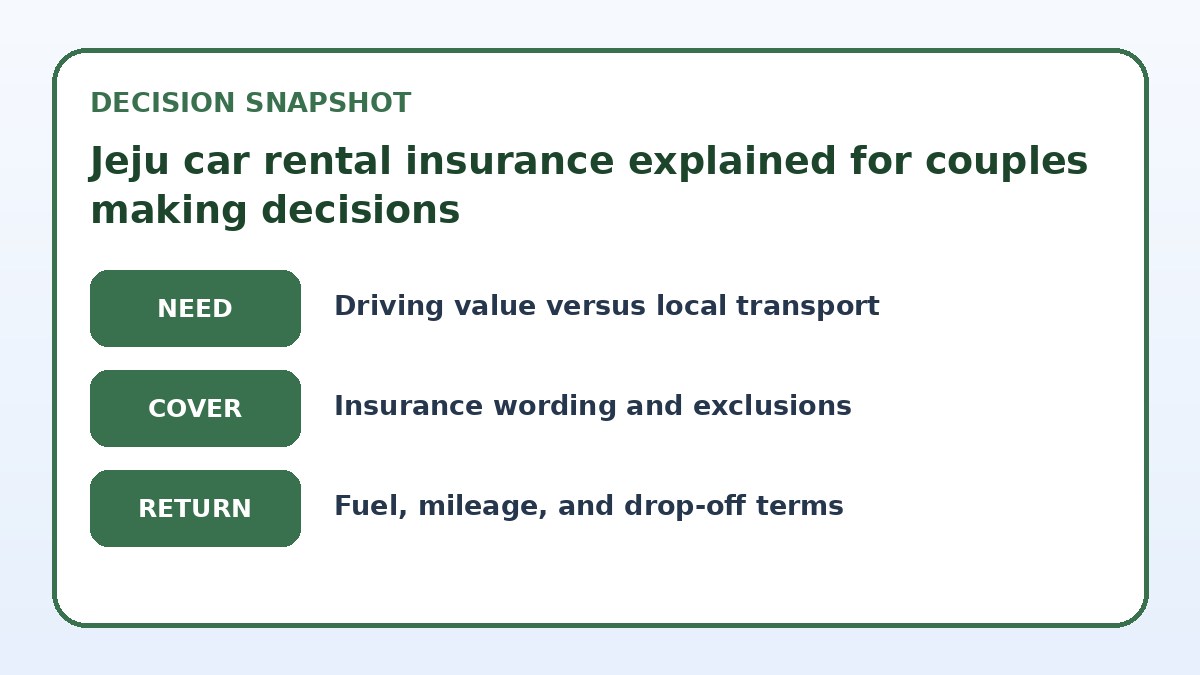
Practical answer first: when renting a car together in Jeju, focus on three things in the insurance wording — the excess (deductible) amount, whether liability for third parties is covered, and who counts as an authorised driver. Those three items determine what you’ll actually pay after an accident, who is protected, and whether your personal card or home insurance can step in. Read the rental confirmation and the insurer’s policy text for exact definitions rather than relying on headline phrases like “full cover” or “collision waiver.” Couples should also check driver age, additional driver fees, and any exclusions for specific roads or off-road use. Finally, verify deposit holds and local toll or fine handling on the provider’s final booking page before you complete payment.
See current options before you compare the details
Availability and final conditions change. Open Trip.com now or keep reading for the practical comparison.
Decoding the key insurance terms you’ll see
Insurance wording usually packs a lot into short phrases. 'Collision Damage Waiver' (CDW) commonly appears; it limits your financial responsibility for damage to the rental car but often still leaves an excess (deductible) you must pay. 'Super CDW' or 'zero excess' options reduce or eliminate that deductible for an extra fee. 'Third-party liability' covers damage or injury you cause to others; check the limit shown in the policy details, not just headline language. 'Personal accident insurance' covers medical costs for occupants, but it may duplicate other coverages you already have through travel or health insurance.
Other frequent terms include 'theft protection' (cover for theft or attempted theft), 'roadside assistance' (tow and emergency help), and 'administration fees' charged when you make a claim. Understand what counts as an excluded use—common exclusions are driving off the sealed surface, driving under the influence, and allowing an unauthorised driver to operate the vehicle. For couples, clarifying who is listed as authorised drivers matters: an unlisted driver can void a claim even if they are your partner.
How to compare excess levels and out-of-pocket risk
The excess (deductible) is the single most practical number for a couple deciding between options. A high excess lowers the upfront rental add-on but increases the amount you’d need to pay immediately for damage. Some rentals advertise low rates with high excesses; others sell a higher daily rate that reduces the excess to a few hundred dollars or zero. Consider how comfortable you are handling the maximum possible immediate charge on your card and whether your credit card or personal insurance will reimburse you later.
Balance out-of-pocket risk with your travel budget and comfort. If one partner will be the frequent driver and the roads you’ll use include narrow rural lanes or busy tourist spots, a smaller excess can provide peace of mind. Conversely, if you rarely plan to drive (using the car mainly for short transfers) and you have a credit card that offers rental coverage, accepting a larger excess may be economical. Always check the final booking page and the insurer’s full policy wording for exact excess amounts and the process for filing and resolving claims.
| Approach | Best for | Tradeoff to check |
|---|---|---|
| Low daily rate with high excess | Couples on a tight budget who accept potential large immediate charges | Lower upfront cost but greater financial risk if damage occurs and reimbursement takes time |
| Higher daily rate with reduced/zero excess | Couples who want predictable out-of-pocket expenses and less stress while driving | Higher regular cost but much smaller or no immediate deductible after an incident |
| Relying on credit card coverage | Couples with comprehensive credit card rental protection and clear issuer terms | Often requires following strict claim procedures; reimbursement timing and exclusions vary by issuer |
| Buying third-party or personal accident extras | Couples wanting extra medical or third-party liability protection beyond basic cover | Adds cost and may duplicate existing travel or health insurance benefits; check overlap before buying |
Ready to check the option that fits your plan?
Use your exact dates and traveler details so the provider page can show the current total and conditions.
Who counts as ‘driver’ and why it matters for couples
Many problems stem from a simple omission: not naming the partner who actually drives. Rental contracts, and the insurer’s policy, define who is an authorised driver. That definition usually requires the person to be present at pick-up, show an appropriate licence, and possibly pay an additional driver fee. If your partner drives but is not listed, a claim can be denied and you could be fully liable. If you want flexibility, add both partners as authorised drivers when booking or at pick-up.
Also check restrictions tied to driver age and licence origin. Some contracts limit young drivers or require an international driving permit for non-Korean licences. For couples where one person prefers to stay resting while the other drives, listing both names removes friction and avoids a denied claim. Confirm exactly what documentation the provider will require to add a driver and whether adding one at the desk is allowed or must be done in advance on the booking page.
Before you book
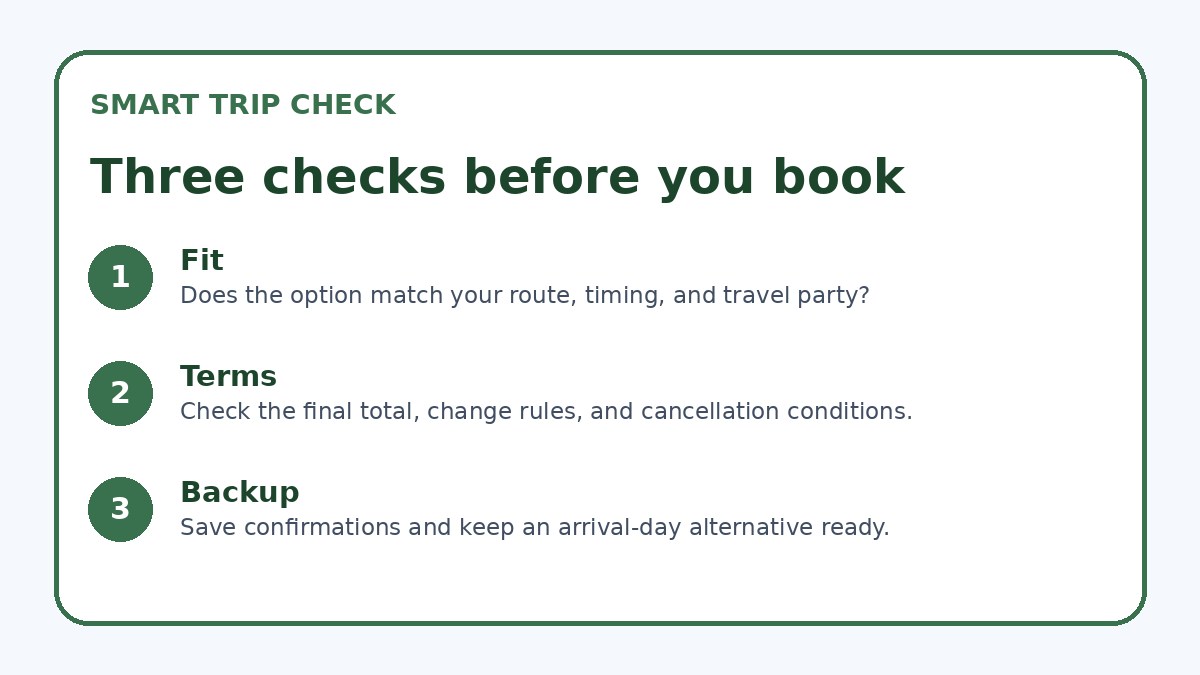
- Read the full policy PDF from the rental page and highlight 'excess', 'exclusion', and 'authorised driver' sections.
- Add both partners as authorised drivers on the reservation and confirm any extra-driver fees in writing.
- Take timestamped photos or video of the car’s condition before leaving the lot and keep copies with the rental agreement.
- Bring the credit card you’ll use to pay and a printed copy of its rental coverage terms, if you intend to rely on that protection.
- Ask the agent to state the exact deposit hold amount and how long it will remain on your card; get that confirmation in writing.
- Save emergency claim phone numbers, local claim procedures, and your insurer’s required evidence checklist on your phone and in the glovebox.
Practical checks on the booking page and at pick-up
Before you click book, open the full insurance policy PDF linked on the provider’s page and search it for words like 'exclusion', 'excess', 'authorised driver', and 'liability'. The booking summary often shows an insurance add-on headline but not the precise terms. In the absence of full text, call or message customer support and request the policy wording in writing. If you use a comparison site such as Trip.com, use it to find current availability but still verify all wording on the rental company’s own confirmation.
At the counter, take these steps together: confirm both names are on the contract; ask the agent to point out the excess amount and whether any local exceptions apply; photograph the vehicle’s condition before leaving; and keep a copy of the policy and claim contact details in the glovebox. If you plan to rely on a credit card’s coverage, bring that card and the issuer’s coverage details. The booking page should tell you whether the provider places a deposit hold and how long it lasts—verify this before authorising the transaction.
Frequently asked questions
Does the 'collision damage waiver' mean I won’t pay anything after an accident?
Not always. A Collision Damage Waiver (CDW) usually reduces or sets a maximum for your financial responsibility for damage to the rental vehicle, but many CDWs still leave an excess (deductible) you must pay. Some providers offer a 'super' CDW or zero-excess upgrade that lowers or removes that deductible for an added fee. Also check for exclusions—damage from off-road driving, driving under the influence, or unauthorised drivers can void coverage entirely. Always read the policy wording on the booking page to see what the CDW actually covers and what you would need to pay upfront after a claim.
Can my credit card or travel insurance cover the excess on a Jeju rental?
Possibly, but it depends on the card issuer’s and insurer’s terms. Many premium credit cards include rental car insurance that can reimburse you for the excess if you follow the issuer’s claim process and meet their eligibility rules. Travel insurance sometimes covers excess too, but policies vary on exclusions and required documentation. Before relying on these, confirm with the card issuer or insurer exactly which countries and vehicle types are covered, whether multiple drivers are allowed, and what paperwork you must submit after an incident. Keep written confirmation of their coverage rules when you pick up the car.
What should couples do at pick-up to avoid denied claims later?
Do everything together at the counter: ensure both names are on the contract as authorised drivers and present the required licences and ID; ask the agent to confirm the excess amount and any notable exclusions; photograph any pre-existing damage with timestamps; and request a printed copy of the signed rental agreement and insurance summary. If the booking included an insurance upgrade, verify it’s recorded on the contract. Any verbal assurances should be backed up with written notes or a photo of the agent’s name and desk receipt. These steps make a claim process far smoother if an incident occurs.
Final planning note
For couples renting in Jeju, the smart move is to read insurance wording as carefully as you read the map. Focus on three decision levers: the excess amount, third-party liability limits, and who is listed as an authorised driver. Balance your tolerance for out-of-pocket risk against convenience and budget—smaller excesses cost more daily but lower stress if something happens on narrow island roads. Confirm deposit holds, check for exclusions tied to road type or driver age, and bring any credit card coverage documents if you plan to rely on them. Use Trip.com or similar sites to compare availability, but always verify insurance definitions on the supplier’s final booking page before you pay. That careful check will make your driving days together in Jeju safer and more relaxed.
Continue planning
Check current options and final conditions
Use the provider page to confirm live availability, the final total, cancellation terms, and every condition that matters to your trip.
This evergreen planning guide was created with AI-assisted drafting and a structured quality review. It does not display live prices, schedules, availability, visa guidance, or provider rankings. Verify current details before booking. Some links are affiliate links; we may earn a commission at no additional cost to you.