
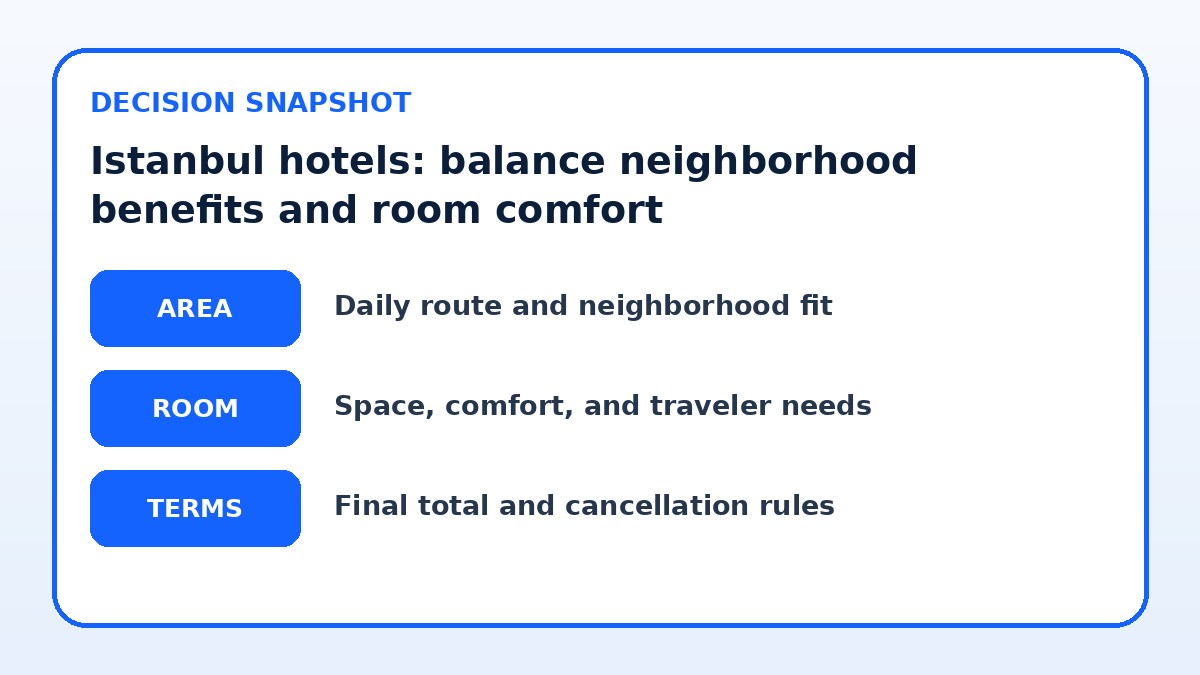
If you’re traveling solo to Istanbul the quick, practical answer is this: prioritize neighborhood first (transport links and daytime activities), then pick room features that match your needs for sleep, storage, and privacy. A central neighborhood like Sultanahmet or Beyoğlu gives easy walkable access to major sights, but quieter areas or places near transit hubs can save time and reduce late-night navigation. Once you pick the area, decide whether you need a larger private room, a single-room with a window, or a well-reviewed capsule/hostel for socializing and lower cost. This sequence—neighborhood, then room features—keeps you secure, flexible, and comfortable without overpaying for conveniences you won’t use.
See current options before you compare the details
Availability and final conditions change. Open Trip.com now or keep reading for the practical comparison.
Decide neighborhood by your daily rhythm
Pick your neighborhood around what you expect to do most days. If you plan to visit top historical sites and want walkable mornings, Sultanahmet puts you within short walks of the Hagia Sophia, Blue Mosque, and Topkapi. For a livelier evening scene with cafes, bars, and restaurants, Beyoğlu (including Istiklal Street and Taksim) gives more nightlife options and independent galleries. For quieter, residential vibes with good Bosphorus views consider Kadıköy or Besiktas on the Asian and European sides respectively, which are well connected by ferries and surface transit.
Balance convenience with noise and crowds: neighborhoods close to major landmarks can be busy and noisier, especially during high visitor seasons and mornings. If you want late-night cafés or easier evening travel, pick a place near a major tram, metro, or ferry line so you don’t rely only on taxis. Also check pedestrian access—some historic neighborhoods have cobblestone streets and limited vehicle traffic, which is charming but may be harder with heavy luggage or late arrivals.
Prioritize room features that matter to solo travelers
After you’ve selected the neighborhood, narrow rooms by the features that will directly affect your comfort and sense of security. For a solo traveler, a private room with a lockable door, bright lighting, and dependable heating or air conditioning matters more than an over-styled suite. Good mattress quality, blackout curtains, and a quiet location in the building will make sightseeing days far more enjoyable. Consider a room with a small desk or seating area if you’ll work or plan, and enough closet or shelf space to keep your luggage out of the way.
Think about practical extras: an en suite bathroom prevents shared-bathroom queues and offers privacy; a reliable kettle or small fridge can save time and let you keep water and snacks handy; luggage storage can be useful if you arrive early or have a late flight. If you value social connections, some hostels and small hotels organize walking nights or breakfast meetups—decide whether social options are a bonus or a distraction from privacy and rest.
| Approach | Best for | Tradeoff to check |
|---|---|---|
| Central compact room in Sultanahmet | Sightseeing-first travelers who want short walks to major attractions | Smaller rooms and more daytime crowds; potentially more street noise |
| Private apartment in Kadıköy or Besiktas | Longer stays, quieter nights, local neighborhood experience | Longer commutes to some European-side historic sights; more planning for transit |
| Boutique hotel near Taksim/Beyoğlu | Solo travelers seeking nightlife, dining, and easy evening returns | Possible noise and denser pedestrian traffic; rooms may be compact |
| Hostel or social guesthouse | Budget-conscious solo travelers wanting social connections and local tips | Less privacy and potential for shared bathroom inconveniences |
Ready to check the option that fits your plan?
Use your exact dates and traveler details so the provider page can show the current total and conditions.

Tradeoffs: location convenience versus room comfort
There’s rarely a perfect balance—central locations tend to have smaller rooms and more street noise, while quieter, residential areas offer more space for the same price but longer commutes to main sights. If you value sleep and private time, accept a slightly longer daily commute and choose a better room; if you plan to be out most of the day and evening, a compact room in the center might be preferable. Factor in how you’ll move—ferries and metros change the dynamic: a longer but scenic ferry commute could be a pleasant part of your day rather than a drag.
Also weigh safety and pick neighborhoods with good nighttime transit or regular foot traffic. Being within a short taxi or tram ride matters more if you arrive late or plan to return after dark. If you have mobility needs, confirm elevator access and minimal stairs; if you prefer fewer crowds, avoid hotels next to major tram stops or tourist clusters. Ultimately, write a short list of must-have room features and a list of negotiable comforts, then compare options within your chosen neighborhood against those lists.
Before you book
- Confirm bed type and room size on the hotel’s booking page before you pay to ensure sleep comfort.
- Verify whether the bathroom is en suite or shared and check recent guest comments about cleanliness.
- Check walking distance and average transit time to your top two planned sites using local transit maps.
- Ask the property about late check-in and 24-hour reception if your flight or ferry arrives after dark.
- Request a room away from the street or near the elevator/stairs depending on whether you value quiet or quick exits.
- Confirm luggage storage options and whether the hotel charges for early drop-off or late pickup.
Booking checklist and what to verify before you confirm
Before you hit book, verify the details that change frequently on the hotel’s final booking page: bed type and size, whether the bathroom is private, cancellation terms, availability of steady Wi‑Fi, and whether the property has 24-hour reception if you’ll arrive late. Don’t assume photos show the exact room you’ll get—confirm whether images represent a room category and ask the property for specifics if those aspects are crucial to you. If you rely on public transport, check walking times to the nearest tram, metro, or ferry terminal rather than estimating on a map alone.
Check guest feedback from the last few months for noise issues, elevator reliability, or repeated cleanliness concerns—these tend to predict short-stay comfort more than older reviews. If you’re choosing a quieter room, request one away from the street or on a higher floor; if you need quick exits, ask for a lower floor near the stairs. Finally, if you want to compare current availability and conditions, you can look at Trip.com as one option, but always confirm specifics on the provider’s official page before payment.
Frequently asked questions
Is it safer to stay in Sultanahmet or Taksim when traveling alone?
Both neighborhoods are popular and generally safe for visitors, but they differ in rhythm. Sultanahmet is calmer in the evenings and very walkable for daytime sightseeing, while Taksim/Beyoğlu is busier at night with more nightlife. For personal safety, choose an area with regular pedestrian traffic and nearby transit so you can return late comfortably. Check recent guest reports about nighttime noise and local street lighting, and confirm 24-hour reception if you may arrive late.
How much should I prioritize good Wi‑Fi and workspace in my hotel selection?
Prioritize Wi‑Fi and a small workspace if you need to remote work, plan daily routes, or frequently check transport connections; unreliable Wi‑Fi can disrupt logistics and research. If you will only use the internet for quick checks and social apps, a stable mobile data plan might suffice and let you trade down on business-style rooms. Always verify the provider’s stated Wi‑Fi reliability and whether the room has a desk; confirm these specifics on the booking page or by messaging the property directly.
Are ferries a practical way to balance location and comfort between Asian and European sides?
Yes, ferries are a scenic and practical complement to trams and metros when moving between sides of Istanbul, often adding pleasant travel time rather than being purely transit. If you enjoy waterfront views and a relaxed commute, staying near a ferry terminal can broaden your neighborhood choices without forcing you to sacrifice room comfort. Before booking, check how often ferries run at the times you’ll travel and assess walking distances from the dock to selected accommodations; verify schedules and connections on transit websites or the hotel’s info before finalizing.
Final planning note
Balancing location and room comfort in Istanbul comes down to ordering your choices: pick the neighborhood that fits your daily rhythm—historical sightseeing, nightlife, or quieter local life—then select a room that secures sleep, privacy, and practical conveniences. For solo travelers, a private room with a good mattress, reliable lock, and en suite bathroom will usually pay back more in comfort than paying extra for central square footage. Use recent reviews and the hotel’s booking page to verify bed size, bathroom type, check-in policies, and transit proximity. With that approach you can enjoy Istanbul’s rich neighborhoods while keeping your nights restful and your days efficient.
Continue planning
Check current options and final conditions
Use the provider page to confirm live availability, the final total, cancellation terms, and every condition that matters to your trip.
This evergreen planning guide was created with AI-assisted drafting and a structured quality review. It does not display live prices, schedules, availability, visa guidance, or provider rankings. Verify current details before booking. Some links are affiliate links; we may earn a commission at no additional cost to you.