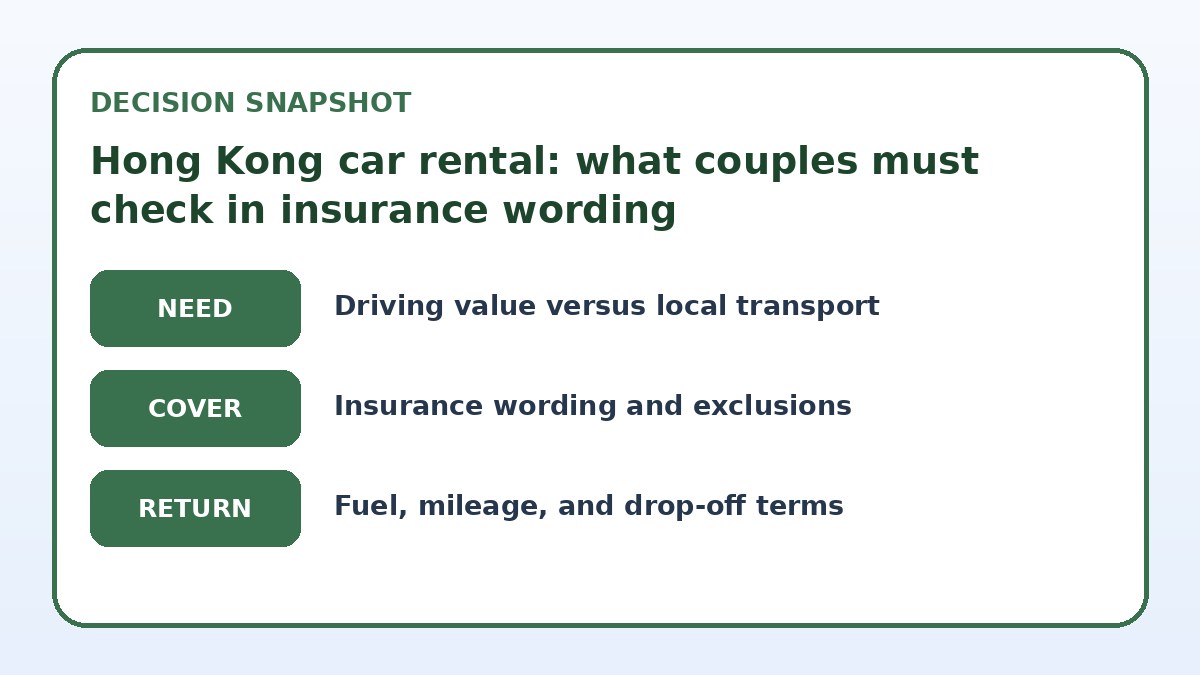
Practical answer: when booking a Hong Kong car rental as a couple, first confirm who is the ‘named driver’ and whether the policy covers multiple drivers, cross-border use, and third-party liability at the limits you need. Ask the rental provider to show the full insurance wording (not just the brochure). Read exclusions for young or inexperienced drivers, alcohol/drug clauses, permitted drivers, and damage to windscreen/tires. Decide whether to accept collision damage waiver (CDW) with an excess and buy supplemental cover that reduces the excess, or to rely on a credit-card insurance benefit after confirming its terms. Finally, verify any required documentation and the exact language on deposit holds and credit-card authorizations before signing. Below I explain common policy terms, tradeoffs couples face, how to compare options, and a practical checklist to use at pickup.
See current options before you compare the details
Availability and final conditions change. Open Trip.com now or keep reading for the practical comparison.
Key policy terms couples must decode
When you scan an insurer’s wording for a Hong Kong car rental, certain phrases matter for couples making joint decisions. Named driver specifies which listed people are covered — many agreements cover the primary renter and one additional driver free, but some count partners as extras. Collision Damage Waiver (CDW) or Loss Damage Waiver (LDW) limits how much you might pay after an incident; this is different from third-party liability, which covers other people and their property. Also check whether the policy says ‘comprehensive’ but still excludes specific elements like windows, tyres, mirrors, and underbody damage. That’s common in short-form descriptions but critical when deciding whether to buy extra protection.
Look for language on ‘per-event’ versus ‘per-claim’ excess, and whether excess reduction products are insurance or contractual waivers from the rental company—this affects who you claim through and what documentation is needed. Terms such as ‘unattended vehicle’ and ‘improper driver’ can void cover, and many insurers explicitly exclude loss following alcohol or drug impairment. For couples, note clauses about long-term rentals, additional drivers over multiple territories, or using the car for ride-hailing or commercial activity — these activities commonly void personal rental policies. If anything is ambiguous, ask for the exact clause and request a screen grab or PDF before you finalize.
Deciding between rental add-ons and external policies
Couples often face a choice: take the rental company’s excess-reduction add-on at pickup, or arrange third-party insurance beforehand. Rental add-ons are convenient because they’re processed instantly and documented by the rental company; however, they can be pricier per day and may still exclude items such as tyres and glass. External policies from specialist insurers or travel-insurance firms can offer lower excesses and broader cover, but you must read the wording to ensure it’s accepted by the rental company and that claims are processed in a timely, couple-friendly way—especially if both partners drive at different times.
Credit-card benefits can be useful but rarely cover every scenario and often require you to pay for the rental on that card and follow specific steps to claim. Couples should examine whether the card policy requires both drivers to be named, whether it imposes age restrictions, and whether it reimburses the rental company or pays you after you make a claim. If coordinating policies for two people, confirm the claim process for joint renters so you avoid disputes about who files or who is reimbursed. When in doubt, get the rental company’s final confirmation in writing about which products they accept and what evidence they require.
| Approach | Best for | Tradeoff to check |
|---|---|---|
| Buy rental-company excess reduction at pickup | Couples who want immediate, documented cover accepted at the desk | Convenience and acceptance may cost more and still exclude some items |
| Use a third-party insurance policy booked before travel | Couples seeking lower excess and broader optional cover | Must verify acceptance by the rental firm and follow claim rules closely |
| Rely on credit-card rental insurance benefits | Couples who meet card conditions and prefer no extra rental desk fees | Often complex proofs, exclusions by age or driver, and reimbursement timing |
| Pay full excess and self-insure minor damage | Couples confident in careful driving and with funds to cover hold/reimbursement | Higher immediate financial risk and potential stress during claims |
Ready to check the option that fits your plan?
Use your exact dates and traveler details so the provider page can show the current total and conditions.
Common exclusions and tricky clauses to watch
Exclusions often hide in plain language: off-road use, driving on beaches, using incorrect fuel, unattended vehicle theft when keys are left inside, or damage caused while the driver is using a phone. Many policies also have specific geographic exclusions—if you plan to cross into mainland China by land (which involves different permits and insurers) this is usually excluded. Couples who plan to swap drivers should check whether the insurer requires both names up front, or whether you can add a second driver at pickup without penalties.
Other tricky clauses affect liability after minor incidents: some policies exclude ‘wear and tear’ but then list items such as tyres and windscreens separately as excluded unless optional cover is purchased. Many rental companies include a security hold on the card equal to the excess; the wording should say whether that hold is refundable and within what timeframe. Read the claims process section: whether the rental company will charge you first and you reclaim later, whether you must report to the police for every incident, and what documentation is mandatory—photos, a completed accident report, and contact details for witnesses are commonly required.
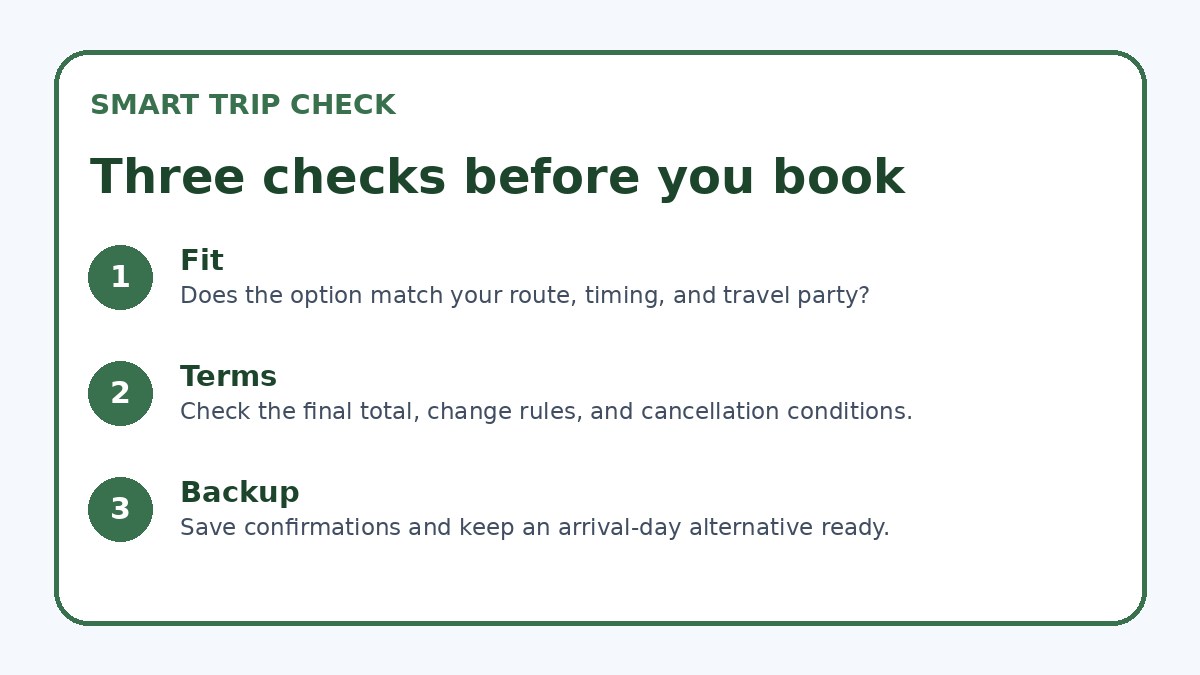
Before you book
- Request and save the full insurance wording PDF from the rental company before booking.
- Confirm both partners’ names, ages, and license details meet the insurer’s named-driver rules.
- Get the exact excess amount in writing and ask whether an excess-reduction product removes that hold.
- Photograph the car thoroughly at pickup and have the agent mark any pre-existing damage on the contract.
- Verify what documentation the insurer requires for a claim (police report, photos, witness contacts) and store copies.
- Check whether your credit card’s policy covers both drivers and request the card issuer’s terms in writing.
Practical negotiation and verification steps at booking and pickup
Before you book, request the full insurance wording PDF and the rental agreement preview that will be signed at pickup. If you can’t get the full text, ask explicit questions: what is the exact excess, which parts of the car are excluded, does the policy cover multiple drivers by name, and what proof will be required for a claim. Couples should decide who will be the primary renter and whether to add the partner as a named driver on the reservation; clarity up front avoids confusion and potential voided claims if a partner drives without cover.
At pickup, carefully review the final contract line by line. Check that optional waivers you bought are printed on the agreement and ask for the insurer’s emergency phone number. Photograph the vehicle’s condition from all sides before leaving and ensure the agent notes pre-existing damage on the contract. If the agent gives verbal assurances that differ from the written contract, ask them to add those assurances in writing on the rental form or an addendum; verbal promises rarely hold up with insurers. Finally, confirm the timeframe and method for deposit release and ask how disputes are handled if you disagree about damage after return.
Frequently asked questions
Can both partners be insured on a Hong Kong rental under one policy?
Yes — many rental agreements allow multiple named drivers, but the wording varies. Some companies include one or two additional drivers free; others charge per extra driver or exclude partners in particular rate categories. Insurer wording will state whether all named drivers are covered, any age limits, and whether drivers must be declared in advance. Always confirm that both partners are explicitly named on the reservation and appear on the signed contract at pickup to avoid voided cover if the non-named partner drives.
What does ‘excess’ mean and how can couples reduce their risk?
Excess (also called deductible) is the amount you would pay if the car is damaged or stolen before insurance covers the remainder. Couples can reduce risk by buying the rental company’s excess-reduction product, purchasing a third-party excess waiver policy, or using credit-card benefits where available. Each route has tradeoffs: rental desk waivers are accepted immediately but cost more, third-party policies can be cheaper but must be accepted by the rental firm, and card benefits often have complex claim processes. Get any reduction in writing and ask how deposits are released after a claim-free return.
If an incident happens, what steps should both partners follow to protect a claim?
Immediately ensure safety and follow local emergency procedures. Take time-stamped photos of damage and the scene, exchange details with other parties, and obtain a police report if required by the insurer. Contact the rental company and your insurer or card issuer promptly, and keep copies of all paperwork, receipts, and communications. If both partners drove, agree on a single point of contact for claims to avoid confusion. Follow the insurer’s specific claims checklist in the policy wording to prevent delays or denials.
Final planning note
For couples renting a car in Hong Kong, the most practical step is to read the full insurance wording before you commit: confirm named-driver rules, exact excess amounts, and specific exclusions for tyres, windscreen, and cross-border use. Decide whether you prefer the rental desk’s instant coverage or a third-party product after checking acceptance rules; credit-card benefits can help but require careful verification. At pickup, ensure the contract lists any purchased waivers and both drivers by name, photograph the vehicle, and obtain written confirmation of deposit-release terms. With those elements checked, you’ll reduce surprises and be better prepared to make a confident, shared decision.
Continue planning
Check current options and final conditions
Use the provider page to confirm live availability, the final total, cancellation terms, and every condition that matters to your trip.
This evergreen planning guide was created with AI-assisted drafting and a structured quality review. It does not display live prices, schedules, availability, visa guidance, or provider rankings. Verify current details before booking. Some links are affiliate links; we may earn a commission at no additional cost to you.