Practical choice first: if you’re leaving Hong Kong with extra suitcases, pick an arrival-to-airport plan that fits your luggage count and your tolerance for transfers. The immediate decision in the first hour after landing is whether to use a direct, door-to-door option (taxi or private transfer) or a mixed route that will involve stairs, platform changes, or short walks (MTR plus luggage carts, shuttle, or shared ride). Your party size, mobility, where you’re staying, and whether your flight is on time will determine the best balance of cost, convenience, and stress. This guide focuses on planning that return leg: how to size up luggage and party needs, prepare for delays or late arrivals, choose a clear meeting point, and match the destination-side drop-off to airport procedures. Read the quick decisions, then use the detailed sections and checklist to confirm the booking while you still have your flight and accommodation details open.
Check options for your arrival details
Use your flight, luggage, party size, and accommodation address to compare current choices.
Luggage and party size: choosing the right vehicle
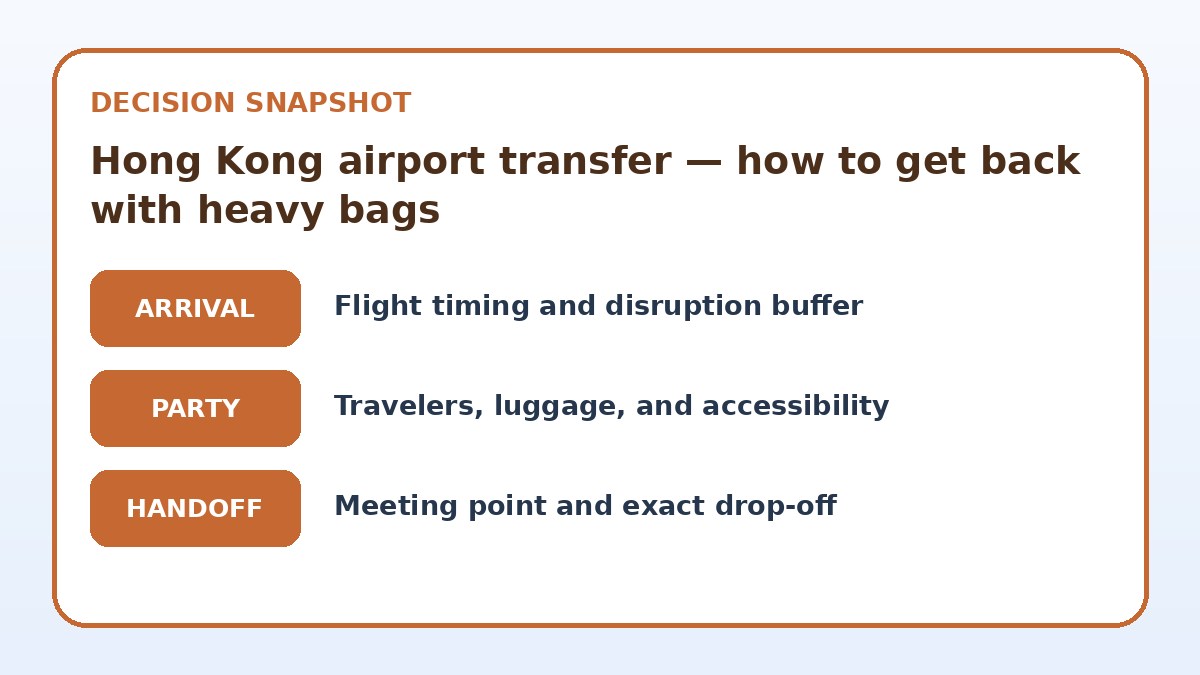
Start by listing every piece of luggage you’ll have at departure: checked suitcases, carry-on bags, and any irregular items (strollers, sports gear, boxes). Convert that list into passenger-plus-luggage space needs: two people with four checked bags will usually require an estate vehicle, MPV, or a compact van. Don’t forget to factor bulky items that don’t pack well when deciding between a sedan and a larger vehicle. If you have mobility needs or a stroller, pick a transfer with step-free access or confirm the driver can assist with lifting heavier items.
When comparing options, ask the provider specific questions: exact vehicle model or class, maximum luggage dimensions, and how many bags count as one unit. If you book a private transfer, you can usually request a larger vehicle; if you consider taxis, be prepared that not every cab will accept oversized loads. For shared shuttles, check capacity limits: they often limit the number of large suitcases per passenger. Finally, always confirm the pickup location that allows the driver to approach the kerb for quick loading.
Arrival details to have ready
- Count all checked and carry-on items and write them down so you can request the correct vehicle size when booking.
- Confirm terminal and estimated arrival time with your transfer provider and save the driver’s contact number and vehicle details.
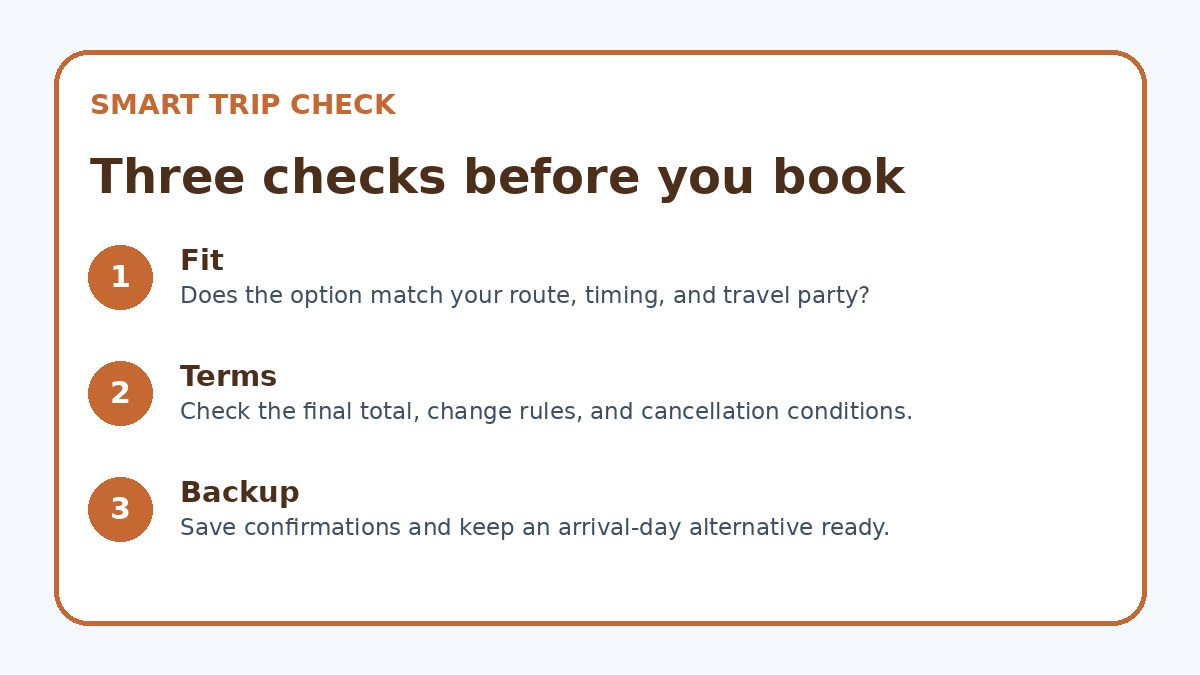
- Check the provider’s late-arrival and waiting-time policy on their official booking page and save any amendment options.
- Choose a precise arrivals meeting point (door number, named exit, or landmark) and share it with both driver and travel companions.
- If you need assistance, request porter or kerbside help from the airline or transfer provider before arrival and note costs and pickup rules.
- Keep flight and accommodation confirmations handy, enable location sharing, and have a backup taxi or public-route plan in case of disruption.
Late or disrupted arrival: contingency planning
Flights get delayed and connections fail; plan a margin. Before booking, read the provider’s late-arrival and cancellation policies on their booking page so you know waiting allowances and whether rescheduling is straightforward. Choose transfers that explicitly state a contact method for delays and who covers additional wait time. If you have a tight connection to the airport, a private transfer with guaranteed wait time offers simpler options than public transport, but verify the provider’s procedure for delays so you aren’t left coordinating from a crowded arrivals hall.
If you anticipate disruptions, build backup options into your plan: identify the nearest taxi rank, note the station-to-airport MTR route requiring the fewest platform changes, and list a local rideshare or concierge phone number. Keep digital copies of booking confirmations and screenshots of contact numbers; connectivity can be patchy in crowded terminals. Also consider buying a short extra booking window when available—some providers sell amendments or flexible pickups that help when flight times change at short notice.
Match the transfer to your arrival
| Arrival approach | Best for | Detail to verify |
|---|---|---|
| Private car or MPV hire | Groups or travellers with many large suitcases who want door-to-door service. | Higher cost than public options and needs clear pickup instructions to avoid delays. |
| Taxi or metered cab | Quick, flexible departures with small to moderate luggage and unpredictable timing. | Space varies by vehicle; multiple round trips or refusals can occur with oversized items. |
| MTR/train plus luggage carts | Budget-minded travellers with manageable bags who can handle short walks and platform changes. | More physical handling and transfers; riskier when schedules are tight or elevators are crowded. |
| Shared airport shuttle | Solo travellers or small parties with standard luggage seeking a lower-cost option than private transfer. | Fixed routes and stops can add time; capacity limits for big suitcases may apply. |
Make the meeting plan clear
Check the final pickup instructions, waiting conditions, and exact drop-off coverage.
Meeting-point clarity: be explicit with drivers and group members
Drivers and passengers often miss each other in busy arrivals areas. When you book, supply the exact flight number, expected arrival time, and terminal. Use clear, unambiguous meeting points: a named arrivals exit, a specific door number, or a recognizable landmark inside the terminal. If your provider offers a driver greeting service, confirm whether the driver will wait inside or outside and what name will be on the sign. Share this same meeting information with your travel companions and pin it in a messaging app so everyone has the exact pickup wording.
On arrival, keep your phone ready and enable location sharing with the driver if the service supports it. If you must use the general pickup area, state whether you will be at the taxi rank, the short-term kerb, or the designated rideshare zone—Hong Kong Airport and city terminals often separate these areas. Confirm who will load luggage: you, the driver, or a porter. Being precise about where and how loading happens saves time and avoids misunderstandings that are harder to fix with heavy bags.
Destination-side drop-off and airport fit
Match the drop-off to where you’ll check in and through security. Hong Kong has multiple terminals and check-in desks that can be spread over a large area; tell your driver which terminal and which check-in hall or airline counter you’ll use. If you need kerbside assistance or an airline porter at the terminal, contact your airline ahead of time so ground staff expect you. For early morning or overnight departures, confirm whether the chosen drop-off point remains open and accessible at your flight’s check-in time.
Think about the final steps after the vehicle stops: will you need to push luggage across a short walkway, use an elevator, or follow signage to a transfer desk? If you’re connecting to another airport service like an express train, tell your driver so they can drop you closer to that entrance. Finally, check whether your luggage must be handed to airline staff at the kerb or carried into the check-in hall; that nuance affects whether you should hire a porter or simply have the driver assist with unloading.
Airport Transfer & Local Mobility questions travelers ask
How should I decide between a taxi and a private transfer for many bags?
Decide by comparing group size, luggage quantity, and convenience. A private transfer lets you book a vehicle class (MPV or van) suited to heavy or bulky loads and usually includes waiting time for delays. Taxis are flexible and available on demand but vehicle size varies and multiple taxis may be needed for large groups or many oversized items. When booking a private transfer, confirm vehicle capacity and pickup terms on the provider’s booking page. If you’re unsure about luggage volume, share dimensions with the operator before confirming so they can assign an appropriate vehicle.
What if my arrival time changes—how do I ensure the transfer still meets me?
Before booking, find and read the provider’s official change and delay policy on their booking page; it should state how long drivers will wait and how to notify them. Choose services that offer clear late-arrival contact procedures and mobile numbers. Keep the driver’s contact and your booking reference saved, enable phone data at the airport, and message the operator as soon as you know of a delay. For high-risk connections or very late arrivals, consider providers with explicit waiting allowances or flexible rebooking options.
Can public transport be practical with lots of luggage in Hong Kong?
Yes, public transport can work if your luggage is manageable and you plan the route. The MTR is efficient and step-free between many stations and the Airport Express connects central city stations with the airport, but some routes require platform changes, escalators, or short walks that are harder with multiple large cases. Check station maps and elevator locations ahead of time, and opt for stations with direct access to the Airport Express when possible. If choosing public transport, travel during off-peak hours to avoid crowded trains and confirm luggage carriage rules for any shuttle or train service.
Final decision note
Planning the return trip to Hong Kong airport when you have extra luggage is mainly about matching luggage volume to vehicle capacity, preparing for delays, and giving crystal-clear pickup and drop-off instructions. Choose the option that reduces handoffs—private transfers or taxis if you need minimal handling, or rail/shuttle if you accept more physical handling for lower cost. Before you book, verify vehicle size, waiting policies, and precise pickup points on the provider’s booking page; if you want a quick cross-check, you can compare current availability on Trip.com. Use the checklist to finalize details while you still have flight and hotel confirmations open, and you’ll reduce stress on departure day.
Continue planning
Check current options and final conditions
Use the provider page to confirm live availability, the final total, cancellation terms, and every condition that matters to your trip.
This evergreen planning guide was created with AI-assisted drafting and a structured quality review. It does not display live prices, schedules, availability, visa guidance, or provider rankings. Verify current details before booking. Some links are affiliate links; we may earn a commission at no additional cost to you.