For most couples planning Hanoi to Da Nang travel, the practical answer is simple: pick the transport that best matches your priorities—time, comfort, scenery and budget—and then verify schedules and seat options before booking. If you value scenic travel and a relaxed pace, consider the train; if you need speed and can handle airports, a flight may save time; for flexible door-to-door travel look at private car hire or self-drive; and for the lowest-overhead choice, overnight buses remain an option. The remainder of this article explains the tradeoffs each couple should weigh, practical steps for comparing options, and the exact items to check on booking pages (seating class, luggage rules, cancellation terms, and transfer logistics). If you want live availability and provider details, a comparison site such as Trip.com can be a helpful place to start—always confirm final terms on the carrier’s booking page.
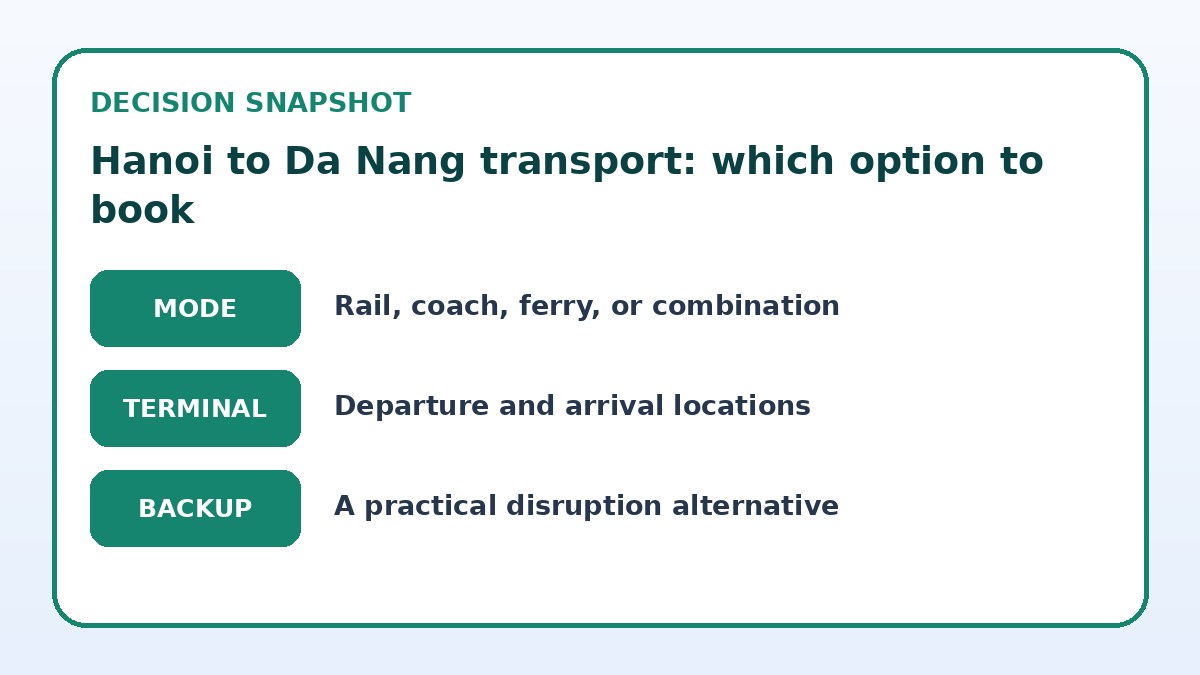
See current options before you compare the details
Availability and final conditions change. Open Trip.com now or keep reading for the practical comparison.
How to frame the decision as a couple
Start by agreeing on the non-negotiables: how much travel time you tolerate, whether you need privacy or sleep, and how important seeing the landscape is. Couples who want relaxation and shared experiences—time to talk, look out the window, or spread out—often prefer train cabins or private cars. If one partner values speed and the other prefers convenience, a flight might be the best compromise, provided you account for airport transfers and security waits.
Also consider practical constraints that affect couples differently than solo travelers: luggage you share, whether you need a single bed or two seats together, and how mobility or motion sickness influence comfort choices. Use these criteria to rank options quickly: fastest, most comfortable, most scenic, most private, and most flexible. Once ranked, you can focus your comparison on a smaller set of transport types and check the provider-specific details that matter to both of you.
Trains: what to expect and what to check
Trains between northern and central Vietnam often offer a mix of seat classes and sleeper berths, which appeal to couples who want a relaxed journey and scenery without airport hassle. When assessing train options, confirm berth arrangement (single berths versus shared compartments), bedding, air-conditioning, and whether a dining car or meal service is available. Consider overnight trains that let you sleep en route—this can save a night in a hotel and turn travel time into rest, but couples should check how private the sleeping space will be and whether attendants will be entering compartments.
Before booking, verify exactly what the ticket includes: seat or berth type, whether the price covers linen and meals, baggage limits, platform and station transfer logistics, and the carrier’s cancellation and change policy. If a provider shows several connections, compare total journey time plus transfer complexity—some itineraries may involve changing trains at stations that require moving luggage. Always double-check seating assignments and whether you can reserve adjacent berths or seats so you travel together.
| Approach | Best for | Tradeoff to check |
|---|---|---|
| Train (sleeper or day seat) | Couples wanting scenic, relaxed travel and shared space | Slower than flying and may involve variable berth privacy and provider policies |
| Flight (direct or connecting) | Couples prioritizing speed and minimizing door-to-door time | Airport transfers, security time and luggage rules can offset airtime savings |
| Private car or self-drive | Couples who want flexible stops and private time on the road | Higher cost and responsibility for driving logistics, insurance and fuel |
| Long-distance bus (day or overnight) | Cost-conscious couples willing to trade speed for direct pick-up/drop-off | Comfort and privacy vary; overnight travel can be tiring without reserved berths |
Ready to check the option that fits your plan?
Use your exact dates and traveler details so the provider page can show the current total and conditions.
Flights, buses and cars: picking by time, cost and convenience
Flights are often the fastest option door-to-door but include time for getting to and from airports, security, and potential delays—so evaluate total travel time, not just airtime. Check whether flights offered between Hanoi and Da Nang are direct or involve connections; if connections appear, compare layover times and the risk of missed connections. For couples, consider seat selection rules, baggage allowances for shared luggage, and whether both of you can sit together without extra fees.
Ground options offer different tradeoffs: long-distance buses are usually the most budget-friendly and sometimes operate overnight, but comfort levels and privacy vary—verify seat recline, restroom availability, and the operator’s luggage procedures. Private car hires or self-drive give the most flexibility for scenic stops, beach detours, and timing, but require checking vehicle condition, insurance, fuel responsibilities, and whether the driver is included. For any provider, read the final booking page to confirm pick-up/drop-off points and any additional fees.
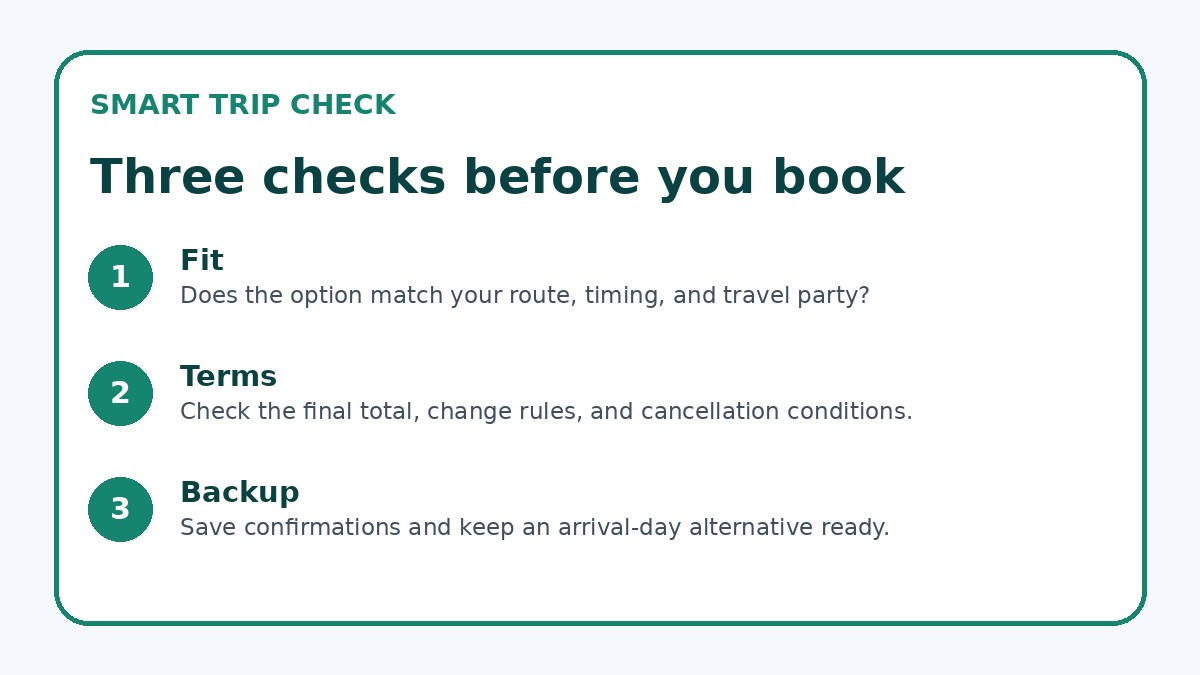
Before you book
- Decide whether total door-to-door time or in-transit comfort matters more to you as a couple.
- Confirm seat or berth pairing options so you can sit/sleep together, and reserve them early if possible.
- Open the carrier’s final booking page to read luggage allowances, seat assignment rules, and cancellation terms.
- Check exact pick-up and drop-off locations and estimate transfer time to your accommodation at both ends.
- If choosing a car hire or driver, verify insurance coverage, fuel policy, and whether tolls or parking are included.
- Compare total trip time and likely stress (early starts, overnight travel, and transfers) rather than comparing only advertised durations.
How to compare total trip time, cost and stress
When couples compare options, always calculate total door-to-door time: include travel to and from terminals or stations, check-in or boarding periods, likely traffic at your departure hour, and time needed to reach your accommodation after arrival. For example, a faster flight can be less convenient if it lands far from the city center and requires a lengthy transfer. Balance that against stress factors—early departures, overnight travel, or long hours on cramped seats may leave you needing a recovery day on arrival.
Also compare hidden convenience items that affect couples disproportionately: whether you can reserve adjacent seats/berths, stroller or extra-luggage handling, inclusion of meals, and refund/change terms if your plans shift. Use a simple spreadsheet or shortlist to score each option on five categories—time, comfort, scenery, flexibility, and cost—and pick the option with the best combined score for both partners. Before finalizing, open the provider’s booking page to confirm exact terms and any mandatory extras.
Frequently asked questions
Is the train more romantic than flying between Hanoi and Da Nang?
Many couples find trains romantic because they can enjoy the scenery together, share a sleeper compartment, and relax without airport formalities. Romance depends on the service level: private sleepers and daytime panoramic seats are more intimate than crowded seats. Consider whether you prefer uninterrupted conversation and views (train) or arriving faster so you can start your honeymoon or sightseeing immediately (flight). Check berth privacy, bedding, and whether adjacent berths are available before you book.
How should couples handle luggage when choosing transport?
Discuss how much luggage you’ll carry and whether you prefer one shared bag or individual suitcases; this affects choice and comfort. Trains and buses often have generous communal luggage areas but may require lifting bags to platforms; flights have strict weight and piece limits that can lead to fees. For private cars, confirm trunk space and whether the driver will help with loading. Always verify the exact luggage allowance and oversize rules on the provider’s booking page before purchasing tickets.
When is it worth paying more for a direct route instead of a cheaper connecting option?
Pay more for a direct option when the savings in time, stress and risk of missed connections matter to you—for example, if you have limited vacation days or tight onward plans. For couples, avoiding an extra transfer can preserve energy and reduce the chance of separated seating or lost luggage. If connections are required, compare minimum connection times, airport or station transfer logistics, and whether the operator protects you in case of missed connections; confirm these protection details on the carrier’s booking page.
Final planning note
Choosing Hanoi to Da Nang transport as a couple comes down to shared priorities. If you prize scenery and relaxed travel, a train or private car gives you space to talk, stop, and take in the coast; if speed and maximizing sightseeing time are the goal, a flight will typically win despite airport formalities. Buses are a pragmatic, lower-cost choice but demand acceptance of variable comfort. Use the checklist above to compare door-to-door time, seat pairing, luggage rules and transfer logistics, and always verify final terms on the provider’s booking page before you pay. If you want a comparative view of operators and schedules, Trip.com can be a starting point—then confirm details with the carrier.
Continue planning
Check current options and final conditions
Use the provider page to confirm live availability, the final total, cancellation terms, and every condition that matters to your trip.
This evergreen planning guide was created with AI-assisted drafting and a structured quality review. It does not display live prices, schedules, availability, visa guidance, or provider rankings. Verify current details before booking. Some links are affiliate links; we may earn a commission at no additional cost to you.