For business travelers, the return leg to Barcelona’s airport is often the most schedule-sensitive part of a trip. The practical answer: choose a transfer method that matches your meeting finish time, luggage and flexibility needs, then confirm pickup timing and cancellation terms on the provider’s booking page. Build a realistic buffer for check-in and security based on whether your flight is domestic, EU, or long-haul, and pick a door-to-door option if lateness would be costly. This guide focuses on the decision factors—timing, reliability, cost trade-offs, and convenience—so you can pick the right approach (taxi, private transfer, train plus shuttle, or rideshare) and leave Barcelona with confidence.
See current options before you compare the details
Availability and final conditions change. Open Trip.com now or keep reading for the practical comparison.
Match timing to the flight and meeting schedule
Start by setting the airport arrival target: factor in the airline’s recommended check-in and security time for your flight type and add a comfortable buffer for Barcelona traffic or unexpected meeting overruns. Business travelers should plan around when a meeting typically ends and avoid aiming for the last possible train or shuttle departure. If your schedule is rigid, prioritize fixed-time transport that guarantees a pickup window, rather than depending on services that vary with demand.
Compare options by working backward from the arrival target. For example, if using rail requires a station transfer, include walking time, waiting time, and luggage handling. For road transfers, research typical traffic patterns for your departure neighborhood at that hour—then add extra margin. When in doubt, choose a slightly earlier pickup; missing a meeting or flight has higher costs than waiting in a lounge or airport café.
Compare reliability and convenience trade-offs
Taxis and private door-to-door transfers offer the simplest logistics: a vehicle collects you at a set time and takes you straight to the terminal, minimizing transfers and handling of luggage. The trade-off is exposure to road congestion and less predictability of journey time during peak hours. For business trips where time is the priority, the benefit of being collected and dropped at terminal doors usually outweighs the variable travel duration.
Rail and bus-based options tend to be more cost-stable and immune to road traffic, but they require walking, luggage transfers, and strict adherence to schedules. These options are better when your meeting ends early enough to catch a regular service or when you want to avoid road delays. Evaluate how many transfers you’re willing to manage and whether hotels or offices near the same line reduce the friction of a public-transport route.
| Approach | Best for | Tradeoff to check |
|---|---|---|
| Private pre-booked transfer (door-to-door) | Travelers who prioritize convenience and minimal transfers | Higher cost and variable travel time due to road traffic |
| Taxi or licensed ride-hail at departure time | Flexible departures with immediate availability | Price variability and less predictability during peak congestion |
| Train or metro plus airport shuttle | Predictable travel times and lower cost during busy hours | Requires transfers, luggage handling, and precise timing |
| Hotel-arranged shuttle or concierge booking | Seamless service coordinated through accommodation | May have fixed schedules and limited pickup flexibility |
Ready to check the option that fits your plan?
Use your exact dates and traveler details so the provider page can show the current total and conditions.
What to verify on a provider’s booking page
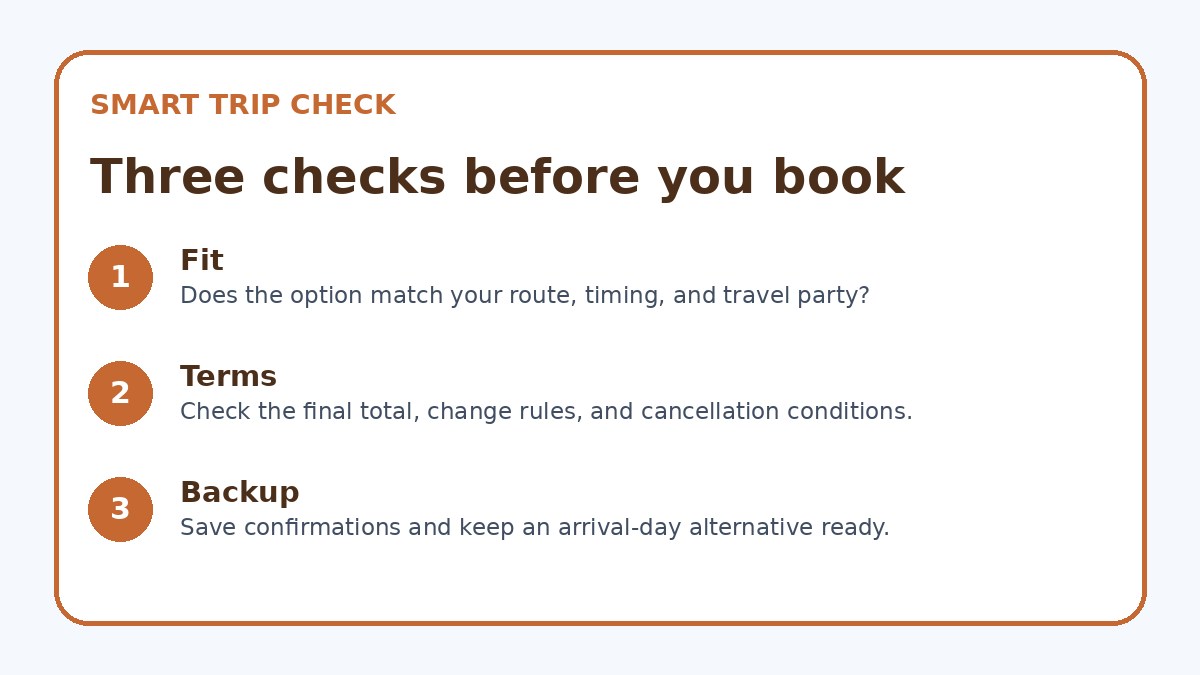
When you find a service you prefer, check the provider’s final booking page for specific operational details that can change: exact pickup location rules (curbside, building lobby, or specific hotel desk), how they handle late running meetings, whether they provide flight monitoring, and the cancellation or change policy. Confirm how many pieces of luggage are included, vehicle size options, and whether the driver will wait beyond a specified free waiting period. If a pickup window is given, make sure it aligns with your meeting end time including buffer.
If booking public-transport tickets or airport shuttles, verify departure points, transfer connections, and whether reservations are required for luggage. For train-based routes, check if services run at your planned time and what alternatives exist if you miss a connection. Remember: service descriptions and schedules can change between booking and travel. Trip.com can be used to compare current availability, but always reconfirm details on the operator’s official page before you finalize plans.
Before you book
- Confirm your flight’s recommended airport arrival time and add at least one traffic buffer window before booking a transfer.
- Choose door-to-door transfers for tight schedules; verify waiting time, pickup point, and luggage allowance on the booking page.
- If using public transport, map each leg including walking times, luggage routes, and backup options for missed connections.
- Save provider contact numbers and booking references on your phone and print one copy for quick access in case of connectivity issues.
- Tell your hotel or meeting host your departure plan and request early checkout arrangements if you need a quick exit.
- Check live traffic and service updates on the morning of departure, and be ready to switch to an alternative transfer if necessary.
Contingency planning and day-of tips
Prepare a simple contingency plan: a secondary transfer option (an earlier public-service departure or a taxi app) and contact details for urgent changes. Keep soft copies of booking confirmations and the provider’s phone number readily accessible. If you anticipate meetings that could run late, tell reception or a colleague your updated plan, and consider booking a flexible or refundable transfer that allows last-minute adjustments.
On the day, check live traffic and public-transport status before leaving the office or hotel. Allow time to gather documents and pack methodically to avoid last-minute delays. If using a driver service, confirm the driver’s arrival through the booking app or a text message, and share your flight details so providers can monitor changes. For cross-terminal transfers, verify which terminal your airline uses to avoid unnecessary extra travel.
Frequently asked questions
How much buffer time should I add when planning a Barcelona airport transfer for a business flight?
Buffer needs depend on the mode of transport and the time of day. For road transfers allow for peak-hour congestion and factor in building exit time and hotel checkout. For rail-based routes, include walk time to the station, waiting for the next service, and any transfers with luggage. If your schedule is tight, prioritize a larger buffer and consider an earlier transfer to avoid last-minute stress. Always confirm any provider’s recommended arrival time and cancellation or change policies on their booking page.
Is it safer for business travelers to pre-book a private transfer rather than rely on taxis or apps in Barcelona?
Pre-booking a private transfer gives predictable pickup arrangements and often clearer terms for waiting and changes, which helps when timing is critical. Taxis and ride-hail apps are convenient for flexible departures, but availability and journey times can vary during busy periods. The decision depends on your tolerance for schedule risk: if missing a flight carries high consequences, a guaranteed pickup window from a pre-booked provider can be worth the extra planning. Verify provider terms and driver identification details before travel.
What documents and confirmations should I keep handy when leaving Barcelona for the airport?
Keep your flight reservation, boarding pass (digital or printed), transfer booking confirmation, and the provider’s contact number easily accessible. Note your pickup location description and the driver’s name or vehicle details if provided. It’s also useful to have hotel front-desk contact details in case a concierge needs to coordinate with the transfer. If you change plans, check the provider’s modification or cancellation rules and record any new confirmation immediately.
Final planning note
Planning the return airport transfer in Barcelona becomes straightforward once you set the arrival target and choose the trade-offs you accept between cost, convenience, and reliability. Match your pickup to when meetings actually end and allow realistic buffers for traffic or connections. For high-stakes business travel, favor door-to-door options with clear pickup and waiting policies; for cost or schedule flexibility, rail and shuttle mixes can work well if you can manage transfers. Always verify operational details on the provider’s booking page—pickup point, luggage rules, waiting times and change or cancellation terms—so there are no surprises on departure day.
Continue planning
Check current options and final conditions
Use the provider page to confirm live availability, the final total, cancellation terms, and every condition that matters to your trip.
This evergreen planning guide was created with AI-assisted drafting and a structured quality review. It does not display live prices, schedules, availability, visa guidance, or provider rankings. Verify current details before booking. Some links are affiliate links; we may earn a commission at no additional cost to you.