Practical preparation makes a Hanoi to Da Nang travel day smoother and less stressful for business travelers. Start by choosing the transport mode that matches your priorities—speed, flexibility, productivity on the move, or reliability—and then check the specific operational details on the provider’s booking page before finalising anything. Pack a slim carry-on with essential work items and adapt clothing for the meeting and local climate. Build buffer time for transfer, security checks, and possible delays, and plan the first meeting or hotel check-in so the day has clear structure. This article focuses on actionable pre-departure steps and tradeoffs to help you make decisions that protect meeting performance and personal energy.
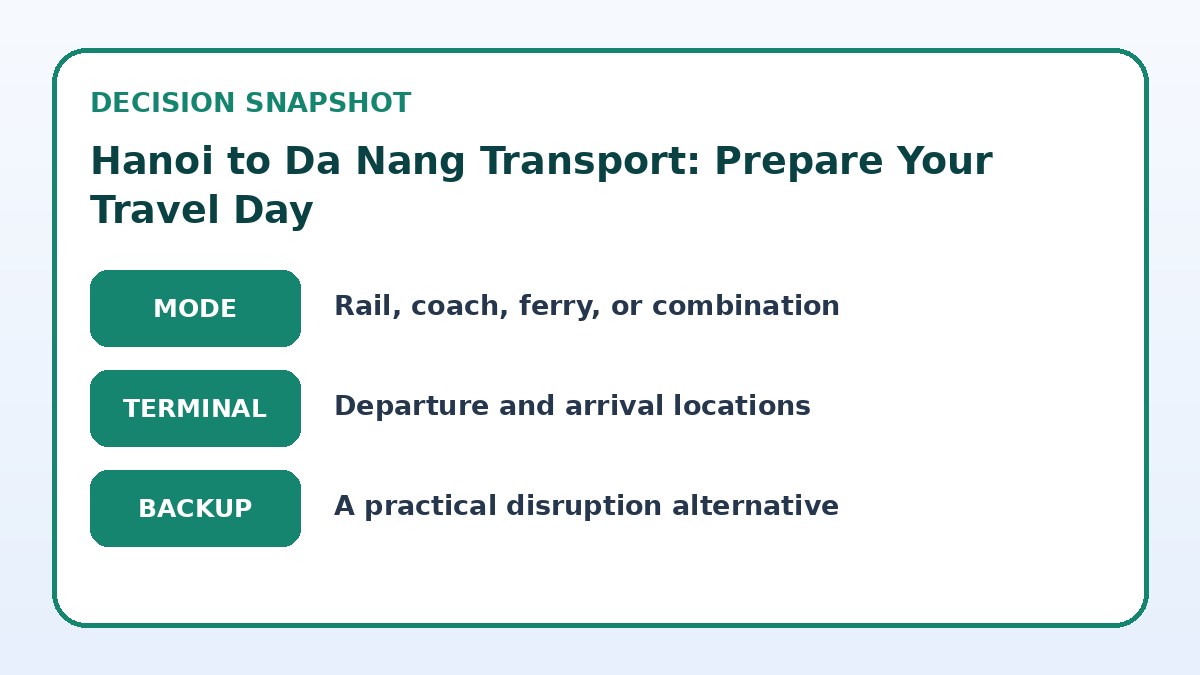
See current options before you compare the details
Availability and final conditions change. Open Trip.com now or keep reading for the practical comparison.
Choose the right transport mode for your priorities
Business priorities shape the best choice between flight, high-speed or conventional train, and private car. Flights are commonly chosen for the shortest door-to-door time but can involve more security and transfer steps; trains often give more uninterrupted working time and a gentler boarding process; a private car gives maximum control over departure time and direct drop-off to a meeting address. Think in terms of door-to-door time, predictability, and your need for productive time while moving rather than only raw travel distance or advertised durations.
To pick, list two non-negotiable items—such as arriving refreshed, maintaining Wi-Fi connectivity, or needing a strict schedule—and then eliminate modes that don’t meet them. If you require reliable mobile internet and uninterrupted work time, a train or private car with a stable connection may beat a short flight that forces airport waits. Conversely, if the meeting time is tight and you can accept transfers, a flight could be the better option. Wherever provider-specific facts matter (schedules, luggage rules, or onboard Wi-Fi), check the final booking page before committing.
Organise time buffers and meeting logistics
Build conservative time buffers into your schedule: allow for transport variability, security or ticket checks, last-mile traffic, and freshening up upon arrival. For example, plan extra time around airport security or busy train-station periods and add a transfer cushion if your meeting is immediately after arrival. If you must be in a meeting soon after arrival, prefer options that reduce unknowns—like a private car or a train that drops you closer to central business districts—so you can manage risk without rushing.
Confirm precise drop-off points and where a driver or station attendant will meet you, and arrange the first hours in the destination: a hotel with guaranteed early check-in, a coworking day pass, or a meeting room booking at a business hotel. If local transport from the arrival point is involved, verify how long that segment usually takes and whether you should prebook a ride. Always check the provider’s termination, delay policies, and contact methods on their booking page so you can escalate if a schedule slips.
| Approach | Best for | Tradeoff to check |
|---|---|---|
| Flight | Shortest scheduled airborne time and long-distance speed | More transfer steps and less guaranteed work time due to check-in and security |
| Intercity train | Comfortable working time and predictable station arrival near city centre | Longer scheduled journey than flight and variable on-board connectivity |
| Private car transfer | Door-to-door control and direct drop-off at meetings | Subject to road traffic and usually not the fastest over long distances |
| Hybrid (flight + car) | Balancing fast segments with direct last-mile delivery | Requires careful timing and buffer to manage connections and delays |
Ready to check the option that fits your plan?
Use your exact dates and traveler details so the provider page can show the current total and conditions.
Pack and prepare to work effectively en route
Organise a compact business carry-on that lets you be productive on the move and transitions you quickly to client meetings. Essentials include laptop or tablet with charger, portable battery, noise-cancelling earphones, a slim suit or smart layering, spare shirt and ties or accessories, key documents both printed and digital, and a small toiletry kit for quick freshening. Use packing cubes and garment folders to keep clothes wrinkle-minimised and ready on arrival; this saves time compared with full unpacking after travel.
Prepare digital backups and offline access to files or presentations: download attachments, save slide decks in commonly compatible formats, and ensure you can open them without a specific corporate VPN if that might be constrained during transit. Create a short ‘arrival plan’ note for yourself listing where you will go first, who to call if delayed, meeting start times in local time, and transport contacts. If sensitive materials are involved, consider secure storage and encrypt devices as appropriate for business travel security.
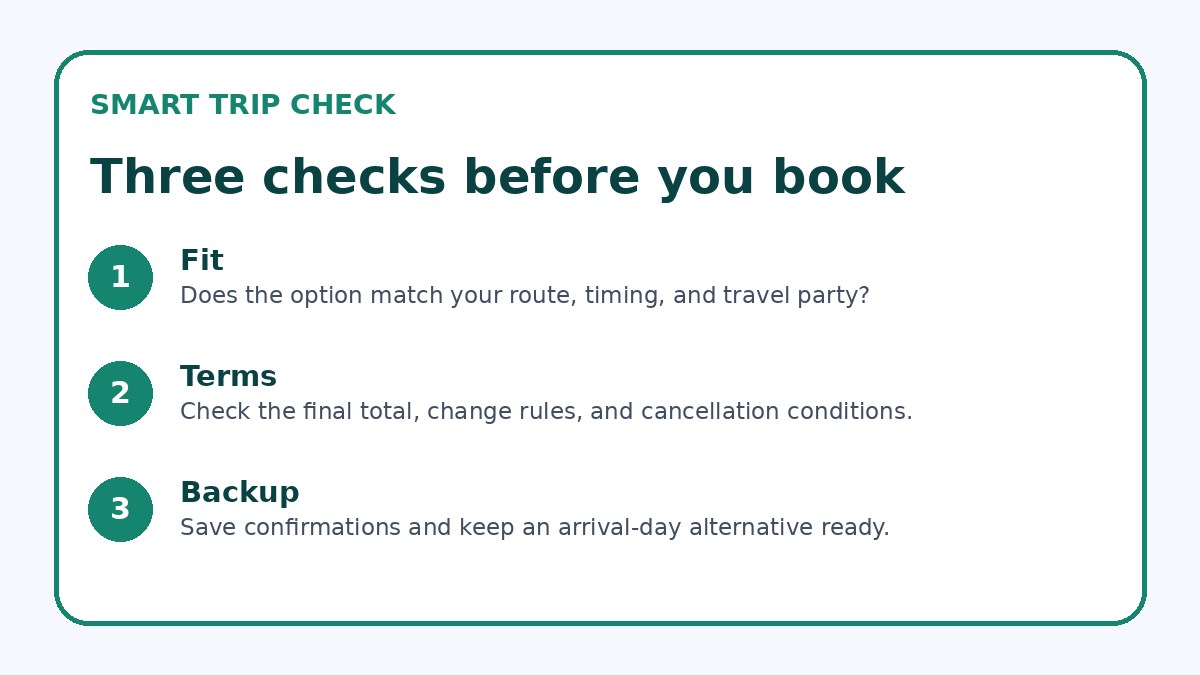
Before you book
- Choose your preferred transport mode based on door-to-door time, working needs, and risk tolerance and shortlist two viable options.
- Check the provider’s final booking page for departure/arrival locations, check-in rules, luggage allowances, and change/cancellation policies.
- Pack a business carry-on with chargers, battery pack, noise-cancelling earphones, a fresh shirt or blazer, and essential documents.
- Arrange or prebook last-mile transfer and confirm the exact pickup/drop-off points and expected travel time at both ends.
- Download presentations and critical files for offline access, and test that you can open them without a corporate VPN if needed.
- Send an arrival-plan message to meeting contacts with your expected window, backup contact numbers, and contingency instructions.
Verify booking specifics and last-minute checks
Before you finalise bookings, confirm the key variables that change frequently: departure and arrival locations, check-in times and how far in advance you must be there, baggage rules, options for changes or refunds, and whether onboard or route Wi-Fi meets your needs. The provider’s final booking or ticket page is the authoritative place for this information; don’t rely on secondary summaries. For flights, check whether the airport terminals and transfer options add meaningful time; for trains, verify station names and platform procedures.
Run a short pre-departure checklist the evening before travel: reconfirm pickups, check mobile roaming or local SIM needs, ensure chargers and documents are packed, and notify meeting attendees if your arrival window shifts. If you use Trip.com or another aggregator to compare availability, use it to spot options but always open the operator’s site or ticketing confirmation to validate final details and possible extras like seat selection or onboard services. A calm, verified final review avoids avoidable surprises on the travel day.
Frequently asked questions
What should I prioritise when choosing between a flight and a train from Hanoi to Da Nang?
Prioritise what you value most on the travel day: if you need the shortest airborne time and your meeting allows for airport transfers, a flight can be appropriate. If uninterrupted work time, easier boarding, and arrival closer to a central business district matter more, a train could be better. Also consider how predictable each mode is for your schedule—verify actual departure/arrival points and transfer needs on the operator’s booking page to make the final call.
How much buffer time should I build into a business travel schedule on this route?
Buffer time depends on your chosen mode and your risk tolerance. For flights, allow for airport check-in, security, and potential terminal transfers; add local transfer time to the destination meeting. For trains, plan extra time for station navigation and possible delays. A practical approach is to add enough slack so that small schedule slips don’t jeopardise your first meeting—often one to two hours beyond the nominal travel window—but confirm specifics like check-in and boarding rules with the booking page before finalising timings.
How can I stay productive and fresh when travelling between Hanoi and Da Nang for a meeting?
Pack a consolidated work kit: a charged laptop or tablet, portable battery, noise-cancelling earphones, and all meeting files saved for offline use. Use a garment folder or lightweight blazer to stay presentable, and include a small toiletry kit for a quick refresh. Schedule short rest or prep time on arrival—book a hotel day room or coworking space if needed—so you arrive at the meeting organised and energy-managed. Verify connectivity options with the provider if stable on-route internet is essential.
Final planning note
Preparing the travel day for a Hanoi to Da Nang business trip means matching transport choice to your working and timing priorities, then confirming the mutable details that affect door-to-door reliability. Pick the mode that best balances speed, productive time, and predictability, and use provider booking pages to verify check-in, luggage, change policies, and exact locations. Pack a compact, business-ready carry-on, prebook or confirm last-mile transfers, and allow conservative buffers so schedule slips don’t undo the workday. With a brief arrival plan and verified logistics, you turn transit time into a controlled part of your business schedule rather than a source of stress.
Continue planning
Check current options and final conditions
Use the provider page to confirm live availability, the final total, cancellation terms, and every condition that matters to your trip.
This evergreen planning guide was created with AI-assisted drafting and a structured quality review. It does not display live prices, schedules, availability, visa guidance, or provider rankings. Verify current details before booking. Some links are affiliate links; we may earn a commission at no additional cost to you.