If you’re traveling from Hanoi to Da Nang with bulky suitcases, sports gear, or more than one checked bag, pick the mode of transport that suits both your schedule and how much lifting you’re willing to do. Practically, the easiest choices are (1) a flight that allows checked baggage and airport transfers, (2) a careful selection of train types with luggage-friendly carriages, or (3) a private car or shuttle that loads at your door. Each choice has different tradeoffs: handling at stations and airports, transfers in cities, the physical effort of loading and unloading, and the need to verify baggage allowances or vehicle capacity prior to booking. Read on to learn what to check before you buy a ticket, how to move oversized items, and simple packing and logistics steps that keep your trip calm and predictable.
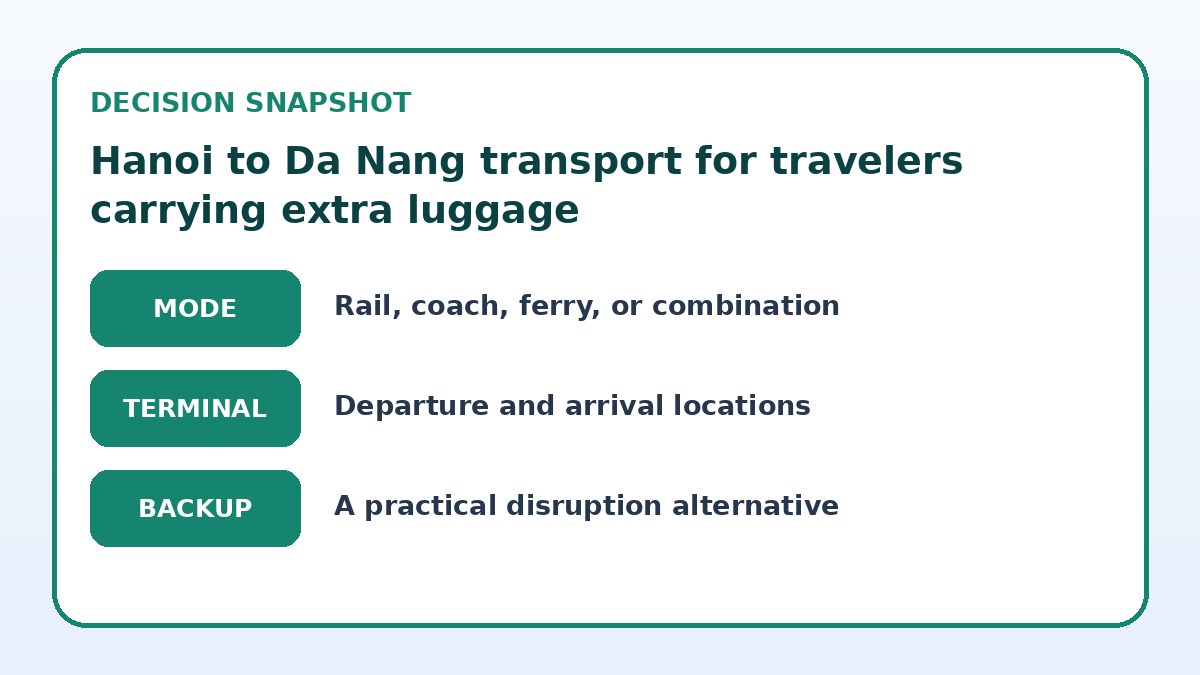
See current options before you compare the details
Availability and final conditions change. Open Trip.com now or keep reading for the practical comparison.
How to compare transport modes when you have extra luggage
Start by listing what makes your luggage “extra”: number of pieces, total weight, odd shapes, or fragile items. This list determines whether you need an aircraft-checked allowance, a train carriage with space beside seating, or a vehicle capable of handling surfboards, bicycles, or large boxes. For every option you consider, create a short checklist: maximum allowed dimensions, whether bags must be gate-checked, whether staff will help with loading, and how much carrying you’ll do between pickup and drop-off points.
Next, align that checklist with your priorities—speed, cost, and convenience. If minimizing handling is highest, a private car or an airline with generous check allowances and convenient transfers may be best. If budget and reliability matter more, a train or bus could work if you confirm luggage storage rules and arrival station handling. Keep options open until you verify the provider’s baggage rules on their official booking page or on a trusted comparison site such as Trip.com.
Flights: when they’re worth the extra baggage hassle
Flying Hanoi to Da Nang substantially cuts travel time, which lowers the number of times you must move heavy bags. However, airlines treat baggage differently—some include a checked allowance, some sell it separately, and oversized items may need special handling. Before booking, check the carrier’s final booking page to confirm included weight or piece limits, applicable fees for extra or oversized items, and whether you can pre-book assistance such as meet-and-greet or porter services at either airport.
Also plan transport to and from airports: domestic terminals are often farther from central neighborhoods than train stations, so factor in transfer time, cost, and how many hands will be available to load and unload. If you’re traveling with fragile or oddly shaped equipment, confirm how the airline protects such items and whether it requires advance notice. If time is critical and another adult can help lift luggage, flights often reduce transfers and walking compared with ground options.
| Approach | Best for | Tradeoff to check |
|---|---|---|
| Flight with checked baggage | Travelers prioritizing speed and fewer hand-carry transfers | You must verify airline baggage rules and arrange airport transfers for door-to-door logistics |
| Intercity train | Those wanting mid-range cost with more onboard space and less strict size limits | You’ll handle bags at stations and may need to carry luggage between platforms and taxis |
| Long-distance bus or coach | Budget-conscious travelers with standard-sized suitcases | Hold size varies widely and access to luggage during the trip is limited |
| Private car or specialized pickup | Groups or people with large, fragile, or awkward items needing door-to-door service | Higher cost and you must confirm vehicle size and loading assistance before booking |
Ready to check the option that fits your plan?
Use your exact dates and traveler details so the provider page can show the current total and conditions.
Trains and buses: maximizing space and minimizing lifting
Vietnam’s trains typically have luggage areas at carriage ends, overhead racks and space at the ends of compartments; buses have underfloor holds and limited cabin storage. For trains, aim for seat types and carriage classes known for more floor space and easier access to luggage areas—double-check at booking. On buses, ask whether the operator will allow oversized or heavy items in the hold and whether the luggage is locked during transit. Expect to lift your bags onto platforms, into holds or up steps at stations.
Think about pickup and drop-off logistics: stations can be a long walk from inner-city hotels, while many bus operators stop near central neighborhoods. If the final stop requires a taxi or transfer, that’s another lift. Pack a small, easily reachable day bag with essentials so you don’t need to open large suitcases mid-journey. For fragile goods, consider a protective case or booking a seat near the carriage end where staff often keep an eye on luggage.
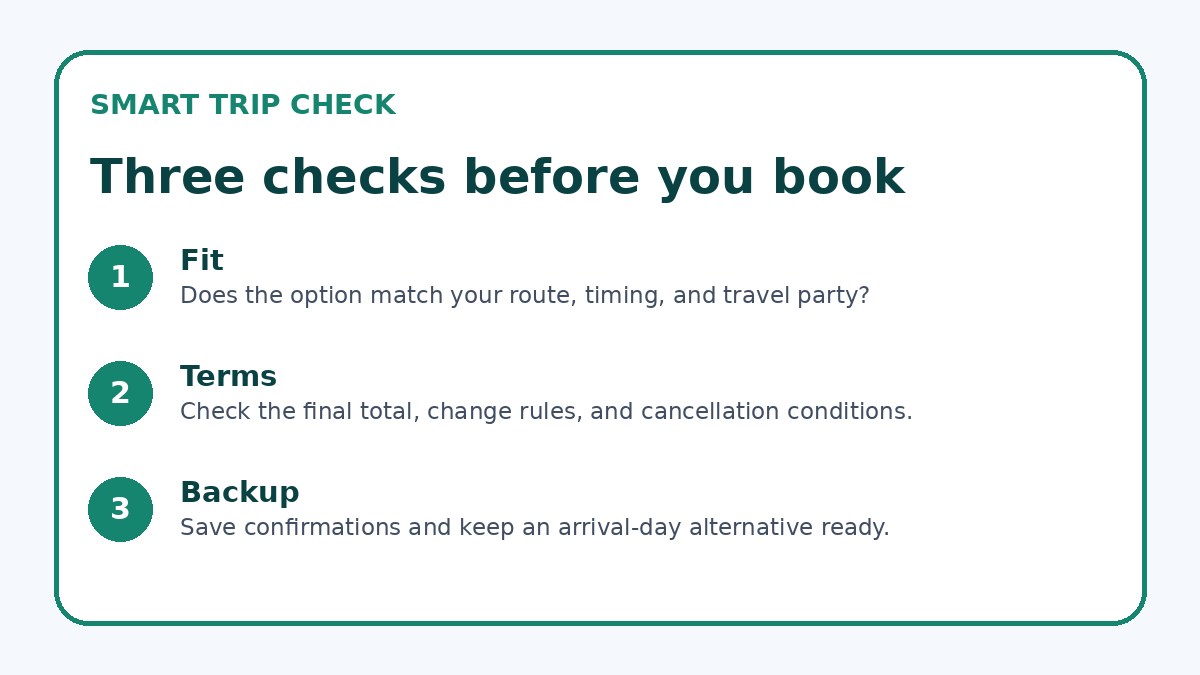
Before you book
- Measure and weigh every piece of luggage and note any odd shapes or fragile items before comparing transport options.
- Check the final booking page for carrier or operator baggage allowances, special-item policies, and any fees for extra or oversized items.
- Confirm how many times and where you’ll physically move your bags between pickup and final drop-off and plan helpers or luggage-friendly transfers.
- Ask train, bus, or driver operators whether staff will assist loading and unloading, and get the answer in writing where possible.
- Pack an accessible day bag with essentials, travel documents, medication, and valuables so the main suitcases can remain locked.
- If transporting bikes, surfboards or large equipment, request a dedicated vehicle or specialist freight service and verify pickup/delivery windows.
Private cars, shuttles and specialized transport for oversized items
Private car hire or airport shuttles are the most flexible option if you have very large or awkward luggage. They let you load at the door, eliminate heavy carrying across stations, and deliver directly to your accommodation. Before you confirm, tell the provider exact luggage dimensions and ask for a vehicle type that guarantees trunk or cargo space—do not assume a standard sedan will suffice for bikes or surfboards. Confirm where the driver will meet you, whether there’s help loading, and any extra charges for bulky items.
For truly oversized cargo—motorbikes, full-size bikes, or large crates—use a specialist transport or freight-forwarding service. These services require more lead time and paperwork but avoid forced disassembly of equipment. Verify pickup and delivery locations, transit method (road vs. rail freight), and any packing requirements. Ask the provider to spell out collection and delivery windows and get everything in writing on the booking page, including insurance or liability terms.
Frequently asked questions
Can I bring oversized or sports equipment on a Hanoi–Da Nang flight or train?
Both airlines and rail operators may accept oversized or sports equipment, but policies differ. For flights, oversized items usually require pre-notification, special handling and may incur a fee; you must check the airline’s final booking page for size, weight, and packing rules. Trains sometimes allow large items in carriage ends or storage areas but cannot guarantee special handling or reserved space. For either option, give exact dimensions and weight when you inquire and consider a protective case or specialist courier for fragile equipment.
How do I move heavy suitcases between stations, hotels and terminals?
Plan each transfer: book taxis or private pickups that can load at the door; choose accommodations with ground-floor or elevator access; and schedule extra time for loading and unloading. Use luggage with rollers and sturdy handles, and if possible split weight across multiple pieces to keep them liftable. For very heavy items, hire porters or use delivery services where available. Always confirm where drivers will meet you and whether they’ll help carry bags to avoid surprises at the pickup point.
What should I verify on a provider’s booking page before finalizing my Hanoi–Da Nang trip?
On any final booking page, look for explicit baggage allowances (weight and dimensions), fees for excess or oversized items, loading assistance options, pickup/drop-off locations and any restrictions on access during travel. For flights, find whether baggage is included in the fare or sold separately; for buses and trains, check hold size and whether the operator accepts fragile goods. If using a private vehicle, verify vehicle type, passenger and luggage capacity, and whether the driver provides help with loading.
Final planning note
Traveling from Hanoi to Da Nang with extra luggage is manageable when you match luggage characteristics to the transport mode and plan each handoff. Flights cut travel time and reduce the number of moves but require checking airline baggage policies and transfer logistics. Trains and buses can be more forgiving on size and cost, but you’ll do more physical moving at stations. Private cars or shuttles offer the smoothest door-to-door experience if you confirm vehicle capacity and loading help. Whichever route you pick, measure and document your bags, verify baggage rules on the provider’s booking page, and arrange transfers that minimize lifts and waiting.
Continue planning
Check current options and final conditions
Use the provider page to confirm live availability, the final total, cancellation terms, and every condition that matters to your trip.
This evergreen planning guide was created with AI-assisted drafting and a structured quality review. It does not display live prices, schedules, availability, visa guidance, or provider rankings. Verify current details before booking. Some links are affiliate links; we may earn a commission at no additional cost to you.