Practical answer up front: for most couples who value flexibility, a refundable or changeable train or flight ticket paired with flexible ground transfers offers the best balance of stress-free planning and door-to-door practicality. If you prefer a single booking, a flexible flight with pre-checked baggage and a hotel transfer can be easiest; if you want scenic travel and easier on-board space for two, flexible train fares work well. Budget-conscious couples who accept fixed times should compare refundable upgrade options or coach tickets with flexible cancellation rules. Before you book, check each provider’s final booking page for exact change fees, allowed refund windows, luggage rules, terminal addresses, and whether charges apply to name changes or reissue — these vary widely and decide whether a ticket is genuinely flexible for your itinerary.
Choosing the right mode: rail, coach, flight or mixed
Start by matching what matters most to both of you: flexibility of schedule, comfort, scenic value, or the simplest door-to-door routing. Trains usually offer space to spread out and move around, which many couples prefer on longer daytime journeys. Coaches can be cheaper but often come with stricter change rules and fewer onboard amenities; they may be appropriate when both travelers accept fixed departure times. Flights give the biggest time savings and often have clear fare classes (some refundable or changeable), but airports can add transfer time and complexity to the door-to-door plan.
A mixed itinerary—say, flying one way and taking the train the other—can combine benefits: speed in one direction and a relaxed scenic route for the return. When considering a combo, add up total door-to-door time including transfers, airport check-in or station arrival windows, and the likely cost and hassle of moving luggage between modes. Couples should compare the net flexibility: a cheap ticket plus expensive change fees may be less flexible than a higher-fare ticket that allows free changes within a sensible window.
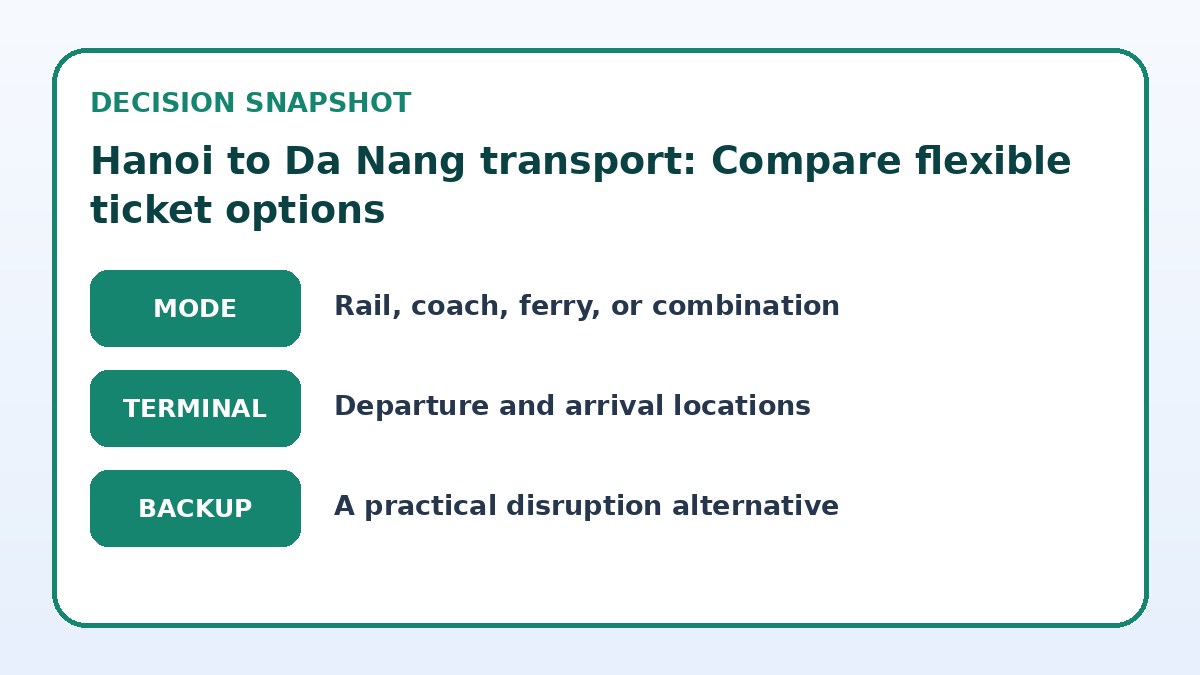
Choose the end-to-end journey plan
| Journey approach | Best for | Friction to check |
|---|---|---|
| Flexible single-mode booking (train or flight) | Couples who want a single, predictable journey with easy change rules | Often higher base fare but simpler changes and fewer transfer points to manage |
| Budget fixed-timetable option (coach or low-fare train) | Couples prioritizing lower cost and accepting limited change options | Less flexibility and fewer daily alternatives if plans change or disruptions occur |
| Mixed-mode round trip (flight one way, train or coach return) | Couples wanting both speed and scenic experience without committing to one mode | Adds complexity in connections and luggage transfers; compare door-to-door time carefully |
| Flexible flight/train plus prepaid local transfer | Couples focused on door-to-door convenience and minimizing arrival stress | Higher total cost but reduces last-mile uncertainty and often shortens effective travel time |
Check live intercity options
Look beyond the ride itself and compare terminals, transfers, luggage, and arrival fit.
Terminal fit and door-to-door practicality
Terminal fit is about where the train station or airport sits in relation to your accommodation and planned activities. Central train stations often drop you closer to city-center hotels, reducing taxi cost and transfer time—important when you want to start exploring together quickly. Airports usually require longer transfers; even if the flight is short, factor in the time and stress of getting to and from the airport and security or check-in waits. For couples, also consider whether terminals have easy, safe waiting areas and reasonable facilities for managing luggage together.
When comparing options, check how straightforward last-mile transfers are: are there metered taxis, ride-hailing coverage, or reliable shuttle buses at both ends? If one partner prefers minimal walking or stairs, verify accessibility options and whether stations or terminals have lifts or staff assistance. For door-to-door convenience, a slightly pricier option that integrates a pre-booked hotel transfer or arrives at a centrally located station can save time and reduce friction on arrival—an important tradeoff when you want to enjoy arrival time together instead of wrestling with logistics.
Luggage, transfer friction and couple-friendly considerations
Couples often travel with more shared gear than solo travelers—camera gear, extra clothes, gifts, or joint toiletries—so luggage allowances and handling matter. Trains typically let you move between carriages and store bags nearby, making it easier for two people to stagger breaks and help with heavy items. Flights have stricter checked-bag limits and possible fees; read the airline’s baggage rules on the booking page before assuming free allowance. Coaches can have limited or awkward storage access during the journey, which affects how often you can leave your seat together.
Also think about transfers with luggage: is there help loading bags into taxis or shuttle vans? Will you need to carry bags up steps or through long walkways? If either partner has mobility concerns, prioritize options with guaranteed assistance or a short walk from vehicle to accommodation. When comparing tickets, verify whether name changes, reissues, or same-day routing adjustments are permitted without onerous fees—those terms determine how flexible your joint plan really is if one person’s schedule shifts.
Compare the practical alternatives
Use the final page to confirm what is actually offered on your dates and save a workable fallback.
Intercity travel checklist
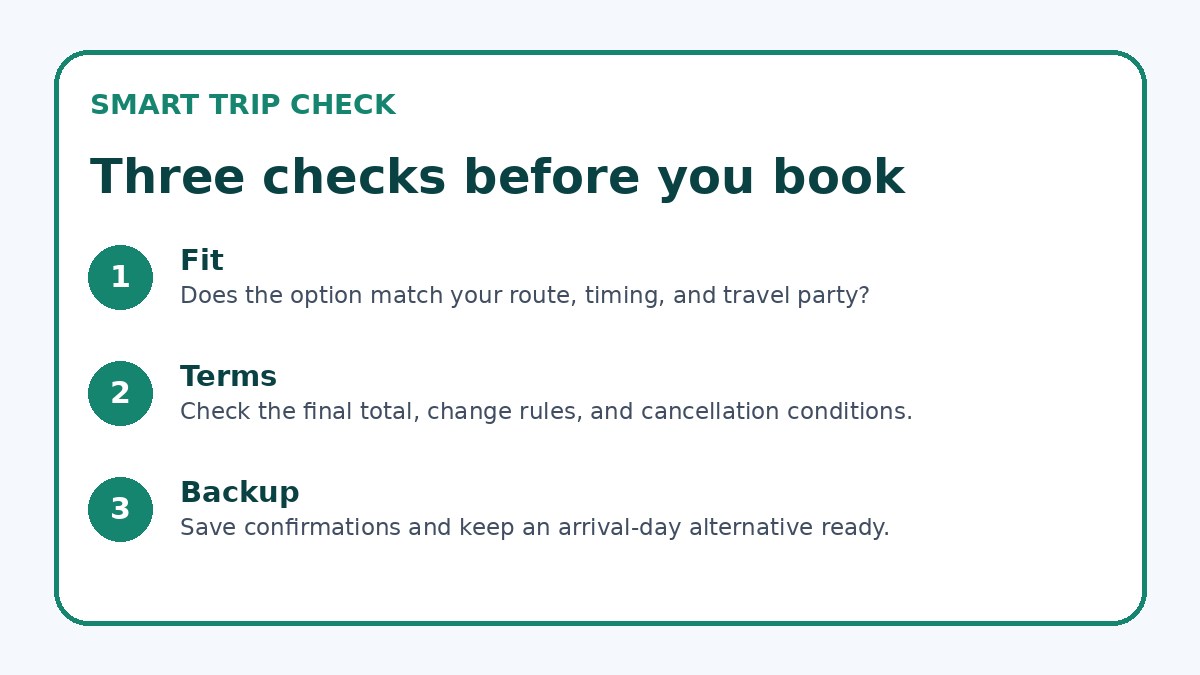
- Open provider booking pages for each mode and copy the exact fare rules for changes, refunds, and name changes before purchasing.
- Confirm terminal addresses and typical transfer times to your hotel and build buffer time into your arrival and departure plans.
- Check baggage allowances and whether transfers include handling or assistance for large items.
- Compare departure frequency for each mode on your travel date so you have alternatives if you need to change plans last minute.
- Save screenshots or PDFs of tickets and change policies for offline access in case of poor mobile coverage.
- Book refundable or changeable accommodation for the first night if your arrival time is uncertain to protect shared plans.
Timing flexibility and disruption backups
Timing flexibility covers both how easy it is to change booked times and how frequently alternative services run. Flexible fares or tickets that allow free or low-cost changes are straightforward to use when plans shift; when they aren’t available, look for services with many daily departures so you can catch the next train or bus. For couples who want an open itinerary, choose fares that offer a reasonable window for changes and confirm any cut-off times for refunds or rebookings directly on the provider’s booking page.
Always prepare a disruption backup: identify one or two alternative departures, note local coach operators or a secondary station, and bookmark trusted transfer apps or numbers. Keep copies of booking confirmations and screenshots of change policies in case connectivity is limited. For critical days—wedding events, anniversary dinners, or timed tours—consider deliberately booking the more flexible leg or leaving an extra buffer day to absorb unexpected delays without sacrificing the main activity you planned together.
Rail & Intercity Transport questions travelers ask
How do I compare ticket flexibility between trains and flights for this route?
Compare the published change and refund windows on each provider’s final booking page, not just the fare label. Look for exact deadlines (for example, whether changes are permitted up to a set number of hours before departure), any reissue or rebooking fees, and whether fare differences apply. Also check baggage rules, as expensive checked-bag fees can make a flight less flexible overall. For trains, verify whether open-date or same-day exchange options exist and whether seats can be re-reserved together; for flights, confirm if the fare allows rebooking onto a later flight on the same carrier or within an alliance.
If one partner might need to change travel dates, what ticket features should we prioritize?
Prioritize changeable fares with low or waived change fees and a clear refund window. Make sure the fare rules permit name adjustments or reissues without disproportionate penalty if you expect to transfer tickets between partners. Also prioritize services with multiple daily departures so a single change doesn’t force a full refund and rebook. Finally, verify transfer flexibility: refundable local transfers and flexible hotel bookings protect your shared itinerary if one of you must change plans at short notice.
What practical backups should couples arrange before traveling from Hanoi to Da Nang?
Identify one or two alternate services per leg—another train departure, a scheduled coach, or a later flight—to absorb delays without cancelling plans. Keep contact details for taxi, shuttle, and rideshare options and know how long each transfer typically takes to your accommodation. Save screenshots of booking conditions and have a modest emergency fund for overnight stays or unexpected rebooking charges. If you have time-sensitive plans at the destination, consider intentionally building an extra buffer day into your schedule.
Final decision note
For couples planning Hanoi to Da Nang transport, the right choice balances genuine ticket flexibility with door-to-door practicality. Start by deciding whether speed, scenery, or simplicity matters more to both of you, then compare real fare rules on providers’ booking pages: change fees, refund windows, luggage allowances, and transfer options will determine how adaptable your trip actually is. Where uncertainty is likely, prefer changeable fares or services with frequent departures and add a prepaid local transfer for a smoother arrival. With a clear disruption backup and a few screenshots of booking terms, you can keep the trip together, minimize stress, and enjoy the journey as a couple.
Continue planning
Check current options and final conditions
Use the provider page to confirm live availability, the final total, cancellation terms, and every condition that matters to your trip.
This evergreen planning guide was created with AI-assisted drafting and a structured quality review. It does not display live prices, schedules, availability, visa guidance, or provider rankings. Verify current details before booking. Some links are affiliate links; we may earn a commission at no additional cost to you.