Practical answer first: before you book anything for a solo trip to Gyeongju, add up every likely cost — transport to and from Gyeongju, local transit or transfers, accommodation (including taxes and cleaning fees), attraction and museum entry, meals, and a modest contingency fund — then compare that total across a few booking approaches. Doing that makes the difference between a smooth stay and surprise overspend. In the paragraphs below I break down the decision criteria you’ll use when comparing options, explain common tradeoffs solo travelers face (time versus money, convenience versus flexibility), and list the exact provider details you must verify on final booking pages. If you want to cross-check availability or get a quick market snapshot, checking a site like Trip.com can help, but always confirm critical terms on the provider’s own booking page.
See current options before you compare the details
Availability and final conditions change. Open Trip.com now or keep reading for the practical comparison.
Map every cost line before picking dates
Start by listing the discrete spending categories that will apply to a solo trip to Gyeongju. Typical lines include arrival transport (flight or long-distance train/bus into South Korea and the onward leg to Gyeongju), a last-mile transfer from the station or airport, nightly accommodation rate plus taxes and incidental fees, entry fees for major historical sites and museums, meals and snacks, short-distance local transport (taxis, buses, rental bike), and a contingency for unexpected expenses. Write these as separate items so you can swap alternatives (for example, taxi versus bus) and see how each change affects the overall total.
Avoid judging options by the headline alone — a cheaper room rate may add mandatory cleaning, tourism taxes, or deposit requirements, while a cheaper train fare might require an expensive taxi at your arrival time. For transport, list both the core fare and likely add-ons: luggage fees, seat reservation costs, and the cost or time of transfers. This line-by-line approach makes tradeoffs visible and prevents the common solo-traveler mistake of focusing only on the largest single price.
Compare journey options: time, comfort and hidden transfers
When you evaluate how to get to Gyeongju from your arrival city in Korea, think in terms of total door-to-door time and the number of hand-offs. A faster high-speed train or a direct coach may justify a higher fare for a solo traveler because it reduces late-night arrivals and the need for costly taxis. Conversely, slower alternatives that require a simple, low-cost connection might be cheaper but increase fatigue and the chance you’ll need an unplanned overnight stay somewhere en route. Lay out each route with estimated transfer steps so you can judge convenience versus savings.
Be explicit about coordination needs: does a listed option assume you’ll make a separate local transfer (taxi, private shuttle) from a station? Does it require an overnight layover because of infrequent connections? The provider’s final booking page should confirm whether transfers are included, if luggage is covered, and what proof of reservation you must present. If you find package options that bundle hotel and transfer, verify cancellation terms and whether single-person surcharges apply before relying on the package price.
| Approach | Best for | Tradeoff to check |
|---|---|---|
| Book transport and hotels separately | Travelers who want maximum flexibility to mix budget and comfort choices | Requires more time to compare and may miss bundled savings or coordinated transfers |
| Buy a bundled trip (transfer + hotel) | People prioritizing convenience and fewer logistics on arrival | Bundles can hide single-person surcharges and have stricter cancellation policies |
| Choose slower, cheaper transport with local transfers | Budget-conscious solo travelers willing to trade time for lower fares | Increased fatigue, potential timing gaps, and extra local-transfer costs |
| Opt for central accommodation at higher nightly cost | Solo travelers valuing safety, convenience, and reduced local transit needs | Higher nightly expense that may reduce discretionary spending for activities |
Ready to check the option that fits your plan?
Use your exact dates and traveler details so the provider page can show the current total and conditions.
Choose accommodation by total nightly cost and solo-friendly terms
For solo travelers the best deal is often not the lowest nightly rate but the option with transparent, low-risk terms. When comparing rooms, factor in mandatory charges such as local taxes, service or cleaning fees, and any refundable deposits. Also check whether listings price single occupancy differently or add a “single supplement” — some guesthouses and private transfers charge per person in ways that change the math for solo bookings. Read the property’s payment and cancellation policies on the booking page: deposit timing, refund windows, and ID-check requirements can affect both cost and flexibility.
Consider the location tradeoff: choosing a slightly more expensive central hotel can save you on late-night taxis and time spent commuting to major sites. For a solo traveler, safety and convenience often justify modestly higher nightly totals. If you plan to move between accommodations during your stay, add the cost and time of each transfer into your calculations. Confirm whether the property offers luggage storage, late check-in, or airport/station pick-ups — those small conveniences reduce hidden costs and stress.
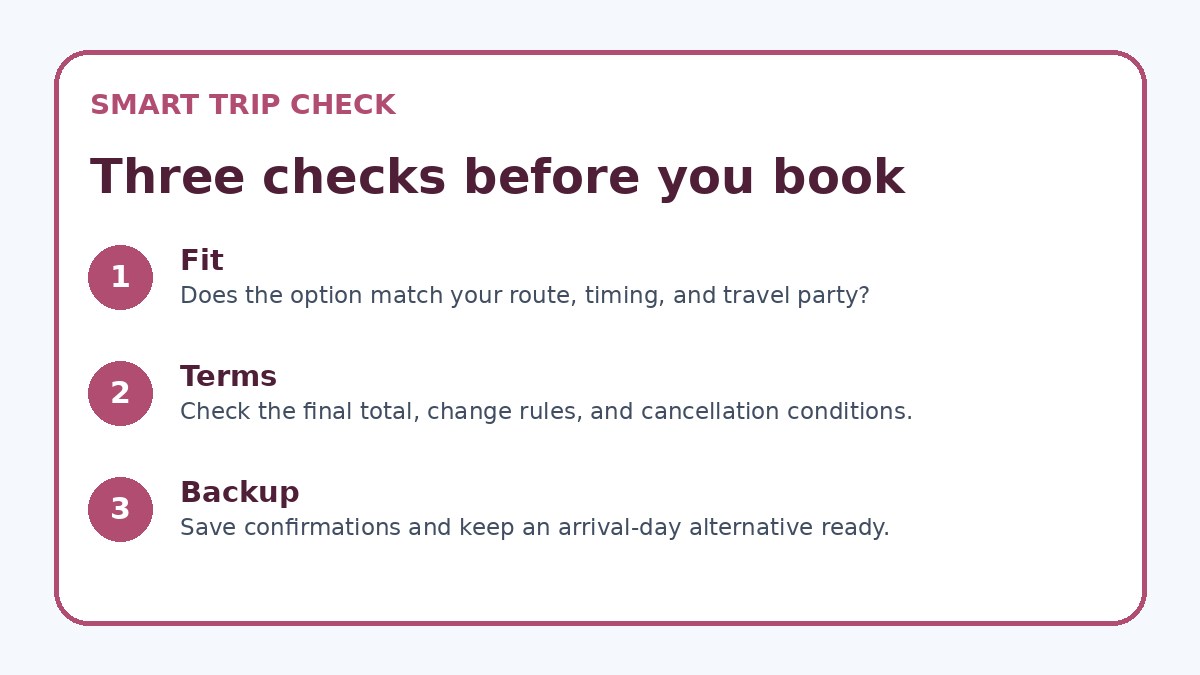
Before you book
- Itemize all cost categories for the trip: arrival transport, last-mile transfer, nightly rates, attraction fees, meals, local transit, and contingency.
- For each transport option, verify final booking pages for included transfers, luggage allowances, seat reservations, and connection requirements.
- Check the accommodation page for mandatory fees, single-occupancy rules, cancellation policy, deposit timing, and identity-check requirements.
- Estimate daily spending by creating 3 scenarios (frugal, typical, comfortable) and multiply by planned days to see the range of totals.
- If prebooking tours or tickets, read the provider’s refund and rebooking terms and note any time-specific entry or group-size rules.
- Keep a contingency equal to a modest percentage of the trip total and confirm payment/refund methods on each final booking page.
Budget activities and daily spending realistically
Decide what you want to do in Gyeongju and cost each activity conservatively. Popular historical sites may have entry fees, audio-guide rentals, or required guided tours for special areas. Don’t forget local experiences such as temple visits, bicycle rentals, or cultural performances; even free sites can produce incidental costs like guided tour fees, photo permits, or transport between dispersed attractions. Estimate daily meal costs using a range (economy to midrange) so you can see how many nicer meals you can afford without blowing the budget.
For a solo traveler, personal comfort matters: add a daily buffer for coffee, occasional taxis, and small souvenirs. Also include a modest contingency (percentage of the trip total) for emergencies or last-minute changes. When you compare final booking pages, verify whether attraction tickets are refundable, transferable, or time-specific. If you plan to prebook tours or museum tickets, confirm the exact refund and rebooking rules on the provider’s page.
Frequently asked questions
Should I prebook all attractions and transfers for a solo trip to Gyeongju?
Prebooking reduces uncertainty but isn’t strictly necessary for every item. For timed-entry cultural sites or guided tours that are popular, prebooking secures your slot and can save time. For flexible activities or smaller attractions, you can often book on arrival if you accept some risk. Transfers arriving late at night or connecting to infrequent services are good candidates for advance booking. Always check the provider’s final booking page for refund windows and change policies so you know how flexible each booking is.
How do I judge whether a higher-priced central hotel is worth the extra cost?
Compare the added nightly cost against likely savings: fewer late-night taxis, shorter travel time to attractions, and reduced need for early departures. For solo travelers, safety and convenience can be worth a modest premium. Calculate the net effect by adding estimated taxi or transit costs you’d avoid and the value of time saved. Also factor in whether the hotel’s cancellation and refund terms are traveller-friendly, since a rigid nonrefundable booking increases risk if plans change.
What exact details should I verify on a provider’s final booking page before paying?
On the provider’s final page confirm total price with taxes and fees, cancellation and refund rules, deposit or prepayment requirements, identity or visa checks, baggage or luggage rules for transport, and whether any transfers are included. If a ticket is time-specific, note the exact window and any rebooking penalties. For combined packages, ensure the terms cover each component, and check whether there are single-person surcharges. If anything looks ambiguous, contact the provider to get written confirmation before completing payment.
Final planning note
Solo travel to Gyeongju can be comfortable and worry-free if you check the full trip cost before booking. Treat each choice as a swap between time, comfort, and cash: faster transport and central lodging often cost more but reduce stress and incidental expenses; slower or out-of-center options may save money but increase transfer costs and fatigue. Use the line-item approach recommended here to compare complete totals across separate bookings and bundled options, and always verify fees, cancellation terms, and included transfers on the provider’s final booking page before paying. That verification step is the last and most important guard against surprises on your trip.
Continue planning
Check current options and final conditions
Use the provider page to confirm live availability, the final total, cancellation terms, and every condition that matters to your trip.
This evergreen planning guide was created with AI-assisted drafting and a structured quality review. It does not display live prices, schedules, availability, visa guidance, or provider rankings. Verify current details before booking. Some links are affiliate links; we may earn a commission at no additional cost to you.