Practical answer first: for most first‑time visitors, pick the mode that matches your door‑to‑door priorities—cost, comfort, and how much hassle you tolerate transferring luggage. If you want lowest friction and the fewest transfers, a direct car or taxi from your Dubai accommodation to your Abu Dhabi door is simplest. If budget matters and you can handle a bus stop walk or a short transfer, coach services give reliable, low‑cost point‑to‑point travel. A mix—coach into central Abu Dhabi and a short taxi at the far end—often balances cost versus effort. This article explains how to compare these approaches, what to pack for the travel day, how terminals and transfers affect the journey, and what to do if something goes wrong. Read on for actionable checklists, decision tradeoffs, and the realistic choices first‑time visitors face when planning Dubai to Abu Dhabi transport.
How to choose between car, coach, and hybrid options
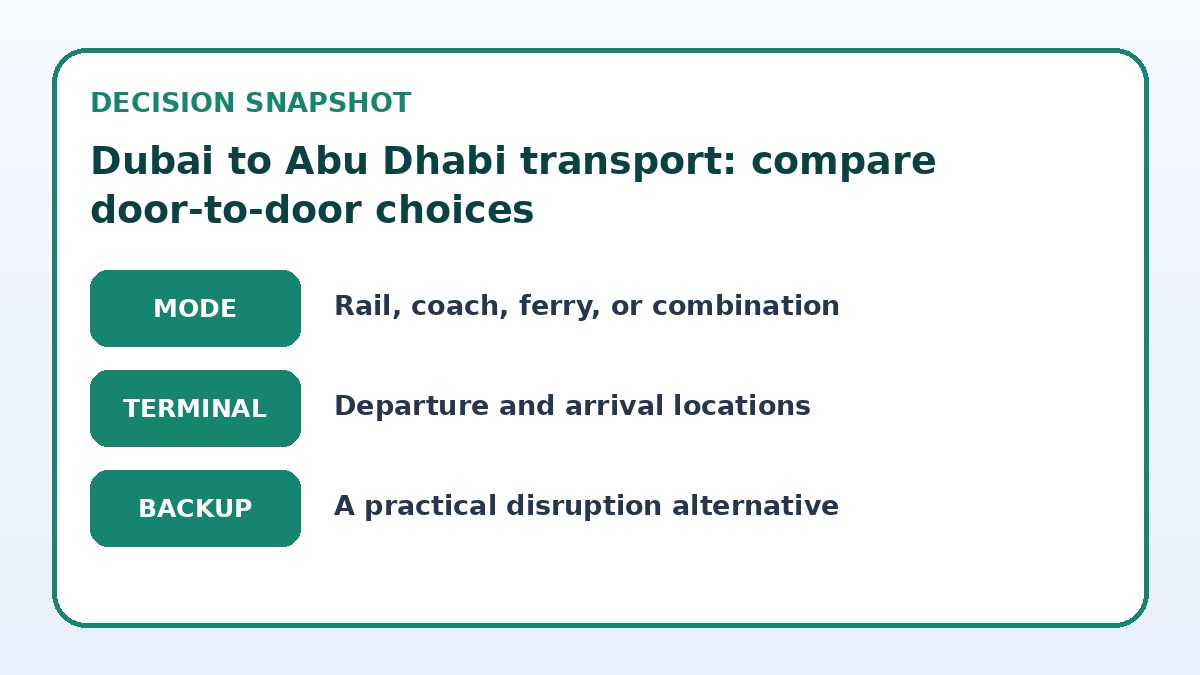
Start by listing what you really need from the travel day: minimal walking, guaranteed seat, fixed budget, or the ability to stop en route. A private car or metered taxi minimizes on‑street transfers and is the easiest door‑to‑door solution if you are carrying heavy luggage or travelling in a small group. Coaches and scheduled shuttles are cheaper per person but typically depart from designated terminals; factor in the time and cost of getting from your hotel to the coach terminal and from the coach drop‑off to your final address.
When comparing options, map the total itinerary rather than just the ride time. Note pickup and drop‑off addresses, average traffic patterns for your planned departure time, and how many times you’ll handle luggage. For a solo budget traveller, coach + short taxi at the end often wins. For families, older travellers, or anyone with lots of bags, a direct car door‑to‑door reduces transfer friction even if it costs more. Keep a practical mindset: the cheapest headline option can become expensive when you add transfers and wait times.
Choose the end-to-end journey plan
| Journey approach | Best for | Friction to check |
|---|---|---|
| Private car or taxi door‑to‑door | Groups, heavy luggage, travellers who value convenience | Higher cost per person and subject to traffic delays |
| Scheduled coach or shuttle | Budget travellers who can handle short transfers | Requires trips to fixed terminals and may need final‑mile taxi |
| Mixed coach + taxi (hybrid) | Balanced budget and convenience for solo or small groups | Some luggage handling and coordination at drop‑off points |
| Ride‑hail apps on demand | Flexible departures and solo travellers without lots of bags | Pricing can surge and availability varies by area and time |
Check live intercity options
Look beyond the ride itself and compare terminals, transfers, luggage, and arrival fit.
Terminal fit, luggage friction, and transfers explained
Terminals and pickup points are where journeys become inconvenient. Some coaches require you to reach a large bus station with limited drop‑off options near your hotel; taxis or ride‑hailing apps can usually reach most addresses. Check how close the coach drop‑off is to your accommodation and whether that final stretch is walkable or needs another taxi. Also ask about luggage rules before booking: some public coaches restrict large suitcases or charge extra for bulky items.
Luggage shape matters in real situations. Hard‑shelled suitcases are heavier to lift and harder to wedge into tight luggage bays; soft duffels and backpacks make short transfers simpler. If you expect multiple handling points—hotel to coach, coach to taxi—pack a day bag with essentials and valuables to avoid rummaging through checked luggage at every stop. For medical equipment, fragile items, or valuables, prefer the one‑vehicle door‑to‑door option to keep everything with you.
Timing flexibility and building realistic buffers
Traffic and border/road controls can vary throughout the day. Midday or early evening can bring heavier traffic; for time‑sensitive plans, give yourself a cushion. If your itinerary includes a timed Abu Dhabi attraction or a flight/connection later the same day, choose an option with predictable departure times and add a comfortable margin. Scheduled coaches can be reliable but arrive early for the terminal; private cars can be adjusted on short notice but are subject to the same road conditions.
Think of schedule flexibility in three layers: departure flexibility (how easily you can change or reschedule), en‑route flexibility (ability to make stops), and arrival flexibility (how close to your final address the service drops you). If you need to be flexible during the day, a private car or ride‑hail service gives you control. If your schedule is fixed and you prefer set times, choose a coach that matches your preferred slot and confirm pickup and drop details before booking.
Compare the practical alternatives
Use the final page to confirm what is actually offered on your dates and save a workable fallback.
Intercity travel checklist
- Confirm exact pickup and drop‑off locations and save them as map pins on your phone before the travel day.
- Pack a small day bag with passports, medications, and valuables so you can keep essentials with you during transfers.
- Measure luggage fit: if taking a coach, confirm permitted baggage size and whether bulky bags require advance notice.
- Reserve a taxi or ride‑hail (or the coach seat) in advance for peak times, and screenshot the confirmation and driver/contact details.
- Allow an extra 60–90 minutes in your schedule for traffic delays if you have timed bookings in Abu Dhabi.
- Save emergency contact numbers, hotel addresses, and a local map offline in case mobile data is limited.
Disruption backup: practical contingency steps
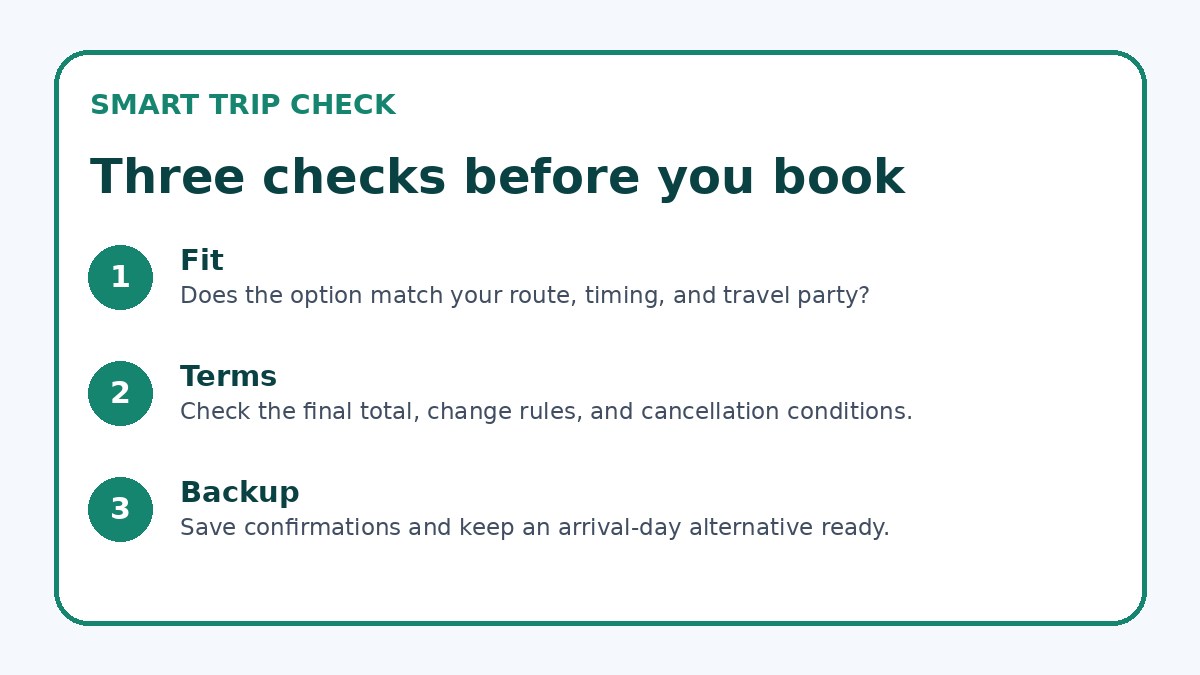
Plan for the most likely disruptions: road congestion, a missed coach, or a last‑minute change of hotel. Keep at least two backup options: an alternative departure time on a coach network and a list of reliable taxi or ride‑hailing apps you can open quickly. Save screenshots or confirmation numbers for all bookings so you can rebook or transfer without hunting for emails when connectivity or time is limited.
Also identify a nearby safe meeting point or easily described address at both the Dubai pickup and Abu Dhabi drop‑off. If you arrive late and a scheduled shuttle has departed, a short metered taxi or ride‑hail ride is usually the quickest recovery. For larger groups, agree in advance who handles rebooking or waits for late travellers to avoid wasted time searching. Finally, check the final booking page of any provider for the latest pickup points, luggage rules, and change/cancellation policies before you commit.
Rail & Intercity Transport questions travelers ask
Which Dubai to Abu Dhabi transport option is fastest door‑to‑door?
Door‑to‑door fastest usually means a private car or taxi because it picks you up and drops you at exact addresses; there are no terminal walks or scheduled departure waits. However, speed depends on current traffic: peak road congestion can extend the same journey time considerably. When speed matters most, book a vehicle that can depart on demand, leave with a buffer for traffic, and confirm the pickup time with the driver or company before leaving your hotel.
Can I rely on scheduled coaches if I have bulky suitcases?
Scheduled coaches usually accommodate luggage, but policies and available space vary. Some services store large suitcases in underfloor bays while limiting onboard baggage; others may count very large or awkward items differently. Before booking, check the provider’s baggage rules on their final booking page and, if possible, contact customer service to confirm capacity for bulky items. If you expect repeated handling or have fragile equipment, a private car that keeps luggage with you is less risky.
How should I choose between saving money and reducing transfers?
Start by quantifying the non‑monetary costs: how much time, physical effort, and stress do extra transfers add? If saving money means multiple transfers with heavy bags or navigating unfamiliar terminals, those savings may not be worthwhile for first‑time visitors. Conversely, if you’re travelling light and comfortable with short walks and a final taxi, coach options can be very economical. Make a short list of priorities (time, comfort, cost) and eliminate options that fail your top priority before comparing final prices and schedules.
Final decision note
Choosing Dubai to Abu Dhabi transport comes down to a simple calculation of what you value on the travel day: fewer transfers and less handling, lower cost, or schedule rigidity. For most first‑time visitors, the practical choice balances a comfortable last mile with a realistic buffer for traffic. Map full door‑to‑door itineraries, check pickup/drop addresses, confirm luggage rules on the provider’s final booking page, and carry a small day bag for essentials. Keep two realistic backups—a later coach or a taxi app—and save confirmations offline. With these steps you’ll reduce surprises and make the travel day between Dubai and Abu Dhabi a predictable, manageable part of your trip.
Continue planning
Check current options and final conditions
Use the provider page to confirm live availability, the final total, cancellation terms, and every condition that matters to your trip.
This evergreen planning guide was created with AI-assisted drafting and a structured quality review. It does not display live prices, schedules, availability, visa guidance, or provider rankings. Verify current details before booking. Some links are affiliate links; we may earn a commission at no additional cost to you.