If you’re arriving in Dubai with extra suitcases, sports gear, or bulky shopping, the practical decision before you click reserve on a Dubai car rental is to verify the provider’s fuel policy, per-day or per-kilometre mileage limits, and whether the vehicle’s permitted load will comfortably carry your luggage. These three checks determine whether you’ll need a larger vehicle, prepay fuel, or face excess-mileage charges that quickly outweigh a cheaper headline rate. Start by noting total luggage volume and planned daily driving distance, then compare suppliers’ written terms for fuel (full-to-full, pre-purchase, or return-empty), free mileage allowances, and any restrictions on roof racks or trailers. Where provider rules could change, always confirm the final booking page and rental contract before payment. If you want a quick place to compare current availability and policy wording, consider looking at Trip.com as one of several comparison tools, but treat each rental company’s booking page as the definitive source.
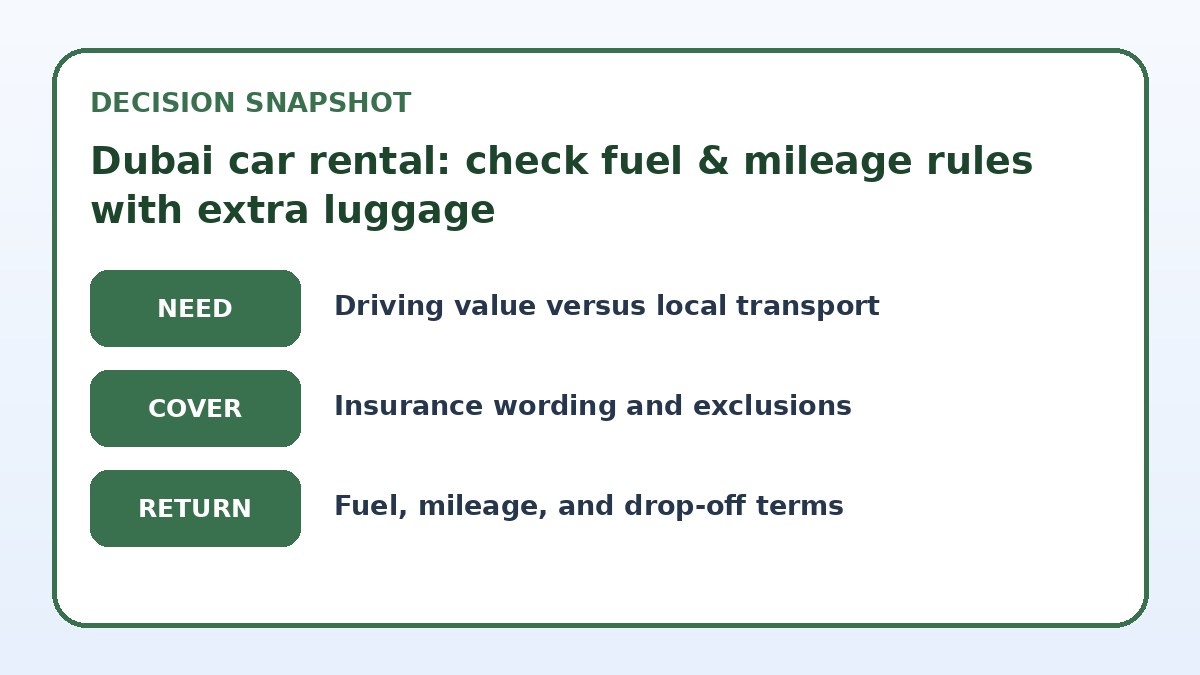
See current options before you compare the details
Availability and final conditions change. Open Trip.com now or keep reading for the practical comparison.
Know your luggage and driving needs before you search
Start with a practical inventory: count bags, measure or estimate their combined volume, and think about shape—soft duffels fit more easily than rigid suitcases. Consider additional items such as golf clubs, strollers, or musical instruments and whether these will live in the cabin or the boot. Next, plan your driving: are you doing short city hops, long highway drives to Abu Dhabi, or off-road desert excursions? Daily kilometre expectations will be crucial when you compare mileage allowances and costs.
With those numbers in hand you can more intelligently select vehicle classes (compact, SUV, people-mover) and optional equipment (roof box, larger boot). Don’t assume two small suitcases and two carry-ons will fit a compact sedan if your return flight adds shopping; choose a car with some buffer. Also consider passenger comfort—extra luggage often reduces cabin space and visibility, which matters for long drives in the UAE heat.
Understand the common fuel policies and how each affects you
Fuel policy language varies but generally falls into a few categories: full-to-full, where you pick up a full tank and return it full (you pay only what you use); pre-purchase, where you buy a tank at pickup and may not be refunded for unused fuel; and return-empty, where you may face higher per-litre charges if you don’t return empty. For travellers with extra luggage, full-to-full is often fairest because it ties fuel cost strictly to actual usage, while pre-purchase or return-empty can hide costs if your driving plans change.
When renting in Dubai, check whether fuel charges are calculated at local pump prices or a provider rate, and whether the booking page explicitly states refund rules for unused pre-purchased fuel. If you plan long drives or expect to visit remote areas, full-to-full avoids surprise refuelling at airport tariffs. Always verify the exact fuel clause on the final booking page and note any requirements for fuel receipts or authorised petrol station lists.
| Approach | Best for | Tradeoff to check |
|---|---|---|
| Choose full-to-full fuel with a larger vehicle | Balanced cost control and enough space for luggage | Higher base rate for a bigger car but clear fuel billing and less chance of excess-mileage fines |
| Pre-purchase fuel and stick with a compact car | Short city stays with predictable low driving distance | May pay for unused fuel and risk cramped cargo space if luggage increases |
| Book unlimited mileage with a mid-size SUV | Long inter-emirate drives or flexible itineraries | Higher daily cost offset by predictability; still check load limits for bulky items |
| Select a compact plus roof box or trailer (declared) | When you need extra cargo capacity but want fuel-efficient vehicle | Additional equipment fees and possible insurance exclusions; verify permitted accessories |
Ready to check the option that fits your plan?
Use your exact dates and traveler details so the provider page can show the current total and conditions.
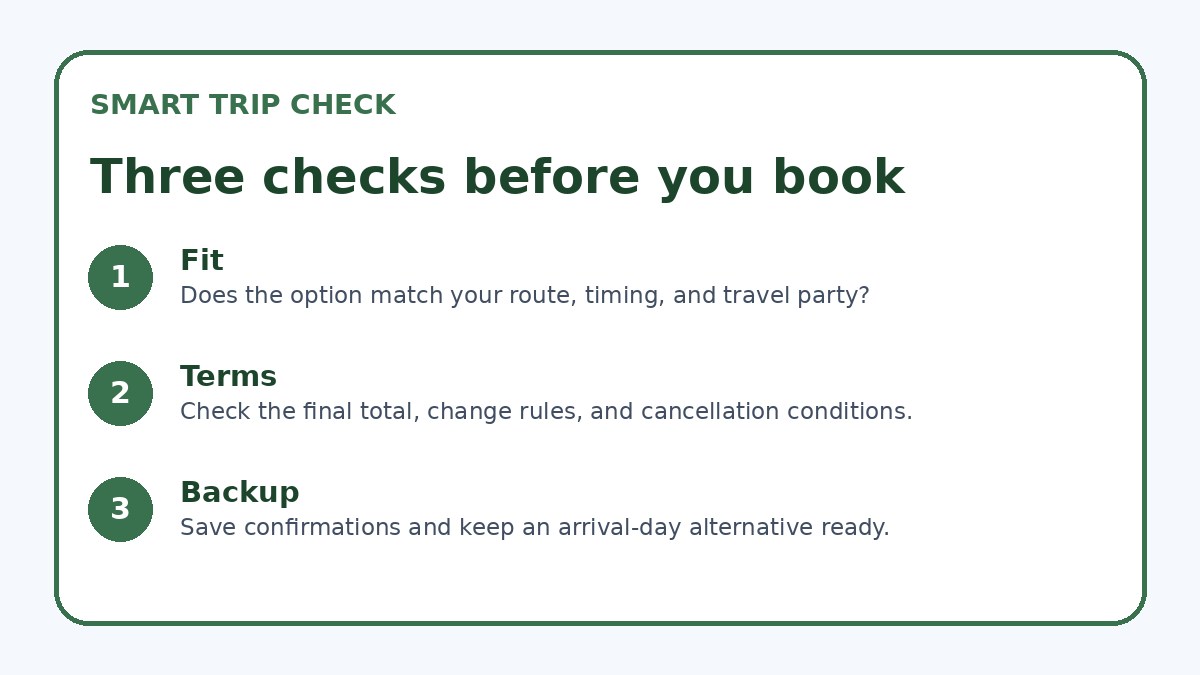
Compare mileage allowances and extras that cover extra kilometres
Many Dubai rentals include a daily free mileage allowance or an unlimited mileage option for a higher rate. If your plan includes inter-emirate trips, sightseeing away from the city, or long coastal drives, calculate the total likely kilometres and divide by rental days to check if the free allowance suffices. If it does not, compare the per-kilometre excess charge against the price of upgrading to an unlimited-mileage rate or a higher-tier vehicle.
Also watch for fine print: some deals limit mileage by region (for example, excluding cross-border travel) or set a weekly rather than daily cap. If you anticipate significant extra kilometres, ask whether suppliers permit a one-time mileage top-up or offer a fixed extra-kilometre bundle—these options can be simpler to budget than unpredictable per-kilometre fees. Confirm these specifics on the confirmation and rental agreement to avoid post-return disputes.
Before you book
- Measure luggage volume and estimate total trip kilometres before browsing rental options.
- On the provider booking page, locate and read the exact fuel policy wording and refund rules for unused pre-purchased fuel.
- Compare daily free mileage allowances, unlimited-mileage options, and the provider’s per-kilometre excess rate.
- Declare any roof box, trailer, or unusual cargo at booking and get confirmation of permitted accessories and fees.
- Confirm maximum laden vehicle weight and whether insurance remains valid with declared loads.
- Photograph vehicle condition at pickup, keep fuel receipts if required, and save the final rental agreement PDF.
Declare large or awkward loads and check insurance and equipment rules
If your luggage is bulky, irregular, or requires a roof box or trailer, you must declare this at booking. Some rental agreements restrict carrying loads on the roof or towing unless you’ve pre-booked the accessory and paid an extra fee. Insurance coverage can also change: policies may exclude damage caused by improperly loaded or overloaded vehicles. Failing to declare large loads risks voiding damage protection and leaving you liable for repairs.
Ask whether the hire company provides roof boxes, tow bars, or heavier-duty suspension vehicles and whether these affect insurance, excess, or deposit amounts. Confirm the maximum permitted laden weight for your chosen vehicle and don’t exceed it—this affects handling and braking. Before you drive off, ensure the rental agent notes any existing bodywork or interior damage and that any declared cargo equipment is documented on the rental contract.
Frequently asked questions
If I pack a roof box, how will that change fuel and mileage costs in Dubai?
Adding a roof box increases wind resistance and fuel consumption, so expect slightly higher fuel use on long highway runs—how much depends on speed and load. It may also change insurance terms and require a declared accessory fee from the rental company. Check the booking page for accessory charges and read the insurance exclusions. If mileage is capped, higher fuel use won’t affect the kilometre limit but will increase the cost of each litre you purchase, so compare total expected fuel spend under your chosen fuel policy before confirming.
Can I avoid excess-mileage charges if my plans change mid-rental?
If you think your itinerary could expand, opt for an unlimited mileage rate or buy a higher daily allowance when booking; many companies also sell extra-kilometre packages. If you already booked a capped plan, contact the provider as soon as plans change—some suppliers allow an amendment for a fee. Always check the final booking page and rental agreement for amendment policies, deadlines for changes, and whether changing the mileage plan mid-rental requires returning the vehicle to the depot.
What should I verify on the rental company’s final booking page to avoid surprises?
Look for the exact fuel policy language, the free mileage allowance and excess-kilometre rate, accessory fees for roof boxes or towing, permitted load or gross vehicle weight, and insurance exclusions tied to overloaded or incorrectly stowed cargo. Also verify deposit amounts, authorised refuelling stations if refunds are conditional, and any documentation required on return (fuel receipts, accessory checklists). Treat that final page and the rental contract as definitive and save screenshots or PDFs for your records.
Final planning note
Travelling to Dubai with extra luggage changes the rental decision: it’s not just about headline daily rates but about matching vehicle capacity, fuel policy, and mileage terms to your real needs. Measure your bags, estimate driving distance, and compare full-to-full versus pre-purchase fuel options alongside mileage allowances; often a slightly higher-rate option that includes unlimited miles or a bigger boot will save money and stress. Declare any roof boxes or trailers when booking and verify insurance and load limits on the provider’s final booking page. Keep documentation, photographs and receipts, and don’t hesitate to ask the rental agent to add agreed accessories to the contract before you sign.
Continue planning
Check current options and final conditions
Use the provider page to confirm live availability, the final total, cancellation terms, and every condition that matters to your trip.
This evergreen planning guide was created with AI-assisted drafting and a structured quality review. It does not display live prices, schedules, availability, visa guidance, or provider rankings. Verify current details before booking. Some links are affiliate links; we may earn a commission at no additional cost to you.