
If you’re planning a family trip to Busan, the quickest practical question is: how flexible must your booking be? For most families, prioritize refundable or easily changeable hotel and transport options for at least one core booking (accommodation or main transit) while using lower-flexibility deals for secondary bookings. That mix reduces disruption risk without forcing you to pay top-tier flexibility across every component. Before you commit, check the provider’s final booking page for exact refund windows, penalties, and whether name or date changes are allowed. If you want a single place to compare live policies, you can optionally check Trip.com but always verify rules on the supplier’s own confirmation page.
See current options before you compare the details
Availability and final conditions change. Open Trip.com now or keep reading for the practical comparison.
Which bookings to make flexible first
Start by making the most disruptive elements of your trip the most flexible. For families visiting Busan, that usually means prioritizing refundable or changeable options for either the main transport (international flight or long-distance train) or your primary accommodation—whichever is more central to your dates and budget. A refundable hotel for the first night or a ticket you can change without steep penalties prevents the cascade effect of a single cancelled plan. When you must choose, think about which cancellation would force extra logistical work: if changing your flight creates the biggest headache, buy flexibility there.
Secondary items—short ferry rides, local day tours, or certain paid attractions—are often safe to book on lower-flexibility deals, since these are easier or cheaper to replace at short notice. For families, avoid splitting group members across different policies: ensure children’s bookings are linked to the same flexible option where possible. Always inspect how a supplier treats group cancellations versus individual cancellations and whether altering one passenger’s ticket affects the rest of the booking.
How to read and compare cancellation language
Cancellation language can be dense; focus on three concrete details: timing (when full refunds stop), penalties (flat fees or percentage deductions), and permitted changes (date or name changes allowed and any fees). Some policies use terms like “free cancellation until X time” while others describe refunds in percentage bands. Translate those into real dates for your trip—write down the last refundable date next to your itinerary. For families, pay attention to whether children are treated as free passengers under a single booking or whether they require separate tickets with different rules.
Also watch for operational distinctions: refundable on the provider’s side may still require you to request the refund through a third party or can take weeks to process. When a policy mentions vouchers or credits instead of money back, decide whether that suits your planning; vouchers tie you to the same provider and could be inconvenient if your dates or travel party change. Wherever possible, verify these exact terms on the final booking page—this is the legally binding text—because marketing copy or summaries sometimes omit key fees and timing.
| Approach | Best for | Tradeoff to check |
|---|---|---|
| High-flex refundable bookings | Families with fixed but high-stakes dates or health concerns | Higher upfront cost and potentially higher nightly or fare rates |
| Changeable fares with fees | Families likely to shift dates but okay with predictable fees | Lower initial price than fully refundable options but fees apply for changes |
| Non-refundable budget deals | Families with firm plans and backup affordability | Lowest price but risk of losing the entire booking if plans change |
| Split strategy (mix of flexible and cheap) | Families balancing cost and protection across key bookings | Requires careful organization and tracking of different cancellation windows |
Ready to check the option that fits your plan?
Use your exact dates and traveler details so the provider page can show the current total and conditions.
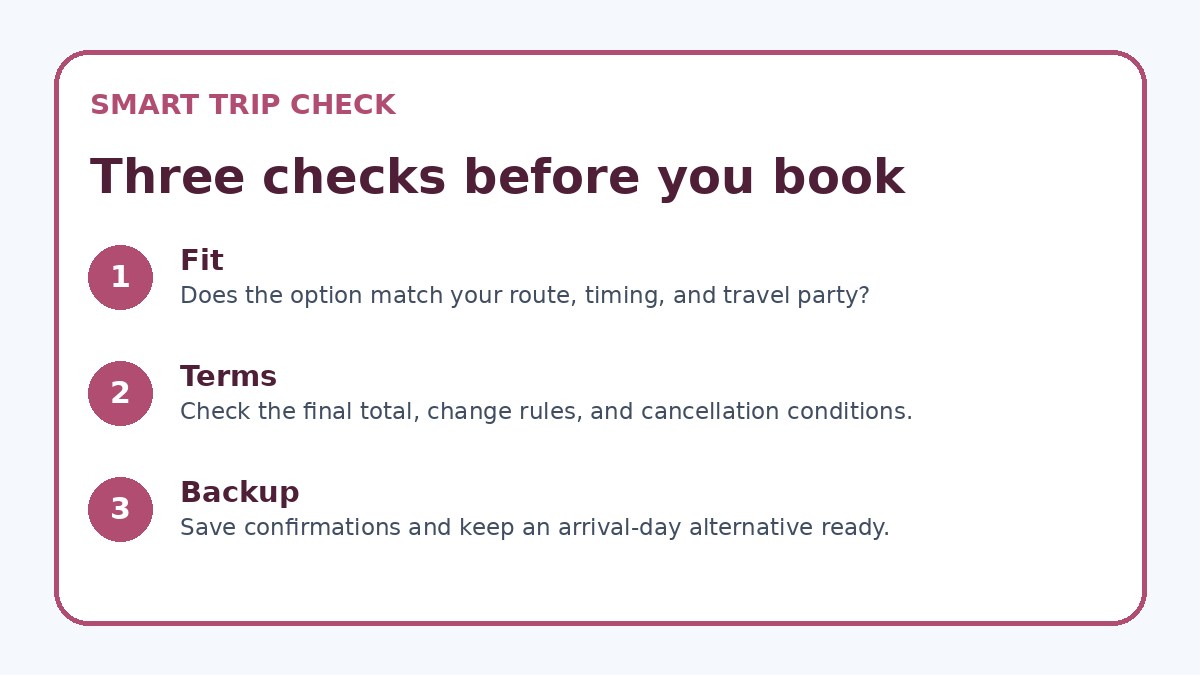
Tradeoffs between price and flexibility for families
Flexibility costs money, and for families that can be significant. The key tradeoff is between paying up front for peace of mind and risking potential loss if plans change. If your trip dates are tied to school holidays or firm commitments, pricier flexible fares can be worth it. Conversely, if your travel window is broad or you can pivot to another nearby date with little fuss, opting for cheaper, non-refundable deals for some items makes sense. Consider parental leave, medical routines, or the chance of weather-related interruptions in Busan when estimating how valuable flexibility is for your group.
Another practical tradeoff is administrative hassle. Some cheaper but flexible options require submitting detailed paperwork or contacting customer service multiple times. That can be a burden when managing children and schedules. Families often prefer a slightly higher fee that guarantees an easy online change or immediate phone support. Factor in the value of time and stress: a flexible policy that lets you manage changes yourself online without long waits is often effectively more valuable than a marginally cheaper refundable fare with slow service.
Before you book
- Identify your trip’s single most disruptive booking (flight or first-night hotel) and make that booking refundable or changeable.
- Write down the exact refund cut-off dates and change-fee amounts from the supplier’s final booking page for every reservation.
- Confirm how children and infants are handled in cancellation rules and whether family rooms require separate charges or deposits.
- Decide if you need an insurer that covers cancellations for family illness or school closure, then compare policy exclusions carefully.
- When booking through an intermediary, read both the intermediary and supplier cancellation terms and note which party issues refunds.
- Save PDFs or screenshots of the booking confirmation and cancellation section so you can reference them quickly if a dispute arises.
What to verify on the supplier’s booking page
On the supplier’s final booking page look for the exact refund timeline in dates and hours, the method of refund (card, voucher, or credit), specific change fees, and whether taxes or third-party fees are refundable. Confirm whether family-specific conditions apply—such as child age cutoffs, family room occupancy rules, or whether infant tickets are handled differently. If you’re booking through an intermediary, verify whether the intermediary’s cancellation process differs from the supplier’s and which party issues the refund.
Also verify how emergencies are handled: some providers have separate clauses for force majeure events, medical cancellations with documentation, or government travel advisories. Check whether travel insurance is recommended or required for refundable terms to apply. If you plan to use insurance, confirm that the insurer accepts the supplier’s terms and that the policy covers reasons you expect could disrupt travel. Always save screenshots or PDFs of the final booking confirmation and the cancellation policy; these are the records you’ll need if you dispute a charge later.
Frequently asked questions
Can I rely on a hotel’s flexible rate to guarantee a full refund if our family schedule changes?
A hotel’s flexible rate often means refunds are available within stated windows, but the final booking page contains the exact conditions. Some hotels issue refunds back to the original payment method, while others provide credits or require cancellation through the booking platform. Verify whether cleaning fees, taxes, or third-party booking commissions are refundable. If a flexible rate references free cancellation “until 48 hours prior,” translate that into the exact local date and time for your arrival and keep proof of the cancellation transaction.
Is travel insurance necessary if I book refundable transport and hotels for my family?
Travel insurance isn’t always necessary when all main bookings are refundable, but it can cover situations beyond supplier rules—like family medical emergencies, missed connections, or travel advisories. Read the policy to ensure it covers cancellations for the reasons you care about and that it reimburses non-refundable expenses, not just medical costs. Also check claim filing timelines and required documentation. Insurance can be a useful second layer of protection, especially for families who have prepaid non-refundable extras like tours or equipment rentals.
How should I handle booking a family of mixed ages if cancellation rules differ per passenger?
When a supplier sets different rules by passenger type (adult, child, infant), try to book the party together under a single reservation so the supplier treats changes uniformly. If separate bookings are required, document each passenger’s cancellation terms and prioritize flexibility for the bookings that are harder to replace. Contact the supplier directly before booking to ask how changes to one passenger affect the others, and request written confirmation if they agree to link or waive fees. Keep copies of any correspondence as evidence if adjustments are needed later.
Final planning note
For families planning Busan travel deals, the right cancellation approach is pragmatic rather than maximalist: protect the booking that would cause the most disruption, and be strategic with the rest. Carefully read and record exact refund deadlines, permitted changes, and whether refunds are monetary or vouchers. Balance the financial cost of flexibility against the non-monetary costs of stress, time and logistical rearrangement. Use a split strategy if you want both protection and affordability, and always verify the supplier’s final booking page for the legally binding terms before you click confirm.
Continue planning
Check current options and final conditions
Use the provider page to confirm live availability, the final total, cancellation terms, and every condition that matters to your trip.
This evergreen planning guide was created with AI-assisted drafting and a structured quality review. It does not display live prices, schedules, availability, visa guidance, or provider rankings. Verify current details before booking. Some links are affiliate links; we may earn a commission at no additional cost to you.