
Practical answer first: for families, aim for Doha’s shoulder seasons—late spring (before intense summer heat) or early autumn (after peak summer) —to balance cooler weather, more comfortable sightseeing, and easier access to kid-friendly activities. Booking your flights and accommodation around those transitional months often means more hotel room types are available, easier meal and activity scheduling for children, and a wider choice of indoor and outdoor plans. When evaluating Doha travel deals, compare total trip comfort (temperature and crowd levels), accommodation layouts suitable for families, and refundable or changeable booking terms. Use the shoulder-season concept to decide whether to prioritize lower daytime heat, quieter attractions, or maximum flexibility; the rest of this guide explains tradeoffs and step-by-step checks so you can pick the timing and deals that suit your family’s needs.
See current options before you compare the details
Availability and final conditions change. Open Trip.com now or keep reading for the practical comparison.
Why shoulder seasons matter for family comfort
Families with children juggle naps, meal rhythms, and tolerance for heat and crowds. In Doha, extremes of temperature and peak tourist months can force you into all-day indoor stays or rushed, uncomfortable sightseeing. Choosing shoulder months lets you spread activities across morning and late afternoon, when temperatures are friendlier for kids. That reduces midday downtime spent confined to hotel rooms and gives you more flexibility to enjoy both outdoor spaces and family-oriented cultural sites without the pressure of peak-season queues.
Comfort isn’t only about weather. Shoulder seasons can mean more accommodation types are actually usable for families: hotel rooms that earlier were reserved for longer peak-week bookings, family suites, or serviced apartments. Those options often offer kitchens or extra living space that make meal prep, early bedtimes, and quiet downtime far easier. Factor in how much indoor space your family needs and whether you value separate sleeping areas or kitchenette facilities when comparing deals.
When to prioritize lower heat versus fewer crowds
If the main family concern is heat sensitivity—young children, elderly members, or long stroller walks—prioritize timing that keeps daytime temperatures moderate enough for outdoor parks, the Corniche promenade, and open-air markets. That might mean selecting the earlier or later shoulder window of the season when daytime highs are less punishing and outdoor playtime is feasible. Plan morning and late-afternoon blocks for sightseeing and reserve indoor options for midday; this rhythm preserves energy and keeps everyone happier.
If your priority is quieter attractions—shorter waits at kid-focused museums or easier restaurant reservations—choose the side of the shoulder that follows major holiday periods. Crowds fall off more gradually than temperature, so a slightly warmer shoulder might still deliver far fewer visitors than peak months. Weigh this against whether your group can comfortably cope with warmer afternoons. The decision comes down to whether fewer people or lower heat will have a bigger positive effect on your family’s daily routine.
| Approach | Best for | Tradeoff to check |
|---|---|---|
| Book earlier shoulder dates (cooler, closer to summer) | Families prioritizing lower daytime heat for outdoor play | May still encounter some residual peak-season crowds and slightly higher rates than the late shoulder |
| Book later shoulder dates (warmer, after peak) | Families seeking quieter attractions and easier bookings | Temperatures can be warmer, requiring more indoor midday plans and flexible scheduling |
| Choose flexible refundable deals | Unpredictable family schedules or when school dates might change | Often higher upfront costs or more limited promotional discounts |
| Lock in a non-refundable discounted package | Families with fixed plans looking to maximize savings | Less tolerance for date changes; possible penalties or forfeited payments if plans shift |
Ready to check the option that fits your plan?
Use your exact dates and traveler details so the provider page can show the current total and conditions.
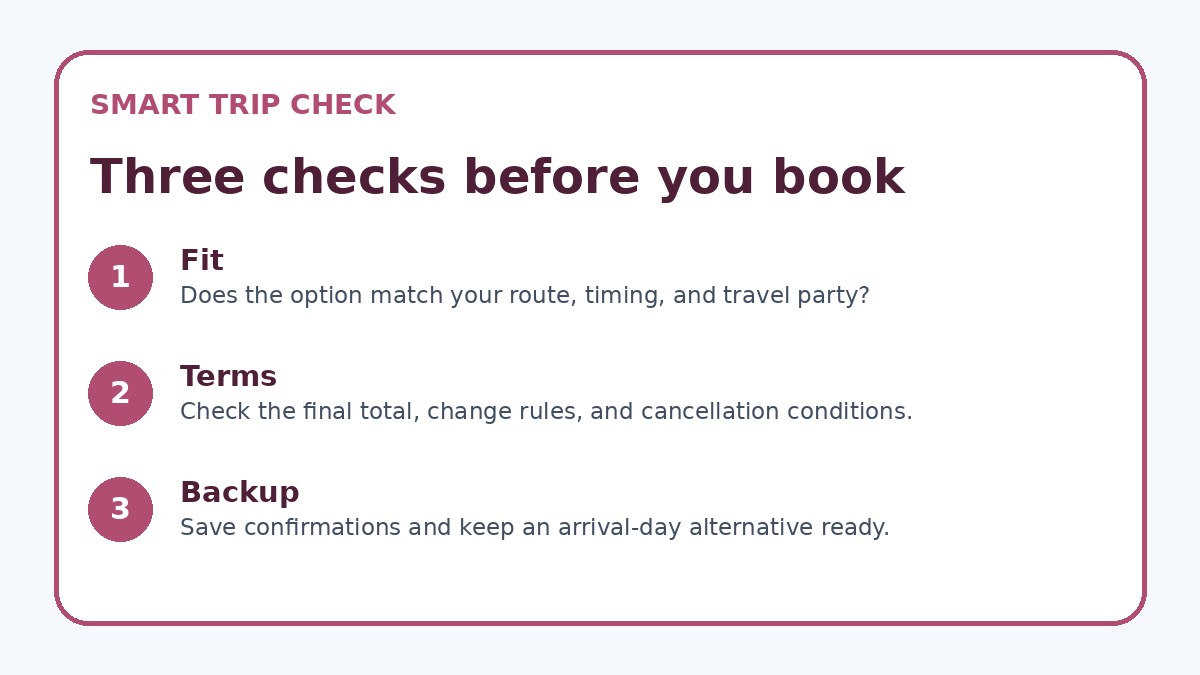
How to compare Doha travel deals for families
Don’t compare deals only on headline price. Build a side-by-side checklist that includes arrival/departure times, room types (suite, connecting rooms, or apartment), included meals, and cancellation or change policies. For flights, check layover lengths and total travel time; families often prefer slightly longer but well-timed connections over red-eye or very early departures. For hotels, assess whether breakfast service, baby cots, or kitchen access are included or require an extra fee—these change the real cost and convenience level substantially.
Also evaluate the location relative to the family activities you plan: proximity to parks, Souq Waqif, museums, and healthcare facilities matters more than being in a flashy neighborhood. When you spot a promising Doha travel deal, verify any childcare services, pool schedules, or shuttle services on the provider’s booking page. If you use a search site such as Trip.com to compare current availability, cross-check the property’s official page or contact them to confirm family-specific amenities and any seasonal schedule changes.
Before you book
- Confirm your preferred travel window fits your children’s school and activity schedule before comparing deals.
- Compare room layouts and request photos or floorplans showing beds, living space, and kitchenette availability.
- Verify cancellation and date-change terms for flights and hotels on the provider’s final booking page before payment.
- Ask the property about cot availability, infant supplies, pool hours, and lifeguard policies for the dates you plan to travel.
- Check transfer options from the airport and whether child seats or family shuttles are available and book them if needed.
- List indoor backup activities (museums, aquariums, malls) and confirm opening times and any prebooking requirements.
Booking strategy and what to verify before paying
When you’re ready to book, lock in flexible options first—reservations that allow date changes or free cancellation give families breathing room. If a deal requires prepayment with restricted changes, weigh how likely plans are to shift: school calendars, health, and weather are common disruptors. For flights, choose fares with seat selection and baggage allowances that match family needs; for hotels, confirm bed configurations and any extra-person charges to avoid surprises on arrival.
Always verify the provider’s live details on their final booking page before confirming: confirm room layout, cot availability, meal inclusions, and any locale-specific rules that affect families. Ask explicitly about pool hours, lifeguard presence, and whether common areas require reservations—these change seasonally. If you book tours or attractions as part of a package, check refund and change policies separately so you can replan without losing the entire prepayment if something changes.
Frequently asked questions
Are shoulder seasons in Doha noticeably cheaper for family travel?
Shoulder seasons can offer better availability and more room types suitable for families, which increases choice rather than guaranteeing lower prices. Savings depend on how hotels and airlines price inventory for nearby peak or off-peak windows. Rather than assuming lower rates, compare total trip costs including room configuration, meal options, baggage and seat fees, and any child charges. If a rate looks attractive, verify refund and change rules on the provider’s final booking page so a perceived saving won’t become costly if plans change.
What parts of Doha should families prioritize during shoulder-season days?
Prioritize outdoor spaces in mornings and late afternoons: waterfront promenades, parks, and open-air markets are more pleasant outside the heat of midday. Schedule indoor activities for late morning or mid-afternoon when temperatures are highest. Families will also benefit from planning one longer indoor rest period during the day to avoid overtired children. Consider proximity to medical services and supermarkets when choosing accommodation, and factor in easy access to transit or shuttle services for flexible, short journeys between attractions.
How far in advance should families book to secure the best shoulder-season deals?
Booking windows depend on your flexibility and the family’s needs. If you require specific room types—connecting rooms, suites, or apartments—reserve earlier to secure those configurations. If your dates are flexible and you value changeable plans, you can watch deals and lock in refundable options closer to departure. In all cases, read the provider’s final booking page for exact terms and reconfirm family amenities directly with properties before final payment, since availability of cots, babysitting, or meal arrangements can change.
Final planning note
Planning a family trip to Doha around shoulder seasons is about balancing heat, crowds, and flexibility. Start by choosing which tradeoffs matter most for your children—lower daytime temperatures for outdoor play or quieter attractions with easier logistics—and use that criterion to narrow dates. Compare deals on total family convenience: room layout, meal setup, cancellation policies, and location to planned activities. Always verify the provider’s live details on the final booking page before paying, and keep a refundable or changeable option if your family’s schedule is uncertain. With those checks in place, shoulder-season travel can deliver a more comfortable, manageable Doha trip for families.
Continue planning
Check current options and final conditions
Use the provider page to confirm live availability, the final total, cancellation terms, and every condition that matters to your trip.
This evergreen planning guide was created with AI-assisted drafting and a structured quality review. It does not display live prices, schedules, availability, visa guidance, or provider rankings. Verify current details before booking. Some links are affiliate links; we may earn a commission at no additional cost to you.