Short answer: many first-time visitors don’t need a Chiang Mai car rental if they plan to stay in the Old City, Nimmanhaemin, or use tours for day trips; but renting becomes more useful when you want flexible, off-the-beaten-track exploring or have a tight multi-destination schedule. Chiang Mai’s compact urban core is walkable and well served by tuk-tuks, ride-hailing and songthaews, and organized day tours reach popular waterfalls, temples and national parks without driving yourself. However, if your itinerary includes dispersed rural sights, remote hill‑tribe villages, or early starts and late returns where public transport is impractical, a car provides independence and saves transfer hassles. This guide walks through the practical tradeoffs—traffic, parking, road types, seasonal weather, costs, and when to choose a car vs alternatives—so you can pick the option that matches your comfort level, schedule, and travel priorities.
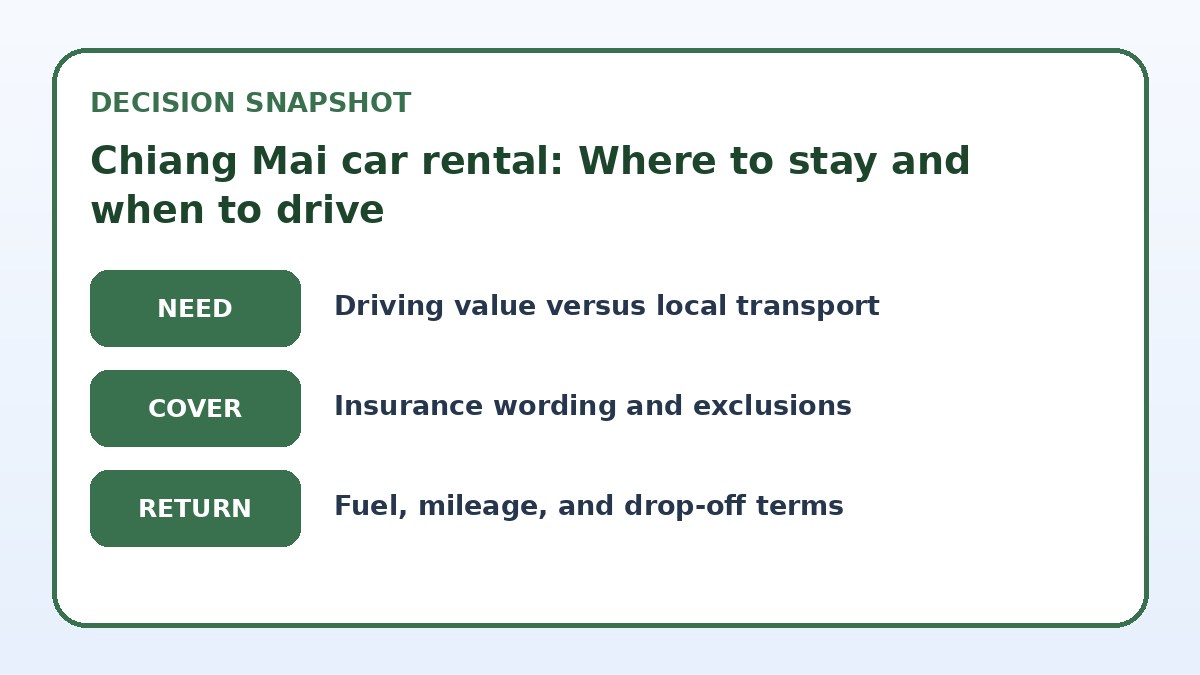
See current options before you compare the details
Availability and final conditions change. Open Trip.com now or keep reading for the practical comparison.
When a Chiang Mai car rental is unnecessary
Many first-time visitors find Chiang Mai’s central neighborhoods easy to navigate without a car. The Old City, Night Bazaar area and Nimmanhaemin are compact, with short distances between temples, cafes and markets. Tuk-tuks, songthaews (shared red trucks), motorbike taxis and international ride-hailing apps cover most short trips reliably. If you prefer not to drive in unfamiliar conditions, these options simplify city living and eliminate parking concerns. Guided day tours are plentiful and deliver straightforward transfers to key sights like Doi Suthep, local waterfalls and craft villages, giving you sightseeing without the stress of route-planning.
For short stays focused on eating, cultural sites and a few organized excursions, a rental car often becomes an unnecessary expense and hassle. Parking in busy zones can be limited and small-parking fees add up; narrow streets inside the Old City make maneuvering and reversing awkward if you’re not used to Thai traffic patterns. Many hotels and guesthouses will help arrange day trips and private drivers, effectively giving you the benefits of a car without the responsibility. If your travel style favors relaxed pacing, local transport and tours usually provide a more comfortable first-time experience.
When renting a car makes sense
Choose a Chiang Mai car rental if your plans include rural destinations, multi-stop day trips, or traveling with children or lots of gear. Independent access becomes valuable when you want to explore mountain roads beyond the main tourist hubs, visit waterfalls and villages at your own pace, or route a multi-day loop through Mae Wang, Pai, or Samoeng areas where public options are sparser. A car lets you set early starts or late finishes to avoid crowds, linger at overlooks, and carry picnic supplies, photography equipment or sports gear without negotiating twice for transfers.
Renting also benefits travelers who value flexibility and privacy—groups and families often find the per-person cost competitive after factoring taxis or private transfers. If you’ll be moving frequently between dispersed accommodations or require reliable door-to-door timing for photography sessions, medical needs or business commitments, the time saved is significant. Additionally, a car can be the smart choice in shoulder seasons when rainfall makes some rural secondary routes passable only by private vehicle, though you should confirm road conditions and vehicle suitability in advance.
| Approach | Best for | Tradeoff to check |
|---|---|---|
| Renting a car for the whole trip | Travelers needing full independence, families, or multi-destination rural itineraries | Higher cost, parking hassles, and more responsibility navigating local traffic |
| Using day tours and local transport | First-time visitors focused on core sights and relaxed sightseeing | Less flexibility and fixed schedules, but less driving stress |
| Renting only for specific days | Mixed itineraries with both city time and a few remote excursions | Requires planning rental pickup/drop-off windows and potential extra fees |
| Hiring a private driver | Those who want convenience without driving, or night/early transfers | Higher per-day cost but lower stress and local route knowledge |
Ready to check the option that fits your plan?
Use your exact dates and traveler details so the provider page can show the current total and conditions.
Key tradeoffs: cost, traffic and parking
A Chiang Mai car rental adds predictable control but also recurring friction. You’ll pay daily rental fees, insurance options, fuel, and parking charges; the financial math shifts depending on group size and how many days you actually drive. Beyond money, consider time lost to urban traffic—morning and evening peaks around major junctions, Nimman, and the university can be slow. Finding parking in popular areas often requires patience and occasionally walking a block or two from a legally allowed lot. Factor the extra cognitive load of navigating unfamiliar signs, motorbike flows and one-way systems into your comfort threshold.
On the other hand, a car reduces dependence on tour schedules and allows faster transitions between distant stops. For some itineraries the convenience outweighs the operational hassles; for others it does not. When evaluating cost versus convenience, compare the full door-to-door time and hassle for each day: include the time a private transfer or multiple taxis would take, the wait time for local transport, and the value you place on flexibility. If you plan many early starts or rural stops where public transport is infrequent, the tradeoff often favors renting a car.
Before you book
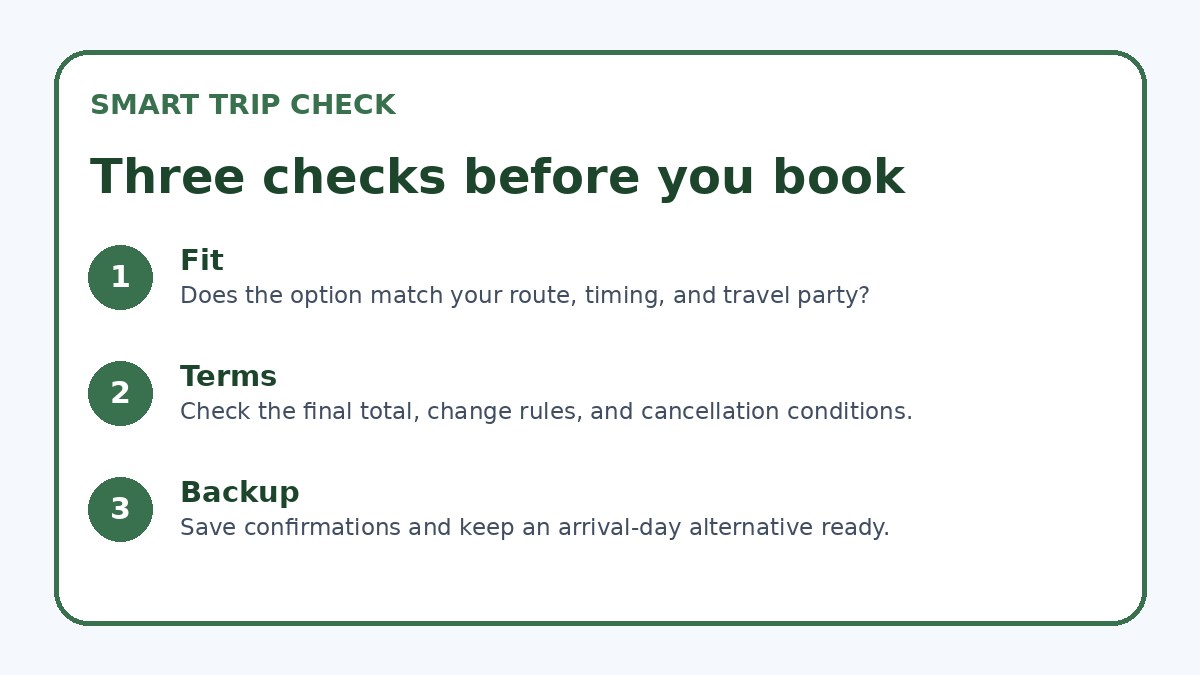
- List every day’s main stops and compare door-to-door time using a rental versus public transport or a tour.
- Verify insurance coverage, excess amounts, and any restrictions (mountain roads, border crossing) on the rental contract page.
- Confirm whether your license is accepted or if an International Driving Permit is required for your nationality.
- Reserve a smaller car for easier parking and narrow-road access; photograph the vehicle for damage records at pickup and drop-off.
- Save key hotel and attraction names in Thai script and load offline maps before driving in rural areas with patchy signal.
- Budget for fuel, parking fees, and possible extra charges for one-way rentals or late returns when comparing total trip costs.
Practical tips for booking and driving safely
Before you book a Chiang Mai car rental, confirm all provider details on the final booking page: vehicle category, driver age and license requirements, included insurance and excess amounts, fuel policy, pick-up/drop-off logistics, and rules about taking the vehicle to rural or mountainous areas. If a supplier states restrictions or extra fees for crossing provincial borders or using unpaved roads, make sure those apply to your planned drives. If you’re comparing options online, Trip.com can be useful to see current availability and provider terms, but always verify the specific rental contract text before you commit.
Plan your driving to avoid peak traffic, use a reliable offline map app and save key addresses in Thai script for taxi drivers or passersby to read if you need directions. Rent a car size that fits narrow streets—smaller cars are easier to park—and consider a vehicle with good headlights and clearance for rural routes. Carry photocopies of your passport and driving license, check whether an International Driving Permit is required for your nationality, and inspect the car carefully at pickup (take photos of any pre-existing damage). If road conditions or night driving make you uncomfortable, hire a local driver for one or more days instead of driving yourself.
Frequently asked questions
Is driving in Chiang Mai difficult for visitors?
Driving in Chiang Mai is manageable for experienced drivers but presents challenges. Expect frequent motorbikes, narrow lanes, and occasional aggressive lane changes. Urban traffic can be congested during peak hours around university and market areas, and some streets in the Old City are one-way, which makes route-planning important. If you’re comfortable with left-hand driving (Thailand uses left-side roads) and confident navigating unfamiliar roads, a rental is feasible. If not, consider using ride-hailing apps, taxis, or hiring a driver for days when you need more reach without the stress of driving yourself.
Can I use a Chiang Mai rental car to visit nearby regions like Pai or Doi Inthanon?
Yes, many rental companies allow travel to nearby provinces, but rules vary. Before you book, check the provider’s terms on the booking page for any geographic restrictions or added insurance requirements for mountain roads or long-distance trips. Consider the road conditions—routes to places like Pai involve long, winding mountain roads that require cautious driving and good brakes. If you plan an overnight multi-day drive, choose a comfortable vehicle and factor in extra travel time for tight turns and slower sections. When in doubt, ask the company about recommended vehicle types and any extra charges.
How do I compare total cost of renting a car versus using taxis and tours?
Compare the total door-to-door cost and time, not just the daily rental rate. Add fuel, insurance excess, parking fees and any potential one-way or airport pickup/drop-off charges to the rental cost. For alternatives, add local taxi or ride-hailing fares for the same set of trips, plus the price and schedule constraints of guided tours. Don’t forget to value convenience—time saved, reduced transfers, and the comfort of carrying gear may justify a higher monetary cost. When comparing suppliers online, check the final booking pages for exact terms before deciding.
Final planning note
Deciding whether a Chiang Mai car rental fits your trip comes down to where you plan to spend most of your time and how much you value independence versus convenience. Stay in central neighborhoods and rely on local transport and tours if you prefer low-stress exploring; rent a car or hire a driver when rural flexibility, early starts or family logistics outweigh traffic and parking hassles. Before booking, map each day’s stops, confirm rental contract details on the provider’s final page, and weigh total door-to-door time and costs. With those comparisons in hand, you’ll choose the option that keeps your first Chiang Mai visit enjoyable and manageable.
Continue planning
Check current options and final conditions
Use the provider page to confirm live availability, the final total, cancellation terms, and every condition that matters to your trip.
This evergreen planning guide was created with AI-assisted drafting and a structured quality review. It does not display live prices, schedules, availability, visa guidance, or provider rankings. Verify current details before booking. Some links are affiliate links; we may earn a commission at no additional cost to you.