
Practical answer first: shift your travel window by a few days on either side of your ideal dates and compare combinations of arrival, departure, and nights in different neighborhoods — that simple step often reveals materially different flight routings, prices, and hotel availability. For a first-time visit to Busan, flexible dates let you control crowd levels at Haeundae or Gamcheon, avoid local events that push up demand, and fit cheaper or more convenient flight connections. Start with a 7–10 day search window, then narrow to 2–3 promising date pairs and compare tradeoffs: extra transit time, different neighborhoods for first-night logistics, and weekday versus weekend rhythms. Keep a short list of hotels near your top transit hub and double-check cancellation rules; when provider details could change, verify all times and fees on the booking page before committing.
See current options before you compare the details
Availability and final conditions change. Open Trip.com now or keep reading for the practical comparison.
How flexible dates change flight options
Changing your trip window by a few days often changes where you connect and how long layovers last. For travelers to Busan, this matters because many itineraries involve at least one connection unless you originate from major hubs that offer direct services. When you broaden your search window, examine the total door-to-door time as well as departure and arrival times that affect your first night — an overnight arrival can make reaching a beachfront hotel late at night more complicated. Use a matrix search (departure date on one axis, return date on the other) to see patterns instead of checking single-day pairs.
Deciding which compromise to accept depends on your priorities: save money with a longer layover and an earlier or later flight, or prioritize convenience with shorter transit and a slightly higher fare. For first-time visitors, early evening arrivals let you settle into your neighborhood and get oriented; morning arrivals maximize sightseeing on day one but can be tiring if you crossed time zones. When comparing options, check connection minimums and whether a single ticket covers both legs — and verify final baggage handling and change-of-plane requirements on the provider’s booking page before booking.
Finding better hotel options by shifting hotel nights
Hotel availability and nightly rates in Busan can swing with local demand patterns; moving which nights you stay in each neighborhood can yield better options. For example, splitting your stays — a few nights by Haeundae beach for the coastal experience and a few nights near Nampo-dong or Seomyeon for markets and transit — may be easier or cheaper on different nights. When searching with flexible dates, run multi-destination or “split stay” searches to compare total cost and transit time between stays. Consider arrival and departure logistics: staying closer to Busan Station or the airport rail link for your first or last night can reduce stress.
Tradeoffs include the hassle of packing and moving between hotels versus the benefit of experiencing distinct parts of the city and potentially lower nightly rates. If you prefer a single base, look at weekday versus weekend pricing and be prepared to shift your whole stay a day earlier or later to avoid peak nights. Always confirm each hotel’s exact check-in policy, whether they hold late arrivals, and their cancellation or change fees on the booking page — those terms matter when you plan around flexible dates and uncertain arrival times.
| Approach | Best for | Tradeoff to check |
|---|---|---|
| Shift arrival by 2–3 days | Travelers prioritizing lower fares or better connections | May change arrival time and require different first-night logistics |
| Split stay between neighborhoods | Visitors who want both beach time and city exploration | Adds packing and hotel transfer time between stays |
| Avoid local event dates | Travelers seeking quieter attractions and easier bookings | Might miss cultural festivals that would enhance the experience |
| Keep a single base and shift whole trip | Visitors who prefer lower hassle and consistent lodging | May not capture neighborhood variety and subtle price dips |
Ready to check the option that fits your plan?
Use your exact dates and traveler details so the provider page can show the current total and conditions.
Timing to avoid crowds and timed events
Small date adjustments can let you avoid busy holiday weekends, local festivals, or school vacation surges that concentrate demand in Busan. Before you lock dates, check multiple local event calendars and public holiday lists that affect Korea and your country of origin. If you land near a festival, you may find higher hotel rates and larger crowds at beaches, markets, and attractions; moving your trip by a few days often reduces those pressures while preserving the same overall itinerary. For a first-time visitor, calmer conditions at major sites make orientation easier and reduce time standing in lines.
There are tradeoffs: avoiding crowds may mean missing a festival experience you’d enjoy, or you might face limited evening dining options during quieter periods. Decide whether you value quieter beach time or the energy of events, then let that preference guide modest date flexibility. Always re-check attraction opening patterns and any ticketed event availability on the official provider pages before booking, since those specifics can change and affect whether shifting dates is worth the tradeoff.
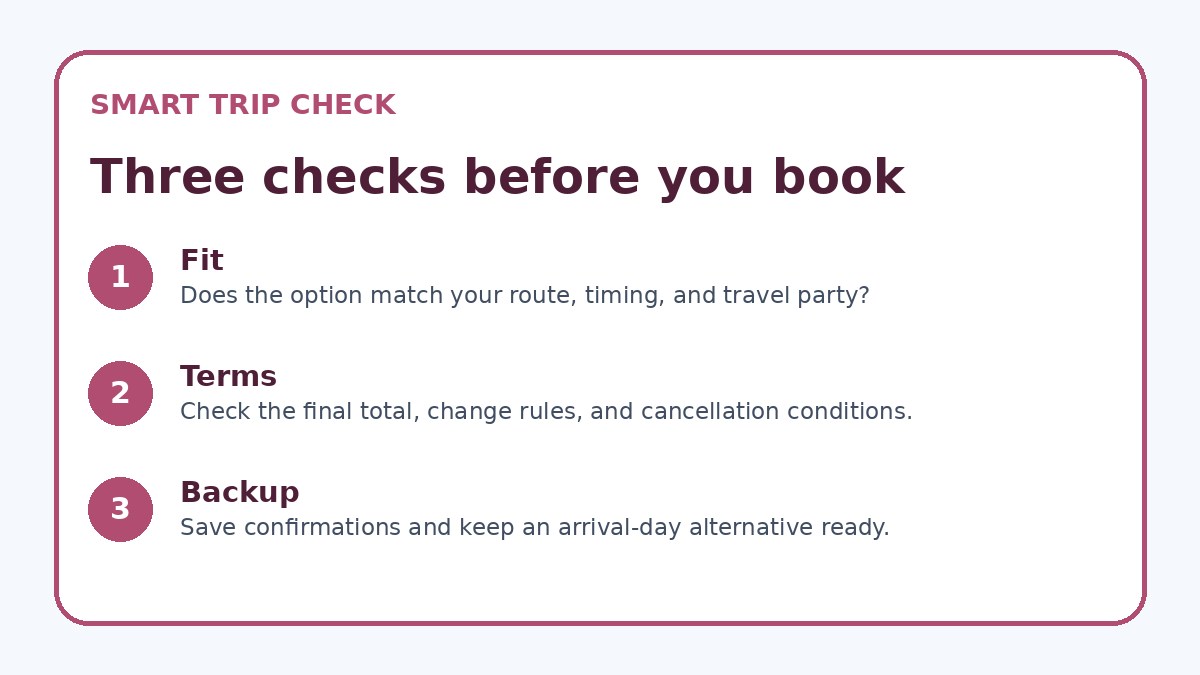
Before you book
- Run a 7–10 day rolling search window for flights and hotels to see how shifting dates alters options.
- Pick two to three date combinations and compare total door-to-door travel time, number of connections, and arrival hours.
- Identify hotels near your preferred transit hub and confirm their check-in/out and cancellation policies for your chosen nights.
- Check local event and holiday calendars and avoid or target high-demand dates according to your preference.
- Set price alerts for your shortlisted date combinations and monitor routing changes that affect layovers.
- Verify baggage rules, transfer procedures, and any terminal changes on the provider’s final booking page before purchase.
Practical search strategies and what to verify before booking
Start broad, then narrow. Run a rolling 7–10 day window for both flights and hotels, identify two to three promising date combinations, and compare total trip cost, transit time, and convenience. Use price alert tools for each of those combinations, and test swap combinations (for example, shift only the arrival day or only the return day) to find whether savings come from different routings or different hotel nightly rates. Keep a short list of hotels near key transit points and confirm that adding a night at the start or end changes the booking rules.
Before you click purchase, verify four provider details: final baggage and transfer rules on the airline booking page, whether multiple tickets require rechecking luggage or changing terminals, the hotel's check-in/out and cancellation terms for your exact nights, and whether any local transport cards or airport transfer options require prebooking. Trip.com can be used as one place to compare current availability and conditions, but always read the provider’s final booking page to confirm the specifics that affect your trip.
Frequently asked questions
How much flexibility should a first-time visitor to Busan build into their travel dates?
For a first visit, aim for a 3–4 day flexibility on either side of your ideal arrival and departure dates; search a 7–10 day window in total. That range is wide enough to reveal different flight routings, avoid local peak dates, and show meaningful hotel availability differences without making the planning process unwieldy. Narrow to two or three date pairs that balance convenience and cost, then focus on verifying transit times and hotel policies for those pairs on the booking pages to decide which tradeoffs you will accept.
If I find a cheaper flight with a long layover, when should I accept it versus changing dates?
Accept a long layover if the overall door-to-door time still suits your energy levels and the airline covers baggage and recheck on a single ticket. If the layover adds complexity — an overnight stop, a terminal change requiring a re-clearance of baggage, or risky tight connections — compare alternate dates first. For first-time visitors, prioritize arrival timing and simplicity over small savings if you prefer a smooth first night; always confirm connection rules and baggage handling on the airline’s booking page before deciding.
How do I balance staying near the beach with being close to transit in Busan?
Decide what matters most for your first nights: convenience on arrival or immediate beachfront access. Staying near Haeundae or Gwangalli gives beach atmosphere, but arrivals late at night may be easier if your first night is near Busan Station or a metro hub. Consider a split stay — first night near a transit hub for easy arrival, then several nights at the beach — and compare the total transit time and extra check-ins with shifting your whole trip. Always verify each hotel’s late-check-in policy and transit times to your planned attractions on their booking pages.
Final planning note
Using flexible dates is a practical lever you can pull to shape the whole experience of your first trip to Busan. Small shifts often change flight routings, hotel availability, and crowd levels at major sites without adding significant complexity. The right approach depends on what you value most: lowest possible cost, minimal transit hassle, or a mix of neighborhoods in one trip. Start broadly, narrow to a few date combinations, and verify key provider details — baggage rules, cancellation terms, and arrival logistics — on the final booking pages. With modest flexibility and focused checks, you’ll pick dates that suit your priorities and make a smoother, more enjoyable first visit.
Continue planning
Check current options and final conditions
Use the provider page to confirm live availability, the final total, cancellation terms, and every condition that matters to your trip.
This evergreen planning guide was created with AI-assisted drafting and a structured quality review. It does not display live prices, schedules, availability, visa guidance, or provider rankings. Verify current details before booking. Some links are affiliate links; we may earn a commission at no additional cost to you.