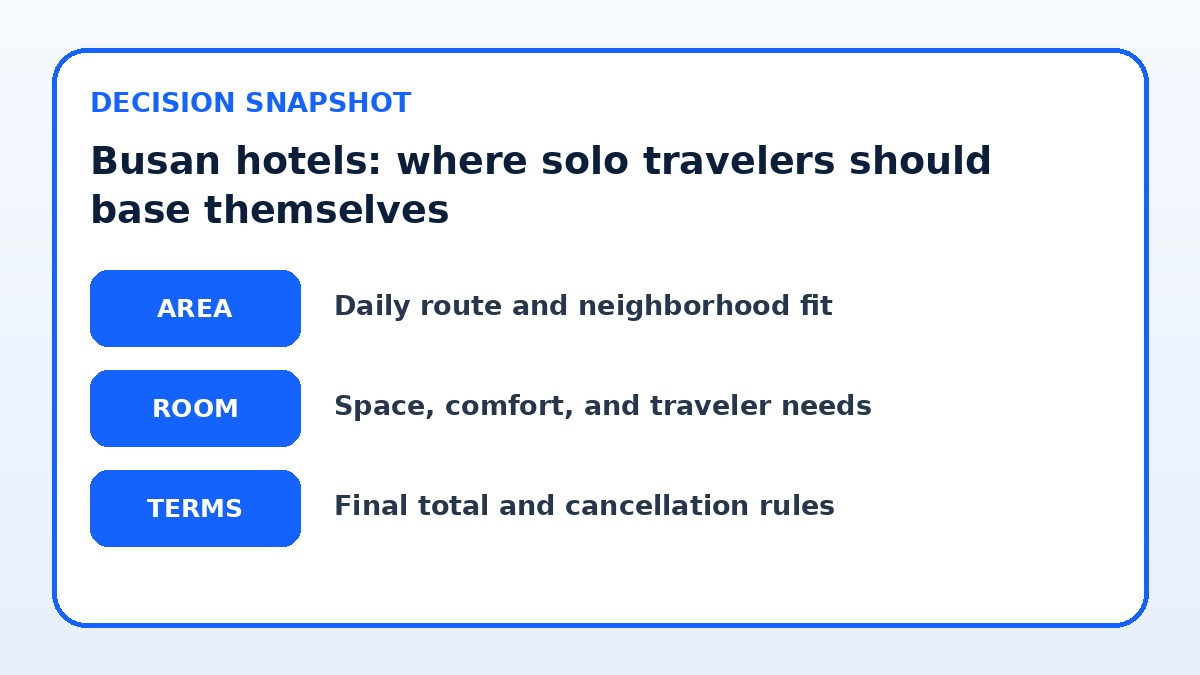
Pick the neighborhood first: for a solo trip to Busan you’ll decide which daily rhythm you want—beach time, nightlife, transport efficiency, or compact sightseeing—and then pick a hotel that supports that choice. If you want long beach walks and cafes, Haeundae puts you on the sand; if you want subway connections and an all-hours food scene, Seomyeon is the practical hub. Nampo-dong offers traditional markets and short walks to cultural spots, while Gwangalli is quieter at night with excellent skyline views. This guide compares those four areas by fit, typical daily friction, room and party needs, and final booking terms so you can shortlist an area before browsing live room inventory (check provider pages for the latest availability and policies). Read the quick comparisons, then use the checklist at the end to lock in the right block and room type for your solo style.

Check live stays in the areas that fit
Use your dates and party size to compare current rooms after you narrow the neighborhood fit.
Neighborhood fit: what each area is best for
Haeundae suits solo travelers who plan to center days on the beach, cafés and seaside walking. Hotels range from international chains to guesthouses near the sand, and daytime services like bike rental, beachfront cafés and tourist information are concentrated and easy to find. For someone who values being able to step out and be immediately on the shore, Haeundae removes the transit decision most mornings and keeps sightseeing and relaxation compact.
Seomyeon is a dense, transit-forward neighborhood ideal for solo travelers who want flexibility. It’s a commercial and nightlife hub with multiple subway lines crossing, making trips to Busan Station, Centum City, and Nampo-dong straightforward. If you plan many day trips or prefer to move around the city quickly between museums, shopping and restaurants, Seomyeon’s location reduces walking distance and the need for taxis late at night.
Choose an area-selection strategy
| Area approach | Best for | Tradeoff to check |
|---|---|---|
| Beach-first (Haeundae) | Solo beach days, cafés, immediate seaside access | More tourist crowds and longer trips to downtown cultural sites |
| Transit hub (Seomyeon) | Fast metro access, nightlife, flexible day trips | Fewer seaside views and busier urban atmosphere |
| Cultural walkable (Nampo-dong) | Markets, short sightseeing walks, harbor atmosphere | Less late-night beach leisure and fewer modern hotel options |
| Quiet coastscape (Gwangalli) | Peaceful nights, bridge-lit skyline views, café-facing water | Longer subway rides to some major attractions |
Daily-route friction: how each base affects moving around
Staying in Haeundae keeps most mornings and late afternoons frictionless because major sights along the east coast are nearby, but trips to downtown Nampo-dong or the westside shopping malls may require longer subway rides or transfers. Expect tourist foot traffic on weekends and summer afternoons; if you prefer quieter morning starts, pick a hotel on a side street away from the main strip. Also note that some attractions on the southern coast are easier reached by bus from Haeundae than by subway.
Seomyeon minimizes transit friction for multi-directional sightseeing because it’s a transfer node for the metro. That makes day trips to the coastline, the ferry terminal, and Centum City simpler, typically with a single subway transfer. Nighttime movement is easy too: late-night food and convenience stores are plentiful, and many hotels here are within a short walk of transit for late returns, which is a practical benefit when traveling solo.
Now compare like with like
Keep the same dates, guests, room needs, and cancellation preferences while you compare the final choices.
Room and party needs: what to book depending on your solo style
If you value privacy and a quiet night in, look for hotels in quieter blocks in any district and book a non-street-facing room; boutique hotels and business hotels commonly offer smaller, private rooms that are easier on a solo budget. Haeundae and Gwangalli have many rooms with sea views, which are great for solitary evenings but often come in higher-category rooms. Check whether the property adds extra fees for late check-in or storage, and verify cancellation and payment terms on the hotel’s booking page before confirming.
If you plan to socialize — join local food tours, meetups, or use co-working cafés — consider a guesthouse with communal areas or a mid-range hotel near lively streets. Seomyeon and Nampo-dong have many small guesthouses and hostels that facilitate meeting other travelers. When choosing a room, decide between a dorm-style room or private single/double; read the provider’s room description carefully to confirm bed type, shared bathroom details, and any house rules that affect solo guests.
Hotel booking check before payment
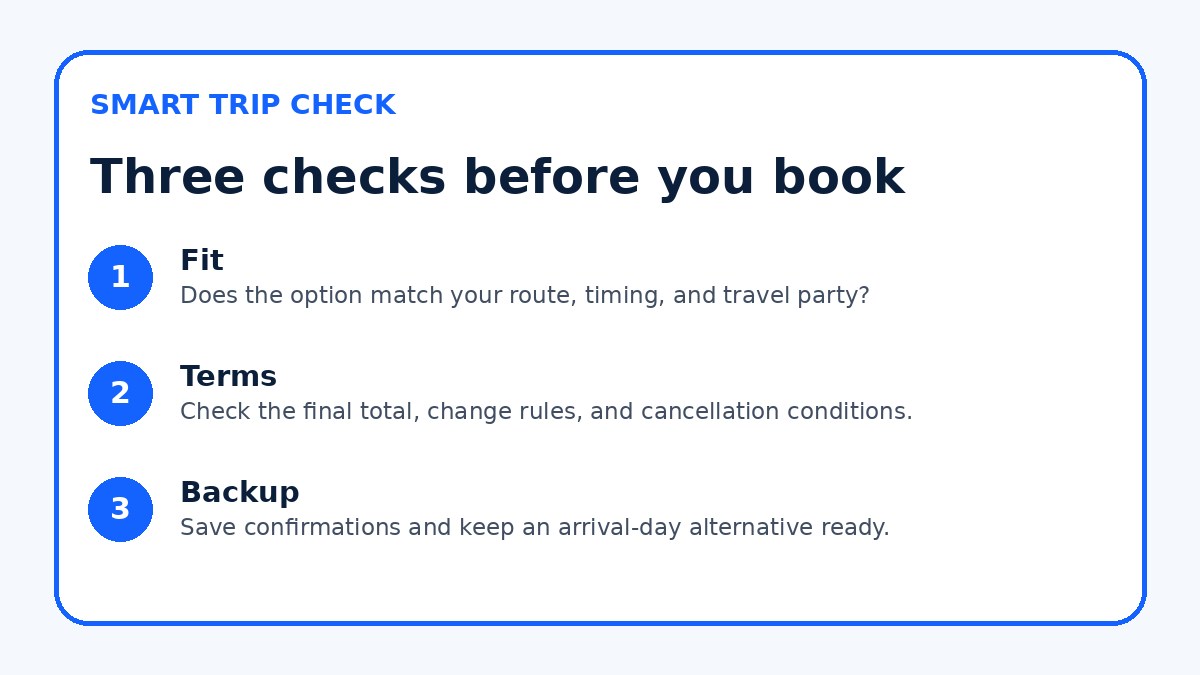
- Decide which daily rhythm you want (beach days, nightlife, transit hub, or walkable culture) and choose the neighborhood that matches it.
- Search hotels in your chosen area and filter for exact check-in/out times, cancellation flexibility, and luggage storage options.
- Confirm bed type and room orientation (street view vs. sea view) in the room description before booking.
- If you need late-night reception, verify 24-hour front desk or self-check-in and get confirmation on the booking page.
- Check transportation links: nearest subway station name, typical transfer count to your top two planned attractions, and taxi availability.
- Read recent guest reviews for noise, cleanliness and safety details, then cross-check any special requests directly with the property.
Final booking terms: what to check before you confirm
Verify cancellation and prepayment rules on the booking page you use; policies differ across properties and platforms and can affect flexibility if your plans change. Also check what identification and registration the hotel requires at check-in, whether the property accepts international cards or requires local payment options, and whether they offer luggage storage if you plan to arrive early or depart late. For Trip.com or similar sites, use them to compare availability and confirm the listed policies on the hotel’s official page before finalizing.
Confirm exact check-in and check-out times, any extra charges for late arrival, and whether breakfast is included or available a la carte. If you’ll rely on late-night returns, ask about 24-hour front desk service or self-check-in options. Finally, if accessibility, quiet floors, or high-floor ocean views matter, request them directly and get a written confirmation through the booking platform or the hotel’s official contact to avoid mismatches on arrival.
Hotel Guide questions travelers ask
Which Busan neighborhood is safest and easiest for solo travelers at night?
Safety in Busan is generally good, but night-time convenience varies by area. Seomyeon and the central parts of Nampo-dong have many late-night shops, restaurants and frequent pedestrian traffic, which can feel safer for solo travelers returning late. Haeundae is busy in summer evenings along the strip but quieter on side streets; choose a hotel with a staffed front desk if you anticipate arriving late. For any property, check recent guest comments about lighting, staff availability, and neighborhood activity and confirm reception hours on the booking page before you arrive.
Should I prioritize being near a subway station when booking solo in Busan?
Prioritizing proximity to a subway station is a practical choice for solo travelers because it reduces reliance on taxis and simplifies reaching attractions or transfer points. Seomyeon is the best example of a transit hub; Haeundae and Gwangalli also have stations but may require a short walk or bus for some specific destinations. If you have mobility needs or plan early starts, pick a hotel within five to ten minutes’ walk of a station and verify station names and exits on a map before booking to ensure the route to your key sites is straightforward.
How much time should I allow between hotel check-out and a late-night flight or train?
Allow extra buffer time between hotel check-out and late-night trains or flights because transport frequency and transfer times can vary. If you plan to store luggage after check-out, confirm the hotel’s storage policy and whether it is complimentary. For travel to Busan Station or Gimhae Airport, map out the likely route, including walking to a station, potential transfers, and peak-hour delays, and leave at least an extra 60–90 minutes beyond the transit estimate to account for unexpected waits; verify schedules on the transport provider’s pages before you travel.
Final decision note
Shortlisting the right Busan neighborhood for a solo trip starts with the question: what will most shape your days—seaside relaxation, fast movement around town, market walks, or quiet evenings? Choose Haeundae for beach-centered days, Seomyeon for transit efficiency and nightlife, Nampo-dong for walkable cultural access, and Gwangalli for a more relaxed coastal feel with scenic night views. After you pick an area, use the checklist items to compare rooms, confirm reception hours, and verify cancellation or storage policies on the booking page you’ll use. If you want a quick comparison of current availability, you can check Trip.com as one of several places to see live inventory; always verify hotel-specific rules and charges on the provider’s official booking page before you finalize.
Continue planning
Check current options and final conditions
Use the provider page to confirm live availability, the final total, cancellation terms, and every condition that matters to your trip.
This evergreen planning guide was created with AI-assisted drafting and a structured quality review. It does not display live prices, schedules, availability, visa guidance, or provider rankings. Verify current details before booking. Some links are affiliate links; we may earn a commission at no additional cost to you.