
If you’re traveling to Busan alone, flexible booking terms can make or break the trip when plans shift. The practical answer: prioritize rates that allow free cancellation until close to arrival, explicit policies for same-day or late changes, and payment options that don’t lock you into nonrefundable prepayment. Compare how a rate handles cancellations, date changes, and required deposits — and confirm exactly what the hotel’s booking page says before you pay. For extra peace of mind, look for free cancellation through the provider and a clear, written policy on refunds and credits so you won’t be surprised at check-in. In the following sections I’ll explain the tradeoffs between refundable and nonrefundable rates, how to read policy fine print, what to ask the hotel directly, and how solo travelers can balance flexibility with price and location priorities in Busan.
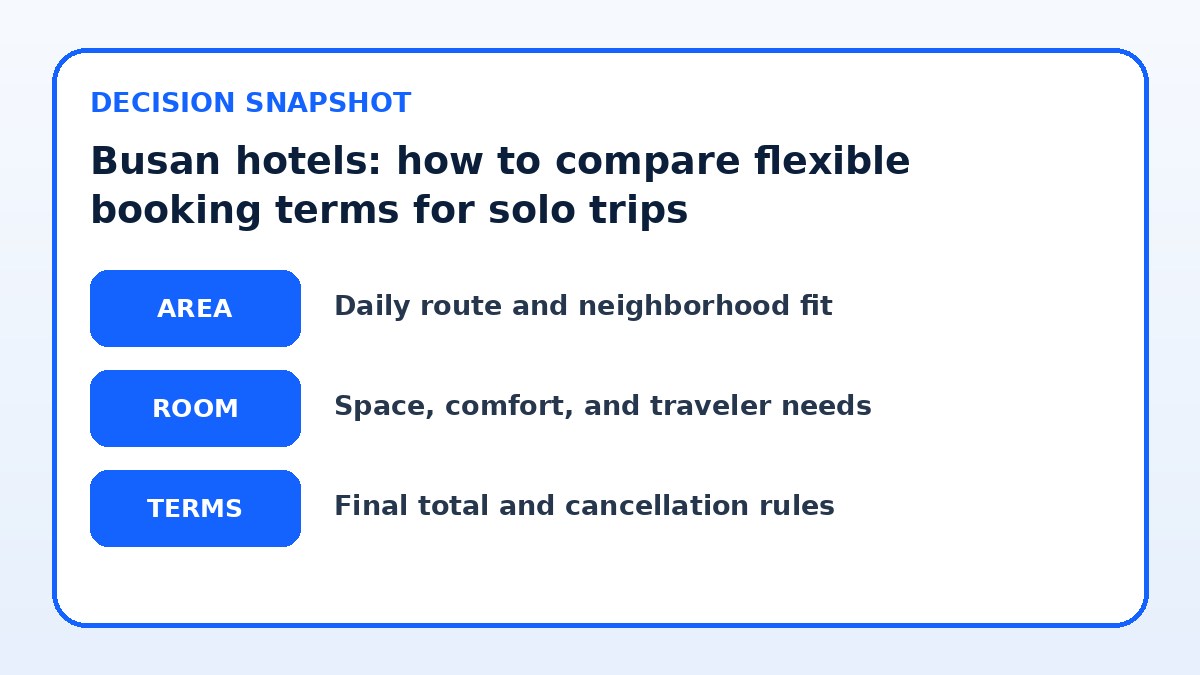
See current options before you compare the details
Availability and final conditions change. Open Trip.com now or keep reading for the practical comparison.
Refundable vs nonrefundable rates: practical tradeoffs
When scanning Busan hotels, you’ll commonly see refundable and nonrefundable rate options. Refundable rates generally let you cancel for a full refund up to a given cutoff (for example, several days before arrival), while nonrefundable rates offer a lower headline price in exchange for little or no refund if plans change. For a solo traveler, a refundable rate reduces stress: you can lock in a room near transit, food, or nightlife and still adjust plans without losing money. The tradeoff is typically a higher upfront cost or limited availability of these flexible rooms during busy periods.
Nonrefundable rates can make sense if your dates are firm and you want to save on base cost, but they increase risk: an illness, a flight change, or a last-minute work obligation could mean you forfeit the entire charge. If you consider a nonrefundable deal, weigh whether travel insurance or a credit card that covers trip interruptions would genuinely protect you. Also confirm whether the provider treats cancellations differently during special events or peak travel dates, since stricter rules often apply and will be on the booking page.
Date changes, rebooking rules, and when to ask for exceptions
Cancellation is only one part of flexibility: date-change policies matter for solo travelers who may extend or shorten a stay. Some hotels allow free date changes up to a cutoff, others permit changes but charge a one-time fee, and some require you to cancel and rebook which can risk losing your room. Before booking, check whether changes are allowed to the same room type and rate; some flexible rates lock you into a higher-price rebooking if the original rate is gone. If you anticipate shifting plans — for example staying longer after meeting people or shortening the trip for weather — prefer a rate that explicitly allows modifications.
If a policy looks rigid but you want flexibility, contact the hotel directly to ask about compassionate exceptions or credit vouchers for future stays; small properties are sometimes willing to be flexible if you explain your situation. When doing this, get the response in writing (email or confirmed message) and save it alongside your booking confirmation. If you booked through a third-party platform, verify that the platform will honor any written promise from the property and understand where refund liability lies—on the hotel or the booking site.
| Approach | Best for | Tradeoff to check |
|---|---|---|
| Fully refundable rate | Solo travelers needing maximum schedule flexibility | Higher nightly rate and possible limited availability during peak dates |
| Partially refundable or deposit-based rate | Travelers balancing some flexibility with lower upfront cost | Partial loss possible if you cancel after the deposit deadline |
| Nonrefundable prepay rate | Firm itineraries where cost savings outweigh risk | Little or no refund if you need to change plans |
| Pay-at-hotel with card guarantee | Those who prefer to delay payment until arrival | Reservation may be canceled or charged if card authorization fails |
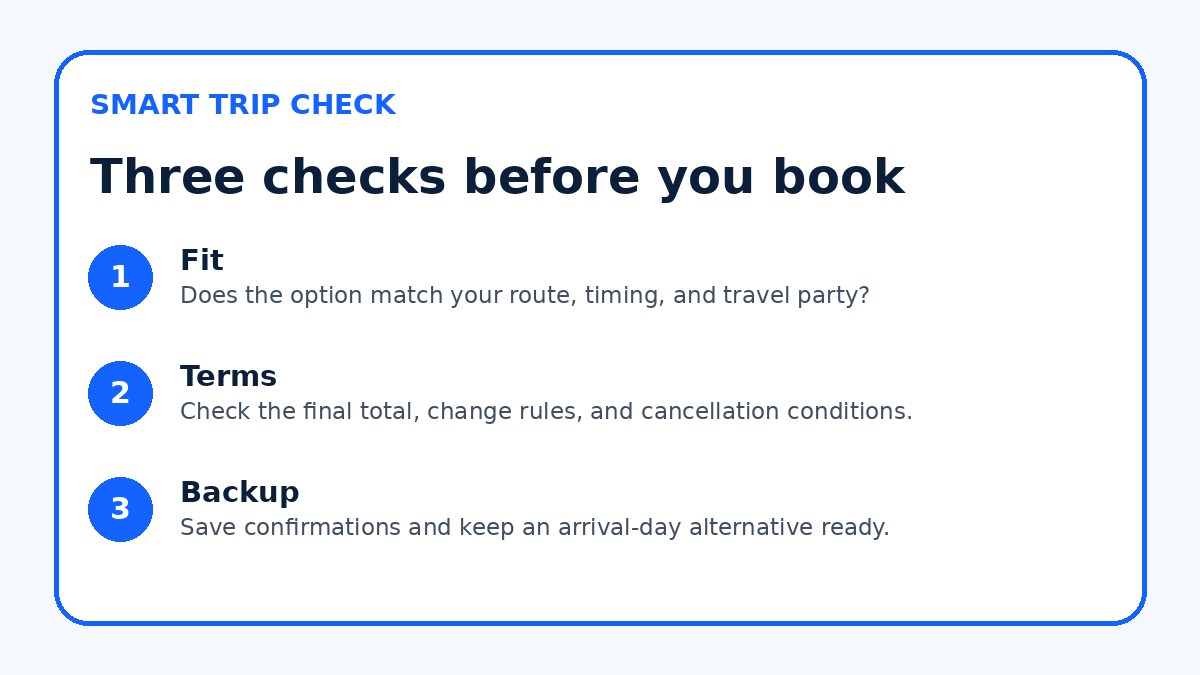
Ready to check the option that fits your plan?
Use your exact dates and traveler details so the provider page can show the current total and conditions.
Deposit, prepayment, and how payment timing affects risk
Booking pages will show whether a rate requires immediate full prepayment, a partial deposit, or just a credit card to guarantee the reservation. Full prepayment on a nonrefundable rate is the riskiest for solo travelers because you cannot recover funds through the hotel if you cancel outside the allowed window. A partial deposit reduces upfront exposure but be aware of how the remainder is collected and whether the deposit itself is refundable. Confirm when the hotel will actually charge your card, what happens if the card declines later, and whether any administrative fees apply to refunds.
Even when a property takes only a card number to hold the booking, many hotels perform an authorization or temporary hold that can affect your available credit. For longer stays or boutique properties, ask whether holds are released immediately upon cancellation or whether processing can take several days. If you rely on a credit card with protections, understand the card issuer’s dispute process and timelines so you can act quickly if a refund is delayed or a charge is disputed.
Before you book
- Read the exact cancellation cutoff and whether refund processing days are specified before booking.
- Confirm whether date changes are allowed without fees and whether the same rate will apply on the new dates.
- Ask the hotel in writing about deposit refunds and the timeline for releasing card authorizations.
- Compare the booking platform’s policy with the hotel’s direct policy and save both pages as screenshots.
- Verify whether special-event or peak-season terms override the listed policy for your travel dates.
- Keep contact details and a written confirmation of any exceptions the property agrees to honor.
Reading the fine print and verifying policy details before you pay
Policies are often split across the hotel’s page, the rate conditions, and the booking confirmation email; discrepancies happen. The best habit is to read the cancellation and change conditions on the exact rate you select, then scroll to the booking confirmation and check that the stated policy matches. Look for explicit phrases about time cutoffs (for example, hours before arrival), whether refunds are issued back to the original payment method, and whether third-party taxes or service fees are refundable. If the language is vague, ask the property or the booking platform to clarify in writing.
When a policy could change — for instance, during festivals or peak seasons — the hotel’s site should state this; if not, confirm whether special-event rules apply to your dates. Keep screenshots or a PDF of the full booking page and confirmation, including policy text; these records are your proof if a dispute arises. Trip.com can be a convenient place to compare availability and headline policies, but always verify the final terms on the hotel’s own confirmation page and payment screen before accepting any charges.
Frequently asked questions
How far in advance should a solo traveler book a refundable room in Busan?
Book as soon as your travel dates are firm enough to reduce stress but balance availability and price. For refundable rooms, earlier booking increases the chance of securing a convenient location and desirable amenities, while still preserving flexibility. However, during local festivals or holidays hotel availability tightens and flexible rates can sell out; if you see a refundable rate that suits your budget and location priorities, reserve it and you can cancel later if plans change. Always check the cancellation cutoff so you know the last day you can cancel without penalty.
If a refund is promised, how long will it take to see the money back?
Processing times vary by hotel, payment method, and banking systems. Many hotels initiate refunds promptly, but the money may take several business days to reappear on your card statement, especially across international banks. Check the provider’s stated refund timing on the booking confirmation and ask whether they issue refunds directly or via the booking platform. If a refund is delayed beyond the stated window, contact both the hotel and your payment provider with your booking confirmation and any screenshots to speed resolution.
Can I rely on a hotel’s verbal promise for an exception to the cancellation policy?
Verbal promises are risky because front-desk staff or reservation agents may not be authorized to override written policy. If an exception is offered, ask for it in writing — an email from the hotel’s reservations team or a message through the booking platform — and attach it to your booking confirmation. If you booked through a third-party site, request that the platform record the change so liability is clear. Written confirmation gives you evidence if disputes arise at check-in or during refund processing.
Final planning note
For solo travelers in Busan, flexible booking terms are a tool to manage uncertainty: refundable or change-friendly rates reduce stress, while nonrefundable options save money if you’re sure of your plans. The decision comes down to how likely your dates are to shift and how much of a price difference you’re willing to accept for flexibility. Read the exact rate conditions, verify payment timing and deposit rules, and get any exception in writing. Keep screenshots of the booking pages and confirmation, and compare the hotel’s direct terms with the booking platform before completing payment to avoid surprises.
Continue planning
Check current options and final conditions
Use the provider page to confirm live availability, the final total, cancellation terms, and every condition that matters to your trip.
This evergreen planning guide was created with AI-assisted drafting and a structured quality review. It does not display live prices, schedules, availability, visa guidance, or provider rankings. Verify current details before booking. Some links are affiliate links; we may earn a commission at no additional cost to you.