Pick the neighborhood first. For a business traveler in Busan, neighborhood choice determines how often you’ll tolerate taxi fares, subway transfers, and late check-outs when plans shift. If your schedule changes, flexible booking terms—free cancellation, refundable rates, or same-day amendment windows—matter as much as proximity to meeting venues. This guide helps you shortlist an area based on daily routes, accommodation type needs, and the booking terms to prioritize. Read the quick comparison rows to pick an area-selection approach, then use the sections to balance commute friction, room setup for work, and the exact contractual terms to verify before you finalize a reservation. If you prefer, compare current availability and provider terms on Trip.com or the hotel’s official booking page, but always confirm the final rate conditions on the vendor’s checkout screen.

Check live stays in the areas that fit
Use your dates and party size to compare current rooms after you narrow the neighborhood fit.
Neighborhood fit: match area strengths to your meeting map
Start by mapping where your meetings, client sites, or conference venue are clustered. Busan’s coastline, business districts, and transfer hubs create distinctly different tradeoffs: staying near Haeundae suits those with conference centers and seaside hospitality, while Seomyeon is a better pick for multiple short client meetings and quick dining options. If you have repeated appointments in one district, favor proximity over novelty. Reducing intra-city travel saves time and mental energy—more valuable than an extra star or scenic view when you’re juggling back-to-back meetings.
Also factor in the arrival point you’ll use—train, airport express, or long-distance bus—and transfer convenience from that hub to potential neighborhoods. If you anticipate late arrivals or early departures, neighborhoods with direct taxi routes or minimal subway transfers are worth the slight premium. Finally, consider on-site business amenities in the area: co-working spaces near the hotel or nearby cafes with private seating can replace costly hotel meeting rooms for short discussions.
Choose an area-selection strategy
| Area approach | Best for | Tradeoff to check |
|---|---|---|
| Stay near your conference or main client site | Minimizing daily travel time for high-intensity multi-day events | Less flexibility if meetings move to other parts of the city; possibly fewer late-night dining or public transit options |
| Base in a central transit hub (e.g., Seomyeon) | Balanced access to multiple neighborhoods and quick transfers across Busan | Can increase short hops and walking; noise and crowds may interfere with rest or late working |
| Choose a quieter residential neighborhood near an express route | Peaceful evenings and reliable taxi or express transit links for early departures | Longer daytime commutes and fewer immediate on-site business services |
| Pick a seaside district with conference resources (e.g., Haeundae stretch) | Large event spaces, hotel business centers, and client-facing hotel environments | Potentially higher room rates and distance from inland client offices |
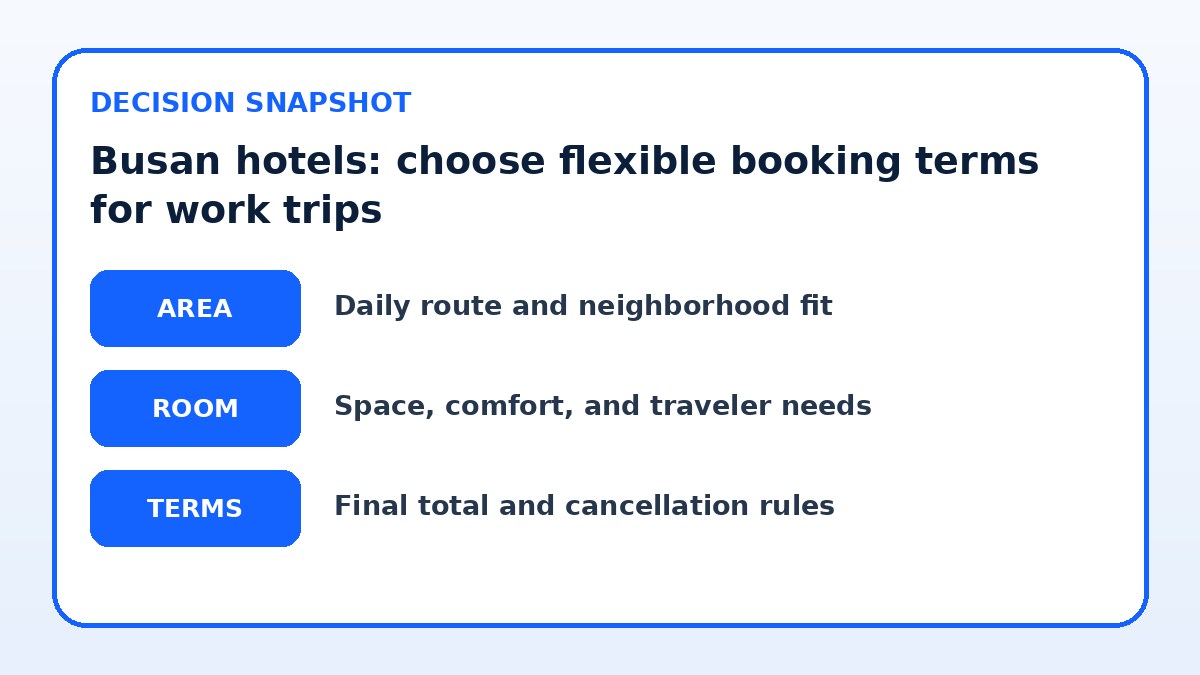
Daily-route friction: measure door-to-door cost, time, and stress
Daily-route friction is more than travel time—include waiting, walking between stations and offices, and the availability of taxis at night. An area that looks central on a map can still require multiple subway changes or a long walk; those small frictions accumulate, especially when you’re carrying a laptop and documents. For each candidate neighborhood, estimate the likely door-to-door routine for a typical day: hotel to meeting, meeting to lunch, then back to the hotel or onward to another appointment. If that routine often crosses the same transfer nodes, choose the hotel on the simpler side of that route.
When contingency time is important, prefer neighborhoods with straightforward taxi access or frequent direct public transit to airports and main train stations. If you will work between bookings, also check evening noise levels and 24-hour conveniences; quieter residential pockets may require less rest but fewer late-night food options. Balance the stress of complex transfers against the convenience of on-demand services—sometimes a slightly longer but simpler route is worth more than a marginally shorter one with multiple connection points.
Now compare like with like
Keep the same dates, guests, room needs, and cancellation preferences while you compare the final choices.
Room and party needs: pick layouts that let you work effectively
Business travelers often need a dependable workspace more than extra sleeping area. When shortlisting hotels, filter room types for a proper desk, comfortable chair, adequate lighting, and accessible power outlets rather than basing the choice on bed size alone. If you expect to host one or two clients in your room, check whether the property offers executive rooms or small meeting spaces included with certain rate packages. For teams or senior executives traveling together, confirm suite configurations or connecting-room options and whether the hotel’s booking terms for group reservations allow flexible changes.
Also consider ancillary services that affect productivity: on-site printing, secure high-speed Wi-Fi with a business tier, and quick laundry for multi-day trips. These services may be available only under refundable or corporate flexible rates, so verify which amenities are included under each rate type before you pick. If you often work late, check whether the hotel provides 24-hour reception and in-room dining that operates late into the evening to avoid disrupting your workflow.
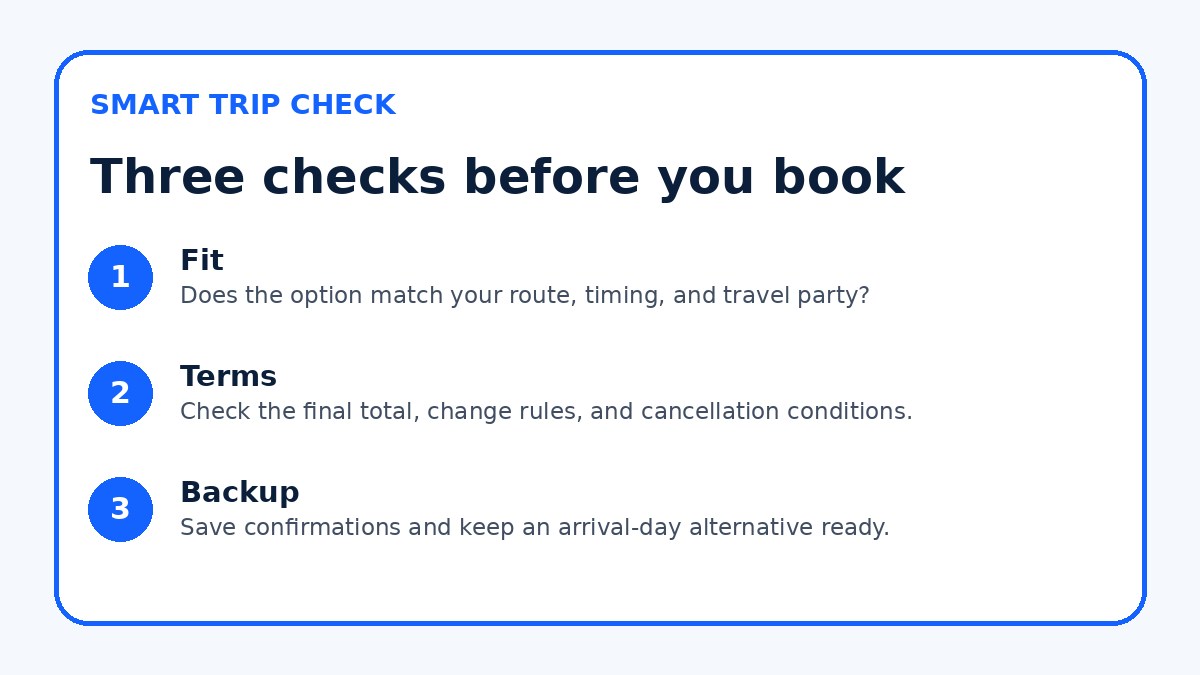
Hotel booking check before payment
- Map your most frequent daytime addresses and shortlist neighborhoods within one straightforward transfer or short taxi ride.
- Compare refundable vs nonrefundable rates and write down the exact cancellation cutoff and refund processing timeline from the checkout page.
- Confirm room layout: ask for a desk, ergonomic chair, access to outlets, and business Wi-Fi details in writing before booking.
- Verify payment terms—whether the rate charges at booking, requires a card hold, or bills on departure—and record the merchant name for expense reports.
- Ask the hotel about same-day modifications, late checkout availability, and any fees; get confirmation in email if offered.
- If traveling with colleagues, confirm group booking amendment rules and how changes affect individual room refunds or reallocations.
Booking terms to verify: what to check on the final checkout page
Before you commit, verify the exact cancellation window, amendment fees, and how refunds are processed on the checkout page. Look for the difference between a ‘free cancellation until X date’ and a refundable rate that still requires a processing period for refunds—timing matters if you might need funds returned quickly. Also confirm whether same-day modifications are allowed, whether they incur a fee, and what qualifies as a nonrefundable offer. If the booking platform lists policies differently from the hotel, prioritize the hotel’s official policy or contact the property directly for clarification.
Check payment authorization terms too: some flexible rates still require a credit card guarantee or a hold on funds at check-in. Confirm whether the hotel charges at booking or at stay completion and how refunds are posted. If mileage, corporate billing, or third-party invoicing matters for expense reconciliation, verify those options and any paperwork needed. Finally, document the cancellation policy in a screenshot or saved confirmation so you can reference it if plans change.
Hotel Guide questions travelers ask
How do I decide between a refundable rate and a lower nonrefundable option for a Busan business trip?
Choose refundable rates when there’s any chance meetings will move or be cancelled; the additional flexibility can save time and stress by avoiding rebooking. If your schedule is fixed and savings are substantial, a nonrefundable rate can make sense—only after you’ve confirmed travel approvals and internal expense rules. Always compare the tangible difference in refund processing time and whether the nonrefundable savings exceed potential change fees you might incur from last-minute itinerary changes.
What specific booking-page details must I verify to avoid surprises with flexible terms?
On the final booking page, confirm the exact cancellation cutoff (date and time), whether refunds are immediate or require processing, and any penalties for modifications. Check who is the merchant of record and whether the rate requires a deposit or authorization hold, plus the stated policy for no-shows. If corporate billing, loyalty points, or third-party vouchers are involved, verify how those interact with flexible or refundable rates so you don’t lose benefits when changing plans.
If I need a quiet workspace, which hotel features and rate notes should I prioritize in Busan?
Prioritize a room with a dedicated desk, confirmed high-speed Wi-Fi (business-tier where available), and a request for a quiet room or higher floor. Look for rate descriptions that include business services such as meeting-room credit or printing access—these are often part of corporate or refundable packages. When booking, ask whether the hotel can guarantee a quiet-room assignment and whether noise complaints are handled swiftly; get any such commitments in the booking confirmation or by direct email.
Final decision note
For business travel in Busan, start by picking the neighborhood that best matches your meeting map and tolerance for daily travel friction. Once your area is shortlisted, choose a room type that supports working from the room and compare rate policies for cancellation, same-day changes, and payment authorization. Verify the exact policy language on the final checkout page and save confirmation details. If you want a quick way to compare multiple properties and published terms, you can check Trip.com or the hotel’s official site, but always rely on the vendor’s final booking screen for the definitive policy. Following this approach keeps your options open and reduces last-minute stress when plans change.
Continue planning
Check current options and final conditions
Use the provider page to confirm live availability, the final total, cancellation terms, and every condition that matters to your trip.
This evergreen planning guide was created with AI-assisted drafting and a structured quality review. It does not display live prices, schedules, availability, visa guidance, or provider rankings. Verify current details before booking. Some links are affiliate links; we may earn a commission at no additional cost to you.