If you want to explore Busan with kids and luggage, the practical choice is to rent a car and pick a base that balances city access with easy highway exits. For most families that means choosing accommodation near a major interchange or coastal road hub, where parking is available and drives to beaches, aquariums, and mountain viewpoints are short. A rental car gives flexibility for strollers, day trips to nearby towns, and hauling picnic gear — but it also adds navigation, parking, and child-safety responsibilities. Before you book, decide whether convenience (airport pick-up and a larger SUV) or lower cost and tighter city parking (compact car with a good public-transport backup) matters more. Below you’ll find how to compare vehicle types, where to base your family, what to verify on the rental page, and a checklist to finish reservations with confidence.
See current options before you compare the details
Availability and final conditions change. Open Trip.com now or keep reading for the practical comparison.
Where to base your family and why it matters
Your accommodation choice determines daily driving time, parking hassle, and how often you’ll rely on public transport. Staying in Haeundae or Centum City puts you close to major family attractions like the beach, shopping complexes, and aquariums; it’s ideal for short drives and quick returns midday for naps. Those neighborhoods tend to have plentiful hotels with parking or valet, but streets can be congested on weekends and parking fees may apply. If you prefer quieter mornings and cheaper lodging, neighborhoods on Busan’s western fringe or near Yeongdo island provide calmer streets and easier highway access, trading short-town trips for slightly longer beach drives.
Think through daily rhythms: are you planning many short stops (ice cream, playgrounds, museums) or fewer long drives to nearby destinations outside Busan? For many families, the best compromise is a centrally located base with good highway access—closer to mountain trails, coastal drives, and day-trip routes—so you can leave early for quieter drives and return before evening crowds. When comparing hotels or guesthouses, prioritize confirmed on-site parking, a safe place to store bulky items, and a ground-floor or elevator-access room to reduce stairs with luggage and strollers.
Choosing the right rental car for family needs
Vehicle size is the first practical decision. A compact sedan or small hatchback is easier to park in dense neighborhoods and is more fuel-efficient, but may be tight with two child seats, stroller, and luggage. A compact SUV or mid-size wagon gives more cargo space and a higher driving position that many parents prefer for visibility and comfort on winding coastal roads. If you will drive off the main highways frequently or expect heavy luggage, prioritize cargo volume and rear-seat anchor points for car seats over simply picking the biggest vehicle.
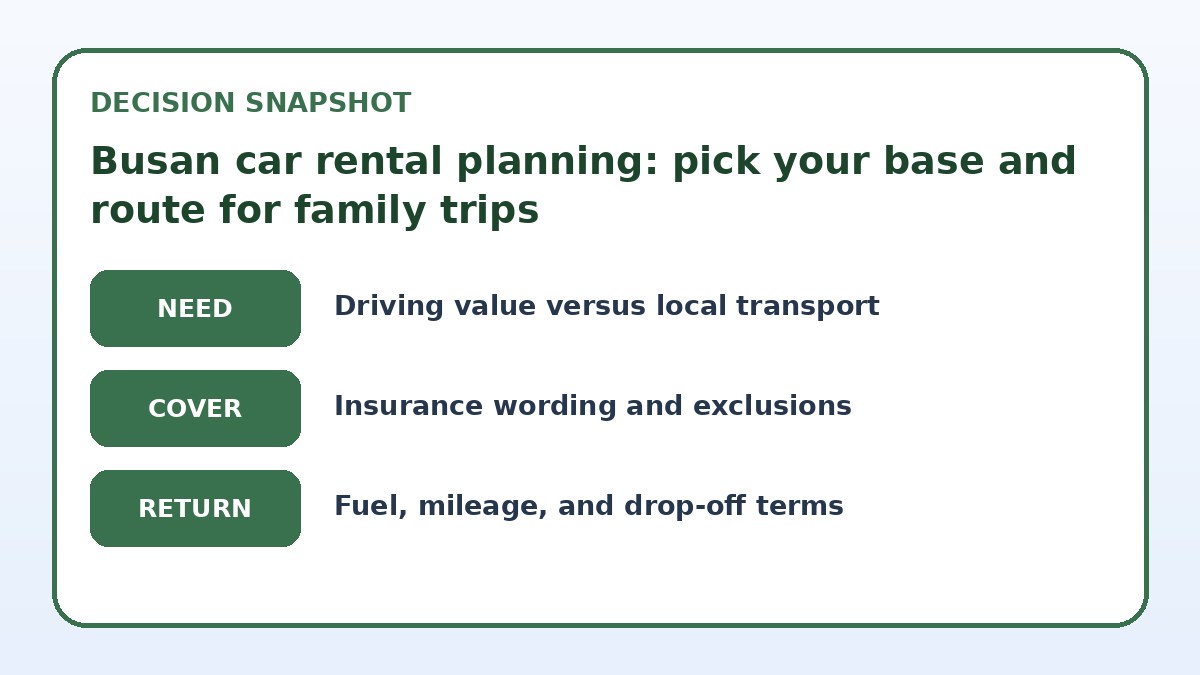
Beyond size, consider features that make each drive smoother: the availability of ISOFIX/LATCH anchors for seats, sliding rear doors (if available), built-in navigation or easy smartphone-mirroring, and air-conditioning that cools the back seats quickly. When you make a booking, explicitly request child seats, specify the number and ages of children, and confirm whether the seat(s) are included in the rate or supplied for a fee. On the rental’s final booking page verify fuel policy, mileage limits, and the process for roadside assistance—these details affect comfort and risk on family trips.
| Approach | Best for | Tradeoff to check |
|---|---|---|
| Base in Haeundae and rent a compact SUV | Families wanting beach access and flexible luggage space | Easier daytime access but potentially harder parking and higher local traffic |
| Base near Busan Station and rent a small hatchback | Families focusing on city attractions and public transport backup | Lower parking hassle in the city center but less cargo room for long day trips |
| Stay outside central Busan and rent a mid-size car | Families prioritizing quieter nights and highway day trips | Longer daily drives to city attractions but simpler parking and lower accommodation cost |
| Pick up at the airport and rent a larger SUV | Families arriving with lots of luggage or planning multi-day coastal drives | High convenience at pickup balanced against potentially higher rental and toll exposure |
Ready to check the option that fits your plan?
Use your exact dates and traveler details so the provider page can show the current total and conditions.
Practical driving tips and local considerations
Driving in Busan involves a mix of coastal roads, tunnels, and urban arteries with variable traffic patterns. Plan daily drives to avoid the morning commute and the late-afternoon exodus; mid-morning departures and early afternoons usually feel calmer. Use a navigation app with live traffic to route around tunnel bottlenecks and ferry approaches; download offline maps in case of spotty mobile coverage. Keep an emergency kit with snacks, water, a basic first-aid kit, wet wipes, and a familiar toy or tablet for longer drives—small comforts reduce stress for children during unexpected delays.
Parking is a continuous part of family driving calculations. Confirm whether your chosen accommodation includes a reserved parking space and whether public parking near attractions is family-friendly. Look for multi-story or underground lots with short walking distances to playgrounds, bathrooms, and transport hubs. When visiting beaches or busy markets, identify a backup parking option ahead of arrival so you don’t circle with hungry children. Finally, check the rental’s policy for tolls and electronic payment devices; know how tolls are charged and how to pay to avoid fines or unexpected charges when you return the car.
Before you book
- Confirm exact pickup and drop-off addresses and operating hours on the rental provider’s final booking page.
- Reserve the correct number and type of child seats and note ages/weights to ensure proper fit.
- Add a second driver to the contract and verify the ID and license requirements for each driver.
- Photograph the car’s exterior and interior during pickup and keep dated copies until the car is returned.
- Verify the fuel policy (prefer full-to-full), mileage limits, and how tolls are charged or reimbursed.
- Pack a small travel kit with water, snacks, wipes, a phone charger, and a printed map of planned stops.
What to verify on the rental page and at pickup
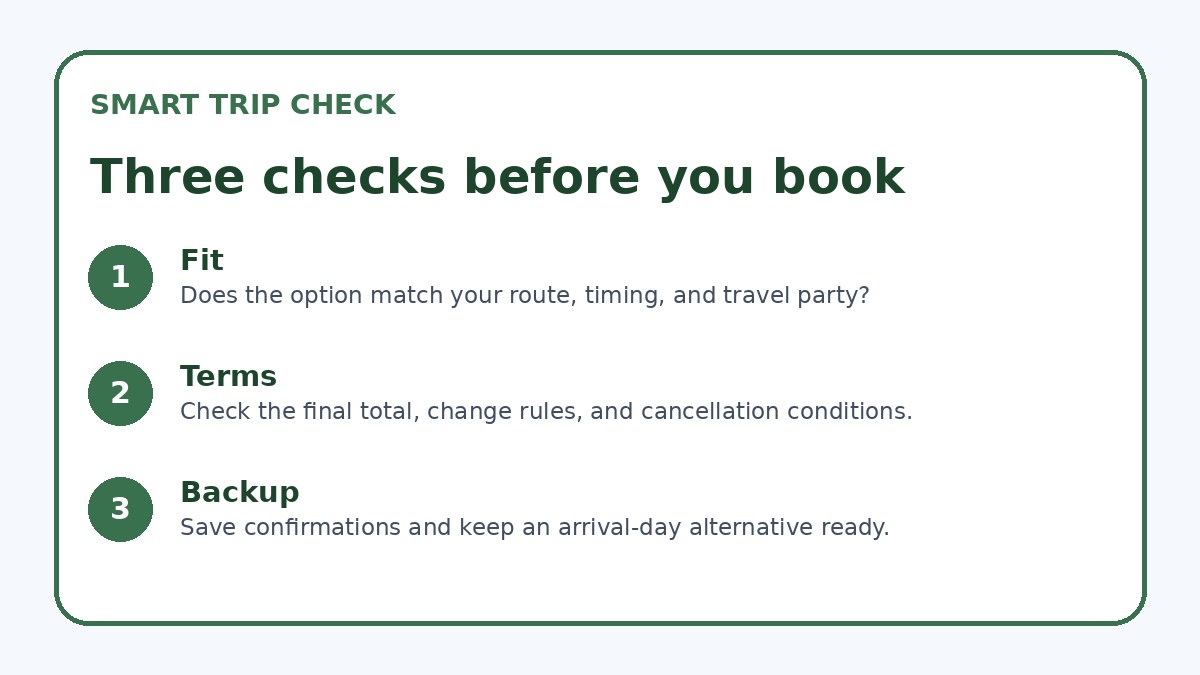
When you move from planning to booking, check the rental listing for exact pickup and drop-off locations, child-seat availability and fees, included mileage, fuel policy (full-to-full is easiest), and whether roadside assistance is provided. Confirm the age and license requirements for additional drivers if a partner will share driving. If you plan airport pickup, verify the terminal meeting point and allowable pickup windows—these details are often updated more frequently than vehicle availability. Trip.com can be used as one place to compare current availability and terms, but always confirm final terms on the provider’s booking page before committing.
At pickup, inspect the vehicle carefully with photos: note existing scratches, tire condition, and whether the child seat is properly installed if provided by the company. Test the seat belts and door locks, and confirm how the company handles tolls, parking citations, and fuel return. Ask the agent to show how to operate headlights, rear heaters, and the spare tire if available. If anything promised online—like GPS, a booster seat, or Bluetooth—is missing, request it be added in writing before driving away or ask for a documented exception so you can return the car if essential features are unavailable.
Frequently asked questions
Do I need an International Driving Permit to drive in Busan?
Rules about driving permits depend on your home country and the length of stay. Many visitors can drive with a valid foreign license and an International Driving Permit (IDP), but some national licenses require a Korean translation or temporary local permit. Check the rental company’s requirements and the official Korean transport authority guidance before booking. On the provider’s booking page confirm acceptable license documents, any minimum age limits, and whether additional verification is needed at pickup.
What should I do if a child seat provided by the rental company doesn’t fit our child?
If the provided child seat is the wrong size or installation type, raise the issue immediately at pickup and ask for an alternative. If the rental fleet lacks the correct seat, you can often bring your own if it meets local safety standards and has proper anchors. Verify return and damage policies for bringing personal seats. When booking, request specific seat models or brands when possible and ask the company to confirm suitability for your child’s age and weight on the final reservation page.
Are roads around Busan family-friendly for long day trips?
Yes, many of Busan’s coastal and mountain roads are family-friendly, with scenic pullouts, rest areas, and well-maintained surfaces. However, some coastal routes include narrow or winding sections and tunnels where slower speeds and attentive driving are required. Plan routes with regular stops for snacks, restroom breaks, and leg-stretching—especially when traveling with toddlers or older relatives. Use current navigation to avoid peak congestion and identify child-friendly attractions and parking before you leave each morning.
Final planning note
Renting a car for a family trip in Busan gives you control over timing, gear, and destinations, but it requires thoughtful choices about your base, vehicle size, and on-the-road routines. Decide first whether shorter daily drives and city convenience or relaxed parking and easier highways matter more to your group. Book the vehicle class that fits seats and luggage, request and confirm child restraints, and verify pickup details, toll handling, and fuel rules on the provider’s booking page. With a few practical checks at booking and pickup—and a simple driving rhythm that respects children’s needs—you’ll turn a rental car into reliable freedom for exploring Busan at your family’s pace.
Continue planning
Check current options and final conditions
Use the provider page to confirm live availability, the final total, cancellation terms, and every condition that matters to your trip.
This evergreen planning guide was created with AI-assisted drafting and a structured quality review. It does not display live prices, schedules, availability, visa guidance, or provider rankings. Verify current details before booking. Some links are affiliate links; we may earn a commission at no additional cost to you.