Short practical answer: for most first-time visitors to Budapest, skip the car if you plan to stay in or near the city center and rely on public transport, walking and occasional taxis. Choose a rental if your itinerary includes day trips beyond Hungary’s capital—wine regions, national parks, or remote villages—or if you value a flexible schedule and are comfortable with city traffic, parking rules, and tolls. This article helps you weigh convenience against cost, stress and practicality. Read the tradeoffs, decision criteria, and a clear checklist to compare renting against alternatives like trains, organized tours, and ride-hailing. If you do consider a car, the guidance will help you check insurance, fuel type, parking options and where to pick up the vehicle so you can make a confident booking decision.
When a Budapest car rental makes sense
A rental becomes attractive when your plans go beyond sightseeing in Buda and Pest. If you want to visit small villages, vineyards in Eger or Tokaj, Lake Balaton’s less-touristed shores, or national parks where public transit is infrequent, a car gives you direct control over timing and routes. Driving also helps when you travel with lots of luggage, young children, or mobility needs that make transfers and multiple train changes impractical. For multi-destination road trips, a single vehicle can be simpler than coordinating regional rail and bus schedules.
Another reason to rent is flexibility: early-morning departures, late drives home, or spontaneous stops are easier by car. If you plan to base yourself outside Budapest—at a rural guesthouse or a lakeside apartment—the daily commute into the city by public transport might be slower than driving. Still, count the time you will spend finding parking, paying for it, and navigating unfamiliar streets; these real costs reduce the advantage of door-to-door freedom.
When to skip the car in Budapest
If your trip focuses on central Budapest—its museums, baths, castles, markets and cafés—public transport plus walking is usually faster and less stressful than driving. Budapest’s tram, metro and bus network covers most attractions efficiently; taxis and ride-hailing fill gaps late at night. Traffic congestion, limited short-term parking in popular districts, and one-way streets make driving in the core slower. You’ll also need to understand local parking rules and where paid spaces or parking garages are available.
Budget and simplicity are other reasons to avoid a rental. Parking fees, fuel, insurance upgrades, tolls for certain highways, and time spent returning the car can push the practical cost higher than it first appears. If you prefer to leave logistics to someone else, organize a few guided day trips or use regional trains for day excursions—these options let you see beyond the city without the responsibilities of a vehicle.
| Approach | Best for | Tradeoff to check |
|---|---|---|
| Rent a car for full trip | Multi-stop regional itineraries, families, travelers with bulky luggage | Higher total cost and potential city parking and driving stress |
| Use public transport and add day tours | City-centered itineraries and those who prefer hands-off logistics | Less flexibility for remote destinations and early/late departures |
| Base in Budapest and rent for specific day trips | Visitors who want occasional rural trips without full-time rental costs | Extra coordination and possible higher per-day rental rates |
| Mix trains and ride-hailing | Short regional trips served by rail with convenient city movement | May require transfers and careful timing for door-to-door journeys |
Key decision criteria to compare options
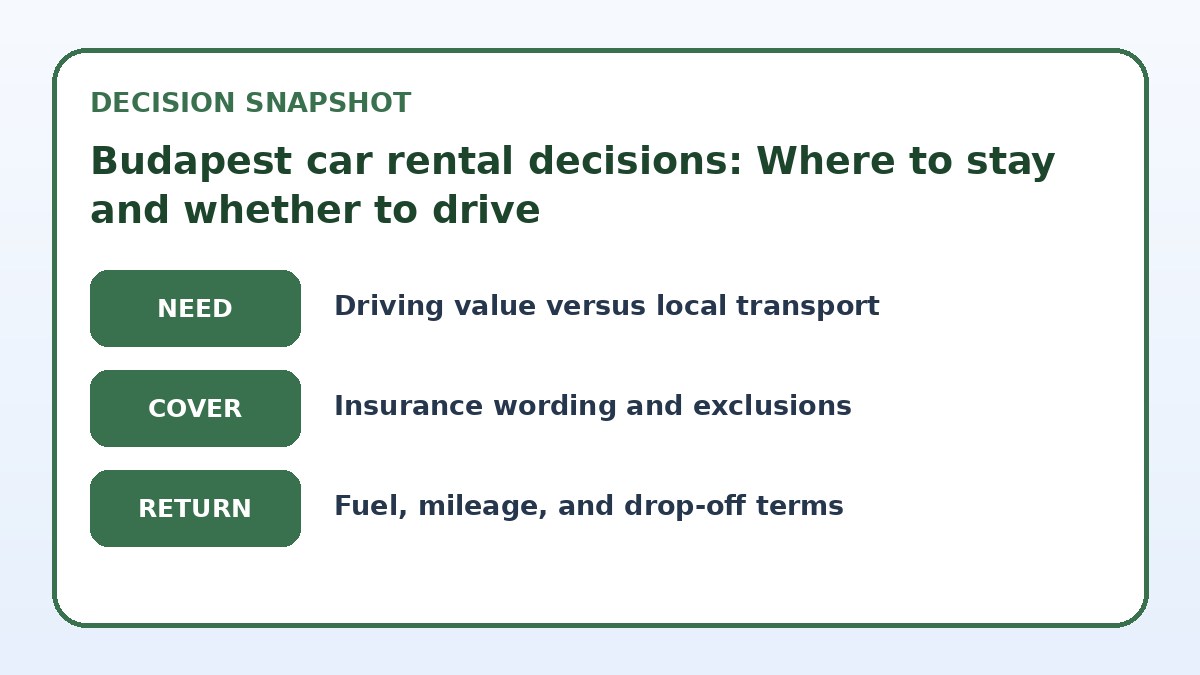
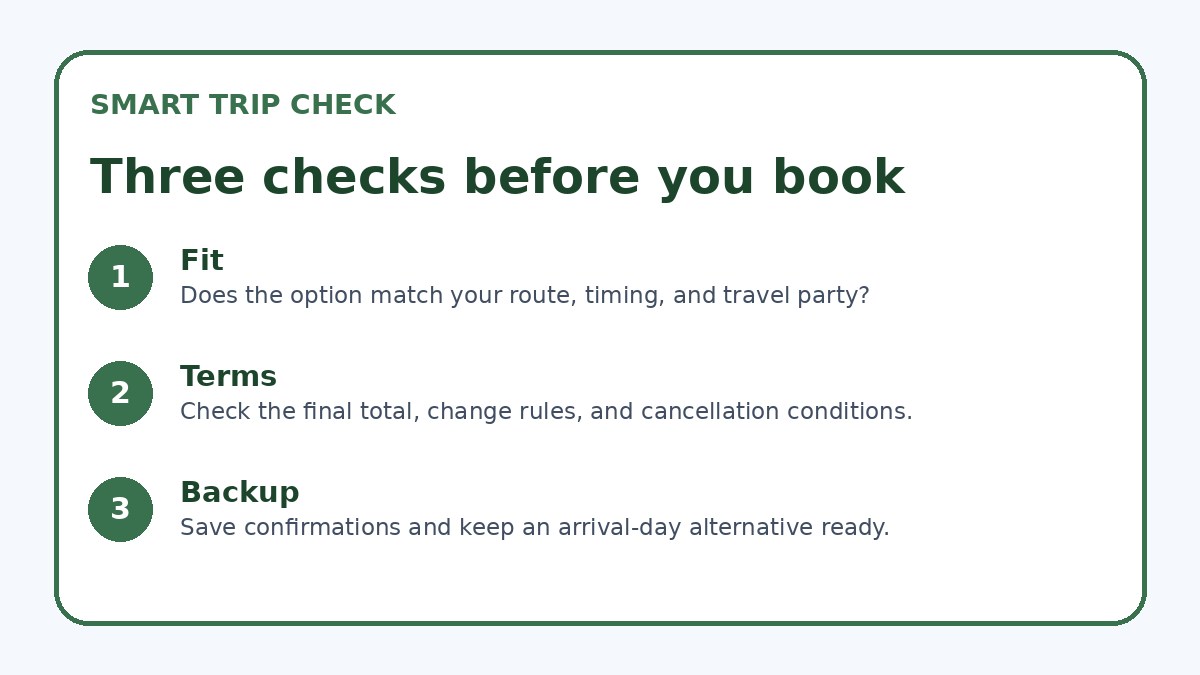
It helps to list what matters most: itinerary geography, flexibility, budget, mobility needs, and comfort with driving abroad. Map your planned stops and mark which are well served by rail or bus. Compare door-to-door travel time for each major day: does a car save enough time to justify parking and toll hassles? Consider total cost rather than rental base rate—include fuel type, insurance excess, possible cross-border restrictions, and parking fees. If you’re uncomfortable navigating in a foreign language or on unfamiliar roads, that stress should be part of your decision.
Also assess group size and luggage: a family with children or large suitcases may find the convenience of a single vehicle worth the extras. Conversely, solo travelers or couples who prioritize nightlife and easy parking-free movement will likely prefer public transit. Finally, check whether your accommodation includes parking or easy access to a garage. If not, short-term city parking can be tricky and expensive, which tends to tip the balance against renting.
Before you book
- Map all planned stops and mark which are served by direct trains or buses to compare door-to-door travel time.
- Confirm whether your Budapest accommodation includes secure on-site parking or easy nearby garages.
- Check the rental insurance excess, optional waivers, and whether your credit card offers rental coverage.
- Verify the fuel policy, mileage limits, and whether Hungarian highway vignettes or tolls apply to your route.
- Confirm pick-up and drop-off locations, desk opening hours, and any airport shuttle or after-hours procedures.
- Compare total estimated cost: base rate plus taxes, insurance add-ons, fuel, parking fees and potential cross-border charges.
Practical checks before booking a car
If you decide to rent, verify a set of details before you book. Confirm what insurance coverage is included and what the excess is; decide whether you need to add collision or theft protection. Check the fuel policy (full-to-full is simplest), mileage limits, and whether the rental requires a local vignette or electronic toll for Hungarian highways. If you plan to cross borders, confirm permitted countries and any extra fees. Always review the supplier’s final booking page for the exact cancellation policy, required documentation, and the address and opening hours of the pick-up location.
Also check vehicle size and parking needs—compact cars are easier in narrow streets and small garages. Ask about child-seat availability and whether the car has winter equipment if you travel outside summer months. Note that many providers allow airport pickup but have remote counters or shuttle requirements; confirm how you will reach the desk and whether any after-hours fees apply. As a comparison source, you can check Trip.com among other search tools to compare availability and basic terms, but verify every contract detail on the provider’s own page before confirming.
Frequently asked questions
Is driving in Budapest difficult for visitors?
Driving in Budapest involves navigating a busy city with tram tracks, one-way streets and limited short-term parking in central neighborhoods. Outside the center roads are generally straightforward, but you should be comfortable with local signage, which is primarily in Hungarian though major signs use international symbols. If you plan only to visit central sights, driving adds stress and time finding parking; for regional drives it’s easier. Practice routes on a quiet afternoon and ensure a reliable navigation app, but remember traffic and parking rules can affect timing.
Can I combine public transport in Budapest with renting a car for one day?
Yes—many travelers combine Budapest’s efficient public transit with renting a car for a specific day trip. This approach keeps the city portion simple while giving flexibility for rural excursions. Book a single-day rental that starts and ends at a convenient location, and confirm pick-up/drop-off times to match your transit schedule. Check whether the rental company charges one-way or hourly penalties, and verify parking options at both your Budapest base and the rural destination to avoid surprises.
What are the main extra costs to budget for with a rental in Hungary?
Expect more than the headline rental rate: budget for fuel, local taxes, optional insurance waivers, and parking fees in cities or tourist sites. Some highways and routes require a vignette or electronic toll—confirm whether these apply. If you cross borders, additional cross-border fees or extra insurance may be required. Also consider possible charges for additional drivers, GPS or child seats, and potential charges if the fuel tank isn’t returned full. Always review the provider’s final booking page to see exact fees and terms before you confirm.
Final planning note
For most first-time visitors whose plans are concentrated in central Budapest, a car usually creates more hassle than benefit: public transport, walking and taxis cover the city efficiently. Renting becomes a sensible choice when your itinerary reaches beyond easy rail and bus links—rural vineyards, national parks or multi-destination road routes—especially for families or travelers with lots of luggage. Make a clear comparison of total door-to-door time, real costs (including parking and insurance), and your comfort with driving abroad. Use the checklist to verify contract details before booking, and if you check providers online, confirm every policy and fee on the supplier’s final booking page.
Continue planning
Check current options and final conditions
Use the provider page to confirm live availability, the final total, cancellation terms, and every condition that matters to your trip.
This evergreen planning guide was created with AI-assisted drafting and a structured quality review. It does not display live prices, schedules, availability, visa guidance, or provider rankings. Verify current details before booking. Some links are affiliate links; we may earn a commission at no additional cost to you.