
If you’re visiting Taipei with kids, the practical choice is to book a hotel in a central neighborhood with easy MRT access, family rooms or connecting rooms, and quick access to food and convenience stores. That combination minimizes daily transit, gives you flexible meal options, and lets tired children return for naps without losing sightseeing time. Once you have the basics — location near an MRT line, a room configuration that fits your family, and reliable breakfast or easy access to restaurants — you can refine by amenities: do you need an in-house kid’s play area, a kitchenette, or luggage storage for early arrivals and late departures?
Tradeoffs are inevitable. The most central hotels shorten travel distances but can be busier and more expensive; quieter neighborhoods can offer space and lower noise but add travel time. Later in the article I’ll explain neighborhood choices, which room features matter most for families, how to check transport links and safety, and a short decision matrix to help you pick between convenience, space, and budget.
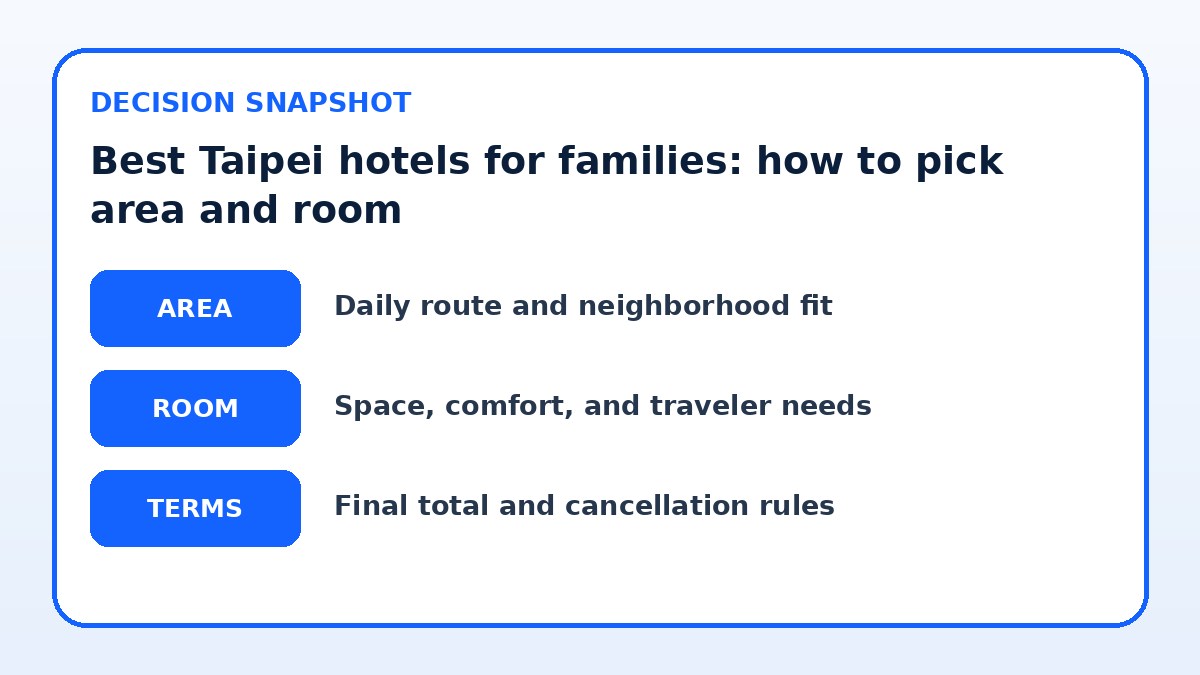
See current options before you compare the details
Availability and final conditions change. Open Trip.com now or keep reading for the practical comparison.
Which Taipei neighborhoods work best for families
For first-time visitors, central neighborhoods along the Taipei Metro (MRT) make day plans simpler. Areas like Ximending and Zhongzheng place you near museums, night markets and major transit hubs so you can return to the hotel quickly for naps or to swap gear. Da’an combines parks and family-friendly restaurants; it’s handy if you want more green space and calmer evenings. Look for hotels within a short walk of a station entrance to avoid long transfers with children and strollers.
If you prefer quieter evenings or slightly larger rooms for the same budget, consider neighborhoods a stop or two off the busiest corridors. These spots usually still have good MRT access but offer a calmer street scene and more residential conveniences. Before booking, map your planned daytime activities and measure walking or transit time from potential hotels. Balance the desire for a larger room or lower noise against extra minutes of travel between sights and the hotel.
Room types, bed setups and family-friendly amenities
When picking a room, think about sleep arrangements and flexible space. A suite or a room with a separate living area gives parents private space and lets a child nap on a sofa bed. Connecting rooms are often the easiest way for families needing separate sleeping areas without sacrificing supervision. If your child sleeps in a travel cot or you need extra bedding, check the hotel’s policy and reserve those items in advance on the booking confirmation page.
Amenities that matter most for families are practical ones: in-room refrigerators or kitchenettes for milk and snacks, laundry services or self-service machines for quick clothing turnover, and on-site restaurants or simple breakfast options. A ground-floor or low-floor room can reduce elevator wait times with stroller and luggage. Confirm specifics on the property’s final booking page—exact bed sizes, availability of rollaway beds, breakfast options, and whether cribs are complimentary or fee-based.
| Approach | Best for | Tradeoff to check |
|---|---|---|
| Stay in the MRT-central neighborhood | Minimizing daily travel and simplifying sightseeing with young children | Rooms tend to be smaller and busier streets may mean more noise and higher nightly rates |
| Choose a quieter residential area | Larger rooms, calmer evenings, and more local atmosphere | Slightly longer travel times to major tourist sites and fewer late-night dining options |
| Book a suite or connecting rooms | Families needing separate sleeping spaces and living areas for downtime | Higher room cost and sometimes limited availability compared with standard rooms |
| Opt for a hotel with kitchenette or laundry facilities | Families with infants, dietary restrictions, or long stays requiring laundry | Fewer on-site dining options and potentially higher rates than basic rooms |
Ready to check the option that fits your plan?
Use your exact dates and traveler details so the provider page can show the current total and conditions.

Transport, logistics and safety checks before booking
Verify how the hotel connects to the MRT and whether transfers require stairs or long walks; some station exits are much closer than others. If you’re arriving by Taiwan Taoyuan Airport, compare hotels by estimated door-to-door transfer options—airport bus stops, MRT interchange points, and taxi access. Don’t assume a single transfer is always faster; for families, fewer transfers and simpler routes are usually preferable even if slightly longer in minutes.
Safety and convenience checks are straightforward but essential. Look at the hotel’s emergency exit information and whether rooms have windows that open (some modern high-rises do not). Check whether the property has secure building entry, a staffed reception 24/7 if you arrive late, and clear luggage storage policies. For anything changeable like shuttle schedules, breakfast hours, or late-arrival procedures, verify the latest details on the hotel’s booking page or confirm by contacting the property directly.
Before you book
- Confirm the hotel’s exact walking time and route to the nearest MRT station using a map and station exit numbers.
- Request and document bed configuration and rollaway/crib availability on the booking confirmation page.
- Verify luggage storage and early check-in/late check-out policies directly with the hotel before arrival.
- Check whether breakfast is included, what’s offered, and whether child portions or early/late service exist.
- Ask how the property handles late arrivals and whether 24-hour reception or secure after-hours entry is provided.
- Note nearby medical clinics and the location of the nearest pharmacy or 24-hour convenience store for emergencies.
Meals, budgeting and day planning with children
Taipei is easy for families who want flexible meal options. When choosing a hotel, consider whether an included breakfast will save morning hassle, or whether proximity to family-friendly eateries and convenience stores is more useful. Night markets are great for sampling, but they can be crowded—plan early evening visits when stalls are open but before the busiest hours with kids. If food allergies or picky eaters are a concern, a room with a small kitchenette or refrigerator can be invaluable.
Budget-wise, compare the time cost against monetary savings. A cheaper hotel further from the MRT may cost less per night but increase daily transit time and taxi bills; a centrally located room can be worth the premium for saved time and easier logistics. Make a short daily itinerary and test how long trips to your top two or three attractions take from each hotel on a map before you book—time saved often equals a better family experience.
Frequently asked questions
Is the Taipei Metro stroller-friendly for families with young children?
Yes, the Taipei Metro is generally stroller-friendly and has elevators at most major stations, but not every exit has step-free access. When planning, check the specific station exits you’ll use and map elevator locations in advance. During peak commuting hours trains are more crowded and elevator waits can be longer; consider traveling just outside commuter peaks with children. If an elevator or ramp isn’t available at an exit, alternative exits or station transfers can add walking distance—so factor that into hotel location and daily routes.
Should I prioritize an in-hotel breakfast when booking in Taipei?
That depends on your family’s rhythm. An included breakfast simplifies mornings and is convenient for early outings, while staying near family-friendly cafés and convenience stores offers more flexible choices and local flavors. If you have picky eaters or infants requiring formula warming or specific foods, a room with a refrigerator or kitchenette may be more useful than an included buffet. Before booking, confirm the hotel’s breakfast hours, offerings, and whether children eat free or require a paid supplement on the property’s booking page.
How do I choose between a central smaller room and a larger room further out?
Balance time against space by listing your daily priorities: how many long outings you’ll do, whether naps at the hotel are essential, and how much luggage you’ll carry. For short stays with many must-see sights, a central smaller room reduces transit time and stress. For longer stays, a larger room or suite further from the center can provide more comfort and lower noise. Compare total daily travel time from candidate hotels to your main activities and decide whether saved minutes justify a smaller room or a higher rate.
Final planning note
Booking Taipei hotels for a family trip means prioritizing practical things first: proximity to an MRT station, room configurations that let parents manage naps and privacy, and easy access to food and basic services. Once those essentials are in place, pick the tradeoffs you can live with—more space and quieter streets versus shorter transit and faster sightseeing. Always verify flexible needs on the hotel’s final booking page, including crib availability, bed types, luggage storage, and check-in procedures. If you want a quick side-by-side of current availability and property details, you can compare options on Trip.com, but confirm every operational detail directly with the hotel before finalizing your reservation.
Continue planning
Check current options and final conditions
Use the provider page to confirm live availability, the final total, cancellation terms, and every condition that matters to your trip.
This evergreen planning guide was created with AI-assisted drafting and a structured quality review. It does not display live prices, schedules, availability, visa guidance, or provider rankings. Verify current details before booking. Some links are affiliate links; we may earn a commission at no additional cost to you.