Practical answer up front: for most first-time visitors building a multi-city ground-transport plan from Bangkok to Ayutthaya, choose the low-friction rail or coach for the main leg, then arrange a short local transfer or bicycle for final site access. Start by comparing departure terminals and arrival points in both cities, match luggage and mobility needs to each mode, and build at least one disruption backup—an alternate train or a hired car you can call on short notice. The rest of this guide explains how to weigh terminal fit, luggage and transfer friction, timing flexibility, and how to construct a robust door-to-door plan that connects your Bangkok accommodation to Ayutthaya ruins with minimal stress. Wherever you book, verify schedules and seat/space rules on the operator’s final booking page before purchasing, and consider Trip.com as one place to compare current availability.
Choose by terminal fit and end-to-end practicality
First decide which Bangkok terminal is easiest from your stay. Bangkok has multiple departure points for intercity travel; a train from a central rail station might put you closest to Ayutthaya’s town center, while a coach leaves from a road terminal that could be nearer your hotel or a direct highway route. Think end-to-end: which mode shortens the total door-to-door time from your Bangkok accommodation to your chosen Ayutthaya destination, not only the seat time. Factor in how you will make the first and last mile—walking, taxi, rideshare, or hotel transfer.
Also consider where each mode drops you in Ayutthaya. Some modes stop closer to the historical park; others arrive at the bus or train station requiring a secondary transfer. If you plan to visit specific temples or a riverside hotel, map the drop-off points to those sites and estimate the final transfer time. This lets you choose the route that minimizes complicated transfers and aligns with your walking tolerance, luggage size, and daylight arrival preferences.
Choose the end-to-end journey plan
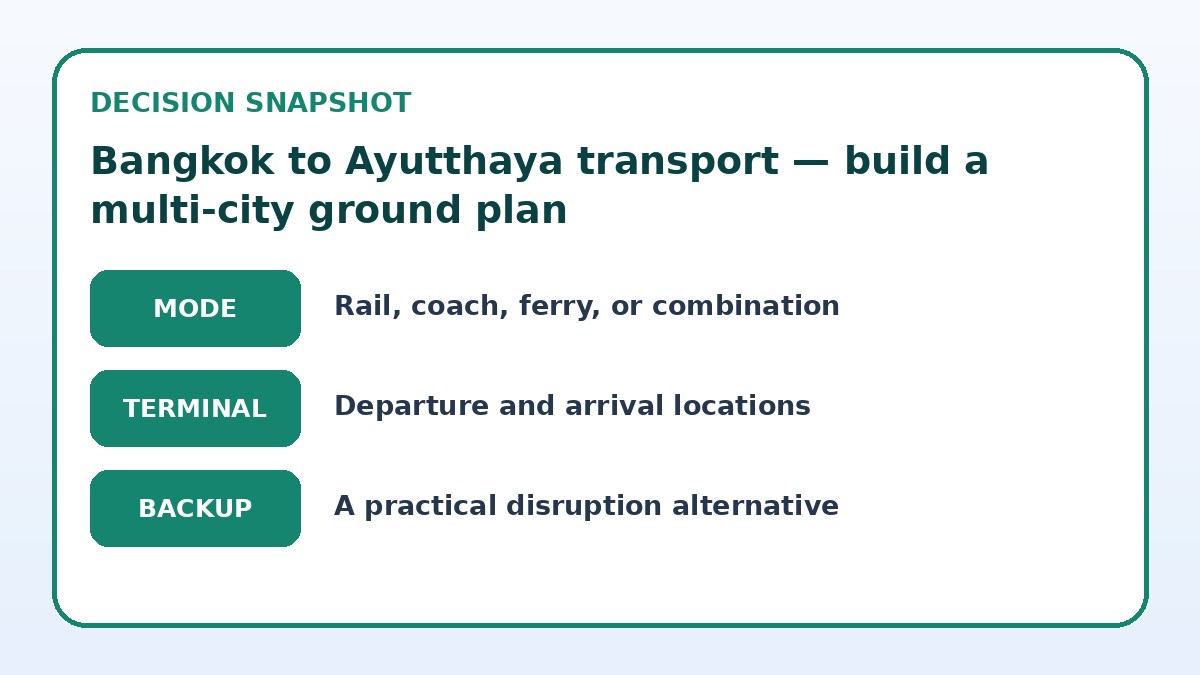
| Journey approach | Best for | Friction to check |
|---|---|---|
| Rail into Ayutthaya + local tuk‑tuk or bicycle | Travelers who want low-cost, relaxed station-to-town transfer and a scenic last mile | Requires managing luggage on platforms and may need multiple short local transfers to reach specific temples |
| Coach to Ayutthaya from a Bangkok road terminal | Those staying near a coach terminal who prefer direct highway routing and underfloor luggage handling | Coach terminals can be farther from some central hotels and may need a taxi for final site access |
| Private taxi or hired car door-to-door | Travelers prioritizing convenience, schedule control, and minimal handling of luggage | Higher cost and need to plan parking or drop-off points near dispersed historical sites |
| Mix-and-match: short private transfer + train or coach | Visitors wanting flexibility—private transfer to the station then public leg to reduce city traffic risk | Adds a transfer leg you must coordinate and can increase overall complexity versus single-mode travel |
Check live intercity options
Look beyond the ride itself and compare terminals, transfers, luggage, and arrival fit.
Luggage, transfer friction, and local connections
Luggage rules and handling vary by mode. Trains typically have overhead racks and luggage areas but move through stairs and platforms that can be awkward with bulky suitcases. Coaches often offer underfloor storage but require lifting to load and unload, which can slow boarding at a busy terminal. If you travel light or use soft-sided bags, both options are straightforward. For larger suitcases or travelers needing assistance, a private car or taxi reduces handling and gives a true door-to-door experience—keep in mind you should confirm any luggage capacity limits with the driver.
Once you reach Ayutthaya, plan the local connection. Many visitors use tuk‑tuks, bicycles, or short taxi rides to reach individual temples, which are spread out. If your itinerary includes multiple stops, consider hiring a vehicle by the half-day or full-day from Ayutthaya to avoid repeated meeting-and-paying. Also check whether your arrival time falls within daylight hours; temples are best seen with good light, and late arrivals increase reliance on motorized transfers instead of pleasant bicycle rides.
Timing flexibility and building a resilient schedule
Decide how flexible your schedule needs to be. Trains can be frequent but may have fewer departure choices at off-peak times; coaches might offer more midday options. If you have a tight schedule—an afternoon train back to Bangkok or an onward connection—prefer a margin of safety: choose an earlier service or allow more transfer time. When planning a full day in Ayutthaya, aim to arrive in the morning to avoid afternoon heat and to give yourself buffer time for delays or extra stops.
Create contingency windows in your plan: allow extra time for late arrivals, traffic, or missed connections, and set a comfortable buffer before any onward reservations like evening trains or flights. If you must be somewhere at a fixed time, lean toward private transfer choices that you can control. Where public services are regular, identify the next available alternative service and note how to rebook or purchase a last-minute ticket if disruptions occur.
Compare the practical alternatives
Use the final page to confirm what is actually offered on your dates and save a workable fallback.
Intercity travel checklist
- Check which Bangkok departure terminal (rail or coach) is closest to your accommodation and save its address and local map pin.
- Confirm luggage policies on the operator’s final booking page and decide if your bags require a private vehicle or light-packing solutions.
- Plan the last-mile from the Ayutthaya arrival point to your first temple or hotel and note typical tuk‑tuk or taxi pickup spots.
- Choose an arrival time that leaves daylight for touring and include buffer time before any onward travel reservations.
- Save contact details and a price estimate for at least one local taxi or hire-car company as a disruption backup.
- Bring printed or screenshot confirmations for bookings and the operator’s terms and change/cancellation rules for quick reference.
A straightforward disruption backup and booking checklist
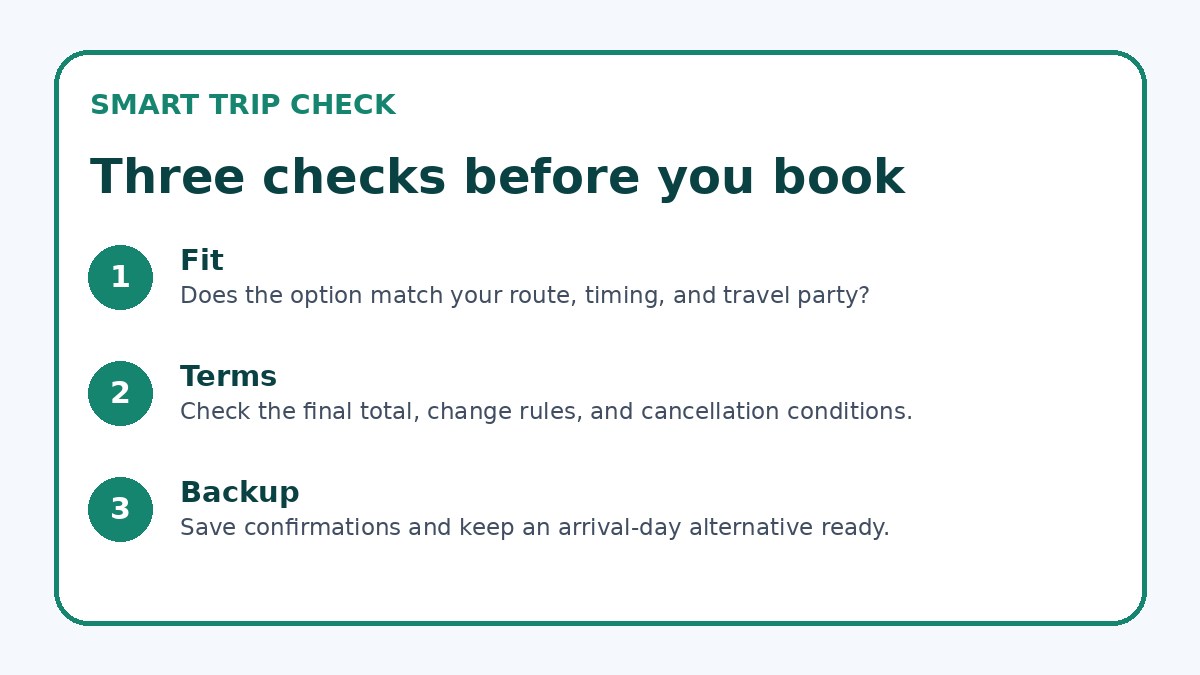
Always have a disruption backup. For the Bangkok to Ayutthaya leg, pick one alternate public departure and one private option (taxi or hire car) you can use if the original plan fails. Store contact details, a reasonable price expectation derived from local sources, and the location where you’ll meet the backup vehicle. If you booked tickets online, save screenshots and confirmation numbers; if relying on walk-up services, identify the station or terminal desk where you can rebook or get assistance.
When booking, verify crucial details on the operator’s final booking page: exact departure terminal and platform or bay, luggage allowance, cancellation and change rules, and whether your ticket reserves a specific seat. If you plan to use third-party sites to compare availability, remember to confirm the operator’s terms before completing payment. Trip.com can be used to compare current availability, but always read the provider’s own booking page for final, authoritative conditions.
Rail & Intercity Transport questions travelers ask
How do I decide whether to take the train or a coach from Bangkok to Ayutthaya?
Compare door-to-door time, not just journey time: find which terminal is closer to your Bangkok lodging and whether the arrival point in Ayutthaya reduces final transfers. Trains can be convenient for central departures and station-to-town transfers, while coaches may run from terminals nearer certain hotels or major highways. Factor in luggage handling, platform stairs, and your tolerance for multiple short transfers on arrival. Check the operator’s final booking page for exact departure and arrival locations, luggage allowances, and rebooking rules before you commit.
Is it easy to get from Ayutthaya’s station or bus stop to the historical park?
Most arrivals in Ayutthaya provide straightforward options to reach the historical park: short tuk‑tuk rides, local taxis, or bicycle rentals are common. Which is best depends on how many temples you plan to visit and whether you have heavy luggage—bicycles are pleasant for multiple close-by temples, while tuk‑tuks or taxis are better with heat, distance, or bulky bags. If you’ll visit several dispersed sites in one day, consider hiring a vehicle for a half- or full-day to avoid repeated short hires and to control timing.
What should I prepare if my scheduled train or coach is delayed or full?
Have a contingency plan: note the next alternative public service and a private hire option you can call. Keep important details accessible—station names, terminal locations, printed or digital tickets, and local taxi contacts. If you booked tickets online, know the operator’s change and refund process and where you can reissue or upgrade tickets at the station. In busy seasons or tight itineraries, building a private taxi as a fallback reduces stress and preserves your schedule; verify driver meet-up points and agreed fares in advance.
Final decision note
Building a practical Bangkok to Ayutthaya transport plan means prioritizing door-to-door convenience over single-mode speed. Start by mapping which departure terminal in Bangkok is most practical from your accommodation and which arrival point in Ayutthaya shortens your last-mile to temples or hotels. Weigh luggage handling, transfer friction, and whether you need strict timing control; then pick primary and backup options—a public leg with a local tuk‑tuk works for many, while travelers with heavy luggage or fixed schedules will often prefer private transfers. Always verify departure terminals, luggage rules, and change/cancellation terms on the operator’s final booking page before buying tickets, and keep contact details for a backup vehicle handy.
Continue planning
Check current options and final conditions
Use the provider page to confirm live availability, the final total, cancellation terms, and every condition that matters to your trip.
This evergreen planning guide was created with AI-assisted drafting and a structured quality review. It does not display live prices, schedules, availability, visa guidance, or provider rankings. Verify current details before booking. Some links are affiliate links; we may earn a commission at no additional cost to you.