If you’re traveling to or from Bangkok with extra luggage, the practical choice often comes down to whether you prioritize cost and predictability or door-to-door convenience and space. Public transport (airport rail link, buses, and trains) can be cheaper and faster in traffic, but it requires carrying bags onto platforms and fitting them in shared spaces. Private transfers (prebooked cars, taxis, or ride apps) offer more space, door-to-door drop-off, and assistance with luggage, but you should check vehicle size and baggage allowances before booking. This guide gives a quick practical recommendation up front, then walks through tradeoffs and the exact things to verify so you can choose the best transfer for your schedule, budget, and number of suitcases.
See current options before you compare the details
Availability and final conditions change. Open Trip.com now or keep reading for the practical comparison.
Decide quickly: practical recommendation
If you need an immediate, actionable answer: choose a private transfer when you have more than two large suitcases, heavy equipment, or mobility constraints. Private transfers reduce stairs, long walks, and repeated loading and unloading; they typically deliver you straight to your hotel or apartment entrance. Before booking, verify the vehicle category (sedan, estate, SUV, van) and how many pieces of luggage the operator accepts. Look for photos or explicit trunk measurements on the provider’s page and read the final booking conditions to see if oversized items incur an extra charge.
Opt for public transport when you have one or two carry-ons or soft bags, are comfortable navigating transfers, and want to avoid traffic-dependent taxi costs. Public options in Bangkok can be faster than road transport during peak congestion, but they mean handling bags on stairs, platforms, and during crowded boarding. If you choose this route, plan your itinerary to avoid rush hours and pick stations or stops with elevators or escalators if available. Double-check accessibility notes and platform layouts on official transit sites before departure.
Tradeoffs: cost, speed, and physical effort
Cost is an obvious tradeoff but not the only one. Public transport fares are usually lower per person, especially on mass transit and shared airport buses, but you trade money for physical effort and potential time lost carrying and transferring luggage. Private transfers charge for the vehicle and often for distance or waiting time. When comparing, include the time and effort to move between platforms or to long-term parking spots — those hidden costs matter if you’re traveling with children or mobility limitations.
Speed depends on time of day more than on the mode itself. Rail or dedicated airport services avoid road congestion, making them reliable during rush hours. Taxis and private cars can be faster in off-peak times, or when you’re going to a location with poor transit connections. If your schedule is tight (early flight or late arrival), weigh the predictability of a prebooked private car against the frequency and operating hours of the public options; always confirm service hours and the provider’s final pickup instructions on the booking page.
| Approach | Best for | Tradeoff to check |
|---|---|---|
| Public transport (rail, bus, metro) | Travelers with light, manageable luggage who prioritize lower fares and predictable rail schedules. | Requires carrying bags across platforms, stairs, and transfers; limited help loading and less door-to-door convenience. |
| Metered taxi or ride-app standard car | Solo travelers with one or two suitcases needing flexible, point-to-point service without prebooking. | Space varies by vehicle model; you may need to request a larger category for extra bags and pay surge or waiting time. |
| Prebooked private car (sedan/SUV) | Travelers wanting guaranteed pickup, driver assistance, and direct transfer to accommodations with moderate luggage. | Costs more than public transport; must verify vehicle trunk size and handling policy for oversized items before booking. |
| Prebooked private van/minivan | Groups or families with multiple large suitcases, strollers, or sport equipment needing one vehicle. | Higher fare but more space; confirm exact passenger and luggage limits on the provider’s booking page to avoid surprises. |
Ready to check the option that fits your plan?
Use your exact dates and traveler details so the provider page can show the current total and conditions.
How to check vehicle and luggage suitability
When booking a private transfer, don’t assume standard wording covers your needs. Look for vehicle class details and labeled images showing luggage space. If only generic terms (like “car” or “van”) appear, use the provider’s contact channel to ask for trunk capacity and the number of checked items allowed. If the service offers seat maps or vehicle dimensions, compare them with your largest bag’s measurements. Also ask whether folding seats will be used and whether the driver will help load and unload; these are often specified in the booking conditions.
For taxis or ride apps that you’ll request on arrival, use local guidance to choose the right vehicle type and prepare a backup plan. Research which app categories list larger vehicles or minivans, and have the local taxi phone number or hotel concierge ready as a fallback. Keep an itemized list of oversized items and carry photos if necessary to avoid surprises when the vehicle arrives. If you plan to use public transit, identify the stations with elevators and the distance between the station exit and your lodging to judge how much carrying is required.
Before you book
- Count suitcases and measure the largest bag; note dimensions and weight if possible to compare with vehicle specs.
- If booking private, request or confirm vehicle class, trunk capacity, and whether the driver will assist with loading.
- If using public transit, map the step-free route from arrival gate to the station and from the station to your accommodation.
- Set a realistic arrival buffer for immigration and baggage claim before your scheduled pickup or last transit departure.
- Photograph oversized or fragile items and email the images to the transfer operator if requested for special handling.
- Save local taxi app categories and the hotel’s phone number offline so you can arrange a larger vehicle on arrival.
Practical booking checklist and on-arrival tactics
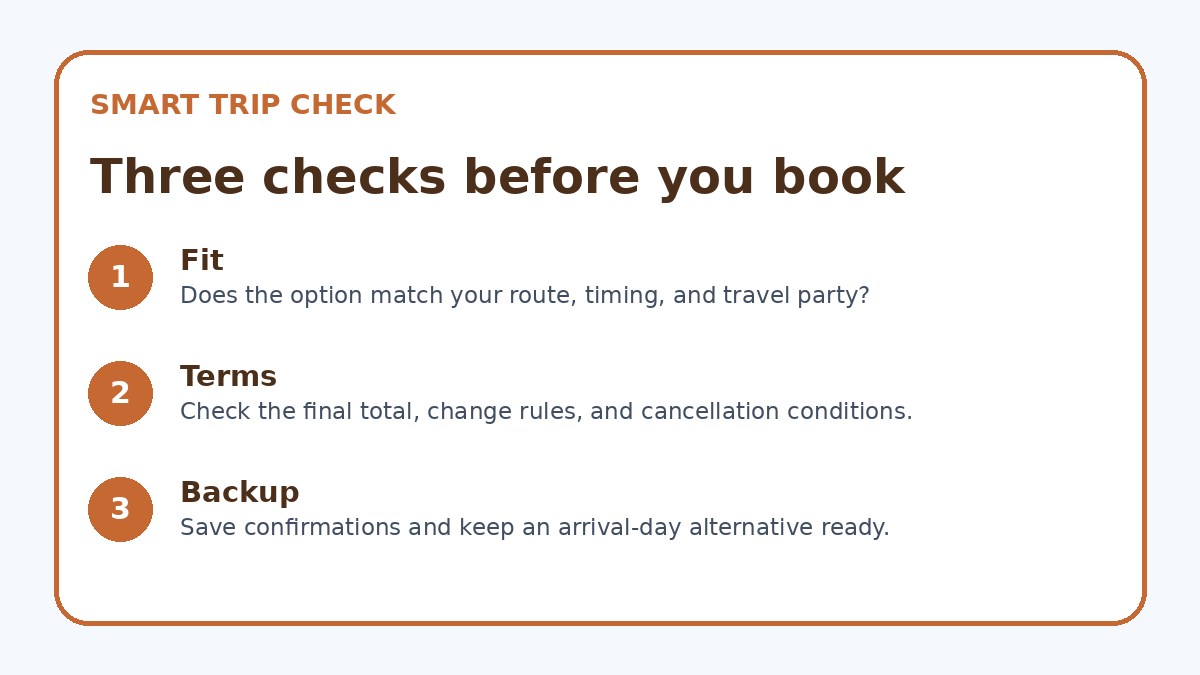
Before you book anything, compare total door-to-door travel time and the number of times you must move your luggage. For private transfers, confirm pickup location (which terminal exit or lane), driver contact method, and any wait-time policy. For public options, check the last-mile connection from the station to your accommodation and whether you will need to switch lines. If you use Trip.com or other comparison sites, treat them as places to view options and then verify details on the provider’s official booking page.
At arrival, prioritize a low-effort route: choose the elevator-equipped exit, follow signs for the designated taxi rank or transfer meeting point, and keep important documents handy. If you have a lot of luggage, ask airline staff for assistance at the terminal if available. When riding, place fragile or valuable items in the cabin with you if possible. Finally, allow extra time for immigration or baggage claim delays when you plan connections or pickups.
Frequently asked questions
How many suitcases can a private transfer usually carry?
There’s no single universal rule — capacity depends on the vehicle model and how many passengers are traveling. Sedans normally handle two to three medium suitcases, while SUVs and estate cars fit more, and vans/minivans are best for four or more large cases. Always check the operator’s vehicle description and trunk guidance on the booking page; if details are unclear, contact the vendor directly and give exact bag dimensions so they can confirm whether your luggage fits.
Is public transit ever faster than a taxi if I have lots of luggage?
Public transit can be faster during heavy traffic because rail and dedicated airport services avoid congestion. However, the time advantage can be negated by the additional effort of moving luggage through stations, stairs, and crowded platforms. If your bags are large or numerous, the extra handling time and physical strain may make a private car preferable even if it takes longer on the road. Compare door-to-door time and factor in how many transfers you must make with luggage.
What should I verify on the provider’s booking page before paying?
Check the exact vehicle type and photos, the stated luggage allowance (including any size or item restrictions), pickup location and driver contact instructions, and the provider’s policy on waiting time, cancellations, and extra charges for oversized items. If any of these elements are missing or ambiguous, message the operator to get written confirmation. If you use an aggregate site like Trip.com to compare options, always click through to the official provider page to verify these final details.
Final planning note
Choosing between public and private Bangkok airport transfer options depends on how many bags you have, how much you’re willing to carry, and whether door-to-door convenience matters more than cost. If your luggage is limited and you’re comfortable with stairs or a short walk, public transit can be efficient and cost-effective. For multiple large suitcases, family groups, or anyone who prefers minimal handling, a prebooked private vehicle or a larger ride-app category is the safer choice — provided you verify vehicle space and handling rules before booking. Use the checklist above to confirm dimensions, pickup details, and driver assistance so your transfer goes smoothly.
Continue planning
Check current options and final conditions
Use the provider page to confirm live availability, the final total, cancellation terms, and every condition that matters to your trip.
This evergreen planning guide was created with AI-assisted drafting and a structured quality review. It does not display live prices, schedules, availability, visa guidance, or provider rankings. Verify current details before booking. Some links are affiliate links; we may earn a commission at no additional cost to you.