If you’re booking Bali travel deals for the first time, check cancellation flexibility before you commit. Practical clarity upfront can save weeks of headache if plans change. Start by asking whether your flight, hotel, or package allows free cancellation, how long that option lasts, and whether credits or travel vouchers replace refunds. Note any penalties for partial cancellations, and whether taxes and third-party fees are refundable. For bundled deals, cancellation rules can differ between components; a refundable flight doesn’t guarantee a refundable resort. This guide explains the tradeoffs, the specific policy language to watch for, and the decision steps that help you balance price, flexibility, and peace of mind when planning a first trip to Bali.
See current options before you compare the details
Availability and final conditions change. Open Trip.com now or keep reading for the practical comparison.
How to read cancellation policy language
Cancellation terms are often written with specific triggers and financial outcomes; learn to read common phrases like “free cancellation until,” “non-refundable,” and “cancellation fee.” Free cancellation until a particular date means you can cancel without charge before that cutoff, but check whether service fees or taxes are excluded. Non-refundable usually means no cash refund, although some providers may offer credit toward future travel. Cancellation fees can be flat amounts or percentages and may increase as departure or check-in approaches. Watch for “per person” and “per booking” distinctions—those change how much you’ll recover.
Also look for hidden conditions such as blackout dates, seasonal surcharges, and third-party supplier clauses. A travel agent, OTA, or tour operator might impose its own cancellation charge on top of the airline or hotel policy. When insurance, credits, or vouchers are offered in lieu of refunds, read the fine print: credits may have expiration dates, limited transferability, or restrictions on eligible services. If the policy mentions exceptional circumstances or force majeure, check how that provider handled refunds in past disruptions; that can indicate how flexible they’ll be under stress.
Comparing flights, hotels, and packages
Flights, hotels, and bundled packages each use different rules and timelines. Airlines often sell multiple fare classes—fully refundable, holdable, or non-refundable—and change fees vary widely. Hotels may offer a free-cancellation rate or a lower prepaid non-refundable rate; the cheaper option can be appealing but carries the full financial risk if plans change. Packages advertise convenience and potential savings, but the tradeoff can be complex cancellation arithmetic: canceling a flight within a bundle might alter the package price or nullify bundled benefits. Treat each component as a separate contract and confirm whether canceling one element affects the rest.
When comparing options, build a scenario-based view: imagine shifting dates, a solo cancellation, or a group member dropping out. Ask the booking agent or provider how each scenario would be handled and get those answers in writing or via the provider’s final booking page before paying. For flights consider fare difference rules and whether a credit is offered for future travel; for hotels check whether deposits are retained and whether the property will rebook you at a similar rate. For packages, request a breakdown of what becomes refundable versus non-refundable if part of the package is canceled.
| Approach | Best for | Tradeoff to check |
|---|---|---|
| Book fully refundable flights and hotels | Travelers with uncertain dates or high cancellation risk | Higher upfront cost but simpler refunds and fewer dispute hassles |
| Choose non-refundable low-rate bookings | Budget-focused travelers with firm schedules | Lowest price if plans hold; full loss if you must cancel |
| Mix refundable flights with non-refundable hotels | Those balancing savings with partial flexibility | Can lower cost while protecting the most expensive element, but adds management complexity |
| Buy a package deal with a single cancellation policy | Travelers wanting convenience and one-stop customer service | Simplicity may hide component penalties; canceling part of the trip can affect the whole package |
Ready to check the option that fits your plan?
Use your exact dates and traveler details so the provider page can show the current total and conditions.
Practical decision criteria for first-time visitors
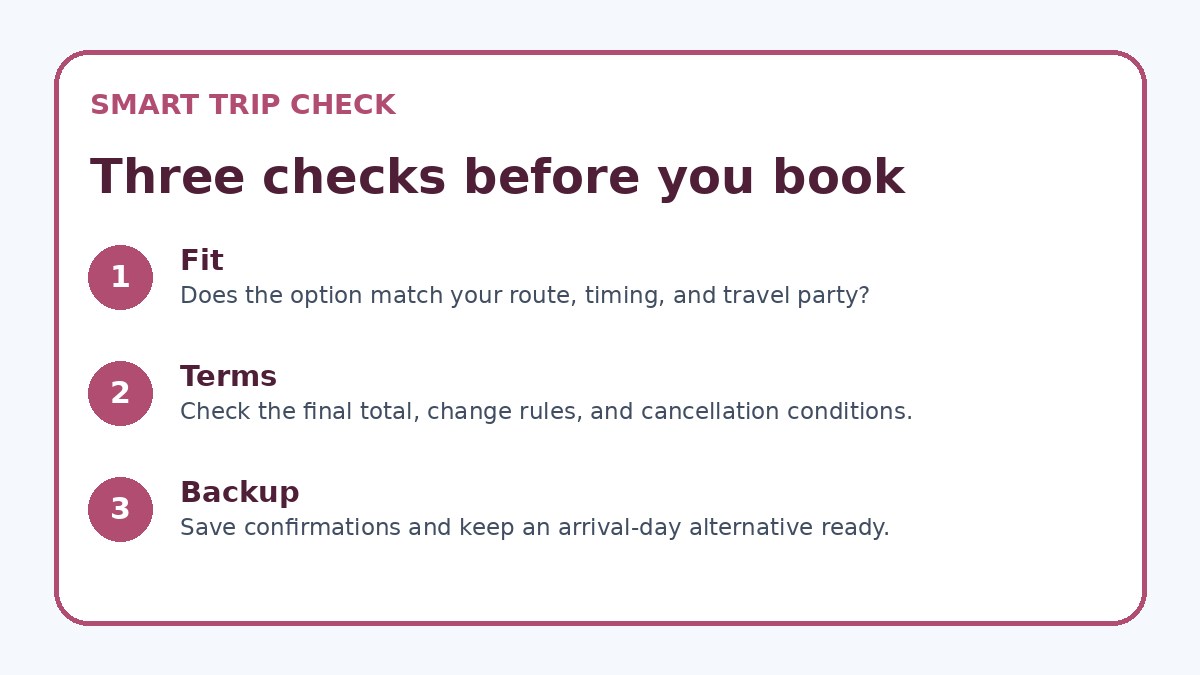
Start with flexibility needs: how certain are your travel dates, and how likely is disruption? If dates are firm you can choose a cheaper non-refundable option, but if uncertainty exists prioritize refundable fares and flexible hotel rates. Consider the size of the party—larger groups multiply risk and often benefit from refundable terms or per-person cancellation protections. Budget-minded travelers should compare the price difference between refundable and non-refundable options and weigh that against the likelihood and cost of cancellation. Sometimes the incremental cost for flexibility is less than the potential loss if plans change.
Next, evaluate time horizons. Long-lead bookings typically allow broader cancellation windows, but policies tighten as travel dates approach. If you’re booking months ahead, prioritize options that let you cancel or change within a comfortable window. If travel is imminent, verify same-day change policies and fees. Also decide whether travel insurance or a policy add-on that covers cancellations for any reason matters to you; such coverage reduces booking friction but adds cost. Whatever you choose, document the cancellation deadlines, fees, and contact points so you can act quickly if plans shift.
Before you book
- Save or screenshot the final booking page showing cancellation terms before you confirm payment.
- Compare the exact cancellation window and refund amount for flights, hotels, and transfers separately.
- Ask the provider to clarify ambiguous clauses (credits, vouchers, expiration) and request written confirmation.
- Use a credit card for booking when possible to retain dispute and chargeback protections.
- Set calendar reminders for free-cancellation cutoffs and the final date to change or cancel reservations.
- Consider a cancel-for-any-reason policy only after comparing its cost against the likely loss without it.
Steps to reduce cancellation risk and verify details
Before booking, screenshot or save the provider’s cancellation policy and final booking page that lists the conditions. When the policy is ambiguous, contact the provider for clarification and ask that any verbal assurances be confirmed in writing. If you use an online travel agency or a package broker, verify whether refunds are processed by the supplier or through the agent; processing routes can affect timing and the ability to dispute charges. For flights, use the airline’s official site to confirm fare rules; for hotels, check the property’s own booking page to reconcile differences with third-party listings.
Consider payment methods that offer buyer protections—credit cards sometimes provide dispute rights that debit transactions do not—and check whether the provider imposes nonrefundable service fees at booking. If you must take a non-refundable deal to stay within budget, limit risk by booking refundable ancillary services (like transfer vouchers) separately. Finally, set calendar reminders for key cancellation windows and maintain a short checklist of exact policy language, refund timelines, and the provider’s customer service contacts so you can act promptly if circumstances change.
Frequently asked questions
If a Bali travel deal includes flights and a hotel, which cancellation rules apply?
When a deal bundles flights and a hotel, each supplier still usually enforces its own rules. The airline controls fare refunds or credits for tickets; the hotel enforces its deposit and room-cancellation rules. The package seller may have an overarching policy about refunds and how it allocates money returned by suppliers, and it may charge its own service fee. Before paying, request a clear breakdown: which parts are refundable, what fees apply, and who processes refunds. Verify the final terms on the provider’s booking confirmation page so you know which rule governs each component.
Can I rely on travel credits or vouchers instead of a cash refund?
Credits and vouchers can be useful but they’re not equivalent to cash. They often have expiration dates, limited transferability, and usage restrictions that might affect future travel plans. If a provider offers credits in place of refunds, read the terms carefully: check validity period, whether taxes or surcharges apply when you redeem, and if blackout dates exist. If you need flexibility, prioritize actual refunds or buy insurance that reimburses you in cash. Always confirm on the final booking page whether a credit is the only option for cancellations.
How does travel insurance interact with supplier cancellation policies for Bali bookings?
Travel insurance is a separate contract that may reimburse you for trip cancellations depending on the policy’s covered reasons. It doesn’t override supplier cancellation rules; you still must cancel with the supplier within their deadlines to avoid incremental fees. If you file an insurance claim, you’ll usually need supplier documentation showing the non-refundable portion and evidence of the event that triggered the claim. Review policy exclusions and claim filing deadlines carefully, and check whether the insurer requires pre-approval or specific supporting documents from hotels or airlines listed on the provider’s final booking page.
Final planning note
First-time visitors booking Bali travel deals should prioritize clarity over the smallest possible fare. Start by reading and saving the exact cancellation language on the final booking pages for flights, hotels, and any bundled components. Decide whether the incremental cost of refundable fares or flexible rates is worth it for your circumstances, and balance that against the risk tolerance of your travel group. Use the checklist steps to lock in protection where it matters most, and consider travel insurance if you need broader cancellation coverage. When in doubt, confirm policy details in writing so you can act quickly and minimize financial surprises if plans change.
Continue planning
Check current options and final conditions
Use the provider page to confirm live availability, the final total, cancellation terms, and every condition that matters to your trip.
This evergreen planning guide was created with AI-assisted drafting and a structured quality review. It does not display live prices, schedules, availability, visa guidance, or provider rankings. Verify current details before booking. Some links are affiliate links; we may earn a commission at no additional cost to you.