If you’re traveling from Auckland to Wellington with more or bulkier bags than usual, the practical decision on the travel day comes down to minimizing transfers, avoiding tight connections, and choosing terminals that handle oversized luggage comfortably. Start by comparing four broad approaches: direct air with checked oversized baggage, coach between city centres that accepts large bags, a combination of ferry plus road links (if using interisland segments), or a slower rail-plus-coach plan that reduces handling but increases door-to-door time. Each approach trades time for convenience, cost predictability, and the number of times your luggage must be moved. Your immediate priorities should be how many times you’ll have to lift or recheck bags, how close terminals are to your start and end points, and whether you can pre-book extra-bag handling. Later sections explain terminal fit, luggage friction at transfers, timing flexibility, and a disruption backup you can execute on the day.
Choosing between air, coach, ferry, or combinations
Start by mapping how many times your luggage will be handled with each mode. A single carrier journey with checked-baggage handling can be easiest because staff move bags once at check-in and once at arrival. Coaches often allow large items stored under the coach, which can be convenient if you can load and unload once at each end. If you consider a ferry plus road segments, check how vehicles and luggage are transferred between land and ship — some setups require passengers to handle carry-on items across ramps or into terminal holding areas.
When comparing options, weigh door-to-door time rather than in-transit speed alone. A flight may be quicker in the air but add time and effort for airport transfers, security, and baggage reclaim. Conversely, coach or a rail-plus-coach combination usually drops you closer to central addresses, cutting or eliminating an expensive late taxi. For each option, list the number of expected lifts, whether staff handle oversized items, and if there are secure storage areas you can use while moving between segments.
Choose the end-to-end journey plan
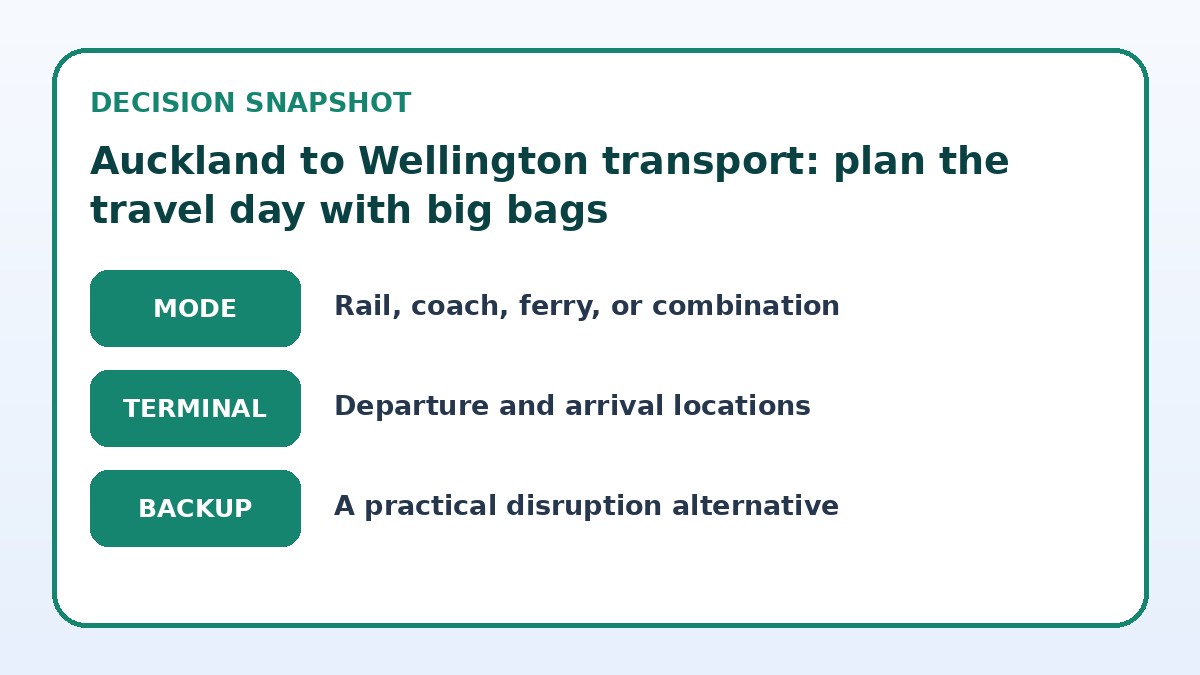
| Journey approach | Best for | Friction to check |
|---|---|---|
| Direct flight with checked oversized baggage | Travelers who prioritize shortest in-air time and minimal transfers if airport transfer time is acceptable | More handling at airports and possible longer door-to-door time if airports are far from city centres |
| Intercity coach that stores large items under the coach | Those wanting simple single-transfer logistics and drop-off near central destinations | Slower than flying and potential difficulty if terminals have limited loading facilities |
| Ferry plus road segments (combination travel) | Passengers with bulky or non-standard luggage who can control transfers and prefer less airport handling | More touchpoints and possible short-term hand-carrying across terminals or vehicle decks |
| Rail-plus-coach slower route with deliberate fewer handlings | Travelers who want predictable, lower-stress handling even if the trip takes longer | Longer door-to-door time and need to plan last-mile logistics carefully |
Check live intercity options
Look beyond the ride itself and compare terminals, transfers, luggage, and arrival fit.
Terminal fit and luggage-transfer friction
Examine the layout of departure and arrival terminals for the options you’re considering. Big, modern terminals tend to have baggage trolleys, level access points, and staff trained to handle bulky or oddly shaped items — all of which reduce strain on the travel day. Smaller coach stations or ferry terminals may have steep ramps, steps, or limited trolley availability, turning a short transfer into a heavy-lift challenge. If you have fragile items, soft-sided bags, or musical instruments, consider whether staff assistance or dedicated storage exists at each terminal.
Also plan how you’ll move between terminals and your accommodation. If a mode requires a transfer between different city-side hubs, check the distance and elevation change and decide whether to hire a taxi or a delivery transfer service. A taxi that carries your luggage directly between a station or airport and your door reduces handling even if it costs more. Don’t assume that every terminal offers porter services; call or check the provider’s booking page to confirm what help, trolleys, or baggage storage options are available on the travel day.

Timing flexibility and managing connections
When you have extra luggage, build generous buffers into your schedule. Allow extra time for loading and unloading, unexpected queues at check-in or security, and longer walks between platforms. If you’re choosing a connecting itinerary, prefer longer connection windows and single-ticket itineraries where the carrier accepts through-checked luggage. If you must transfer luggage yourself between operators, allow at least an hour (often more) to avoid rushed lifting and missed connections.
Consider travel-day timing relative to local traffic and peak periods. Early-morning or late-evening departures may be quieter but could limit ground-service availability for oversized items. Midday departures sometimes provide steadier staffing and more predictable handling. If you value flexibility, prioritize options with multiple daily departures; that way you can shift to a later service without having to relocate all your bags or pay hefty change fees. Always confirm the provider’s latest check-in time for oversized baggage before finalizing your plan.
Compare the practical alternatives
Use the final page to confirm what is actually offered on your dates and save a workable fallback.
Intercity travel checklist
- Measure and photograph each large item; record dimensions and a contact number for the day-of paperwork.
- Confirm oversized-baggage policies and pre-book extra allowance on the provider’s final booking page for the chosen mode.
- Reserve a taxi with sufficient space or a small goods van for direct door-to-door transfers to avoid multiple lifts.
- Pack a separate carry-on with essentials and valuables so you can access them if bags are stored or delayed.
- Locate nearby storage or short-term luggage facilities along the route as an emergency option before travel day.
- Save provider contact details, booking references, and a backup coach or rail timetable accessible offline.
Disruption backup and swapping plans on the day
Prepare a straightforward backup that you can implement without unpacking everything. For example, if you plan to fly but want a fail-safe, identify the nearest coach or rail routes that accept large bags and note their pickup points and approximate travel times. Keep essential documents and a small ‘day bag’ separate so you can hop on a substitute service quickly without dragging all items. Save contact numbers for taxi services that can carry oversized loads and confirm which drivers can handle your luggage profile.
On the travel day, monitor your progress and communicate with providers early if delays occur. If you need to swap modes, prioritize door-to-door convenience: a slightly longer coach trip that drops you at a central stop near your accommodation is often better than a disrupted flight that leaves your bags in an unfamiliar airport. Where possible, use a single booking platform or keep confirmations for each mode in one place (some travelers use Trip.com to compare real-time availability before committing), but always verify handling rules on each provider’s final booking page.
Rail & Intercity Transport questions travelers ask
Can I combine different carriers and still have my luggage checked through?
Sometimes you can, but it depends on whether carriers have an interline agreement or sell a single-ticket itinerary that includes through-checked baggage. When you book across separate providers, expect to reclaim and re-check luggage between segments unless the booking explicitly states otherwise. On the travel day, verify at the first check-in desk whether they will accept through-checking and ask for written confirmation or a baggage tag. If through-checking is unavailable, plan for extra transfer time and consider a direct taxi between terminals.
What’s the best way to move bulky items like bikes or surfboards on this route?
For bulky sports equipment, confirm the transport provider’s policies and packaging requirements before travel. Many operators require specific bike boxes, padded cases, or boards strapped into designated racks. If the preferred carrier accepts such items, pre-book the space and arrive early to allow staff to handle stowage. If you must use mixed modes, arrange a single ground transfer that carries these items directly between departure and arrival hubs to avoid repeated handling; confirm the vehicle can legally and safely transport oddly sized loads.
If a service is delayed or cancelled, how do I avoid moving luggage multiple times?
Before you travel, identify one backup that minimizes additional handling—ideally a single coach or rail service that departs from the same or a nearby terminal. Keep essentials separate so you can switch modes without unpacking everything. If a provider cancels, contact customer service quickly to request rebooking onto alternative services that can accept your luggage; ask if they will transfer or store bags for you. When in doubt, hiring a direct taxi or small van to move everything once is often less stressful than multiple short transfers.
Final decision note
Traveling from Auckland to Wellington with extra luggage requires prioritizing moves that reduce handling and simplify door-to-door logistics. Compare options by counting transfers, checking terminal layouts, and confirming oversized-baggage rules on the provider’s final booking page. Prefer itineraries that place you close to your start and end points to avoid expensive or exhausting last-mile trips. Build time buffers and a straightforward backup that you can activate without unpacking. With a measured plan—pre-booked allowances, a taxi or van option for direct transfers, and essential items separated—you’ll reduce strain and ensure the travel day stays focused on reaching Wellington rather than wrestling with bags.
Continue planning
Check current options and final conditions
Use the provider page to confirm live availability, the final total, cancellation terms, and every condition that matters to your trip.
This evergreen planning guide was created with AI-assisted drafting and a structured quality review. It does not display live prices, schedules, availability, visa guidance, or provider rankings. Verify current details before booking. Some links are affiliate links; we may earn a commission at no additional cost to you.