
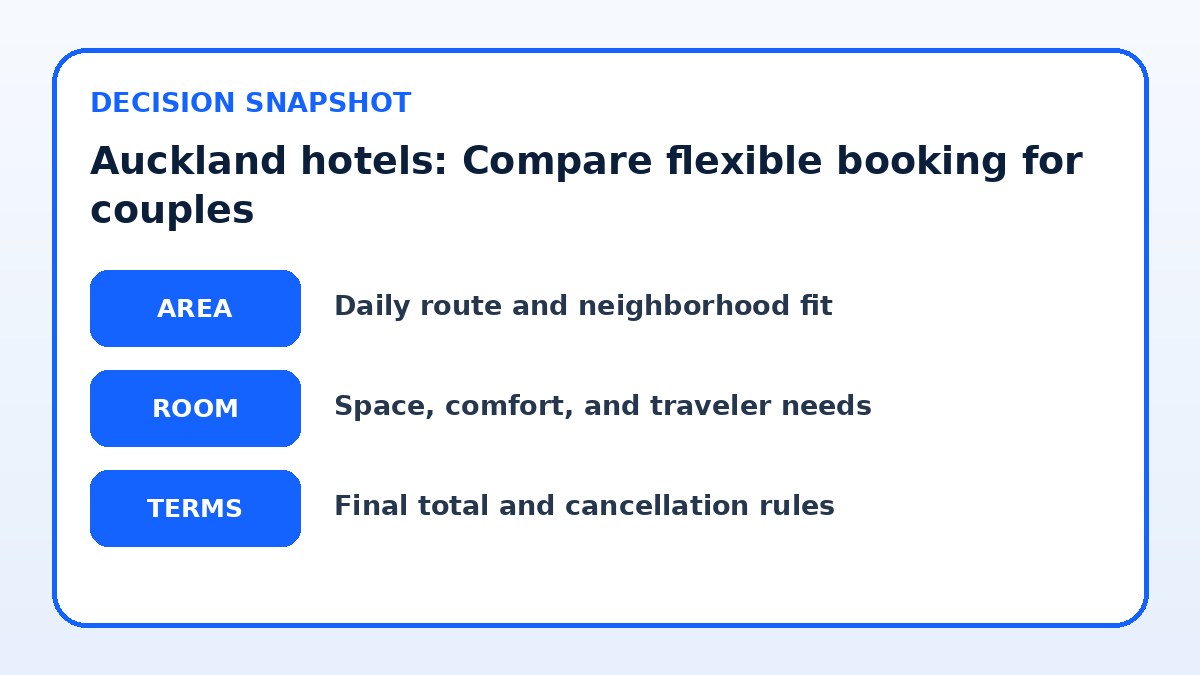
If you and your partner want room to change plans, focus on the booking terms, not just room type or location. For Auckland hotels, that means reading three parts of the fine print: refundability, change or re-booking rules, and the deadline or fee structure for cancellations. Couples should decide whether they need full refunds, partial credits, or simply a flexible change window—each choice affects the rate and which properties are suitable. Start by comparing the same room type across refundable and non-refundable rates, then check how modifications are handled when travel dates shift by a few days or months. Always confirm the final policy on the hotel or booking-site checkout page because the wording and effective deadlines can differ between chains, independent hotels, and third-party sellers like Trip.com.
See current options before you compare the details
Availability and final conditions change. Open Trip.com now or keep reading for the practical comparison.
Understand the core flexible terms
Booking flexibility for Auckland hotels generally falls into a few clear buckets: fully refundable, partially refundable/credit, and non-refundable. Fully refundable rates permit cancellations up to a stated deadline with a full refund to the original payment method. Partially refundable options often return a credit for future stays or a pro-rated refund minus a penalty. Non-refundable bookings typically offer the lowest rate but come with strict penalties for cancellations or no refunds at all. Couples should map their comfort with uncertainty to one of these categories before comparing properties, because the rate difference is the usual tradeoff for peace of mind.
Beyond the headline label, study the exact conditions. Look for time windows (for example, cancel up to 48 hours before arrival) and whether the hotel charges a fixed fee, a night’s rate, or a percentage. Check whether the policy applies to the entire stay or per room-night, and whether special events or public holidays alter the rules. Also confirm which party processes the refund—booked directly through the hotel versus a third-party platform can change how and when you receive money back, and which contact you must use if you need to amend the reservation.
How couples should prioritize flexibility vs. cost
Start by assessing how likely your plans will change. If you’re traveling for a wedding, family event, or a job-dependent trip, lean toward fully refundable or flexible-change rates. For a leisure weekend with fixed dates, a non-refundable deal may make sense if the price gap is substantial and you have travel insurance. Couples on their honeymoon or a significant anniversary might value flexibility more highly—unexpected delays or extended stays are common in those cases. Make a simple calculation: multiply the potential penalty by the probability of change to decide whether paying extra for flexibility is worth it.
Also consider emotional cost: the stress of an inflexible policy can affect enjoyment before arrival. If one partner is more risk-averse, prioritize clarity and generous change policies to keep the trip relaxed. Conversely, if both partners are confident about dates and budget, a lower non-refundable rate frees money for experiences at the destination. Remember that many hotels offer partial flexibility on room upgrades, free breakfast credits, or late-checkout—these can soften the impact of restricted cancellation terms without paying fully refundable premiums.
| Approach | Best for | Tradeoff to check |
|---|---|---|
| Fully refundable rate | Couples with uncertain travel dates or major life events | Higher nightly rate but full refund if you cancel before the stated deadline |
| Partially refundable / credit | Couples who want some protection without paying full flexibility premiums | Lower cost than full refund but refunds may be partial or issued as restricted hotel credit |
| Non-refundable deal | Couples with fixed dates who prioritize lower prices over flexibility | Lowest rates but little to no refund if you need to cancel or change dates |
| Flexible-change (modify without heavy penalty) | Couples likely to shift dates by a few days | Moderate rates; changes are allowed within a window but may incur small fees or re-pricing |
Ready to check the option that fits your plan?
Use your exact dates and traveler details so the provider page can show the current total and conditions.
What to verify on the hotel or booking page
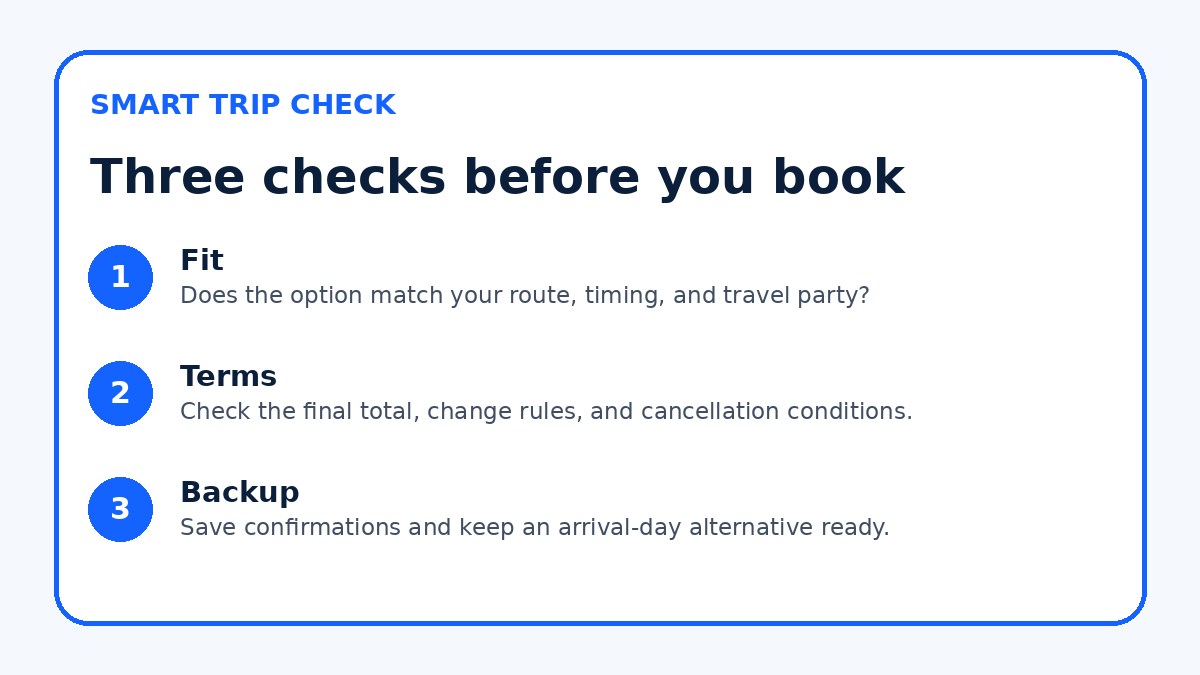
Before you hit confirm, read the booking confirmation and the hotel’s terms linked on the checkout page. Verify cancellation deadlines, any fees for changes of date, and the refund processing timeline. If the booking platform or hotel mentions a credit instead of a cash refund, confirm how long that credit lasts and whether it’s transferable. Check who handles disputes and chargebacks—direct bookings usually put you in contact with hotel customer service; third-party sites may require you to go through their support first. If the booking references special event or blackout dates, ask for written clarification on how those alter the standard policy.
If any policy language is unclear, contact the hotel directly and request a written statement of terms or an email confirmation that outlines the cancellation and change rules. For couples booking separate rooms or adding packages (dinner, spa, transfers), verify whether add-ons are refundable under the same terms or treated independently. Finally, if you’re paying with a credit card that offers trip protections, check with the issuer whether it covers non-refundable expenses—this can influence whether a non-refundable rate becomes an acceptable risk.
Before you book
- Compare the same room category across refundable and non-refundable rates to isolate the cost of flexibility.
- Read the cancellation and change policy on the hotel’s checkout page and save a screenshot or PDF of the terms.
- Confirm whether refunds are full cash refunds or hotel credits and note any expiry dates or transfer restrictions.
- Ask the hotel in writing about special event blackout dates, and whether those override the displayed policy.
- Check payment and refund timelines—who issues refunds and how long processing takes for your card type.
- Verify whether add-ons (breakfast, transfers, spa) follow the room’s policy or have separate refund rules.
Practical booking tactics for couples in Auckland
Compare the same room type across different rate rules rather than different room categories; that isolates the cost of flexibility. Use filter tools on booking sites to show refundable rates only, then cross-check the hotel’s official site to see if an identical flexible rate exists or if direct-book benefits apply. Consider short-term holds or reservations that allow free cancellation close to your stay—if you plan to firm up details nearer the date, a cancellable booking gives you time without immediate cost. Keep all confirmations and policies in a shared folder or trip chat so both partners can access the terms easily.
If you anticipate last-minute changes, negotiate at check-in for flexible options—hotels sometimes accommodate date changes directly if occupancy allows. For longer stays, ask about modifying only one night rather than the whole booking, or converting a cancellation fee into a hotel credit usable within 12 months. Use loyalty programs where possible; elite status often unlocks more lenient change and cancellation windows. Finally, remember to factor in travel insurance that covers trip interruptions—it can be a cost-effective layer on top of a non-refundable rate for couples wanting both value and some protection.
Frequently asked questions
Is it better for couples to book directly with the hotel or through a third-party site for flexibility?
Booking directly is often clearer because you deal with the hotel for changes and refunds, and staff can sometimes make exceptions at check-in. Third-party sites may offer competitive inventory and easier comparison tools, but their change and refund process often routes through their support desk, which can add steps and delay. Whatever route you choose, verify the final cancellation language on the booking confirmation page and ask the hotel to confirm any negotiated flexibility in writing. Trip.com can be used to compare availability and options, but always confirm the operative policy on the provider’s final booking page.
Can travel insurance replace the need for a refundable hotel rate for couples?
Travel insurance can cover trip interruptions and some cancellations, but policies vary widely in covered reasons and required documentation. If you rely on insurance, ensure your policy covers the specific risks you worry about—medical emergencies, work obligations, or family events—and check whether coverage extends to non-refundable hotel costs. Insurance claims take time and may require receipts and proof of cause; they don’t prevent an immediate out-of-pocket loss. Use insurance as a second layer of protection alongside clear booking terms rather than a complete substitute for flexibility unless you fully understand the policy limits.
How do I handle a last-minute date change for an Auckland hotel booked on a non-refundable rate?
First, contact the hotel immediately—if the property has rooms available it may offer a credit, rebook the stay, or charge a small fee to adjust the reservation. Be polite and explain the reason; front-desk or reservations managers sometimes provide goodwill adjustments, especially for small shifts. If you booked through a third-party site, contact their support as well, since they may negotiate on your behalf. Keep all correspondence and request any concessions in writing. If no flexibility is offered, check whether your credit card or travel insurance covers the situation before accepting a full loss.
Final planning note
For couples visiting Auckland, the right booking choice balances emotional comfort, likelihood of change, and budget. If you expect schedule shifts, pay extra for fully refundable or flexible-change rates; if dates are locked, a non-refundable deal might free funds for experiences. Always compare identical room types, read the provider’s final terms on the checkout page, and document the policy in writing. Use negotiation at check-in, loyalty benefits, or travel insurance as supplementary tools. With a clear decision framework and a short checklist, couples can select hotel booking terms that minimize stress and maximize enjoyment of their Auckland stay.
Continue planning
Check current options and final conditions
Use the provider page to confirm live availability, the final total, cancellation terms, and every condition that matters to your trip.
This evergreen planning guide was created with AI-assisted drafting and a structured quality review. It does not display live prices, schedules, availability, visa guidance, or provider rankings. Verify current details before booking. Some links are affiliate links; we may earn a commission at no additional cost to you.