
If you're traveling to Auckland on business and plan to rent a car, the single most practical step is to confirm the rental company's fuel policy and mileage allowances before you reserve. These two items affect your expense reports, trip costing, and potential surprises on the final invoice. Fuel policies vary: some contracts require you to return the car with a full tank, others sell you a full tank upfront, and some charge per litre on return. Mileage rules range from unlimited use to daily or total-kilometre caps with per-kilometre charges. For business trips where you need predictable reimbursement, prioritize policies that match your likely driving pattern, and insist on written confirmation of estimated costs. Always save booking pages and the rental agreement PDF, and check the provider’s final booking page for precise fuel terms, mileage caps, and how damage or tolls factor into total charges.
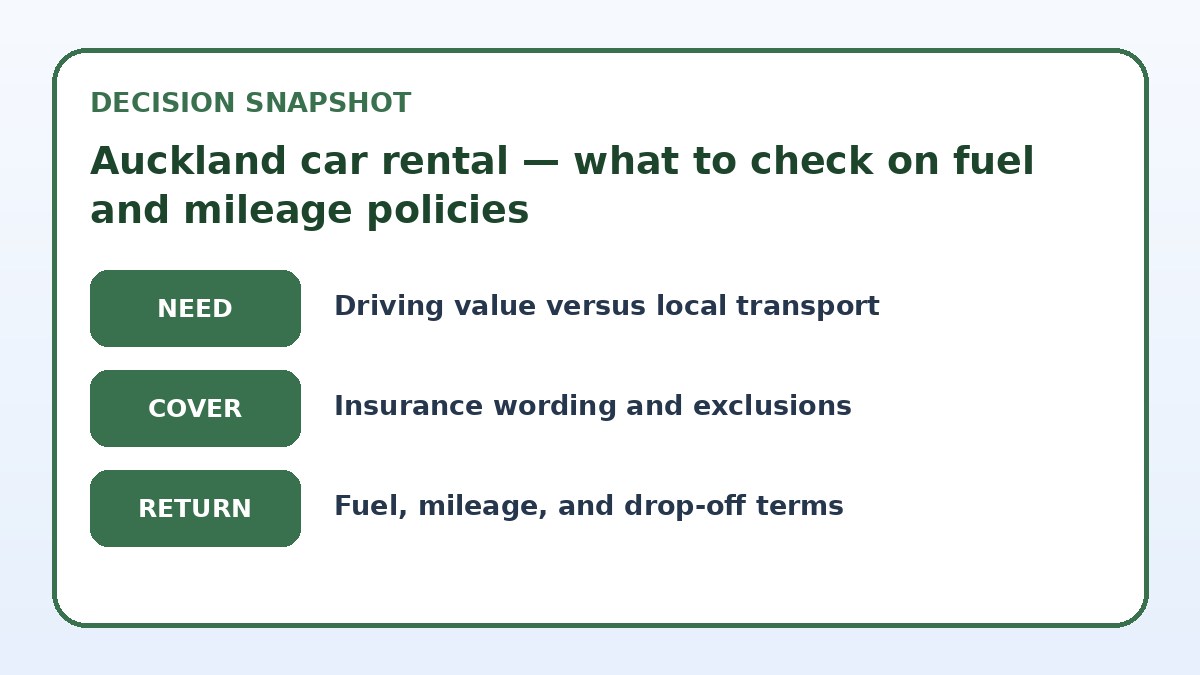
See current options before you compare the details
Availability and final conditions change. Open Trip.com now or keep reading for the practical comparison.
How fuel policies work and what costs to expect
Fuel policies typically fall into a few familiar patterns: full-to-full, pre-purchase (you buy a full tank up front), or pay-for-return (the company tops up and charges you per litre plus a service fee). Full-to-full is the easiest to reconcile with expense reporting: you pick up a full tank and return it full, paying only for the fuel you used. Pre-purchase can save time but often leaves no refund for unused litres; it’s most useful if you know you’ll use the full tank or want to avoid a final fuel stop.
When planning, consider Auckland logistics and likely city versus regional driving. Urban business travel typically uses less fuel but may involve more short trips; airport pickups and suburban meetings increase fuel use. If the rental contract includes refuelling service fees or admin charges for top-ups, those are usually higher than local pump prices. Before finalizing the reservation, note exactly how the company calculates per-litre charges and whether any minimum refuelling service fee applies; verify these final details on the provider’s booking page and the rental agreement PDF.
Mileage limits: match the cap to your itinerary
Some Auckland car rentals offer unlimited kilometres; others assign a daily or total kilometre allowance and charge per extra kilometre. For a business trip that includes regional visits—wineries on the outskirts, client sites north or south of the city, or day trips to a neighbouring town—kilometre accumulation can be significant. Calculate your planned route distances roughly before booking. Multiply expected daily kilometres by the number of days and compare that total to any stated cap. If you expect to exceed a capped allowance, ask for a quote that converts the extra-kilometre rate into an estimated charge so you can budget and seek approval from your employer.
If the rental company allows one-way travel between different pick-up and drop-off locations, confirm whether that changes mileage rules or adds a discretionary charge. Also check if odometer readings will be taken on pickup and drop-off and whether GPS-derived distance is used for disputes. For business travelers who must report mileage claims to a finance department, a rental with unlimited kilometres simplifies reporting. If limited, make sure the excess per-kilometre fee is reasonable compared with booking a higher-tier vehicle or an unlimited plan.
| Approach | Best for | Tradeoff to check |
|---|---|---|
| Full-to-full fuel policy | Short city business trips where you can refill before drop-off. | Requires finding a station before return; little administrative markup on fuel. |
| Prepaid fuel (full tank bought upfront) | Busy itineraries that avoid stopping for fuel at drop-off. | You usually don’t get refunded for unused fuel, potentially wasting money. |
| Unlimited kilometres | Regional meetings, long drives, or flexible multi-stop schedules. | Daily rate may be higher; check if it’s cost-effective versus per-kilometre plans. |
| Limited kilometres with per-km charge | Predictable, low-mileage city travel where cost control matters. | Risk of unexpected extra charges if plans change or detours occur. |
Ready to check the option that fits your plan?
Use your exact dates and traveler details so the provider page can show the current total and conditions.
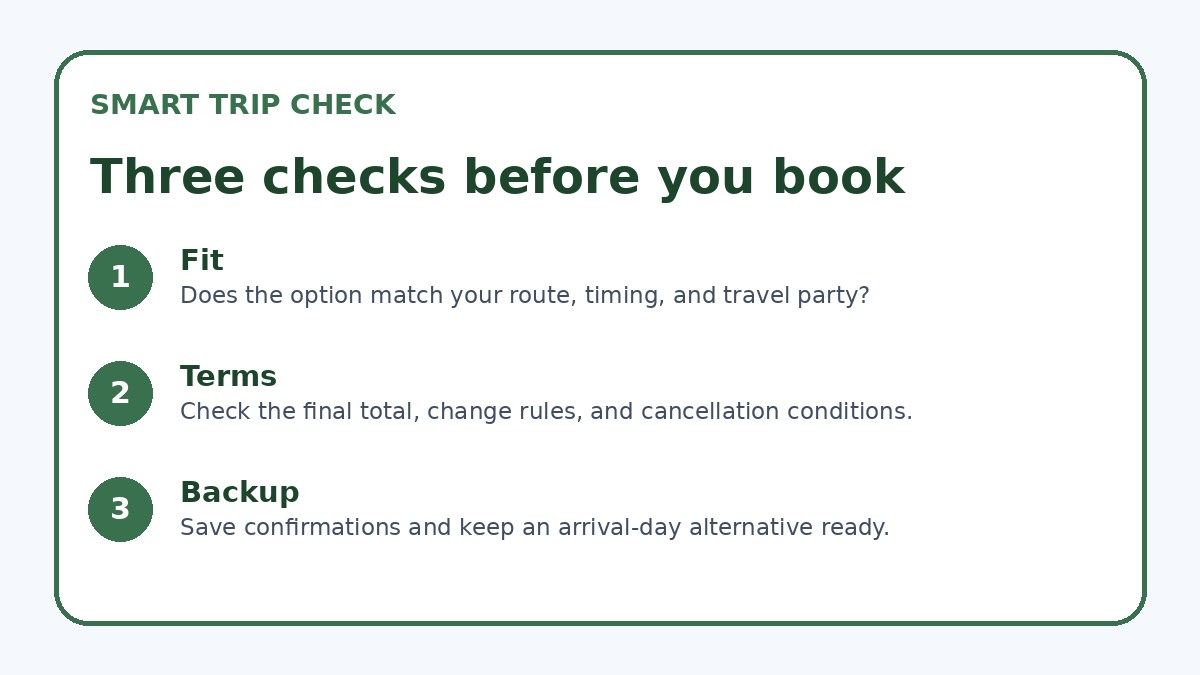
Tolls, tags, and incidental charges to watch
Auckland uses electronic tolling on some motorways and bridges; rental agencies handle tolls differently. Some provide a tag and bill the driver later, often adding an admin fee; others ask you to use cashless payment yourself. That admin fee can be a fixed per-charge sum or a daily charge for having the tag, so ask for the exact fee structure. Also confirm how parking fines, congestion charges, and local authority penalties are handled—usually the renter is responsible, but the rental company’s processing can add administrative charges.
When booking for business, choose the option that minimizes administrative headaches for expense reconciliation. If your employer reimburses tolls only with receipts, ask the provider whether they can supply detailed toll statements. If the rental supplier uses a partner for electronic tolling, verify on the provider’s final booking page whether tolls will be billed per occurrence and whether you can opt out of tag services by paying tolls yourself during the trip.
Before you book
- Confirm and save the exact fuel policy (full-to-full, prepaid, or pay-on-return) from the booking page and rental agreement PDF.
- Calculate expected trip kilometres and compare them to any mileage cap; ask for a written estimate of excess-kilometre charges.
- Photograph the odometer and fuel gauge at pickup and drop-off, and keep the condition report and receipts for expense claims.
- Ask how tolls and electronic tags are handled and request itemized toll statements if your employer requires receipts.
- Check whether refuelling or administrative fees apply for fuel top-ups and include those in the total trip cost estimate.
- Verify cancellation, amendment, and dispute procedures on the provider’s final booking page before submitting the reservation for approval.
Documentation, inspection and refund rules to secure
Before you drive away, document the car thoroughly: take clear photos of the odometer, fuel gauge, and any existing damage. Request a signed condition report and a copy of the rental agreement that lists fuel policy, mileage allowance, and any refundable deposits. This paperwork is essential for corporate expense claims and for disputing questionable charges after return. If you receive a rate quote via email or a booking page, download and archive it. For any provider-specific terms, always re-check the final booking page and the PDF agreement attached to the reservation.
At drop-off, photograph the car’s fuel gauge, odometer, and surrounding area again and retain the drop-off receipt or confirmation. If the provider charges for top-up fuel or excess kilometres, ask for a line-item invoice showing how each charge was calculated. If an unexpected charge appears on your corporate card, contact the rental company and your corporate travel manager promptly and supply the photos and booking documents. These steps greatly increase the chance of a quick resolution in your favour.
Frequently asked questions
Should I choose prepaid fuel to save time at Auckland Airport?
Prepaid fuel can save time because you avoid a final petrol stop, but it often means you won’t be refunded for unused litres. For short business trips where you won’t use a full tank, prepaid is usually more expensive than refuelling yourself before drop-off. If your schedule makes stopping impractical, weigh the time-savings against the likely leftover fuel. Always check the rental agreement for refund rules and ask the provider to confirm whether prepaid fuel is refundable under any condition.
How do I handle tolls and charges on Auckland motorways with a rental car?
Toll handling varies: some agencies provide an in-car tag and bill you with an administrative fee; others let you pay tolls directly via the local payment system. If your company reimburses tolls only with receipts, ask the provider for detailed toll statements. Confirm whether the rental agreement records each toll transaction and the admin fees involved. If you prefer to avoid rental admin fees, check if you can pay tolls yourself and retain the receipts for corporate reimbursement.
What proof do I need to resolve a fuel or mileage dispute after returning the car?
Keep the booking confirmation and rental agreement, plus photos of the fuel gauge and odometer taken at pickup and drop-off. Obtain and save the drop-off receipt or email confirmation that shows return time, odometer reading, and fuel state. If charges appear unexpectedly, submit these documents with a clear timeline to the rental company and your corporate travel or finance team. If the supplier provides a line-item invoice for fuel or extra kilometres, ask for that immediately to speed the dispute resolution.
Final planning note
For business travelers in Auckland, clarifying fuel and mileage rules before booking eliminates most billing surprises and simplifies expense reporting. Choose a fuel policy and mileage option that align with your itinerary: full-to-full for predictable city runs, unlimited kilometres for regional travel, or prepaid fuel only when time constraints outweigh cost. Document everything—photos, signed condition reports and the rental agreement PDF—and verify toll handling and administrative fees on the provider’s final booking page. If you want to compare current availability and provider terms quickly, Trip.com can be used as one comparison tool, but always treat the supplier’s final booking page and rental contract as the authoritative source.
Continue planning
Check current options and final conditions
Use the provider page to confirm live availability, the final total, cancellation terms, and every condition that matters to your trip.
This evergreen planning guide was created with AI-assisted drafting and a structured quality review. It does not display live prices, schedules, availability, visa guidance, or provider rankings. Verify current details before booking. Some links are affiliate links; we may earn a commission at no additional cost to you.