
If you’re a solo traveler booking an Auckland car rental, check the pickup and return terms first — they shape where you’ll start and end each day and affect cost, time, and stress. Focus on: where the vehicle is collected (airport desk, off‑airport shuttle location, or city branch), required identification and credit card rules, the opening hours and after‑hours return process, and what the agent will inspect at handover. These details determine whether you’ll need extra airport transfers, whether you can return late without penalty, and whether you’re liable for damage found after you leave. Read the rental contract’s pickup and return sections carefully and confirm any verbal promises in writing before you drive away. Below I’ll explain the tradeoffs solo travelers commonly face and give concrete steps to compare options and avoid surprises at pickup and drop‑off.
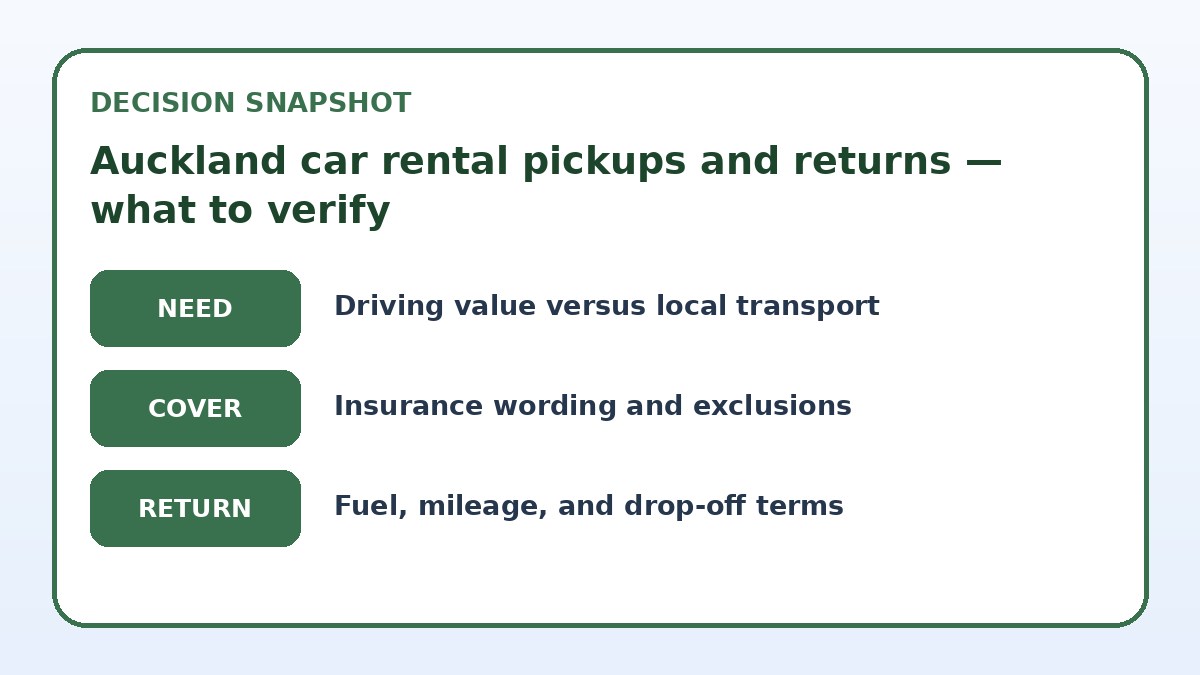
See current options before you compare the details
Availability and final conditions change. Open Trip.com now or keep reading for the practical comparison.
Where you pick up the car: location tradeoffs
Pickup location choices matter more than most solo travelers expect. Airport desks can be convenient on arrival but often have queues, extra airport fees, and shuttle transfers to offsite lots. City branches may be closer to your accommodation and avoid airport surcharges, but they might require a prearranged pickup time and could be closed outside standard hours. If you arrive late, an offsite company that uses a shuttle could add waiting time or a required phone call to trigger collection.
Decide by weighing convenience versus certainty. If minimizing transfers and walking with luggage is a priority, a desk at the terminal or a downtown branch within walking distance is preferable. If you want lower base rates and don’t mind a short bus or shuttle, offsite lots can be cheaper but add complexity, especially if you arrive tired or after dark. Before booking, confirm exactly how to get from your arrival gate, train station, or ferry terminal to the pickup point.
ID, payment and driver requirements for solo renters
Rental contracts often require the name on the reservation to match the primary driver’s ID and the credit card used for the security hold. Solo travelers who plan to use a different card, or who are not the cardholder (for example, paying with a partner’s card remotely), should verify the supplier’s policies in advance. Some companies accept third‑party payments with paperwork; others insist on the primary driver presenting the card in person. Also check age limits and surcharges — younger solo travelers may face additional fees or restricted vehicle categories.
Ask what documents the agent will check at pickup: passport or domestic ID, driver licence (some companies require an International Driving Permit for non‑English licences), proof of return travel, and the payment card used for reservation guarantees. If you rely on digital confirmations, ensure you can present them offline if needed. Request written confirmation if the supplier approves an exception (for example, a different payment card), and screenshot or save the email to avoid disputes at the counter.
| Approach | Best for | Tradeoff to check |
|---|---|---|
| Airport desk pickup | Arrivals with lots of luggage or late flights | Higher convenience but potentially longer queues and airport-related fees |
| Offsite lot with shuttle | Lower base rates and wider vehicle choice | Requires shuttle transfer and can add waiting time or confusion on arrival |
| City branch pickup | Staying in central Auckland and avoiding airport surcharges | May require specific pickup hours and additional travel from arrival point |
| After‑hours return allowed | Early or late departures where staffing is limited | Risk of post‑rental damage claims if inspection occurs after you leave |
Ready to check the option that fits your plan?
Use your exact dates and traveler details so the provider page can show the current total and conditions.
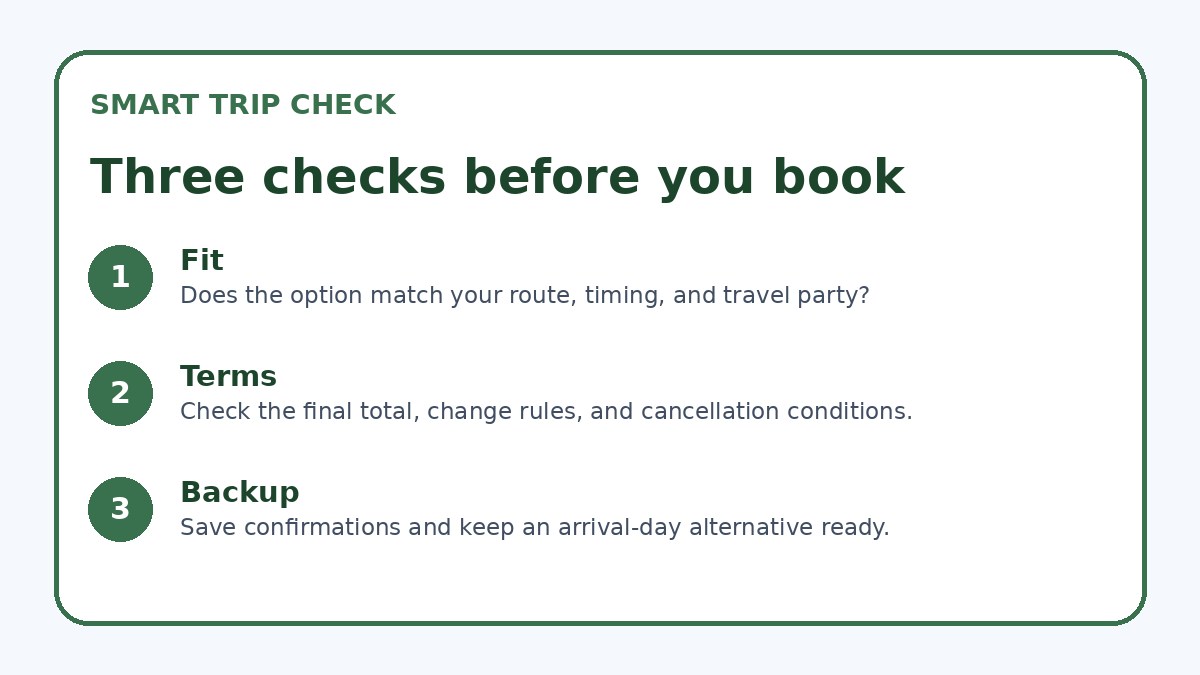
Return procedures and after‑hours risks
Understand how returns are handled, especially if your flight or ferry departs early or late. Many branches allow after‑hours returns but will either inspect the car before you leave or accept keys via a drop box and inspect later. If the vehicle will be inspected after you leave, ask how damage claims are handled and whether a timestamped receipt will be provided. Without a proper inspection and receipt, you could be charged for damage discovered later. Solo travelers should allow extra time to return the car during staffed hours if possible.
If you anticipate an after‑hours return, photograph the vehicle thoroughly and note the fuel level with timestamps or a quick video. Confirm where to leave the keys and what documentation the supplier will provide. If the office requires you to fill out a return form or take a staff member’s signature, plan for that step. When returning to airport lots, factor in the transfer time from the lot to the terminal to avoid missing connections.
Before you book
- Confirm the exact pickup address, meeting point instructions, and whether a shuttle is needed to reach an offsite lot.
- Verify which ID, licences, and the exact credit card the provider requires at pickup and whether third‑party payments are accepted.
- Ask how returns are processed after hours and request written instructions plus a contact number for drop‑off complications.
- Photograph the entire vehicle (close‑ups of any marks plus wide shots) and record the fuel level with a timestamped image or video at pickup.
- Note the branch’s documented inspection process and insist on a signed or electronic condition report before you leave the desk.
- Clarify toll handling and obtain a clear explanation of fuel policies — full‑to‑full is simplest — and keep all related receipts after return.
Inspection, fuel and tolls — what will cost you later
Inspection disputes are common. Agents will note preexisting scratches, dents, and tyre or windscreen damage at pickup; insist on a clear annotated condition report before you drive away and take photos covering all sides. Ask how minor marks are handled and what evidence will be used for post‑rental claims. Fuel policies vary: full‑to‑full is usually simplest for solo travelers because you only pay for what you use. Prepaid fuel or full‑to‑empty schemes can result in high refuelling charges.
Tolls and electronic tags are another frequent headache. If the rental includes an electronic toll device, confirm whether you’ll be billed directly by the provider and how to receive receipts. If not included, find out whether the supplier charges a daily fee for toll processing in addition to the road charges themselves. Keep all toll invoices or confirmation emails, and check the rental company’s process for disputing charges after return.
Frequently asked questions
Can I use someone else’s credit card to pay for an Auckland car rental?
Policies vary by company. Many suppliers require the credit card presented at pickup to be in the primary driver’s name because they place a hold for the security deposit. Some providers accept third‑party payments if a written authorization or a company voucher is provided, but this must be confirmed and documented before pickup. If you plan to use another person’s card, contact the rental company in advance, get their written policy, and bring any additional ID or authorization forms they request to avoid being refused at the counter.
What should I do if the branch is closed when I return the car in Auckland?
If the branch is closed but accepts after‑hours returns, follow the supplier’s instructions precisely: park in the specified lot, leave keys where directed (secure drop box or returned to a kiosk), and complete any online or paper return form if required. Immediately photograph the vehicle and its odometer/fuel gauge, and email or upload the images to the contact the company provides. Request a timestamped confirmation or receipt. If unsure, call the emergency number given on your rental agreement and keep records of all communication to support any later dispute.
How can a solo traveler reduce the chance of an unfair damage claim after return?
Document everything at pickup and drop‑off: get a full written or electronic condition report, take detailed photos of all panels, wheels, and interior, and request staff to sign or timestamp the inspection at both stages. Return the car during staffed hours when possible so an agent can inspect it with you and issue a receipt. Keep copies of fuel receipts and toll invoices. If the supplier inspects later, provide your photos and timestamps as evidence; having the agent’s written notes from pickup makes disputes much easier to resolve.
Final planning note
For solo travelers in Auckland, pickup and return terms deserve more attention than vehicle type or headline price. Prioritize clarity: know where you’ll collect and drop off the car, what ID and card the supplier expects, how after‑hours returns are handled, and how inspections, fuel and tolls are charged. Accept small tradeoffs — like a slightly longer walk to save on airport surcharges or choosing a staffed return to avoid inspection disputes — when they reduce uncertainty and travel stress. Before you book, confirm any nonstandard arrangements in writing and save screenshots or emails; when in doubt, Trip.com can be used to compare availability and current supplier terms, but always verify final contract details on the rental company’s booking page.
Continue planning
Check current options and final conditions
Use the provider page to confirm live availability, the final total, cancellation terms, and every condition that matters to your trip.
This evergreen planning guide was created with AI-assisted drafting and a structured quality review. It does not display live prices, schedules, availability, visa guidance, or provider rankings. Verify current details before booking. Some links are affiliate links; we may earn a commission at no additional cost to you.