If you’re booking an Auckland car rental for a family trip, start by reading the insurer and rental-agreement wording before you click confirm. The practical step is simple: identify who is insured (named drivers vs. additional drivers), what deductibles or excess apply, which damage types are excluded (tyre, windscreen, underside, or roof), and whether liability coverages meet New Zealand minimums. Families should also check roadside assistance, child seat damage rules, and whether loss-of-use and administrative fees are covered after an accident. Knowing these five items will prevent unpleasant surprises at the counter and make it easier to compare optional cover offers. Below I explain how to interpret policy language, tradeoffs between waivers and third-party insurance, and the exact booking-page details to verify before you finalize a reservation.
Key insurance terms families must identify
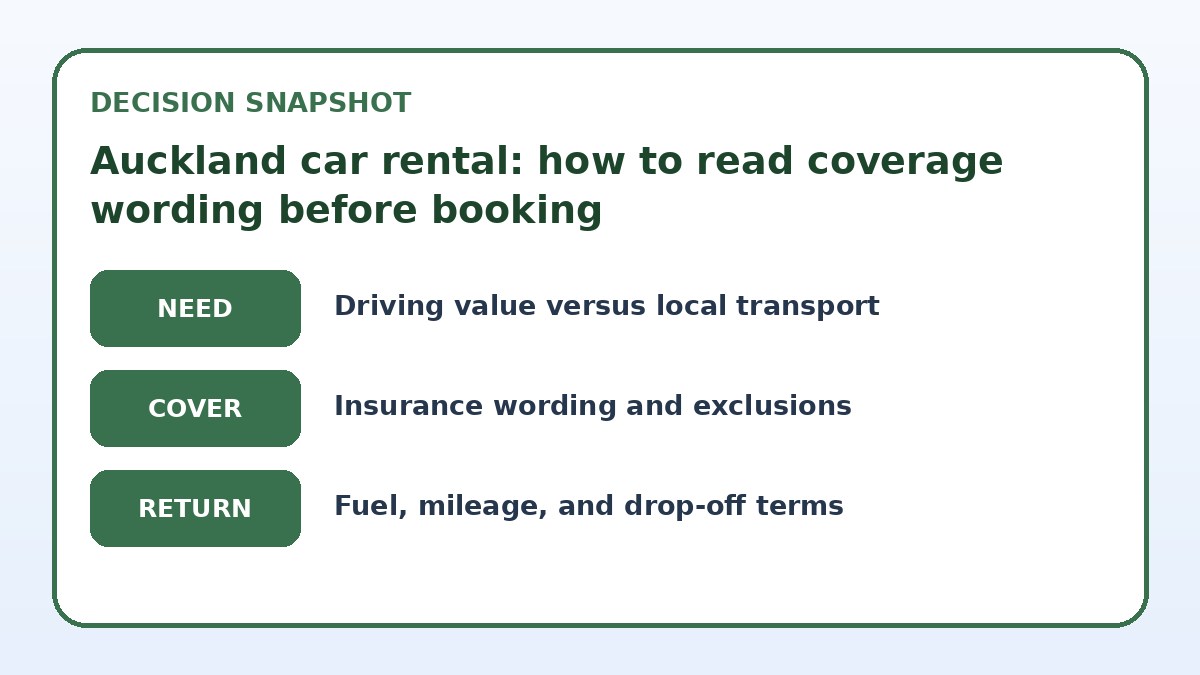
Start with the contract vocabulary. 'Collision damage waiver' (CDW) or 'loss damage waiver' (LDW) sounds like full cover but usually only limits your financial responsibility for damage to the rental vehicle; there’s often an excess. 'Supplemental liability insurance' (SLI) increases third-party bodily injury and property damage limits beyond basic cover. 'Personal accident insurance' (PAI) covers occupant medical costs but can duplicate travel or health insurance benefits. Finally, 'roadside assistance' may be treated as a separate product with its own exclusions—confirm whether jump-starts, towing for damage incidents, or lock-out services are included.
For families, two specific wording points matter more than most: named-drivers language and child-seat coverage. Some policies only insure drivers listed on the rental agreement; others allow additional drivers free up to a limit or for a fee. If your partner or teenager will drive, check age restrictions and whether the policy excludes inexperienced drivers. For child seats, read whether damage, theft, or misuse of the seat is covered; many providers treat child-safety equipment as rental accessories with separate liability or replacement rules. Always cross-reference these terms with the provider’s final booking page to confirm current wording and fees.
How to evaluate excess, waivers and optional cover
Excess (also called deductible) is the maximum you pay after a claim. Wording to watch: does the CDW 'reduce the excess to zero' or only 'reduce by X amount'? Some waivers remove liability for collision damage but exclude tyres, glass, interior or undercarriage damage. Optional covers—premium CDW, super CDW, tyre/glass protection, and theft protection—use different language about what's 'covered' versus 'excluded' and whether cover applies only if you follow certain procedures, such as reporting incidents promptly or using approved garages.
Deciding whether to buy optional cover requires weighing potential claim costs against daily premium and whether your travel insurance or family credit card already provides specific protections. If insurance wording requires the renter to pay for repairs upfront and claim reimbursement later, ensure you have funds or card limits large enough. Look for wording about 'administrative fees' and 'loss of use' charges; these can be billed separately and sometimes are only waived if you purchase a specific protection product. Verify these details on the rental provider’s booking page and your payment card’s benefit guide.
| Approach | Best for | Tradeoff to check |
|---|---|---|
| Buy the rental company’s full-waiver product | Families wanting simple, immediate cover with minimal claims paperwork | Higher upfront daily cost and possible overlaps with other insurance |
| Rely on travel insurance or credit-card cover | Travelers with comprehensive policies already covering rental damage | May require reclaiming costs after paying repairs and meeting strict conditions |
| Purchase third-party rental insurance before travel | Families comparing broader, often cheaper annual or trip-specific policies | Coverage details and claim procedures vary; ensure it covers local exclusions |
| Accept standard cover, self-insure small risks | Short trips with low-risk driving plans and strong personal budgets | Exposure to high excesses and unexpected administrative or loss-of-use fees |
Common exclusions that surprise families
Many exclusions trip up families: driving off-road or on unsealed roads, using a vehicle for adventures like towing or organized motorsport, and allowing unlisted drivers to handle the car. Policy wording may also exclude damage caused while reversing, when parking, or by loading children and gear—though the latter is rare. Some companies deny cover for damage to roof racks, bike racks, or accessories not installed by the rental company. Read the exclusions list; if the language is vague about where and how you can drive, ask the provider to clarify in writing.
Another frequent surprise is child-seat and luggage exclusions. Policies sometimes exclude damage to rented accessories (like child seats) unless you buy the accessory-protection add-on, or they limit liability for personal belongings left in the car. If you plan to bring or rent a child seat, check the wording for liability in case of theft, accident damage, or improper installation. Also check the steps required to make a valid claim—documentation, police reports, and timeframes are commonly specified and must be followed to avoid denial.
Before you book
- Open the rental company’s full terms and find the excess amount, noting whether optional waivers reduce it to zero or only partially.
- Confirm exactly who is an authorised driver, any age limits, and the cost and wording to add additional drivers.
- Search the policy for exclusions covering tyres, glass, undercarriage, roof racks, and accessory items like child seats.
- Read the claim process section: required documents, police-report rules, time limits for filing, and whether you must use approved repairers.
- Check whether roadside assistance, towing, and lock-out services are included or sold separately and what the response obligations are.
- Compare the rental cover wording with your travel insurance and credit-card benefits to identify gaps and overlapping protections.
How to compare options and verify before you book
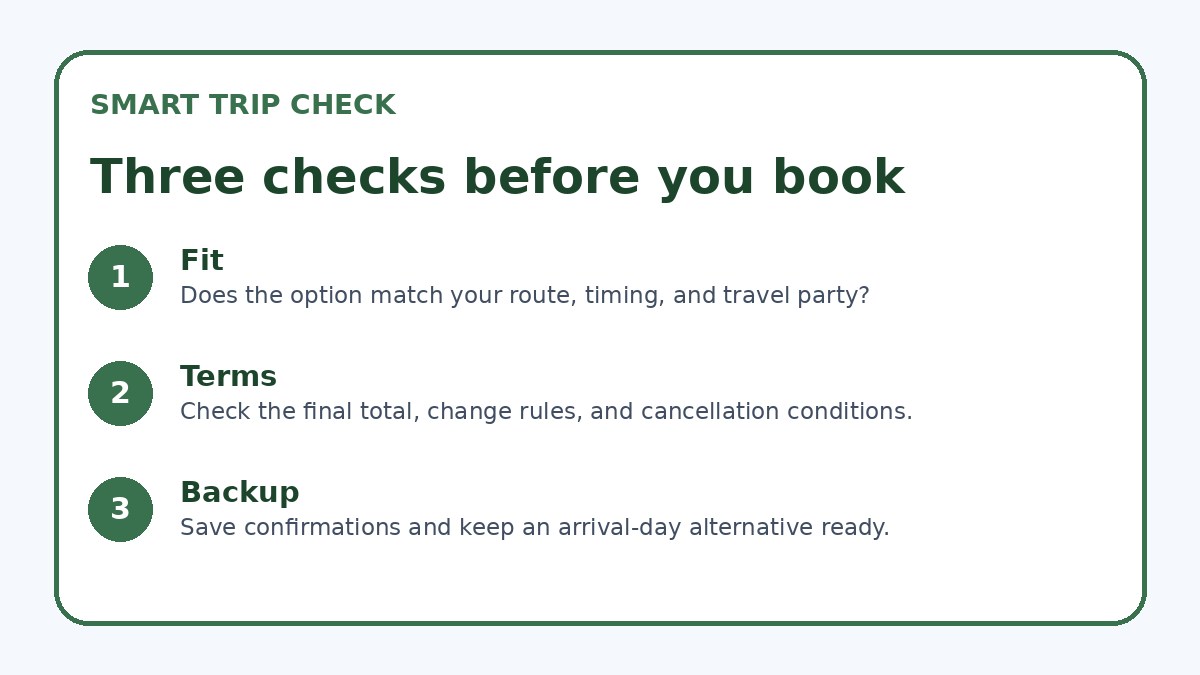
Create a short checklist for side-by-side comparison: excess amount, specific exclusions, named-driver rules, whether roadside assistance is included, and what the claim process requires. When comparing rental quotes, open each provider’s full insurance wording or 'terms and conditions' PDF and search for the exact phrases listed in your checklist. If an option mentions 'zero excess' or 'full cover', find the clause that confirms tyres, glass, and undercarriage are included. If the document is unclear, ask the supplier for a written clarification—email is better than chat for record-keeping.
Remember to verify anything that matters on the supplier’s final booking page, because promotional text can differ from contract wording. Confirm additional driver fees, age-based exclusions, and the exact procedures for reporting damage. If you plan to rely on your credit card or travel insurance for CDW, read those documents’ rental-car sections and cross-check exclusions with the rental policy. Optionally, compare listings on Trip.com if you want another platform view, but always cross-verify the provider’s terms on their booking page before finalising.
Frequently asked questions
Does paying extra for the rental company’s insurance eliminate all risk for families?
Paying for a rental company’s extra waiver reduces or removes your financial liability for many types of vehicle damage, but it rarely removes every risk. Read the waiver wording: some still exclude tyres, windscreen, undercarriage, roof damage, or accessories. Administrative fees, loss-of-use charges, and penalties for violating rental terms (like driving off-road or allowing unlisted drivers) might still apply. For families, confirm child-seat and personal-belongings rules and whether an incident requires immediate reporting or specific repairers to keep the waiver valid.
If my credit card or travel insurance says it covers rental cars, do I need the rental company’s protection?
Not necessarily, but you must read the exact eligibility and exclusion wording in your card and travel-insurance documents. Many credit-card covers exclude certain vehicle types, age ranges, or driving locations (for example, unpaved roads), and they may require you to decline the rental company’s CDW at the counter to stay eligible. Travel insurance can duplicate or complement cover but may require you to pay up-front and claim reimbursement. Cross-check requirements, and verify on the rental agreement page whether their terms force you to buy local add-ons to maintain cover.
What steps should I take at the rental desk to avoid disputes over insurance coverage?
At the counter, confirm which drivers are listed and ask for the exact wording of any purchased waiver or protection—either on-screen or printed. Inspect the vehicle with a partner and record visible damage with time-stamped photos or video, capturing tyres, glass, undercarriage snaps if accessible, and odometer and fuel readings. Ask the agent to initial or write notes about pre-existing damage on the inspection sheet, and request a copy to keep. Finally, ask what you must do immediately after any incident to preserve cover, and save the agent’s name or email for future reference.
Final planning note
Families booking an Auckland car rental should prioritise clarity over speed. A few minutes spent reading the provider’s insurance wording, confirming named drivers, and checking exclusions for tyres, glass, child seats, and roadside assistance will save time and money later. Compare excess levels, claim processes, and whether a purchased waiver truly removes the specific risks you care about, and cross-check those details with any travel-insurance or credit-card protections you plan to use. Always verify the exact terms on the rental company’s booking page and keep written confirmation of whatever add-ons you buy. That way you can focus on enjoying Auckland’s sights knowing the coverage matches your family’s needs.
Continue planning
Check current options and final conditions
Use the provider page to confirm live availability, the final total, cancellation terms, and every condition that matters to your trip.
This evergreen planning guide was created with AI-assisted drafting and a structured quality review. It does not display live prices, schedules, availability, visa guidance, or provider rankings. Verify current details before booking. Some links are affiliate links; we may earn a commission at no additional cost to you.