Practical answer first: for most first-time visitors to Berlin, a rental car is unnecessary and often more of a hassle than a benefit. The city has a dense, affordable public transport network (U-Bahn, S-Bahn, trams, buses) and compact central neighborhoods where walking and cycling are efficient. However, a car can make sense if your itinerary includes day trips into the Brandenburg countryside, frequent journeys to airports or remote attractions, or if you travel with a lot of bulky gear. This guide helps you weigh the tradeoffs—time saved versus time lost hunting parking, flexibility versus urban limits—and gives clear criteria to decide whether to book a vehicle. Read on to compare scenarios, checklist items to verify while booking, and practical tips for driving and parking in and around Berlin.
How Berlin’s transport setup shapes the choice
Berlin’s transport network is designed around public mobility. The inner districts are compact, with many attractions reachable by foot or short transit rides. Frequent U-Bahn and S-Bahn lines connect central hubs, while trams and buses fill gaps at street level. If your plan focuses on museums, neighborhoods like Mitte, Prenzlauer Berg, Kreuzberg, and Charlottenburg, or a few evening outings, public transit typically beats driving for time and predictability. Walking often saves time door-to-door because parking searches and walking from lot to destination add hidden minutes to any car trip.
By contrast, a car becomes more attractive when your itinerary pushes beyond that compact core. Brandenburg’s lakes, small towns, and some manor houses or nature reserves are much easier to reach by car, especially if timetables are sparse. Consider whether your schedule requires frequent, off-peak mobility where transit connections are long or absent. Also weigh luggage and companion comfort—if you’re traveling with toddlers, elderly relatives, or heavy equipment, a private car can lower stress despite urban drawbacks.
Costs and practical tradeoffs to calculate
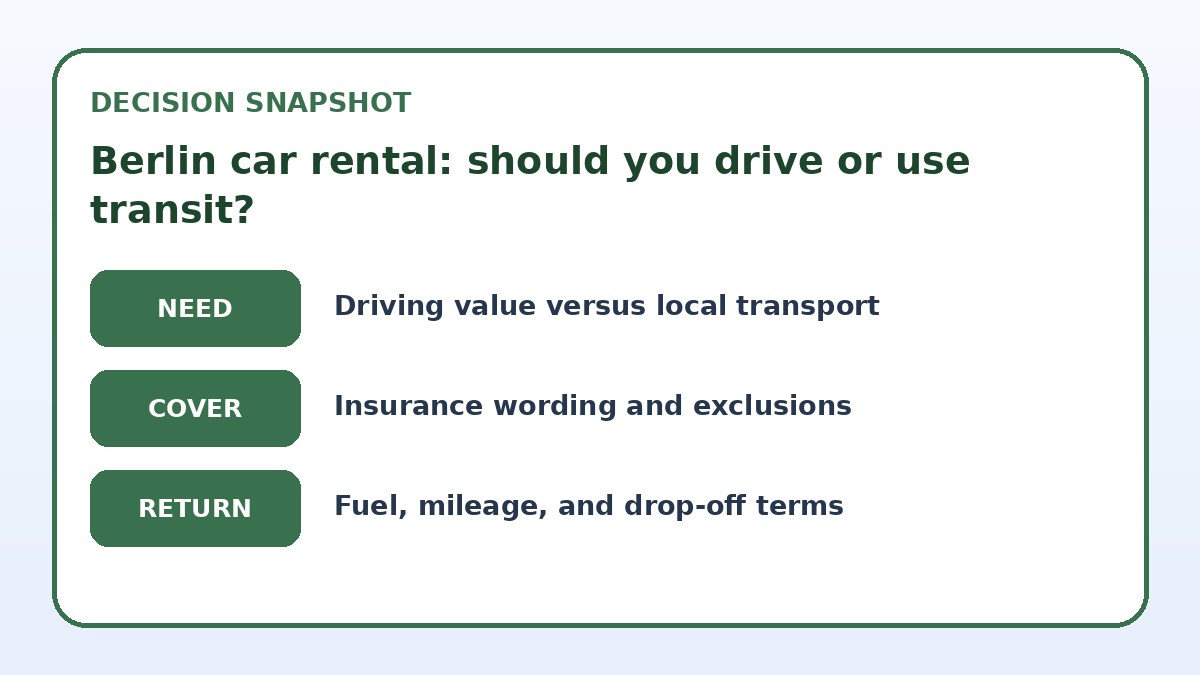
When comparing costs, look past the headline rental rate. Add fuel, parking fees, environmental stickers if needed, insurance options, and potential congestion or special zone charges. Pay attention to fuel policy and mileage limits on the rental contract. Parking in central Berlin ranges from metered street spots to private garages; short-stay parking might be relatively pricey and long-stay options can be far from your lodging. These factors can tip the balance against a car even when the rental rate seems low.
Time is a cost too. Estimate realistic door-to-door travel times including searches for parking, walking from the lot to your final stop, and typical traffic during your visit. If your group splits costs, per-person math changes—car pooling can be economical for day trips to Potsdam or the Spreewald. Also evaluate convenience: the ease of dropping luggage at your hotel and setting off, versus navigating Berlin’s transit with bags at rush hour. Make a simple table comparing sample fares, parking, fuel, and transit tickets for representative days of your trip.
| Approach | Best for | Tradeoff to check |
|---|---|---|
| No rental: rely on public transport, walking, cycling | Visitors staying in central Berlin who prioritize convenience and low stress | Less flexibility for remote day trips and carrying bulky gear |
| Single-day rental paired with transit | Sightseers who want transit in the city but need a car for one specific day trip | Added booking complexity and short-term parking costs |
| Full-trip rental | Travelers with multiple rural destinations, large groups, or heavy luggage | Higher total costs, parking hassles, and urban driving stress |
| Car-sharing or local short-term hire | Flexible travelers needing occasional car access without full rental commitment | Availability can be sporadic and vehicles vary in size and price |
Safety, environmental zones, and driving rules to check
Before you commit to a car, verify which low-emission zones (Umweltzonen) apply to your route and whether your rental includes the required sticker or permit. Rules and enforcement vary; always check the rental company’s information and the city’s official pages before travel. Also confirm license and age requirements with the provider, and whether an international driving permit is recommended for your nationality. These administrative details can add cost or paperwork and sometimes affect vehicle availability.
Familiarize yourself with local driving norms: speed limits on urban roads, how roundabouts are used, and cyclist priority areas. Berlin is bicycle-friendly, and cyclists frequently share lanes; give them space and watch for tram tracks that can catch narrow tires. If you’ll park in residential areas, learn about permit zones to avoid fines or towing. When in doubt, ask the rental company which neighborhoods are practical to drive in and where recommended parking garages are located.
Before you book
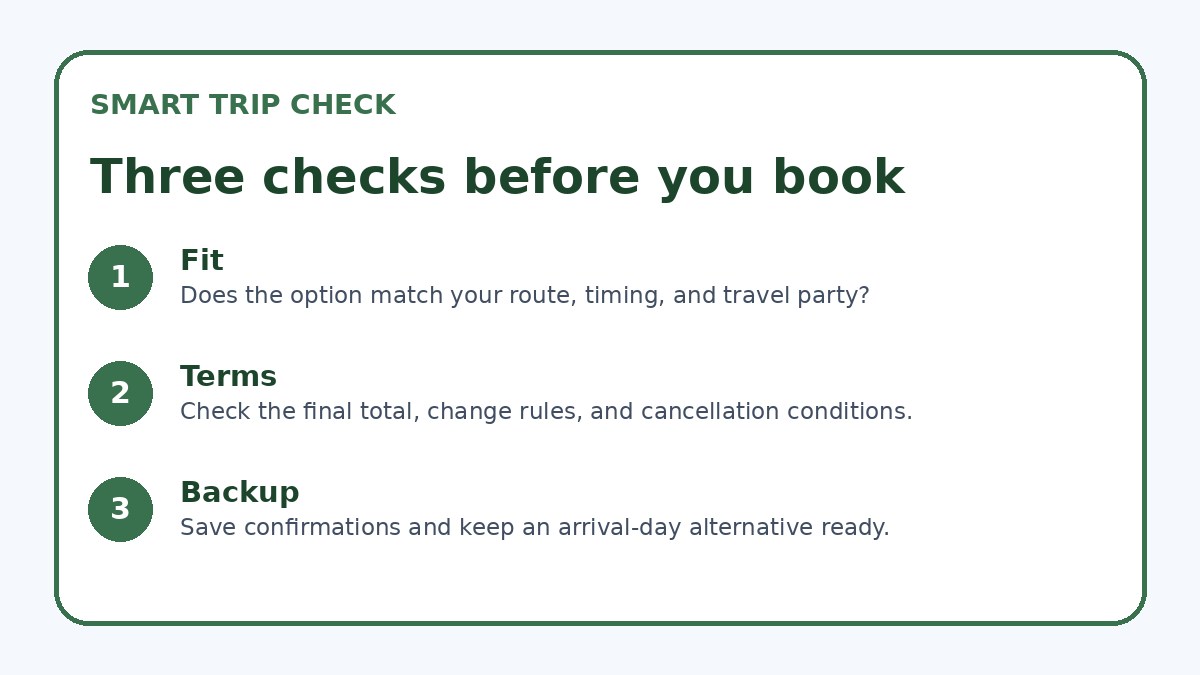
- Map your planned daily routes and mark which destinations lack direct transit service before deciding to rent.
- Compare total costs: rental rate, fuel, parking, insurance, and any low-emission zone fees on the provider’s booking page.
- Confirm pick-up/drop-off locations and opening hours; note after-hours drop procedures and late-arrival penalties.
- Verify what insurance is included and whether you need to buy extra coverage from the rental company or your credit card.
- Check whether the vehicle has the required environmental sticker and whether cross-border travel is permitted if needed.
- Identify recommended parking garages near your lodging and major attractions, and note typical walking distance from each garage.
When to rent: timing, pick-up spots, and alternatives
If you decide a car adds value, choose the pick-up location carefully. Airport counters are convenient but can include extra fees and require negotiating city traffic immediately after travel. Off-airport city locations may be closer to your lodging and save time. Confirm opening hours, drop-off flexibility, and what to do if your flight or train is delayed. Always review the provider’s final booking page for exact pick-up instructions, blocking deposits, and cross-border rules if you plan to drive outside Germany.
Consider alternatives before booking: day tours, regional trains, and ride-hailing plus occasional car rentals can offer the best of both worlds. For example, take transit in the city and book a rental just for a two-day countryside loop. Also check car-sharing or peer-to-peer options for short trips. Trip.com can be useful to compare current availability and conditions when you’re ready to book, but verify all policy details—insurance, fuel rules, mileage—directly on the rental company’s final booking page.
Frequently asked questions
Is it easy to park a rental car in central Berlin?
Parking in central Berlin is available but can be limited and time-consuming to find during busy hours. Many streets have paid metered spots or resident permit zones that restrict long-term parking. Private parking garages are common near tourist areas and can be more reliable, though often farther from exact destinations. If you expect to park in the city frequently, identify specific garages in advance and factor their fees and walking distance into your plans. For overnight stays, check whether your hotel provides a guest parking option and what it costs on the provider’s final booking page.
Do I need a special sticker or permit to drive in Berlin?
Some parts of Germany use low-emission zones that require vehicles to display an environmental sticker (Umweltplakette). The exact rules and which zones apply can change, so confirm whether the rental car includes the required sticker and whether your planned routes enter regulated areas. Ask the rental company and check the official city resources before travel. If you plan to drive beyond Germany, verify cross-border requirements and whether the rental agreement allows travel into neighboring countries—this information is listed on the rental company’s booking page and should be read carefully.
What’s the best way to combine public transport and a rental car?
A practical strategy is to use public transport while in the city and rent a car only on days when you need to reach rural or poorly connected sites. Book the rental for a single pick-up at a convenient city location or near a train station, drop it off the same way, and reserve parking in advance if possible. This minimizes costs and urban driving stress. Compare transport timetables with driving time estimates for each day to decide whether the rental adds significant value; consider local car-sharing services for short, flexible needs instead of a full-day rental.
Final planning note
For most first-time visitors, Berlin’s compact layout and comprehensive public transport mean a rental car is more likely to complicate than simplify your trip. Choose transit, cycling, and walking for central sightseeing, and only add a car when your itinerary includes multiple rural destinations, heavy luggage, or a mobility need that transit cannot meet. If you opt for a rental, do the homework: map routes, calculate true costs including parking and emissions permits, confirm insurance and pickup details on the rental company’s final booking page, and consider hybrid approaches—rent for a single day or use car-sharing. Thoughtful planning ensures your ground transport supports your trip, not slows it down.
Continue planning
Check current options and final conditions
Use the provider page to confirm live availability, the final total, cancellation terms, and every condition that matters to your trip.
This evergreen planning guide was created with AI-assisted drafting and a structured quality review. It does not display live prices, schedules, availability, visa guidance, or provider rankings. Verify current details before booking. Some links are affiliate links; we may earn a commission at no additional cost to you.