
Practical answer first: for most couples planning a relaxed city trip to Amsterdam, aim to start monitoring deals 2–6 months before your preferred travel dates and lock bookings 6–10 weeks out for a good balance of choice and price. If you travel in a shoulder month (late spring or early autumn) you can comfortably book closer to departure; for high-season periods like warm-summer weekends and major holidays, begin seriously searching earlier—3–6 months for flights and 3–4 months for hotels. Use a short watch period (2–3 weeks) to catch temporary fare drops or package deal flashes, but avoid waiting until the final 2 weeks unless you prioritize flexibility over selection. Below I explain tradeoffs, how to set a personalized window, what to compare, and which details to verify before you finalize reservations.
See current options before you compare the details
Availability and final conditions change. Open Trip.com now or keep reading for the practical comparison.
Decide what matters most to you
Before picking a booking window, clarify the nonnegotiables: exact travel dates, preferred neighborhoods, accommodation type, and must-do activities. Couples often prioritize different things—one partner may want a canal-side hotel while the other cares more about flight times—so list these preferences and rank them. That ranking will guide how aggressively you search early. For example, if staying in a specific boutique district is essential, you should start checking availability earlier than if you’re happy with several neighborhoods.
Next, decide how much flexibility you truly want and can afford. Flexible tickets and refundable rooms cost more, but they let you book early without the stress of locked plans. Conversely, fixed-date travelers can book mid-range windows to chase lower fares or promotional packages. Consider your work commitments, special events, and how confident you are in locking dates—those practical constraints should shape the window you choose more than vague rules about ‘best time to buy.’
Compare timeframes by travel element
Flights, hotels, and special experiences each follow different availability rhythms. International flights to Amsterdam often show patterns where discounts appear a few months before departure and again very close to travel; for couples wanting specific flight times, begin checking three to six months out. For hotels, central rooms in popular neighborhoods fill sooner for weekend stays or during festivals, so open your search three to four months ahead if location matters, or wait closer in shoulder seasons if you value price over exact placement.
Tours, museum skip-the-line entries, and canal cruises can sell out for popular time slots—book these as soon as your main travel dates are locked. Dining reservations at highly sought restaurants often require weeks or months of lead time. When comparing options, create parallel searches with different lead times (e.g., 4 months, 8 weeks, 3 weeks) so you can see how availability and rates change; that evidence helps you pick a realistic personal window rather than guessing.
| Approach | Best for | Tradeoff to check |
|---|---|---|
| Book early (3–6+ months) | Couples with fixed dates, specific neighborhoods, or special-event travel. | Higher certainty and selection, but may miss short-term promotions and flexible cancellations can cost more. |
| Mid-range window (6–10 weeks) | Couples balancing choice and potential savings without last-minute risk. | Good selection for many travelers, but top rooms or ideal flights may already be limited. |
| Short-notice booking (2–4 weeks) | Flexible couples prioritizing last-minute deals or those who can accept alternative accommodations. | Possible lower prices but higher risk of limited options and inconvenient times or locations. |
| Staggered approach (monitor long, book at target) | Couples who want both surveillance for deals and a firm booking point. | Requires effort to track and discipline to act when criteria are met, but balances risk and reward. |
Ready to check the option that fits your plan?
Use your exact dates and traveler details so the provider page can show the current total and conditions.
Balance risk versus reward
The core tradeoff when choosing a booking window is risk (losing your preferred options) versus reward (finding lower prices or package deals). Longer lead times reduce the risk of sold-out rooms or inconvenient flights but may miss temporary promotions. Waiting closer to departure can yield sharp, short-lived deals, but it increases the chance you’ll pay more or compromise on neighborhood, flight times, or travel sameness.
Couples should weigh how much compromise they accept. If getting an evening canal walk or a room with a view is crucial, value the security of earlier bookings. If you value squeezing into a lower budget or keeping plans open, set alerts and be ready to book when a deal matches your minimum criteria. Establish a maximum acceptable tradeoff—such as commuting time from hotel to main sights or a latest acceptable flight arrival time—and don’t chase a lower fare that breaks those rules.
Before you book
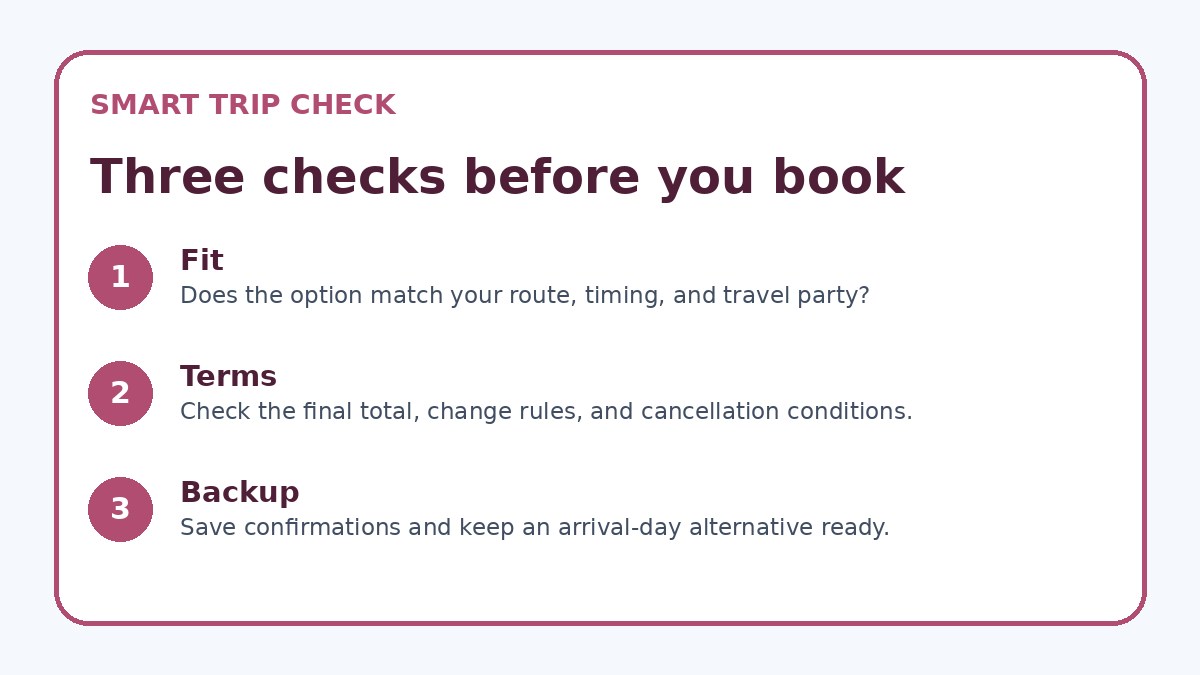
- Agree on nonnegotiables: dates, neighborhoods, and maximum travel time from lodging before you start searching.
- Set price alerts on two platforms and record offers in a simple spreadsheet or notes app for comparison.
- Check change and cancellation policies on the provider’s booking page before completing payment.
- Decide a firm booking deadline (e.g., 8 weeks before travel) and stick to it to avoid endless monitoring.
- Book must-have experiences (museum time slots, special dinners, canal cruise) as soon as main dates are confirmed.
- Compare package deals to separate flight-plus-hotel pricing to ensure you’re getting the combination you expect.
Practical steps to implement your window
Set up price alerts on at least two platforms and compare packages and standalone options. Check airline and hotel policies directly before purchase—confirm change fees, cancellation windows, and any extras like breakfast or city taxes on the provider’s booking page. For couples, coordinate a small “decision window” where you both agree to book if a deal meets your pre-agreed criteria: dates, neighborhood, total cost, and refundable options if needed.
Keep a simple tracking sheet of the deals you see with dates and provider links. If you prefer packaged deals, compare them to booking flight + hotel separately before committing. Trip.com can be one of the places you check for current availability, but always verify final terms, total price, and restrictions on the provider’s booking page before paying. Finally, set one firm deadline to stop monitoring and book—having that deadline avoids endless dithering and increases the chance you’ll actually travel the way you planned.
Frequently asked questions
How far ahead should my partner and I book flights to Amsterdam?
For most couples, start monitoring prices three to six months before your intended travel dates to understand price patterns. If you have rigid dates or need specific arrival/departure times, aim to secure flights on the earlier side of that range to preserve options. If your schedule is flexible, set alerts and be willing to book in the mid-range window of six to ten weeks or possibly closer if a compelling fare appears. Always verify baggage rules, change fees, and final total cost on the airline’s booking page before purchase.
When should we reserve hotels in central Amsterdam neighborhoods?
Reserve hotels in popular neighborhoods three to four months ahead if you want a wide choice of room types and locations—weekends and festival periods sell more quickly. For travel in shoulder or quieter months, you can often wait until six to ten weeks before departure without losing acceptable options. Check the property’s cancellation policy and whether any city or local taxes are included; confirm those details on the hotel’s booking page before paying. If a specific room feature matters (canal view, terrace), book earlier to increase the chance of securing it.
Can we rely on last-minute packages for a cheaper Amsterdam trip?
Last-minute packages can sometimes offer savings, particularly for flexible couples willing to accept alternative travel times or neighborhoods. However, relying on them increases the chance of limited choices for flights, room types, and activities. If you try a last-minute approach, set clear minimum standards—acceptable arrival times, neighborhood distance to sights, and refund limits—and have a fallback plan if nothing suitable appears. When you do find a promising package, verify total costs and change/cancellation terms on the booking page before confirming.
Final planning note
Choosing a realistic booking window for Amsterdam travel deals as a couple comes down to prioritizing what you value most—certainty of dates and location, or flexibility and potential savings. Start tracking prices two to six months out and set a firm personal deadline to book, tailored to your travel season and must-haves. Use alerts, compare package versus separate bookings, and always verify provider policies and final totals on the booking page before payment. With a shared decision framework and a few practical tools, you can pick a window that reduces stress and gives you the best chance of the trip you both want.
Continue planning
Check current options and final conditions
Use the provider page to confirm live availability, the final total, cancellation terms, and every condition that matters to your trip.
This evergreen planning guide was created with AI-assisted drafting and a structured quality review. It does not display live prices, schedules, availability, visa guidance, or provider rankings. Verify current details before booking. Some links are affiliate links; we may earn a commission at no additional cost to you.