Practical answer first: set staggered price alerts (separate alerts for flights, hotels, and trains), use a fixed decision checklist for each alert hit, and enforce a short cooling-off period before you book. For business travelers headed to Amsterdam, alerts are useful intelligence—saveable screenshots, exact fare rules, and a link to the provider’s booking page will prevent hurried choices. Pair alerts with calendar windows you control: lock travel dates with your company travel policy, then let alerts inform whether you should switch carriers, change class, or move to refundable fare types. If an alert presents a fare that matches your checklist (policy compliance, reasonable connection times, refundable or changeable terms), proceed; otherwise either snooze the alert or mark it 'monitor only.' This gives you market awareness without impulsive spending that can conflict with corporate approval or expense scrutiny.
See current options before you compare the details
Availability and final conditions change. Open Trip.com now or keep reading for the practical comparison.
Set alerts that reflect business constraints
Begin by aligning alerts with core business constraints rather than price alone. Create alerts that respect preferred carriers, allowable arrival and departure times, and hotel vendor programs your company uses. For flights, add filters for maximum total travel time and preferred alliance or cabin rather than searching only by the cheapest fare. For hotels, include only properties within the company’s approved classes or loyalty partnerships if those matter for status or billing rules. This prevents an alert from tempting you with a lower fare that later fails internal approvals or adds administrative overhead.
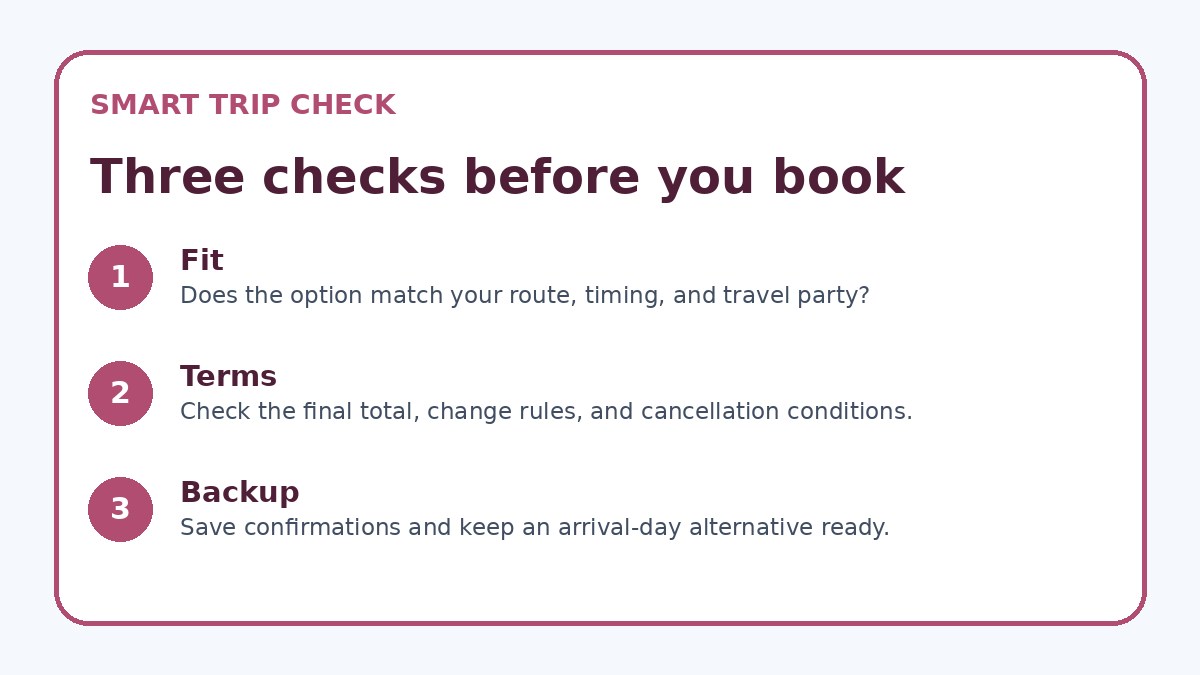
Next, embed fare rules into your alert review routine. When an alert hits, don’t treat the email as a booking ticket; open the provider’s final booking page and read the change and cancellation terms, baggage inclusions, and ticketing deadlines. If your company requires refundable fares or pre-approved vendors, verify those conditions on the actual booking screen before considering purchase. If you use a third-party tool, confirm the provider and fare class on the final booking page—tools can show aggregated results, but the booking conditions are set by the carrier or hotel and can change at checkout.
Design a decision checklist and cooling-off rule
A compact decision checklist keeps emotions out of purchases. Include five or six non-negotiables: compliance with travel policy, acceptable travel times, luggage allowance, cancellation/change terms, total out-of-pocket cost after fees, and whether the supplier is preferred or pre-approved. When an alert meets every item, you have a defensible reason to proceed. If an item fails, record the reason it failed and either dismiss the alert or move it to a lower-priority watchlist. A written checklist also speeds approval conversations with travel managers or assistants.
Complement the checklist with a cooling-off rule: wait a set number of hours after an alert triggers before booking. A short delay (24–72 hours depending on urgency) allows you to re-check availability, confirm with colleagues, and avoid emotional decision-making driven by FOMO. For last-minute travel where cooling-off isn’t possible, require at least a single quick verification step—screenshot the fare and confirm policy compliance with your travel manager. Use calendar holds or temporary reservations when available, but verify those holds’ expiration and fees on the provider’s booking page before relying on them.
| Approach | Best for | Tradeoff to check |
|---|---|---|
| Immediate booking on first alert | Those with fixed, last-minute travel and full authority to approve expenses | Higher risk of policy mismatch, limited time to check fare rules and approvals |
| Use alerts plus 24–72 hour cooling-off | Most business travelers who can delay short periods for verification | May lose very short-lived fares but reduces impulse purchases and errors |
| Alert plus pre-approved hold/ticketing window | Travelers whose companies allow holds or have travel-management integrations | Holds can expire and may have fees; always confirm hold terms on provider page |
| Monitor-only alerts (no immediate booking) | Those collecting market intelligence or preparing future travel | Requires disciplined review later; useful data but possible missed opportunities |
Ready to check the option that fits your plan?
Use your exact dates and traveler details so the provider page can show the current total and conditions.
Compare direct versus connecting options without assumptions
Alerts can return both direct and connecting itineraries; don’t assume either is always preferable. For business trips to Amsterdam, compare total door-to-door time, risk of missed connections, and overnight requirements alongside price. A connecting option can be cheaper on the alert, but it may introduce greater disruption risk if tight connections or separate tickets are involved. If you’re accountable for on-time arrival at meetings, give higher weight to itineraries with padding and single-ticket connections that transfer responsibility to one carrier.
When an alert shows a cheaper connecting itinerary, verify baggage transfer rules and minimum connection times on the carrier’s booking page. If the itinerary involves separate tickets, compute the cost and logistics of rechecking luggage and the potential cost of a missed connection. For each alert hit, add a short note: why this route is acceptable or not for the business purpose. This keeps your decisions reproducible in expense reports and makes it easier to explain tradeoffs to managers or colleagues.
Before you book
- Confirm dates and meeting times are fixed and approved by your manager before considering nonrefundable fares.
- Open the final carrier or hotel booking page and read cancellation, change, and baggage rules before booking.
- Take a screenshot of the alert and the provider’s booking page to document the fare class and timestamp for approvals.
- Compare total door-to-door travel time and missed-connection risk—not just displayed price—before choosing an itinerary.
- Verify whether the supplier is within your company’s preferred vendor list or requires pre-approval for expense reporting.
- If unsure, apply your 24–72 hour cooling-off rule and confirm purchase only after policy checks and stakeholder sign-off.
Use alerts to time hotel and ground transport decisions
Hotel alerts can be noisy but valuable if you restrict them by neighborhood, refundable terms, and corporate rate categories. For Amsterdam business stays, run alerts for properties near your meeting locations or convenient transit hubs. Configure alerts to monitor refundable rates when your schedule could change, and set separate alerts for non-refundable discounts only when your dates are locked and approved. Always verify cancellation policies and any mandatory city or tourism fees on the hotel’s booking page before confirming to ensure the alerted rate aligns with company expense rules.
Ground transport (trains, taxis, airport transfers) responds differently: price alerts are less common, so combine manual checks with provider-specific notifications. If a rail alert or last-minute fare shows a meaningful saving, ensure the service schedule fits meeting times and that ticket exchange or refund rules meet your needs. When using a third-party aggregator such as Trip.com to compare availability, verify schedules, fare rules, and supplier identity on the final provider page before booking, because aggregator displays may not include all provider-specific conditions.
Frequently asked questions
How should I set price alerts if my travel dates might change?
When dates are tentative, set broader alerts (flexible dates +/- one or two days) and prioritize refundable hotel rates and fully changeable flight fares. Label those alerts clearly as 'flexible' and avoid nonrefundable purchases until dates are locked. If a low nonrefundable fare appears and your schedule could shift, capture the offer details and discuss with your travel manager—sometimes an approved flexibility fee or refundable upgrade is a better corporate outcome than a small upfront saving.
Can I rely on aggregator alerts for final booking conditions?
Aggregators are useful for market visibility, but always verify terms on the supplier’s final booking page before purchasing. Aggregator displays may omit provider-specific restrictions, baggage rules, or ticketing deadlines. Use the aggregator to compare broad options, then follow through to the carrier or hotel page to confirm change/cancellation rules, seat or room availability, and the exact supplier name for expense reporting. Trip.com can be used as one place to compare availability, but confirm conditions on the provider's booking screen.
How do I justify a purchase made after an alert to my travel manager?
Document the decision: include the alert screenshot, the provider booking page showing fare rules and total cost, and your checklist confirmation items (policy compliance, acceptable schedule, baggage). Explain the tradeoffs you considered—time savings, risk of missed connections, refundable vs nonrefundable—and why this option met company needs. If relevant, note approvals obtained via email or messaging. Clear documentation turns an impulsive-seeming purchase into a traceable, policy-aware decision.
Final planning note
Price alerts are a powerful tool for Amsterdam travel deals when you pair them with clear business rules. For corporate travelers, the goal isn’t to chase every low fare but to gather actionable intelligence and make reproducible decisions that align with company policy. Use separate alerts for different travel products, apply a short cooling-off rule, and require verification on the provider’s final booking page before purchase. Keep a simple documented checklist and capture screenshots to streamline approvals and expense reporting. With these steps, alerts become a disciplined planning aid—reducing reactive bookings while still letting you take advantage of worthwhile opportunities.
Continue planning
Check current options and final conditions
Use the provider page to confirm live availability, the final total, cancellation terms, and every condition that matters to your trip.
This evergreen planning guide was created with AI-assisted drafting and a structured quality review. It does not display live prices, schedules, availability, visa guidance, or provider rankings. Verify current details before booking. Some links are affiliate links; we may earn a commission at no additional cost to you.