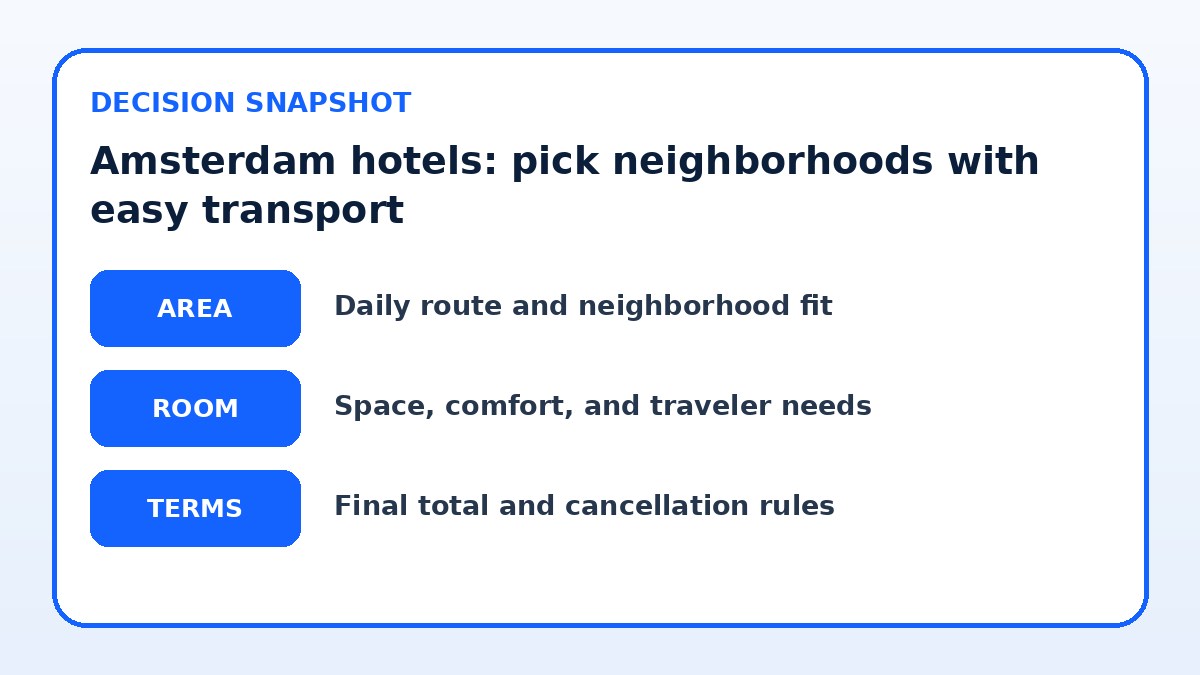
Practical answer first: pick a neighborhood that puts you on a simple onward route from the airport or train station, minimizes transfers with heavy bags, and offers hotel arrival options such as street-level entrances, elevators, or porter service. For most travelers with oversized or multiple suitcases, that means focusing on areas with direct public-transport links (central stations or major tram lines), easy taxi or rideshare access, and hotels that advertise luggage-friendly amenities. Once you shortlist one or two neighborhoods, filter hotels by ground-floor check-in, lift access, luggage storage, and clear arrival instructions from the hotel’s booking page. Below I walk through neighborhood fit, how daily routes affect friction, what to specify in the room and booking, and the final contractual checks to confirm before you press reserve.

Check live stays in the areas that fit
Use your dates and party size to compare current rooms after you narrow the neighborhood fit.
Neighborhood fit: match your arrival and departure flows
Start by matching where you arrive (Schiphol or a rail station) to where you’ll spend most of your time. If you land at Schiphol and want the shortest transfer, neighborhoods near Amsterdam Centraal or Amsterdam Zuid reduce the time and number of changes because they sit on major rail and tram corridors. If you expect many day trips that return to the hotel late, choose an area with 24-hour taxi availability or straightforward late-night tram lines. Think in terms of door-to-door travel rather than map distance—what matters is the number of transfers and how many stairs or narrow corridors your luggage must navigate.
Also consider whether you prefer one long transfer into the city or multiple short hops between activities. A base near a central node means longer walking to some attractions but fewer transfers, which is easier with bulky bags. Conversely, staying in a smaller neighborhood close to a particular cluster of museums or business venues can shorten daily walking but often requires at least one transfer on arrival from major hubs. Weigh the value of reduced arrival friction against the convenience of proximity to your daily priorities.
Choose an area-selection strategy
| Area approach | Best for | Tradeoff to check |
|---|---|---|
| Stay adjacent to a major rail hub (Amsterdam Centraal) | Minimizing transfers and simpler taxi or train links to Schiphol | Can be busier and slightly more expensive for quiet residential comforts |
| Choose a hotel near tram lines in Museumplein or Leidseplein | Easy daytime access to attractions with short tram rides | Trams can be crowded and have narrower boarding for large suitcases |
| Book in Zuid or Zuidas business districts | Direct train access and more modern hotels with lift access | Further from city-center tourist sites, adding short commutes |
| Pick a smaller canal-side neighborhood | Quieter stay with close walking access to local sights | Canal houses often have stairs and limited lift access for luggage |
Daily-route friction: routes, transfers, and luggage handling
Map your typical day: hotel to meetings or museums, then back, including any side trips. Count how many times you will haul or store luggage during the trip. Each transfer (train to tram, tram to ferry) increases the chance of stairs, crowded platforms, and street-level obstacles. If you have children, a mobility concern, or bulky cases, prioritize routes with level boarding or elevators, and avoid interchanges known for steps. Where elevators exist, check with the station or the municipality website; when in doubt, plan a taxi for arrival or departure to eliminate transfer stress.
Look beyond route frequency and consider vehicle type: trams and metro trains usually have narrower doorways and steps, which can be awkward with large suitcases. Ferries and mainline trains offer more space but may require a short walk across a quay. If you plan to use short regional trains for day trips, read the operator’s guidance about storing luggage on board. Consider scheduling arrival and departures outside rush hours when possible — that reduces lifting through crowds and can make a single longer transfer preferable to multiple short ones.
Now compare like with like
Keep the same dates, guests, room needs, and cancellation preferences while you compare the final choices.
Room and party needs: what to request in the booking
Decide the practical room features you need and make them explicit in the booking. Ask for a ground-floor room or one accessible by lift, request early check-in or luggage storage if you arrive before standard check-in times, and confirm whether the hotel provides porters or trolley carts. If you are traveling with a group, book adjacent rooms or a larger suite to avoid moving luggage between floors. When contacting the hotel, give case dimensions and arrival time; that helps staff confirm whether baggage handling is feasible through service doors or whether you’ll need to navigate narrow staircases.
Consider layout details that affect how you move luggage in and through the hotel: entry thresholds, inner courtyard stairs, narrow corridors, and whether the elevator fits larger suitcases. If your room has a balcony or internal steps, that can complicate unloading. If you plan to leave large items in storage for a day, clarify liability and access hours. Before finalizing a booking, ask the hotel for plain-language arrival directions (which door to use, where taxis can drop off) and verify that they will note any special handling requests on your reservation.
Hotel booking check before payment
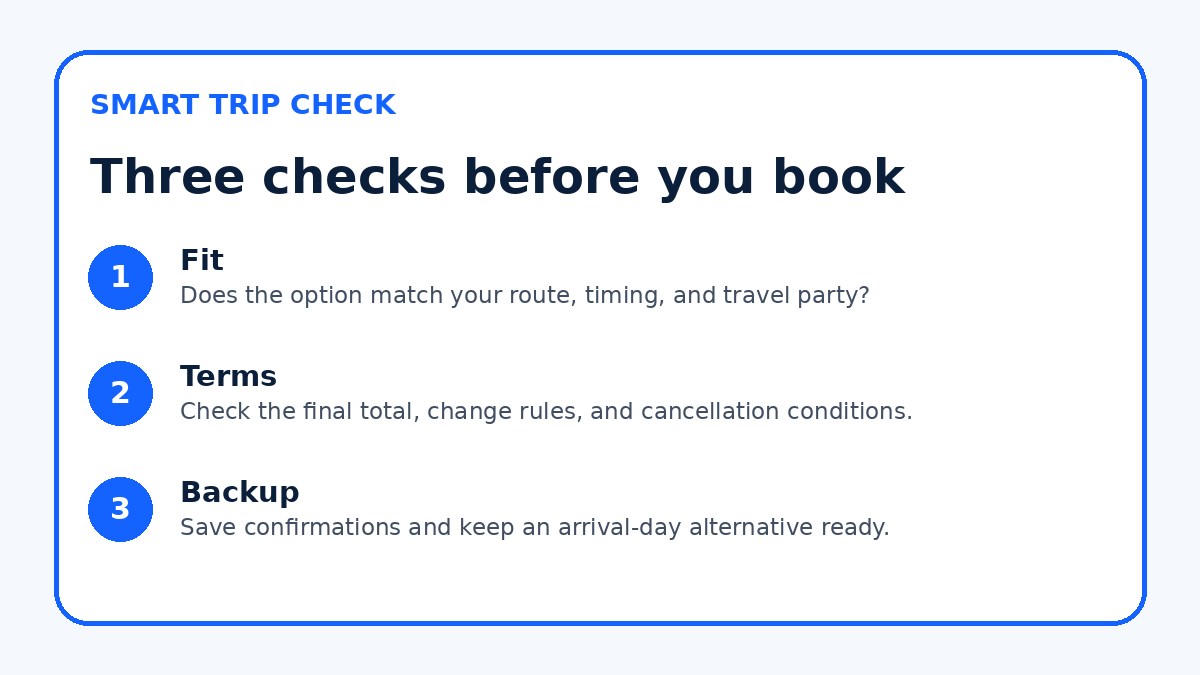
- Confirm which station or airport you’ll use and map the simplest door-to-door route to each candidate neighborhood.
- Contact each shortlisted hotel with arrival time and luggage dimensions; request written confirmation of porter, lift, or storage availability.
- Check hotel photos and descriptions for elevator size, room floor level, and step-free entrances before finalizing the booking.
- Plan at least one taxi or rideshare option for arrival or departure if transfers involve stairs or long walks with bags.
- Verify cancellation, early-check-in, late-check-out, and luggage-storage terms on the hotel’s official booking confirmation.
- Save clear arrival directions from the hotel and a local contact number in case your arrival time changes or you need assistance.
Final booking terms: what to confirm before you reserve
Before you press reserve, check and confirm several contract-related items that affect luggage handling. Review the hotel’s stated accessibility and baggage policies on the booking page and ask for written confirmation of any verbal promises. Confirm whether porters are available free of charge or for a fee, whether luggage storage is complimentary and for how long, and how they handle early arrivals or late departures. If you will rely on a third-party transfer service or taxi, verify drop-off points and whether the hotel requires a specific entrance for arrivals with luggage.
Also confirm cancellation and modification terms in case your arrival time changes, and ask if the hotel needs your flight or train number to coordinate arrival assistance. If the hotel mentions shuttle, porter, or storage services, ask what exactly is included and where to find those terms on their booking page. If you prefer to compare live availability or confirm precise service notes, Trip.com can be used alongside direct hotel pages, but always treat the hotel’s own confirmation as the operative source for arrival instructions.
Hotel Guide questions travelers ask
Is it better to take a taxi from Schiphol to avoid transfers with heavy luggage?
A taxi removes transfers and stairs, which usually reduces stress when you have multiple or oversized suitcases. Taxis drop you at the hotel entrance, eliminating platform changes and tight tram doors. However, taxis in Amsterdam can be affected by traffic or limited street access in narrow canal areas; confirm the hotel’s preferred drop-off point. Compare the door-to-door cost and time to the train-plus-tram route — the train is often straightforward and frequent, but a taxi can be worth the convenience if you value minimal handling.
How do I verify a hotel truly has luggage-friendly facilities?
Ask the hotel directly to describe how guests with luggage reach reception and rooms: which entrance to use, the elevator dimensions, and whether staff assist with bags. Request that they add any commitments (porter service, storage hours) to your booking confirmation or reservation notes. Check recent guest photos and reviews for evidence of step-free access or wide elevators. Treat the hotel’s own written confirmation as the authoritative source and, if using a booking site, cross-check the property page for the same details before you travel.
If I have an early arrival, what are practical options for handling bags?
Ask the hotel for early check-in or, at minimum, complimentary luggage storage so you can start your day without dragging bags. If storage is limited or unavailable, arrange a short-term locker solution at a nearby station or use a third-party luggage storage service; always confirm hours and security terms. Alternatively, timing a later train or taxi that arrives closer to standard check-in can avoid wait times. Whatever option you choose, get the hotel’s written note of any storage or handling arrangements and a local contact number for flexibility.
Final decision note
With extra luggage, the neighborhood you choose in Amsterdam should prioritize fewer transfers, clear arrival logistics, and hotels that explicitly support luggage handling. Start by narrowing to neighborhoods tied to major transport corridors—Centraal, Zuid, Museumplein, or Leidseplein—then filter hotels for elevators, porter service, and written arrival instructions. Contact properties with your luggage details and arrival time, verify storage and cancellation terms on their booking page, and plan a taxi backup for complicated arrivals. These steps will help you shortlist a practical area and choose a hotel that reduces movement friction so your trip starts and ends more smoothly.
Continue planning
Check current options and final conditions
Use the provider page to confirm live availability, the final total, cancellation terms, and every condition that matters to your trip.
This evergreen planning guide was created with AI-assisted drafting and a structured quality review. It does not display live prices, schedules, availability, visa guidance, or provider rankings. Verify current details before booking. Some links are affiliate links; we may earn a commission at no additional cost to you.