If you’re traveling to Abu Dhabi with extra luggage, driving can be the right move — but only if the rental’s fuel and mileage rules won’t turn convenience into hassle. For many visitors, a private car saves time at airports, gives flexible access to coastal sights and lets you carry bulky bags without juggling taxis. That payoff shrinks when a chosen rate forces you to return near-empty, charges per kilometre beyond a low allowance, or forbids rooftop carriers you actually need. Decide to drive when the itinerary demands frequent, door-to-door transfers, off-airport pickups, or routes with limited public transport; choose not to drive if you only plan short, central hops where taxis and rideshares are cheaper and easier. Read on to learn exactly what to check on the final booking page — fuel policy wording, mileage cap and excess rates, allowed luggage equipment, and insurance exclusions — so you won’t be surprised at pickup or return.

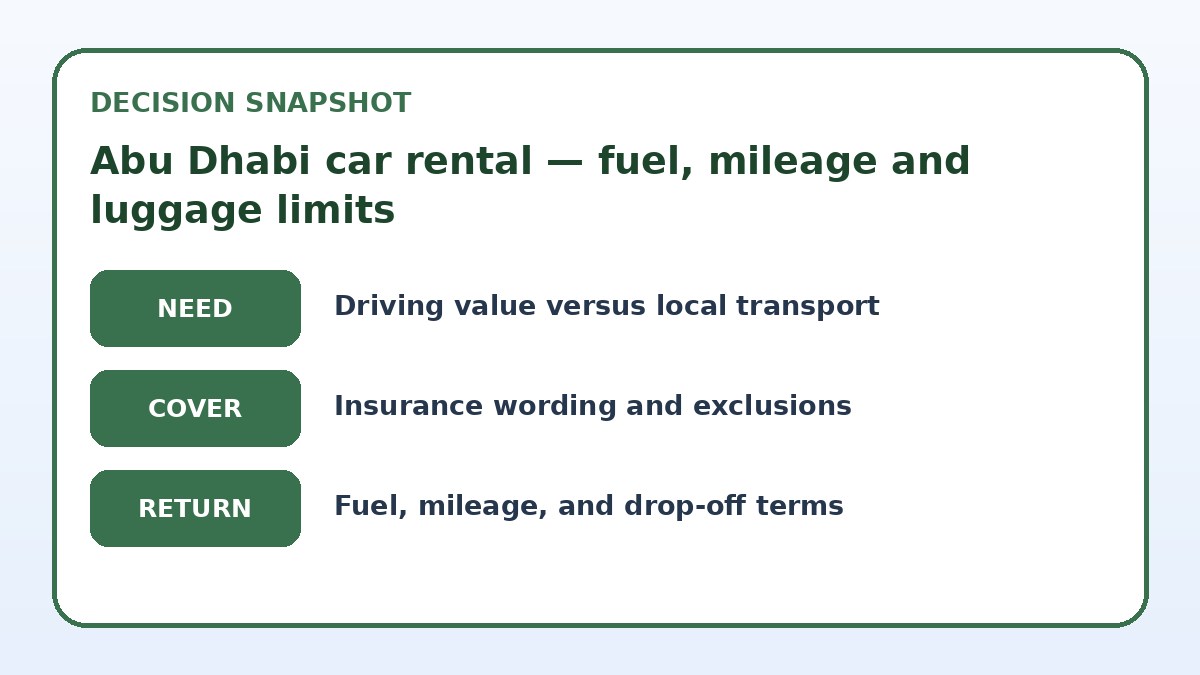
Route value: when extra luggage makes driving worth it
Decide whether driving truly improves your trip by mapping what you’ll carry and how often you’ll move. If your plan includes multiple transfers, early or late flights, beach kit, or sports equipment, a car that securely fits bags avoids repeated taxi handling and waiting times. Driving also pays off if you intend to reach locations with limited or irregular public transport, such as coastal islands' ferry terminals, remote reserves, or privately located hotels where door-to-door convenience matters more than small savings.
On the other hand, if you’ll spend most of your time inside central Abu Dhabi or in walkable districts, the inconvenience of managing a larger vehicle and paying parking fees can outweigh benefits. Compare realistic door-to-door journey times for taxi versus driving, including parking and fuel stops. For longer scenic drives, consider whether the rental’s mileage allowance and fuel wording let you make those journeys without steep per-kilometre penalties or forced fuel purchases.
Decide whether driving earns its place
| Mobility strategy | Best for | Cost or friction to check |
|---|---|---|
| Full-time rental (self-drive) | Travelers needing frequent door-to-door access and flexible schedules with bulky baggage. | You control timing but must manage fuel rules, mileage limits, parking and insurance responsibilities. |
| Airport or private transfer | Groups with heavy luggage needing reliable, hands-off airport-to-hotel transport. | Convenient and luggage-friendly, but less flexible for multi-stop sightseeing and potentially costlier for many trips. |
| Short-term day hire or excursion rental | Visitors who need a vehicle for a single long outing or equipment-heavy activity. | Avoids long-term mileage and fuel complications, but requires precise timing and separate bookings for other travel days. |
| Taxis and rideshares | Urban stays with infrequent moves where luggage needs are occasional and routes are short. | No refuelling or parking concerns, but can add up with many transfers and may be awkward for large or numerous items. |
Check live rental choices only after the route test
Use the exact driver, dates, pickup point, and return plan to compare current conditions.
Insurance wording: what to verify about luggage and coverage
Insurance pages often focus on collision damage waivers and liability, but travelers with extra luggage must read the fine print about cargo and load limits. Verify whether the main coverage extends to personal belongings in the vehicle, whether there's a cap on luggage value, and whether claims are excluded if the vehicle is overloaded or if cargo is carried on an external rack. Many providers exclude damage caused by improperly secured loads or require additional waivers for roof racks, bikes, or ski carriers — you’ll want clear written permission on the booking confirmation.
Also check the deductible (excess) and how it’s applied in incidents involving luggage — some insurers treat cargo claims differently from vehicle damage. If you plan to carry expensive equipment, consider supplemental travel insurance that specifically covers gear, or ask to add a cargo protection add-on at pickup. Always photograph and inventory bags at collection and note any pre-existing interior damage on the vehicle report to avoid disputes later.

Compare the full rental conditions
Confirm insurance wording, exclusions, deposit, fuel, mileage, and return terms on the final page.
Pickup and return friction: fuel clauses, refueling options, and paperwork
Fuel policy language dictates both how you pick up the car and how you return it. Full-to-full is straightforward: you take the vehicle with a full tank and return it full, avoiding refuelling service charges but requiring you to find a convenient station before drop-off. Pre-purchase or 'full-to-empty' options may read simpler but can be less economical if you don’t use all purchased fuel. On the final booking page, compare the exact refund or surcharge rules, whether fuel is measured by litres or percentage, and whether the agent requires station receipts.
Also anticipate pickup logistical issues: airport counters with long queues, off-airport shuttles, or limited after-hours return options affect how you handle fuelling when carrying heavy bags. Ask whether the drop-off location accepts returns after hours without staff, if there’s an out-of-hours surcharge, and whether the fuel gauge check is done by staff or self-service. These operational details determine whether you need to stop and refuel with baggage in the car or can manage a return without extra handling.
Car rental terms to verify
- On the booking page, confirm the fuel policy exact wording (full-to-full, pre-purchase, or charged on return) and how refunds or surcharges are calculated.
- Verify the mileage allowance (daily or total) and the precise per-kilometre excess rate that applies if you exceed it.
- Ask whether rooftop carriers, bike racks or oversized luggage are permitted, and request written confirmation of any accessory fees.
- Read insurance exclusions to see if cargo damage or overloaded-vehicle incidents are covered or require an add-on.
- Check airport pickup and after-hours return procedures, including whether staff verify fuel level and inspect interior condition when you drop off.
- Take timestamped photos of the trunk and interior at collection and return, and get a signed vehicle condition report to avoid cargo-related disputes.
Non-driving fallback: when to prefer taxis, transfers, or trains
If rental fuel and mileage rules make driving expensive or complex, have a clear fallback. For short city stays, taxis and rideshares eliminate concerns about fuel policies, parking, and insurance limits while handling luggage for each door-to-door trip. Book an airport transfer for the first and last journeys when luggage is heaviest; fixed transfers simplify timing and avoid surprise fuel or excess kilometre charges on the rental. Use trains or express buses where available for predictable travel between hubs, then combine with a single local taxi for the last mile.
When you still want a car for a single long excursion, consider hiring a car only for that day rather than renting for the whole trip. Day hires and local private drivers can come with different mileage rules and often include fuel and driver, removing luggage worries. Before cancelling a rental, compare the total of taxi/transfer costs and convenience against the car hire’s total potential charges including fuel service, mileage excess, parking and time spent loading luggage.
Car Rental & Road Trip questions travelers ask
Does Abu Dhabi have special rules about carrying luggage on roof racks or inside rental cars?
Rules vary by provider; many allow roof racks or carriers but require prior approval and may charge for fitting or insurance. On the final booking page, look for explicit permissions about external carriers, weight limits and fastening requirements. Check whether the insurer excludes claims caused by unsecured or overloaded external loads. If you need a roof box or bike rack, request confirmation in writing before pickup and note any extra fees or required waivers.
How do mileage allowances typically affect longer drives from Abu Dhabi to nearby attractions?
Mileage allowances are set either per day or as a total for the rental period; exceeding them usually triggers a per-kilometre charge. For longer drives to coastal areas, deserts, or neighboring emirates, multiply expected kilometres and compare that to the included allowance on the booking page. If the allowance is low, a rental upgrade or an unlimited-mileage option (if offered) can be cheaper than paying per-kilometre excess. Always calculate likely distance before committing and confirm how excess is billed.
What fuel policy is easiest for travelers with lots of luggage and limited time at return?
Full-to-full is often the most straightforward: you pick up with a full tank and return it full, avoiding the rental company’s bulk fuel charge. However, if you can’t refuel before a late-night drop-off, pre-purchase options can remove the final errand at a potential premium. On the provider’s booking page, compare the exact refuelling procedures, any required receipt proof, and out-of-hours return rules so you won’t be stuck refuelling with heavy bags or incurring inflated fuel service fees.
Final decision note
Driving in Abu Dhabi with extra luggage can be a major convenience if you check the right contract details before booking. Focus on three dealmakers: the fuel policy wording, the mileage allowance and any luggage-specific insurance or accessory rules. If any of those are vague or unfavourable on the provider’s final booking page, factor in the cost and hassle of upgrades, accessory fees, or per-kilometre charges — and compare that total to taxis, transfers or a one-day hire. Take photos at pickup and confirm permissions for roof or trunk carriers in writing; these small steps remove the biggest surprises and let you choose the mobility option that matches your luggage, schedule, and comfort tolerance.
Continue planning
Check current options and final conditions
Use the provider page to confirm live availability, the final total, cancellation terms, and every condition that matters to your trip.
This evergreen planning guide was created with AI-assisted drafting and a structured quality review. It does not display live prices, schedules, availability, visa guidance, or provider rankings. Verify current details before booking. Some links are affiliate links; we may earn a commission at no additional cost to you.