
If you’re traveling on business between Seoul and Busan, the two decisions that make or break a comfortable trip are how you handle baggage and how you schedule your time at the airport. Start by deciding whether you’ll travel carry-on only or check luggage, then align that choice with flight options, transfer logistics, and meeting timings. A light carry-on can save time at both ends, but checked baggage gives you more gear and flexibility for longer stays. Factor in the terminal you’ll use, transport time to the airport, and whether you need express check-in or lounge access. Below you’ll find practical time targets, packing tactics, and comparison points to help you pick the fastest, least stressful option for a work trip between Seoul and Busan.
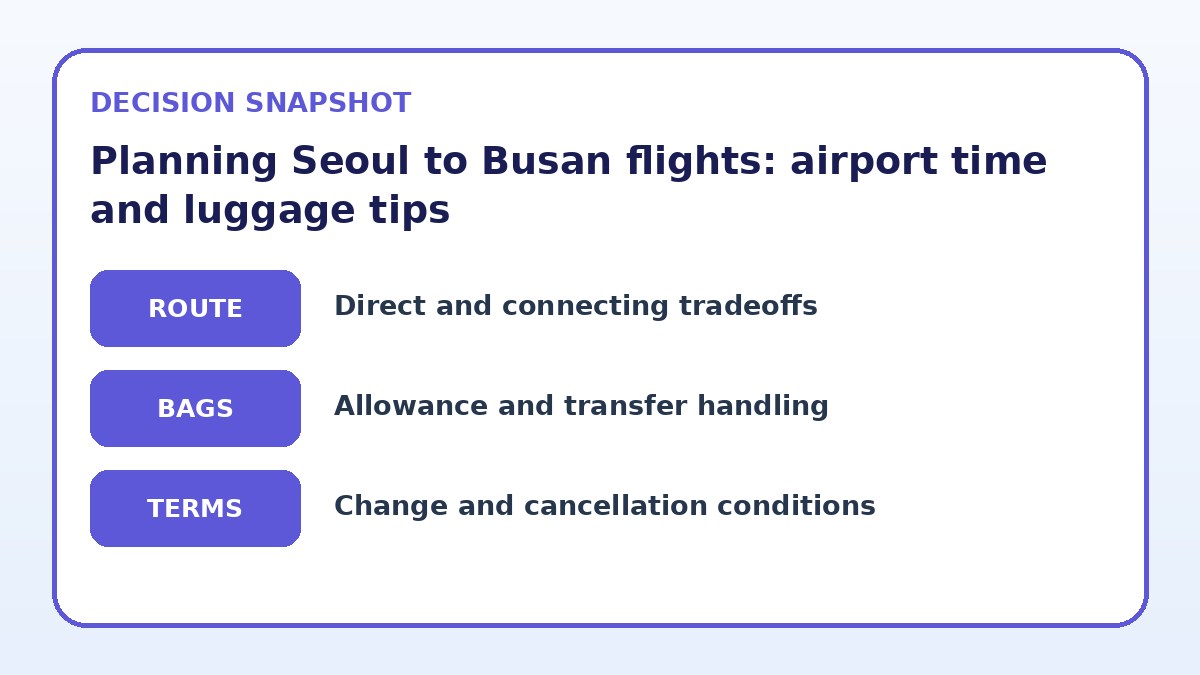
See current options before you compare the details
Availability and final conditions change. Open Trip.com now or keep reading for the practical comparison.
Choosing carry-on versus checked luggage
Decide first whether the trip’s length and wardrobe needs justify checked luggage. For a single overnight or two-day meeting, a well-packed carry-on often suffices and saves you from waiting at the baggage claim. Carry-on travel minimizes points of failure: lost luggage, delayed bags, and extra walking between terminals. It also shortens arrival time, which is valuable when you have a tight schedule or an immediate meeting. If you choose carry-on, use packing organizers and limit liquids to the allowable volume so security lines move quickly.
Checked baggage makes sense when you need suits, samples, or equipment that won’t compress easily. If you check a bag, research the airline’s permitted weight, size, and drop-off windows, and consider purchasing priority or express baggage handling if available. When booking, confirm whether your fare includes checked luggage; low-cost or basic fares may not. On arrival, account for the time it takes to reach the baggage belt and exit customs or the arrivals area—this can affect the schedule for the first meeting or transit onward.
How much airport time to allow
Set your airport arrival target based on baggage choice and service level. If you are carry-on only and have a mobile boarding pass, arriving 45–60 minutes before domestic departure can be enough in many cases, provided you know exactly which terminal and gate you need. For checked baggage, allocate at least 75–90 minutes to allow for check-in, bag drop, security screening, and walking to the gate—more if you expect lines or if travel is during peak periods. Always check airport transport times and add buffer for traffic or rail delays.
If you plan to use airport lounges, priority security lanes, or need to print documents, add extra time. Business travelers traveling between cities often benefit from choosing a slightly earlier or later flight to avoid congested windows. For flights that list inter-airport transfers or connections, give significant additional time to move between terminals or airports; confirm transfer procedures on the carrier’s booking page. Remember that local transit strike days, weather, or holiday peaks can extend recommended arrival times, so verify conditions before departure.
| Approach | Best for | Tradeoff to check |
|---|---|---|
| Carry-on only | Short trips, tight schedules, avoiding baggage claim | Limits clothing and equipment you can bring; stricter liquid limits |
| Checked luggage | Multi-day trips needing more wardrobe or equipment | Adds check-in and arrival wait time; risk of delays or misplaced bags |
| Direct flight | Minimizing connection risk and fastest airborne routing | May have less convenient departure times or higher fare classes |
| Connecting flight | Greater schedule flexibility or more flight choices | Higher risk from missed connections and longer total door-to-door time |
Ready to check the option that fits your plan?
Use your exact dates and traveler details so the provider page can show the current total and conditions.
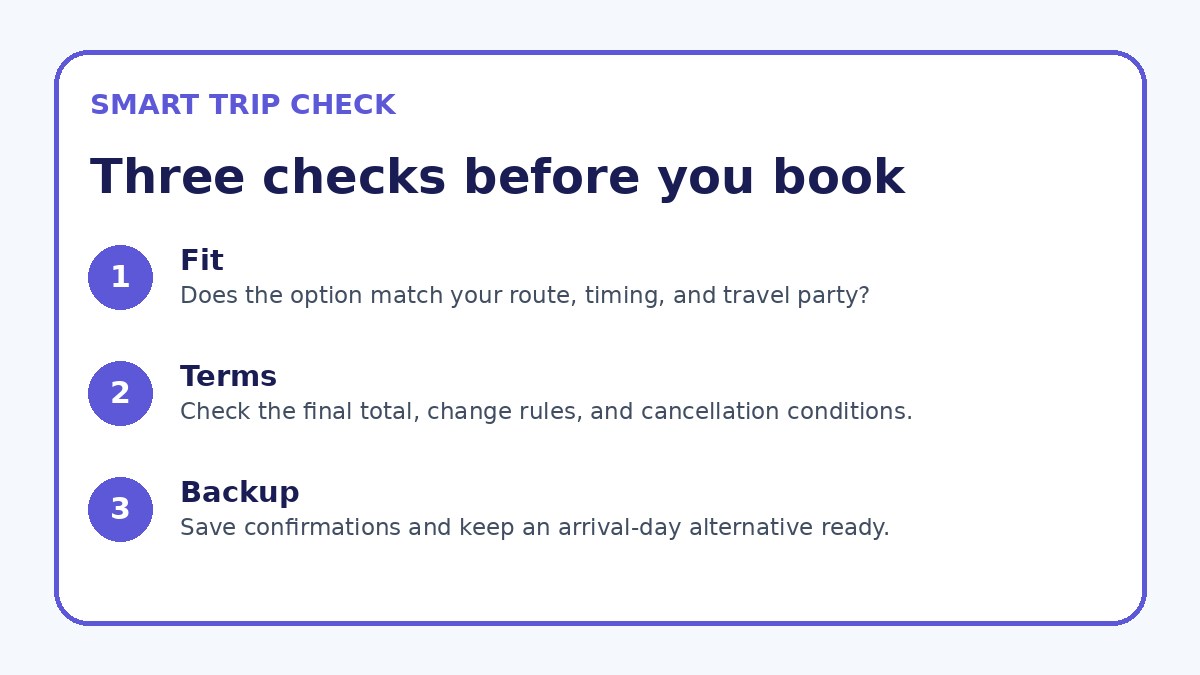
Comparing direct and connecting flight options
When both direct and connecting flights appear, compare total door-to-door time rather than flight duration alone. A direct flight with a later departure might still get you to your meeting earlier than a morning connection that involves a long layover or requires terminal transfers. Consider the likelihood of delays compounded by connections, and whether you can rebook easily without derailing your itinerary. Also weigh the convenience of fewer transfers for important meetings—missing a connection can be more disruptive than a slightly longer single flight.
If you consider a connecting itinerary because of schedule or price, check minimum connection times at the connecting airport and whether you must change terminals or re-clear security. For each option, verify baggage transfer policies and whether checked luggage is through-checked to the final destination; this is usually listed on the airline’s final booking page. For business travelers, the reliability of the carrier and ease of rebooking or standby options may be more valuable than shaving a few minutes off travel time.
Before you book
- Confirm your airline’s carry-on and checked baggage size, weight, and fee rules on the carrier’s booking page before finalizing a ticket.
- If traveling carry-on only, pack all liquids and electronics to meet security rules and test the bag on a scale at home to ensure compliance.
- Set your departure target time by adding transit time to the airport, an airline-recommended arrival buffer, and a 15–30 minute personal cushion for unexpected delays.
- If checking a bag, take a photo of its contents and label the inside with contact details in case of misrouting.
- Verify whether your fare includes priority check-in or boarding and decide if paying for priority handling saves you meaningful time.
- Re-check flight status and terminal information the evening before and again two hours before departure; update transport plans accordingly.
Practical packing and pre-flight checks
Pack a business-savvy carry-on: wrinkle-resistant fabrics, a compact toiletry kit within liquid limits, a small garment bag if needed, and an electronics organizer for chargers and adapters. Keep essentials like a tie, extra shirt, presentation materials, and a compact umbrella accessible in an outer pocket so you can reach them during transit. Use a lightweight wheeled bag to speed movement through terminals and elevators; remove heavy items from outer pockets before security to avoid surprises.
Perform a short pre-flight checklist the evening before: confirm your flight status on the airline’s booking page or an aggregator such as Trip.com for live availability, re-check baggage allowance, ensure your ID and any required documents are in one easy-to-grab place, and set an alarm for departure considering transit time to the airport. If you depend on a ride service or train, book or check schedules ahead of time. Packing and verification the night before significantly reduces morning stress and the chance of missed items or missed flights.
Frequently asked questions
How soon should business travelers arrive for a Seoul to Busan flight?
For carry-on only travelers with mobile check-in and no extra services, arriving about 45–60 minutes before domestic departure is often sufficient. If you need to check luggage, print documents, or use priority services, allow 75–90 minutes or more. For connections between terminals or when using services like lounges or printing, add extra time. Always verify recommended arrival times and terminal details on the airline’s booking page and consider local transport variability when setting your departure from the hotel or office.
Can I rely on carry-on only for important work trips between Seoul and Busan?
Yes, for short trips that don’t require bulky items, carry-on only is often the fastest option and reduces points of failure. It lets you leave the airport immediately after arrival and usually avoids baggage delays. However, if you need suits, demonstration equipment, or printed materials that won’t fit or may crease, checked baggage may be unavoidable. Decide based on what you must present at meetings and whether you can pack a backup outfit in a compact way. Confirm size limits with the airline before travel.
How should I compare flights when both direct and connecting options are available?
Compare total door-to-door travel time including transport to/from airports, minimum connection times, and the potential for delays that multiply with connections. Evaluate how a longer nonstop versus a shorter multi-leg option affects your schedule and stress levels. Check whether checked luggage will transfer automatically on connections and whether terminal changes or additional security checks are required. Always verify these connection and baggage transfer details on the carrier’s final booking page before committing.
Final planning note
For business travel between Seoul and Busan, the smart combination of baggage strategy and airport timing turns travel time into usable time. Opt for carry-on only when possible to shorten airport processes, but choose checked baggage when wardrobe or equipment needs make it necessary. Match your arrival buffer to the services you’ll use—mobile check-in, baggage drop, lounge access—and measure flight options by total door-to-door time rather than flight duration alone. Before you book, verify baggage allowances, terminal information, and connection rules on the carrier’s final booking page; you can also compare options on Trip.com if you want a broad view of current availability. Small decisions made before departure will protect your schedule and keep your trip efficient.
Continue planning
Check current options and final conditions
Use the provider page to confirm live availability, the final total, cancellation terms, and every condition that matters to your trip.
This evergreen planning guide was created with AI-assisted drafting and a structured quality review. It does not display live prices, schedules, availability, visa guidance, or provider rankings. Verify current details before booking. Some links are affiliate links; we may earn a commission at no additional cost to you.