
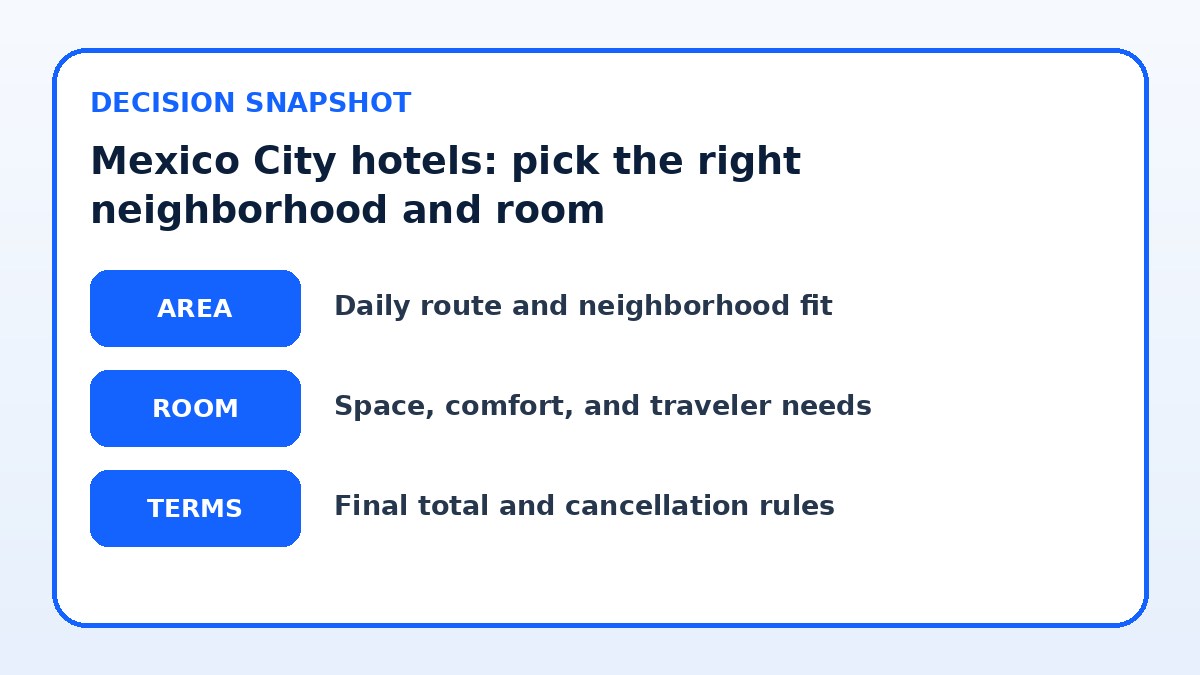
Quick practical answer: prioritize neighborhood first, then room features. For most solo travelers in Mexico City, choose a centrally located neighborhood (Roma, Condesa, Polanco, Centro Histórico, or Coyoacán) that matches your daytime plans, and then select a room that gives the privacy, noise control, and safety features you need. A central location reduces transit time and lets you return to your room during long days; a quieter, better-appointed room reduces fatigue and allows safer, more comfortable evenings. If you want nightlife and cafés within walking distance, pick a lively area and budget for a room with good soundproofing. If you plan long museum or business days, prioritize a calm room, higher mattress quality, and blackout shades even if you sacrifice the exact center. Later sections explain how to weigh walkability, transit access, budget, and room tradeoffs so you can book with confidence.
See current options before you compare the details
Availability and final conditions change. Open Trip.com now or keep reading for the practical comparison.
Neighborhood choice vs. nightly comfort: the high-level tradeoff
Neighborhood determines the ease of reaching attractions, restaurants, and public transport. Roma and Condesa are compact and walkable with lots of cafés and nightlife; Polanco is upscale with museums and fine dining; Centro Histórico offers proximity to major sights; Coyoacán feels village-like and quieter. Choosing a neighborhood that puts most of your interests within walking distance means fewer taxis, lower decision fatigue, and easier returns to the room after long days. For a solo traveler, this convenience often translates into feeling safer, because you’re moving in familiar, well-trod areas rather than navigating late-night transfers across the city.
The tradeoff is that central, lively neighborhoods tend to have higher street noise, denser crowds, and sometimes smaller rooms. If you prioritize sleep quality, privacy, and a calm space to work or recover, look for hotels advertising soundproof windows, interior-facing rooms, or higher floors. Balance: pick a neighborhood that minimizes travel time for most of your itinerary, then filter hotels by room features that address comfort and rest. Always confirm noise control and room orientation on the hotel’s booking page or by messaging the property directly.
Safety and solo-traveler specifics to verify
Safety for solo travelers is a mix of neighborhood, hotel security, and personal habits. When evaluating Mexico City hotels, check whether the property has secure entry (reception 24/7, key-card access), staff presence at night, and in-room safes. Consider floor level: many travelers prefer mid-level rooms that are not ground-floor but are accessible in an emergency. Review photos and recent guest comments for signs of good lighting in corridors and clear, staffed reception areas; ask the hotel about how they handle late check-ins or emergency contacts and confirm those details on the booking page.
Also plan personal safety actions: share your lodging address with a trusted contact, use reputable transport at night, and keep copies of important documents. For solo female travelers, some hotels and neighborhoods are more commonly reported as comfortable after dark; look for properties with positive, recent feedback from single travelers. Remember, neighborhood reputations can change—verify local conditions on current booking pages, recent reviews, and with trusted sources before you finalize a reservation.
| Approach | Best for | Tradeoff to check |
|---|---|---|
| Choose central neighborhood + basic room | Travelers prioritizing quick access to attractions and nightlife | Higher street noise and smaller rooms with fewer comfort features |
| Choose quieter neighborhood + upgraded room | Travelers needing rest, privacy, or work-friendly space | Longer transit times to major sights and restaurants |
| Budget hotel in central area | Short stays focused on daytime exploring and minimal transit | Compromises on room size, bedding quality, and noise isolation |
| Boutique or apartment-style stay in a calm pocket | Solo travelers who want local feel and self-catering amenities | Possible fewer on-site services and variable security measures |
Ready to check the option that fits your plan?
Use your exact dates and traveler details so the provider page can show the current total and conditions.
Room features that matter most for solo travel comfort
For sleep and personal downtime, focus on a few high-impact room features: bed quality and mattress size, noise control (double glazing or interior-facing rooms), blackout curtains, climate control you can adjust, and adequate lighting for reading or working. A compact room with those basics will often be more restorative than a larger room without them. If you work or plan long mornings, check for a stable desk, strong Wi-Fi notes on the booking page, and plentiful outlets; if you need quiet to sleep, prioritize soundproofing and a higher floor.
Bathroom layout and storage matter too: an ensuite with a reliable hot shower, good water pressure, and sufficient hooks/shelves will make solo stays smoother. Small hotels sometimes offer more personalized service—helpful for restaurant recommendations or safety questions—but larger hotels may provide 24-hour reception and consistent security policies. Before booking, look at multiple photos of the actual rooms available (not just staged images) and ask the hotel to confirm anything that matters to you; confirm those specifics on the provider’s final booking page.
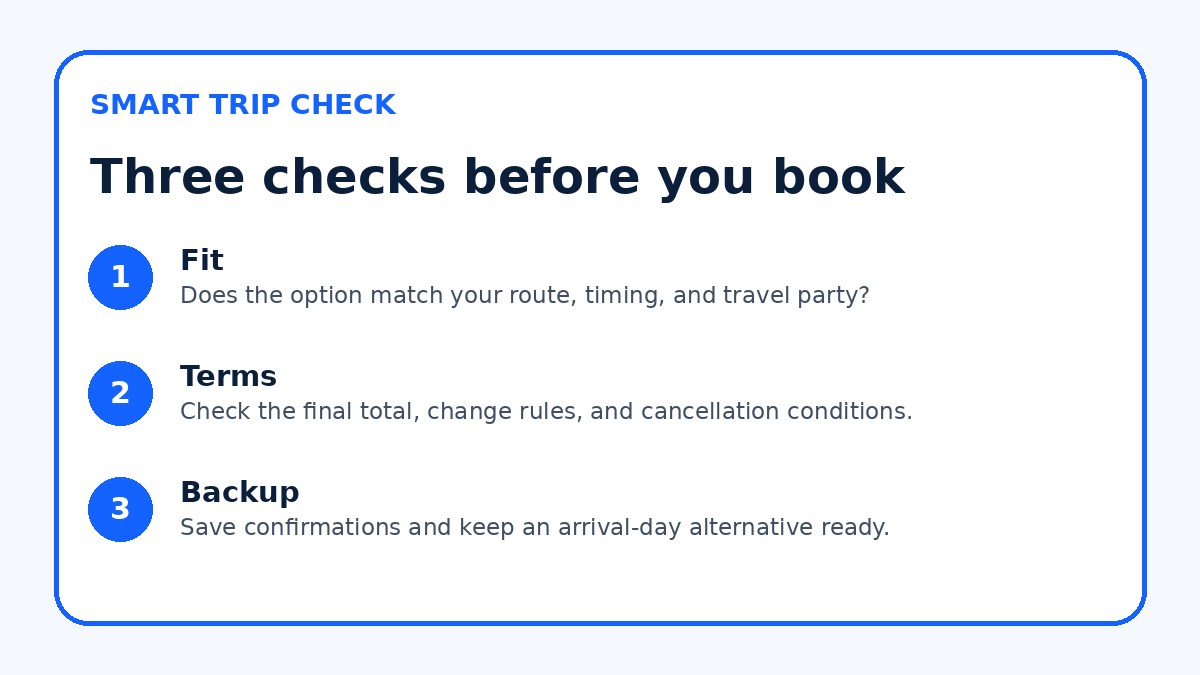
Before you book
- Map your daily itinerary and choose the neighborhood that places most activities within walking distance or a short transit ride.
- Filter hotels by room-level features: soundproofing, blackout curtains, air conditioning controls, and bed size before comparing prices.
- Message the property to confirm room orientation (street- or courtyard-facing), exact bed type, and whether windows close securely—save their reply.
- Verify 24/7 reception, key-card entry, and in-room safe availability on the hotel’s booking page before you book.
- On arrival, test locks, safe, Wi‑Fi speed, and shower; ask to move rooms if security or noise is unacceptable.
- Keep digital and physical copies of booking confirmation, address, and local emergency contacts; share your lodging details with someone trusted.
Practical booking strategy and on-arrival checks
Start by mapping your must-see places and choose a neighborhood that minimizes transit for most of those items. Use filters for walkability, nearby metro or bus lines, and proximity to landmarks. Once you have a shortlist of hotels in the right area, compare room-level features: bed type, room orientation, floor, noise-mitigation, and in-room safety features. Read recent reviews for mentions of construction noise, street noise, or unreliable amenities, and match those to your tolerance level before deciding.
Before finalizing your booking, message the property to confirm anything not explicit—exact room size, orientation (street-facing or courtyard), mattress type, and whether windows close securely. On arrival, test locks, safes, lighting, and the shower; request a different room if noise or security feels off. If you compare prices or availability, Trip.com can be one source to view current conditions, but verify all room-specific and cancellation details on the hotel’s final booking page.
Frequently asked questions
Which Mexico City neighborhoods are best for a solo traveler who wants both convenience and safety?
Good balance depends on your priorities. Roma and Condesa offer walkability, cafés, and nightlife, making them excellent for solo travelers who want convenience and social options; choose quieter, interior-facing rooms to offset noise. Polanco gives a more upscale, polished environment near museums and reliable taxis, often favored for safety and daytime comfort. Centro Histórico places you nearest many major sights but can be busy—pick a hotel with secure entry and positive recent reviews. Coyoacán is quieter and feels village-like; it’s ideal if you prefer calmer evenings and don’t mind longer rides to central museums. For all neighborhoods, confirm security features and recent guest feedback on the hotel’s booking page.
How can I check if a hotel room will be quiet enough for good sleep?
Start with the listing and look for explicit mentions of soundproofing, double-glazed windows, and interior-facing rooms. Review recent guest comments for keywords like “noise,” “street,” “construction,” or “quiet” to spot patterns; beware of older reviews about noise that may not reflect current conditions. Ask the hotel directly which rooms face the street and whether they have soundproof windows or higher-floor options. On arrival, request a room change if you hear traffic or nightlife noise above your comfort level. Always verify any noise-control promises on the provider’s booking page and keep screenshots or written confirmation of what the hotel commits to.
Should I book a boutique hotel or a larger chain when traveling solo in Mexico City?
Both can be suitable depending on what you want. Boutique hotels often provide character, personalized recommendations, and a local feel—useful if you want neighborhood tips and friendly staff. Their rooms may vary more in size and amenities, so inspect recent photos and ask specific questions. Larger chains tend to offer consistent security protocols, 24-hour reception, and standardized rooms—advantages if you value predictable service and on-site staff. If you choose a boutique property, confirm its safety measures and check-in procedures on the booking page. Consider your priorities—personalized service versus consistent on-site support—when deciding.
Final planning note
Balancing location and room comfort in Mexico City is about prioritizing what will make your solo trip smoother: save transit time and mental energy by choosing a neighborhood close to most of your plans, then insist on room features that protect sleep and privacy. Walkability, secure entry, and nearby transit reduce stress; soundproofing, a good mattress, and blackout curtains reduce fatigue. Use recent reviews and direct messages to the hotel to verify conditions and confirm anything that matters—room orientation, noise control, and safety features—on the final booking page before you pay. Thoughtful tradeoffs will let you explore more confidently and rest better between adventures.
Continue planning
Check current options and final conditions
Use the provider page to confirm live availability, the final total, cancellation terms, and every condition that matters to your trip.
This evergreen planning guide was created with AI-assisted drafting and a structured quality review. It does not display live prices, schedules, availability, visa guidance, or provider rankings. Verify current details before booking. Some links are affiliate links; we may earn a commission at no additional cost to you.