
If you’re flying from Dubai to Sydney for the first time, the practical decision is how to balance travel time against comfort. Start by comparing direct versus one-stop itineraries, then choose a cabin, seat and a sleep plan that match how well you rest in the air. For many travellers, a late-evening departure from Dubai and an overnight segment can help shift sleep across time zones; for others, a planned daytime stopover breaks the journey and reduces fatigue. Think about baggage transfer rules, transit visa requirements for stopovers, and how long ground time you need to move between terminals. Before you book, check exact layover transfer policies, seat maps and the airline’s sleep/meal timing on the booking page. Use that information to pick options that let you arrive in Sydney alert enough to start your trip or rest first if you plan to sleep on arrival.
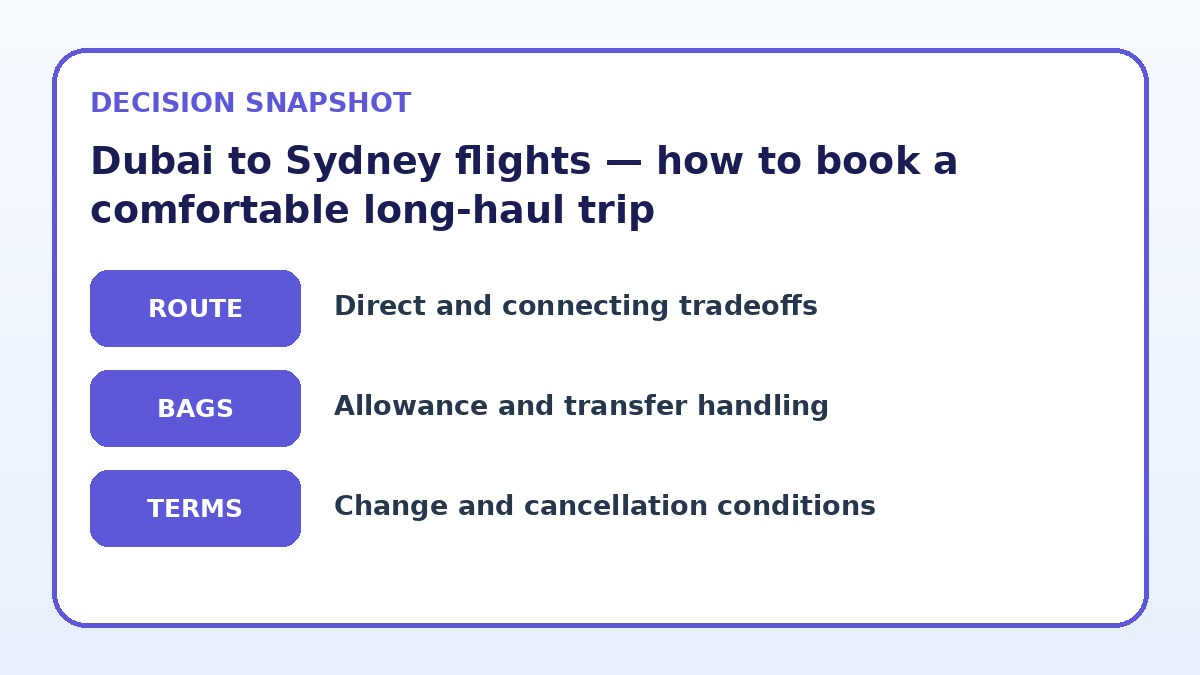
See current options before you compare the details
Availability and final conditions change. Open Trip.com now or keep reading for the practical comparison.
Decide: nonstop or stopover — the core tradeoff
The fastest connection is a nonstop flight, which reduces time in transit and simplifies baggage handling and transfers. Nonstops usually mean you board once and don’t face the stress of airport navigation, security re-clearance or changing aircraft. That reduction in touchpoints lowers the chance of missed connections and lost bags, which is appealing for first-time visitors unfamiliar with Sydney’s arrival procedures. On the downside, long nonstops demand a single long sleep block on a cramped cabin timetable; if you don’t sleep well on planes, fatigue on arrival can undermine the start of your trip.
A one-stop itinerary breaks the journey and can offer real comfort benefits if you schedule the stop to match your body clock. For example, a daytime stopover lets you move around, stretch properly and reset with a hotel nap; an overnight stop gives you a bed and a full night’s rest before the second flight. But adding a stop increases complexity: you must verify whether baggage is checked through, whether you need a transit visa, and how to transfer between terminals. Compare total door-to-door time, transfer difficulty, and the psychological comfort of a fresh hotel bed versus fewer travel legs.
Choosing cabin, seat and sleep strategy for long-haul comfort
Cabin class matters for sleep quality but isn’t the only factor that affects whether you arrive rested. Bigger seats and more recline improve sleep, but even in economy you can improve rest by selecting a good seat: choose a window for uninterrupted rest against the fuselage, a bulkhead for extra legroom if available, or an aisle if you prefer easy access to move. Pay attention to seat maps, proximity to galleys and lavatories (to avoid traffic and noise), and whether the airline blocks middle seats during booking. On the airline’s final booking page verify exact seat pitch and recline figures rather than relying on general class labels.
Plan a practical sleep strategy: adopt the destination’s night pattern before boarding when possible, schedule a sleep period aligned with a long overnight segment, and use aids like an eye mask, earplugs or noise-cancelling headphones. Hydration, light meals and limited alcohol help your circadian rhythm; avoid heavy meals that disturb sleep. If you can afford it, consider upgrading a single long segment rather than both legs—flying more comfortably on the longest block gives the best sleep return for the extra cost. Always confirm in-flight amenities and whether pre-departure meal timing suits your sleep plan on the booking confirmation page.
| Approach | Best for | Tradeoff to check |
|---|---|---|
| Nonstop flight | Travelers prioritising shortest total travel time and simpler transfers. | Long continuous cabin time can increase fatigue if you don’t sleep well on planes. |
| One-stop with short layover | Those wanting a break without adding an overnight stop. | Short layovers raise stress and risk of missed connections or rechecking baggage. |
| One-stop with overnight hotel | Travelers needing a full rest to arrive refreshed in Sydney. | Adds complexity and extra planning for visas, luggage and ground transport. |
| Split-cabin approach (upgrade longest leg) | Budget-conscious flyers seeking better sleep on the crucial segment. | Improved comfort on one segment still leaves shorter segments in standard seating. |
Ready to check the option that fits your plan?
Use your exact dates and traveler details so the provider page can show the current total and conditions.

Managing transfers, layovers and ground logistics
If you book a connecting itinerary, plan layover times with realistic buffer for delays and terminal transfers. Airports in Dubai and Sydney can have multiple terminals and different procedures for international arrivals versus transfers. Confirm on the carrier’s booking page whether your baggage is checked through to Sydney or if you must collect and re-check; also verify whether your connection requires clearing immigration or collecting transit visas. For short connections, stick to a single-airline itinerary or codeshare partner to reduce the chance of needing to reissue tickets or recheck luggage.
Consider an overnight stop if you need more than six to eight hours to recover from a flight and want a hotel nap or a shower before continuing. When you do book an overnight or long daytime layover, check airport hotel locations and shuttle services, luggage storage options, and whether the airline offers protected hotel accommodation for long delays. For any on-ground plans, check the provider’s current transfer procedures, terminal maps and recommended minimum connection times on the booking page before committing—airlines and airports post the most accurate, up-to-date instructions there.
Before you book
- Compare nonstop and connecting itineraries and note total door-to-door time plus transfer complexity before choosing.
- On the booking page verify whether baggage is checked through to Sydney or must be collected at the stopover.
- Select a seat on the airline seat map that matches your sleep needs and check seat pitch and recline specifications.
- Plan layover duration that factors realistic minimum connection times and potential terminal transfers.
- Pack a carry-on comfort kit: travel pillow, eye mask, earplugs, refillable water bottle, and basic toiletries.
- Confirm entry and health documentation requirements for Australia on official government or airline booking pages.
Practical comforts, health and arrival routines
Pack a small comfort kit in your carry-on with travel essentials: a compressible travel pillow, a light blanket or large scarf, hydration tablet or water bottle (empty before security to fill after), a basic toiletry set for a freshen-up, and high-quality earplugs. Compression socks can reduce swelling on long legs, and wearing layered clothing helps you adapt to variable cabin temperatures. If you take medications, keep them in your carry-on with a copy of prescriptions and verify any supply needs on the airline’s health guidance before flying.
On arrival in Sydney, plan a minimum routine to manage jet lag: hydrate, get natural light if it’s daytime, and schedule a modest activity rather than forcing a long sleep. If you arrive late and intend to sleep, aim for a short, timed nap and a proper night’s rest on local time. For first-time visitors, confirm entry requirements, vaccine or health declarations, and luggage reclaim procedure on the official immigration and airline booking pages—these sources will list the exact documents and steps you must follow when you land.
Frequently asked questions
Is a nonstop Dubai to Sydney flight the best option for first-time visitors?
A nonstop is the simplest logistical option and minimizes time in transit; it reduces transfer stress and the chance of baggage issues. However, nonstop flights require you to manage one long sleep period in the air. If you sleep poorly on planes, a planned stopover with an overnight hotel may help you arrive more rested. Balance your tolerance for long continuous flying against the extra effort a stopover requires—check the airline’s seat dimensions and cabin configuration on the booking page to help decide.
How long should my layover be in Dubai or another hub when connecting to Sydney?
Aim for a layover long enough to cover deplaning, potential security or immigration checks, and a terminal change if needed. For same-terminal connections with checked-through bags, two hours can be workable, while longer or cross-terminal transfers typically need three or more hours. If you plan to leave the airport or use a hotel, add several hours. Always confirm the airline’s stated minimum connection time and any terminal transfer rules on the booking page before finalising your itinerary.
What in-flight strategies most reliably reduce jet lag on this route?
Shift your sleep schedule toward Sydney time before travel when possible and prioritise a solid sleep block during the long overnight segment. Use an eye mask and noise-cancelling headphones, avoid heavy alcohol, and stay hydrated. Time light exposure by seeking daylight on arrival to reset your circadian rhythm; if you arrive late, keep activity light and sleep at a normal local bedtime. For specific medication or medical jet-lag strategies, consult your healthcare provider well before departure and check airline rules for carrying prescriptions.
Final planning note
Planning a comfortable Dubai to Sydney long-haul connection comes down to honest tradeoffs: saving time with a nonstop versus restoring energy with a stopover, and investing in seat choices or a single-leg upgrade that maximises sleep where it matters most. First-time visitors should prioritise reliable information found on the airline’s final booking page—seat specifications, baggage-through policies and minimum connection times—before booking. Prepare a practical sleep strategy, pack comfort items in your carry-on, and build buffer time into connections so stress stays low. Use comparison tools like Trip.com to see current availability, but verify transfer rules directly with airlines and official airport sources so your arrival in Sydney starts how you planned.
Continue planning
Check current options and final conditions
Use the provider page to confirm live availability, the final total, cancellation terms, and every condition that matters to your trip.
This evergreen planning guide was created with AI-assisted drafting and a structured quality review. It does not display live prices, schedules, availability, visa guidance, or provider rankings. Verify current details before booking. Some links are affiliate links; we may earn a commission at no additional cost to you.