If you’re landing at Auckland and travelling with extra luggage, the fastest way to decide is to match how many bags you have and how much you value convenience. Public transport—rail and bus—can work for one or two large suitcases plus carry-ons if you’re willing to handle transfers and short walks. Private transfers, taxis, rideshares, or pre-booked shuttle vans are more convenient when you have oversized bags, instrument cases, or a family with prams. This guide helps you weigh the main tradeoffs: cost versus door-to-door convenience, flexibility versus fixed schedules, and luggage handling versus waiting time. Read the quick points, then use the comparison rows and checklist to pick and book the option that fits your specific luggage, mobility, time window, and budget needs.
See current options before you compare the details
Availability and final conditions change. Open Trip.com now or keep reading for the practical comparison.
Assess your luggage and travel priorities
Start by inventorying what you’ll roll through Auckland: number of suitcases, carry-on bags, and any awkward items such as sports gear, instruments, or prams. Note whether any luggage is oversized or requires special handling, and be realistic about who will help you lift heavy cases. Also list your time constraints, mobility needs, and whether you prefer fewer steps and shorter walks. Your luggage profile will strongly tilt the decision—two checked bags plus a backpack is a different problem from three checked suitcases and a bicycle.
Next, clarify priorities that matter beyond luggage: speed, cost, door-to-door convenience, and flexibility. If you need to be at a meeting or hotel by a certain time, factor in potential public transit waits and transfers. If cost is a strict concern and you have manageable bags, public transport can be a good compromise. If comfort, minimal handling, or avoiding stairs is paramount, private transport becomes more attractive even if it typically involves a higher fare or pre-booking.
Public transport: what to expect with extra bags
Public transport in Auckland may include trains and buses that serve the airport precinct and nearby stops. These modes usually have luggage space but expect to lift your own suitcases up steps or into racks and to navigate crowded aisles at peak times. If your trip includes a transfer—changing trains or getting a bus from a station—factor in the time and physical effort required to move bags between platforms or across bus stops. Also consider the distance from transit stops to your final address; a longer walk can make public transit less practical with heavy luggage.
When using public services, plan for staggered boarding and consider off-peak travel when trains and buses are less crowded. Pack important items in an accessible bag so you don’t need to repeatedly open large suitcases. Verify luggage rules and any policies for oversized items on the official operator pages before travel. If your route requires a connection, map the transfer in advance and estimate whether station layouts include elevators or long ramps—this matters more than theoretical schedules when you’re handling heavy bags.
| Approach | Best for | Tradeoff to check |
|---|---|---|
| Public transport (train/bus) | Solo travellers with one or two standard suitcases and flexible timing | Lower cost but requires lifting, possible transfers, and more walking with luggage |
| Rideshare or taxi | Small groups or single travellers needing quick, door-to-door service | Convenient and immediate but vehicle size may limit luggage unless you request a larger car |
| Pre-booked private transfer/van | Families, groups, or oversized/fragile luggage needing guaranteed space | Higher upfront cost and requires booking in advance; check vehicle specs and wait policies |
| Shared airport shuttle | Budget-conscious travellers with moderate luggage who accept scheduled stops | Cheaper than private vans but may include multiple stops and longer total travel time |
Ready to check the option that fits your plan?
Use your exact dates and traveler details so the provider page can show the current total and conditions.
Private transfers: benefits and booking checks
Private transfers—taxis, airport-authorized shuttles, rideshare apps, or pre-booked private vans—offer door-to-door service and usually assist with loading and unloading luggage. That reduces physical strain and can save time, especially with groups or oversized items. Private vehicles can meet you curbside and drop you exactly at a hotel entrance, which matters when mobility or weather are concerns. If travelling as a group, a single van can be more economical than multiple taxis and avoids splitting up luggage.
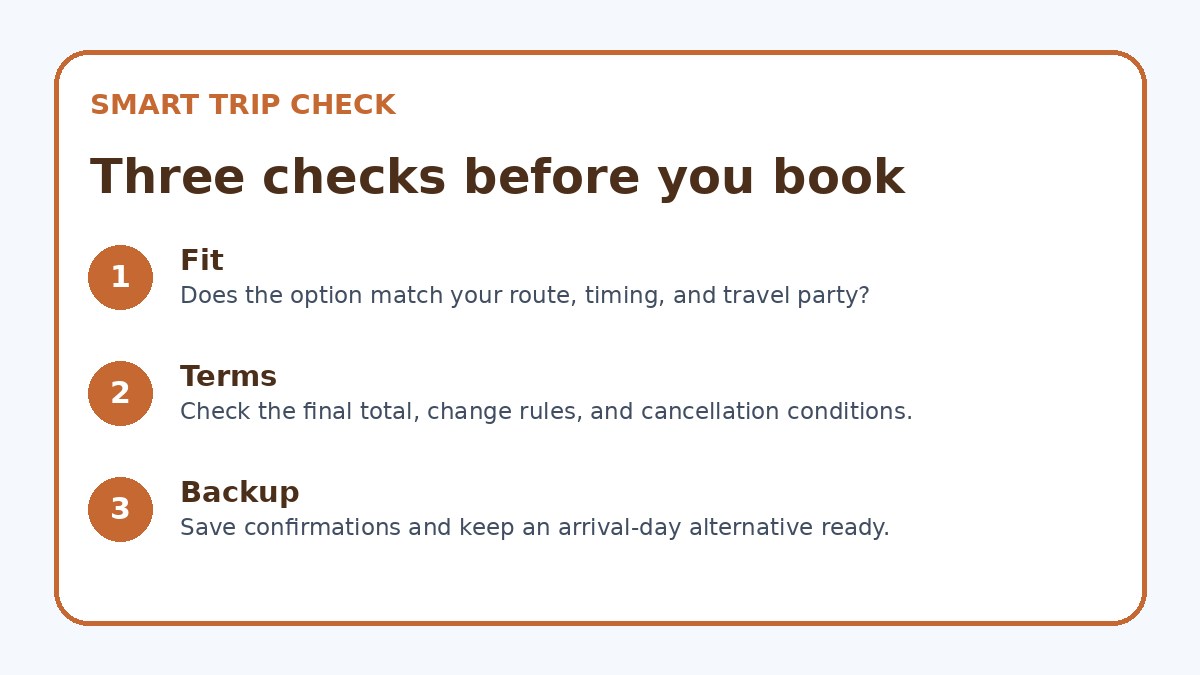
Before booking a private service, confirm the vehicle size, luggage allowance, and whether assistance is included on the provider’s booking page. For rideshares, check the vehicle category you request—standard cars may not accommodate multiple large suitcases. If you need a van, book that vehicle type explicitly. Verify pickup instructions, wait-time policies, and any extra charges for stops, flight delays, or oversized items. Trip.com is a possible place to compare availability, but always confirm final terms on the provider’s page before committing.
Before you book
- Count every bag and measure any oversized item; note who will carry each piece at pickup and drop-off.
- Check vehicle type and luggage allowance on the provider’s final booking page before you reserve.
- If using public transit, map transfers and confirm elevator or ramp availability at each station.
- For private bookings, confirm pickup instructions, meeting point, and the provider’s wait-time policy.
- Pack essentials in a carry-on for access during transit and to avoid needing to open checked bags.
- Compare door-to-door time estimates, cancellation rules, and whether luggage assistance is included.
How to compare time, cost, and convenience
When choosing, calculate three things: total door-to-door time, total monetary cost, and physical effort required. For public transit estimate walking to/from stops and transfer times; for private options estimate pickup wait and potential traffic delays. If you’re travelling during rush hour or have a tight connection, the predictability of a pre-booked private transfer can outweigh the higher cost. Conversely, if you value savings and your luggage is manageable, public transport with minimal transfers may be perfectly adequate.
Use a simple decision checklist: match luggage volume to vehicle capacity, compare the number of hands needed to move cases, and factor in the time you’re willing to spend. For uncertain schedules, choose a flexible option that allows cancellations or flight-delay adjustments. Always read provider terms about luggage limits and cancellation policies on the final booking page. If you’re deciding between a rideshare and a pre-booked shuttle, list the pros and cons for your exact pick-up time and luggage count, then pick the one that lowers risk for your particular travel priorities.
Frequently asked questions
Can I take oversized luggage on Auckland public transport from the airport?
Public transport generally accepts luggage but oversized or unusually shaped items can be difficult to manage on crowded trains or buses. Before you travel, check the operator’s luggage policy on their official site to confirm any restrictions. If your item is large—like a surfboard, bicycle, or large musical instrument—consider a private transfer that can accommodate its size and protect it during loading. Also plan for additional time to load and unload, and identify stations with elevators or ramps to avoid stairs.
How do I know if a taxi or rideshare will fit all my suitcases?
Relying on a standard taxi or rideshare without checking vehicle type risks leaving a bag behind. For rideshares, request a larger category (people mover, SUV, or XL) if available, and verify vehicle dimensions or luggage counts when the app displays details. For taxis, ask the company or driver about trunk space, or pre-book a larger vehicle through a private transfer service. Always confirm on the provider’s booking or confirmation page whether the vehicle you selected is suitable for your luggage volume.
Is it better to pre-book a private transfer or wait for a taxi at the airport?
Pre-booking gives certainty about vehicle size, luggage assistance, and pickup instructions—useful when you have extra or oversized bags. Waiting for an airport taxi can work if you prefer flexibility and your luggage is manageable, but availability of larger vehicles cannot be guaranteed at busy times. If your schedule is tight or you need guaranteed space for special items, pre-book and check the provider’s terms; otherwise, assess on arrival whether the taxi rank offers suitable vehicles without excessive wait.
Final planning note
Choosing between public and private Auckland airport transfer options comes down to a simple tradeoff: willingness to handle and move luggage versus paying for door-to-door convenience. If you have few, manageable suitcases and time, public transport can be an efficient, lower-cost choice—provided you map transfers and station access in advance. If you travel with oversized items, multiple cases, or a group, a private taxi, rideshare, or pre-booked van removes physical strain and shortens the door-to-door experience; just confirm vehicle capacity and luggage policy before booking. Use the checklist to finalize the practical details, then book the service that matches your luggage profile, mobility needs, and tolerance for walking and transfers.
Continue planning
Check current options and final conditions
Use the provider page to confirm live availability, the final total, cancellation terms, and every condition that matters to your trip.
This evergreen planning guide was created with AI-assisted drafting and a structured quality review. It does not display live prices, schedules, availability, visa guidance, or provider rankings. Verify current details before booking. Some links are affiliate links; we may earn a commission at no additional cost to you.