
If you’re travelling to Melbourne with extra luggage, the single most practical move is to build flexibility into your travel dates so you can compare combinations that reduce baggage fees and simplify transfers. Start by opening a date range for both flights and accommodation—three days either side is often enough to reveal cheaper fare structures and better transfer windows. Focus on the whole door-to-door timeline: check flight arrival times against airport transfer options and hotel check-in policies, and look at multi-leg itineraries where luggage allowances are clearer. Use flexible-date tools on booking sites and mark any fares that include checked baggage or allow affordable add-ons. That gives you a short list of realistic options to price against the inconvenience of extra bags, rather than picking the first ticket that matches a rigid calendar.
See current options before you compare the details
Availability and final conditions change. Open Trip.com now or keep reading for the practical comparison.
Why flexible dates matter when you have extra luggage
Extra luggage changes the cost calculus for flights, transfers and accommodation. A ticket a day earlier or later can include a checked bag or allow a different routing with a single connection instead of two, which reduces the number of times you have to collect and re-check bags. Similarly, arriving during daylight hours tends to offer easier transfer choices — airport shuttles, meters and train services run more frequently and are easier when you’re handling multiple bags. The idea is to treat dates as a variable you can tune to trade time for convenience rather than a fixed constraint that forces expensive or awkward logistics.
Practically, use flexible-date search tools to surface those low-friction options. Look for fare calendars, multi-day search ranges and “flexible dates” checkboxes on flight sites. Then narrow results with filters for baggage-inclusive fares or fare families allowing inexpensive add-ons. For accommodation, check property policies for luggage handling, early check-in or secure storage; a modest extra night or slightly later booking might remove a day of difficult transfers or hotel waiting, which is worth more than a small nightly rate difference when you have bulky bags.
How to compare flight options with heavy bags
When assessing flights, compare the full door-to-door cost, not just the headline fare. Note which fares include a checked bag, the price to add one, and whether baggage is charged per segment on connecting itineraries—this is important because some carriers charge for each leg separately. Also check carry-on size allowances: if you can shift items from checked to cabin, you may avoid fees entirely. Time-of-day matters too; late-night arrivals can mean limited transfer options and extra taxi costs, and early-morning departures may require a hotel night near the airport, so factor those costs into the comparison.
For connecting flights, list both connection duration and whether you must clear immigration and recheck luggage. Short connections with through-checked bags save handling, while long transfers may force you to collect and re-check, adding stress and potential fees. When multiple airlines are involved, verify baggage transfer agreements on the airlines’ pages: look for phrases like “interline baggage” or “through-checked” and confirm on the final booking page. If uncertain, select an itinerary with a single carrier or alliance partner to reduce baggage handling unknowns.
| Approach | Best for | Tradeoff to check |
|---|---|---|
| Shift travel dates by 1–3 days | Minimising total fees and finding baggage-inclusive fares | Requires flexible personal schedule and potential changes at destination plans |
| Keep fixed dates, buy higher-flex fare | Travelers who cannot change plans but want lower stress | Higher base fare may offset savings from avoided baggage hassles |
| Mix carriers to lower fare and add baggage | Price-focused travellers comfortable managing luggage transfers | Higher risk of separate-baggage charges and complicated connections |
| Book single-carrier itineraries with added baggage | Simplicity: fewer transfers and clearer baggage handling | May limit cheapest date options or require slight date shifts |
Ready to check the option that fits your plan?
Use your exact dates and traveler details so the provider page can show the current total and conditions.
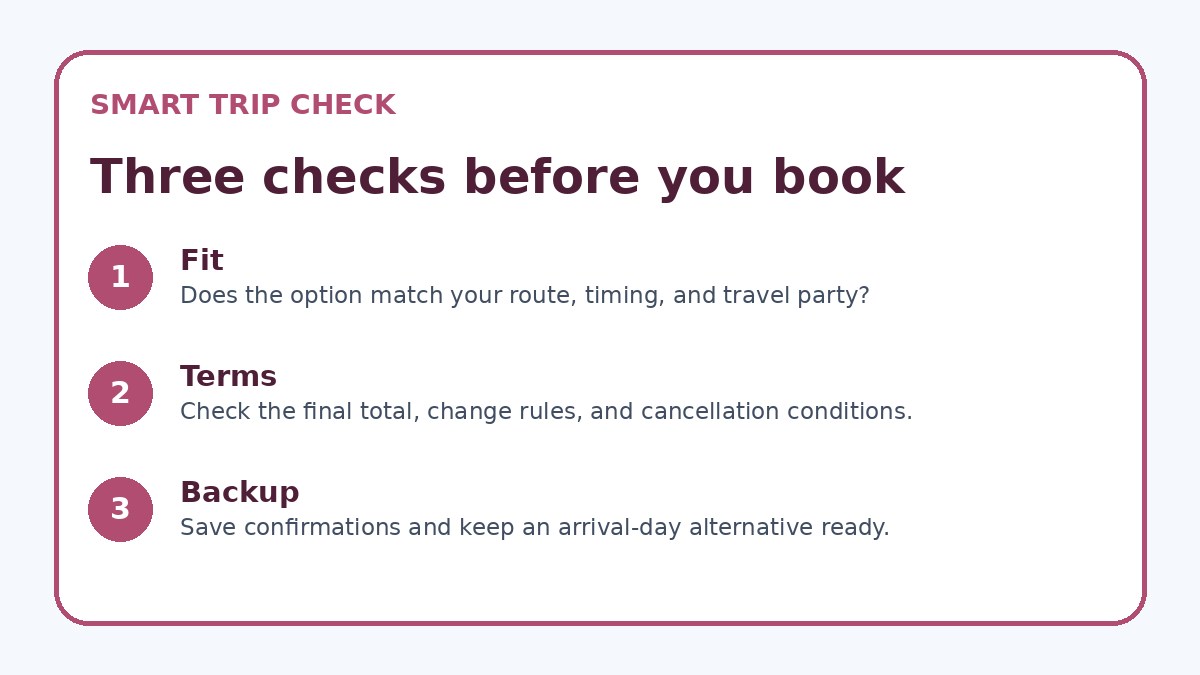
Aligning accommodation and transfers to reduce strain
Choose accommodation with practical luggage conveniences: ground-floor rooms, elevators, luggage storage, and 24-hour reception ease arrivals outside standard check-in windows. If a hotel charges for early check-in, weigh that fee against the cost and hassle of storing or dragging baggage around the city for the day. Proximity to reliable transport is useful, but balance that against walking distance with heavy suitcases—sometimes a slightly more expensive hotel closer to a tram or train stop saves time and physical effort.
Also plan your transfer method with your baggage in mind. For Melbourne, that could mean comparing taxi fares, ride-share availability, airport shuttle services that accept large bags, and train options into central stations. Verify luggage dimensions and limits on train lines and shuttles on the provider’s pages before booking — some services have strict size or quantity limits. Book transfers that allow you to pre-reserve space for luggage if possible, and time your arrival to match service frequency to avoid long waits while standing with heavy bags.
Before you book
- Open flexible-date calendars for both flights and hotels to compare a three-day range either side of preferred dates.
- List full door-to-door costs for shortlisted options: base fare, baggage fees per segment, transfer fares, and any hotel early-check or storage charges.
- On each airline’s booking page verify baggage inclusion, per-segment baggage policy, and whether baggage is through-checked on connections.
- Choose transfer options that accept large luggage and confirm size/quantity limits on the provider’s website before booking.
- Select hotels with confirmed luggage storage or 24-hour reception; email the property to confirm elevator access and early-arrival handling.
- If tempted by a non-refundable fare, calculate the break-even point where savings are offset by potential rebooking or baggage charges.
Booking strategy and what to verify before you buy
Make an initial shortlist using flexible-date search windows, then check the fine print on each candidate itinerary. On airline pages, confirm baggage inclusion, cost to add cases, transfer baggage policies for connections, and whether the ticket is a single reservation or separate legs (which affects baggage through-checking). For accommodation, verify check-in times, baggage storage availability, elevator access, and any extra fees for luggage-handling services. Trip.com or similar platforms are useful for initial comparisons, but always confirm baggage rules and transfer options on the airline or hotel’s official booking page before paying.
Keep an eye on rebooking penalties and fare rules if you might adjust dates later: flexible fares can save stress if your plans change, but they often come at a higher base fare. If you select a non-refundable or tightly restricted ticket because dates were cheaper, weigh the savings against the probability of date changes and the cost of paying baggage fees on each leg. Finally, create a simple cost table for each option listing base fare, baggage charges, transfer costs, and potential hotel fees so you can compare total expense and the practical burdens of handling extra luggage.
Frequently asked questions
How much date flexibility do I need to find better Melbourne travel deals if I have extra luggage?
A practical window is three days either side of your ideal travel date. That usually exposes different fare families, alternate routings and arrival times that can include checked baggage or cheaper add-ons. It’s enough to reveal cheaper single-connection options or flights arriving during daytime transfer windows without making planning complicated. If you can be looser, a seven-day range gives more options, but requires more work to compare total door-to-door costs and may complicate arrangements at your destination.
What should I verify on airline and booking pages about baggage before I book?
Always confirm whether the fare includes checked baggage and whether baggage fees apply per flight segment. Check if bags will be through-checked on connections, the size and weight limits, and any rules for carry-on items. If multiple airlines are on the itinerary, verify interline baggage agreements or whether you’ll need to collect and re-check luggage. Finally, look at rebooking and refund rules on the airline’s final booking page so you know the cost to change dates if your plan shifts.
Are airport transfer choices in Melbourne affected by arrival time when I have extra luggage?
Yes. Arrival time affects available transfer modes, frequency, and the ease of moving heavy bags. Daytime arrivals generally offer frequent trains, trams, shuttle services and plenty of taxis; late-night arrivals can mean limited public transport and reliance on taxis or pre-booked transfers which may charge more. Before booking, compare taxi or ride-share accessibility, shuttle schedules, and train service hours for your arrival time on the operators’ pages, and factor any extra transfer costs into your decision.
Final planning note
Flexibility with dates is a powerful tool when you’re travelling to Melbourne with extra luggage. It lets you shift the balance between fare price and convenience: a small date move can mean a baggage-inclusive fare, a simpler routing, or a daytime arrival that avoids awkward transfers. Work from a short list generated by flexible-date searches, then verify baggage rules, transfer options and hotel luggage services on provider pages before committing. Build a simple cost-and-convenience table to compare total door-to-door implications rather than just the headline fare. That approach saves time, reduces physical strain, and helps you make a clear tradeoff between money and comfort on your trip.
Continue planning
Check current options and final conditions
Use the provider page to confirm live availability, the final total, cancellation terms, and every condition that matters to your trip.
This evergreen planning guide was created with AI-assisted drafting and a structured quality review. It does not display live prices, schedules, availability, visa guidance, or provider rankings. Verify current details before booking. Some links are affiliate links; we may earn a commission at no additional cost to you.