
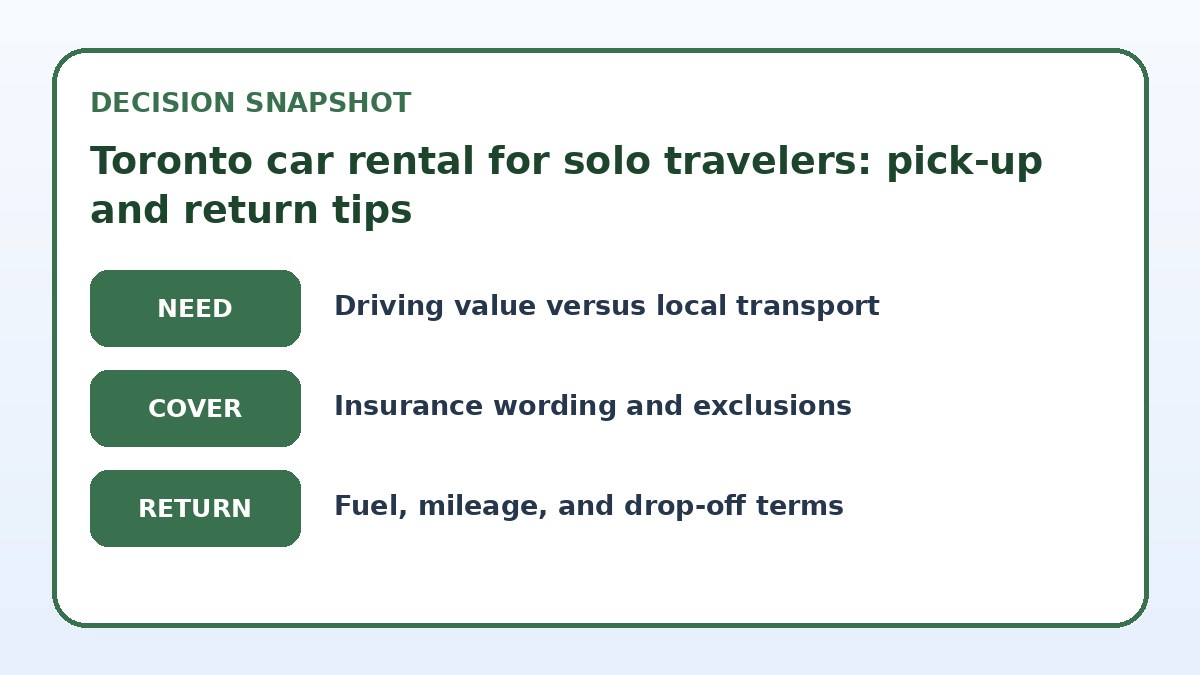
If you're a solo traveler booking a Toronto car rental, prioritize three decisions: pickup location, return flexibility (same vs. different place), and the vehicle paperwork you'll need to manage alone. Choosing downtown, airport, or neighborhood pickup affects transit time, luggage handling, and late-night access; selecting one-way returns can add convenience but often comes with extra administrative steps. Before booking, confirm ID and credit requirements, fuel and mileage rules, and where a company processes damage claims — those operational details change frequently, so verify them on the provider's final booking page. This guide walks through tradeoffs for common pickup and return setups, what to check at collection and drop-off, and how to make solo logistics predictable so you can focus on your Toronto itinerary rather than rental headaches.
See current options before you compare the details
Availability and final conditions change. Open Trip.com now or keep reading for the practical comparison.
Choosing a pickup location
Decide where to collect your Toronto car rental by balancing convenience, transit connections, and the assistance you expect on arrival. Airport pickups at Pearson or Billy Bishop (if offered by a provider) are convenient when you land with luggage and may have extended desk hours and on-site shuttle options to off-airport lots. Downtown or neighborhood branches often reduce drive time to your first accommodation and may have lower daily rates, but they can have shorter operating hours and limited staff for after-hours handovers. For solo travelers arriving late, a location with 24-hour support or an after-hours collection process reduces stress.
Factor in how you will get from your arrival point to the pickup site: walking with luggage, public transit, taxis, or rideshares. If your flight or train arrival time is uncertain, choose a provider that explicitly documents their late-arrival or after-hours pickup procedure on the booking page. Also check whether the rental office requires appointments for certain vehicle classes or special equipment like child seats or ski racks—these can be harder to arrange after hours. If accessibility is a concern, call ahead to confirm parking and staff assistance rather than relying solely on online descriptions.
Understanding return options and fees
When planning returns on a Toronto car rental, decide early whether you'll return to the same location or make a one-way drop-off. Same-location returns are straightforward: you usually follow the rental firm's specific parking lot and an attendant will inspect the vehicle. One-way returns add flexibility for multi-leg trips but frequently involve drop-off fees, and the precise return point may be a third-party lot or an offsite depot. Always read the provider’s return instructions on the final booking page to know where to leave keys, whether to refuel to a specific level, and any after-hours procedures for returning without staff.
Be aware of inspection timing and photo documentation requirements. Some companies expect you to wait for an attendant for a signed condition report, while others allow documented self-check-in with timestamped photos. For solo travelers, taking clear photos of all sides of the vehicle, the odometer, and the fuel gauge before and after your rental protects you against disputed damage claims. If you must return after hours, verify how the company records the condition and where to deposit keys; keep confirmation emails or screenshots until your security hold is released.
| Approach | Best for | Tradeoff to check |
|---|---|---|
| Airport pickup and return | Arrivals with luggage or late flights needing staffed desks | May require extra transit time into city and could have higher convenience fees |
| Downtown branch pickup and return | Staying in the central city and minimizing local driving time | Shorter hours and fewer after-hours options compared with airports |
| Neighborhood or off-airport lots | Lower daily rates and quieter locations near your accommodation | Possibly limited staffing and more complex after-hours procedures |
| One-way drop-off | Linear or multi-city itineraries that end elsewhere | Convenient but often includes drop-off fees and stricter return location rules |
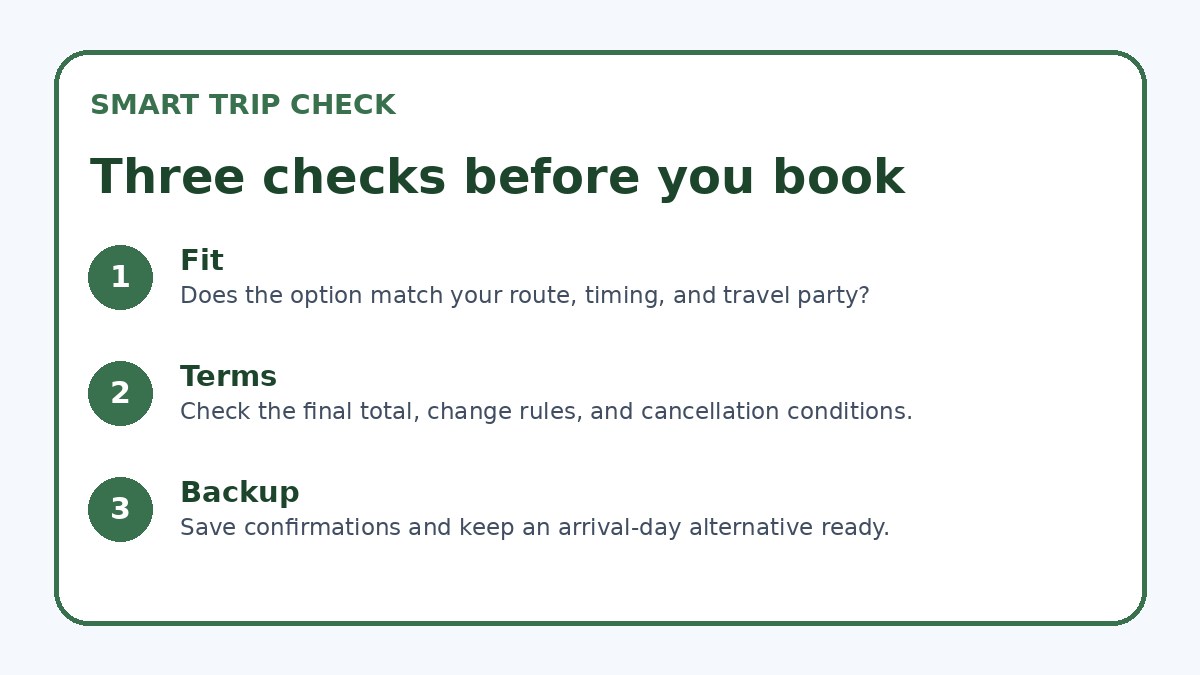
Ready to check the option that fits your plan?
Use your exact dates and traveler details so the provider page can show the current total and conditions.
Paperwork, ID, and payment considerations
As a solo renter in Toronto, make sure your driver’s license, secondary ID, and the payment card meet the provider’s rules—these rules vary and may affect whether you can pick up the car. Many companies require the primary driver to present the physical credit card used at booking and will hold an authorization against it; debit card acceptance varies and often comes with additional checks or higher holds. If you plan to use an international license, confirm whether a translation, an International Driving Permit, or specific endorsement is required on the booking page. Also, examine the insurer and roadside assistance options and whether proof of additional coverages must be shown at collection.
If you're adding extras—GPS, child seats, ski racks, or additional drivers—understand who can sign for these on your behalf and whether extra driver fees apply. Solo travelers frequently prefer to keep the booking in a single name to simplify responsibility, but that makes verifying identity paperwork crucial. If you expect to cross provincial or international borders, check restrictions and any supplementary insurance requirements. As provider policies can change, always verify exactly what documents and payment methods will be required on the final booking confirmation before relying on a particular pickup location.
Before you book
- Confirm pickup and return addresses, hours, and after-hours procedures on the provider’s final booking page before you travel.
- Bring the exact payment card used to reserve the rental and a secondary photo ID accepted by the company.
- Photograph the vehicle (all sides, interior, odometer, and fuel gauge) at pickup and again at return; email images to the provider.
- Note the fuel policy and refill the tank to the required level before returning to avoid refueling charges.
- Confirm roadside assistance and accident reporting phone numbers, and save them in your phone plus a written copy.
- Keep screenshots or PDFs of the signed rental agreement and the return receipt until any security hold is released.
Practical steps at pickup and drop-off
At pickup, arrive with the reservation confirmation and be ready to walk the vehicle with staff or perform a self-check if permitted. Inspect the car for scratches, dents, and interior damage, and ensure every issue is recorded on the condition form—take time-stamped photos from multiple angles and photograph the odometer and fuel gauge. Ask where to park and whether the company expects a specific fuel level on return; confirm the local protocol for tolls and parking fines. Request clear instructions about after-hours support and the process to report accidents or breakdowns while alone.
When returning, follow the provider’s directions precisely to avoid disputes over late returns or condition. If the company requires an attendant, allow time for a joint inspection; if self-drop is allowed, perform the same photo routine and email the images to the provider with a timestamped note. Keep a copy of any return receipt, odometer reading, and fuel level. If you receive an unexpected charge later, having these records makes it easier to contest discrepancies. Finally, check your bank or card account for the security hold release timeline and the method for disputing damage claims if needed.
Frequently asked questions
Can I pick up a Toronto car rental if my flight arrives late at night?
Possibly, but policies differ by company and location. Some airport and large downtown branches provide 24-hour desks or after-hours kiosks; others require prearranged after-hours pickup with a documented process. Always verify the provider’s after-hours policy on the final booking page, and if after-hours pickup is allowed, ask how keys and paperwork are handled and whether staff will meet you. If after-hours procedures are unavailable, plan to arrive earlier, book an overnight hotel near the pickup, or arrange a branch with confirmed evening coverage.
What should I do if I find new damage on the car during my Toronto rental?
Report new damage to the rental company immediately following their accident or damage reporting instructions on your rental agreement. Document the issue with clear photos and notes, and if possible, have an agent record the damage on the condition report. If staff are unavailable, use the company’s documented after-hours reporting method and keep time-stamped evidence. Retain copies of all correspondence, and verify whether your payment card or purchased insurance covers such damage. Check the provider’s final booking page for the exact claims procedure and time windows for notification.
How do I avoid disputes over fuel level or mileage when returning solo?
At pickup, photograph the fuel gauge and odometer and confirm the fuel policy in writing. If a full-to-full policy applies, fill the tank within the nearest available station before returning and save the receipt if the provider requires proof. For mileage, record the odometer reading at pickup and again at drop-off with timestamped photos; deliver these to the company per their return instructions. If performing self-check-in, email the images immediately and request a confirmation. These steps create a clear record that reduces the chance of later disputes over charges.
Final planning note
For solo travelers, a smooth Toronto car rental depends on choosing the pickup and return setup that matches your arrival time, comfort with after-hours procedures, and willingness to manage documentation. Airport locations offer staff and longer hours, while downtown and neighborhood branches can save transit time but may require stricter scheduling. One-way returns buy flexibility but demand attention to fees and precise drop-off instructions. The single most useful habit is documentation: take time-stamped photos, confirm procedures on the provider’s final booking page, and keep emailed receipts. If you want to compare current availability and conditions while planning, consider checking a comparison site such as Trip.com, but always verify policies directly with the rental company before you commit.
Continue planning
Check current options and final conditions
Use the provider page to confirm live availability, the final total, cancellation terms, and every condition that matters to your trip.
This evergreen planning guide was created with AI-assisted drafting and a structured quality review. It does not display live prices, schedules, availability, visa guidance, or provider rankings. Verify current details before booking. Some links are affiliate links; we may earn a commission at no additional cost to you.