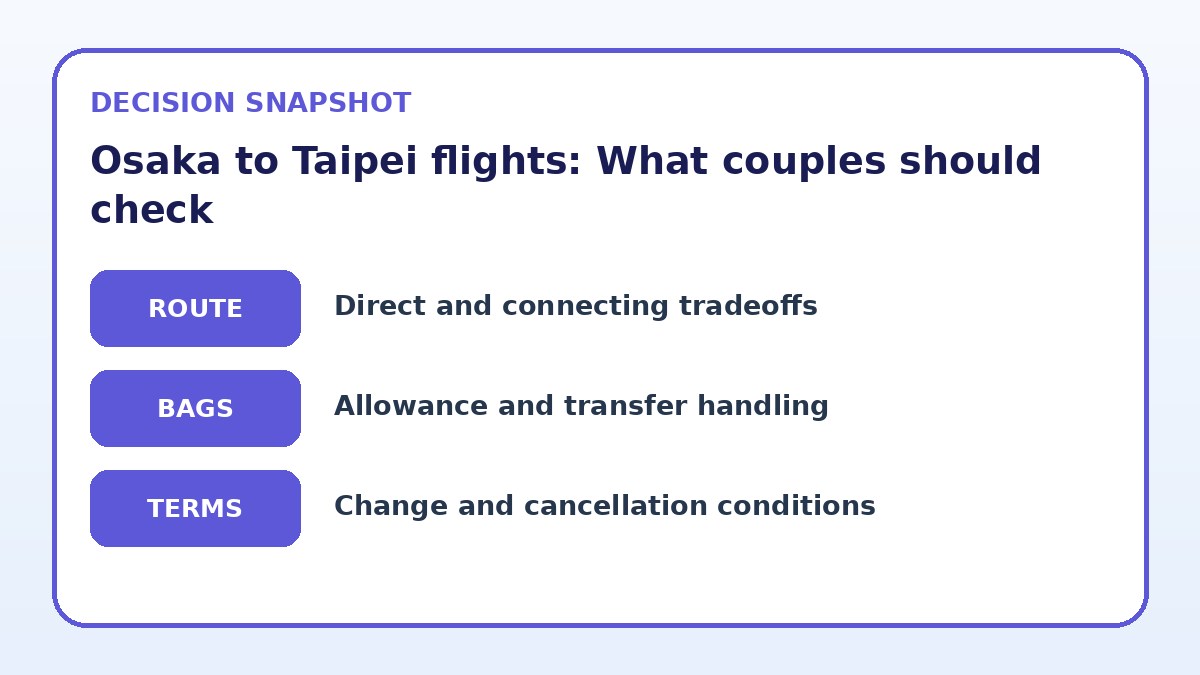
If you and your partner are planning Osaka to Taipei flights, focus first on the change and cancellation rules that affect flexibility and cost. Start by comparing refundable versus nonrefundable fares, change-fee policies, and the window for free changes or full refunds. Couples should decide whether they value low upfront fares with tighter rules, or slightly higher fares that offer flexibility and simpler rebooking when plans shift. Also check how airlines handle name changes, group bookings, and connecting itinerary protections—these details determine whether you can rebook together without extra hassle. When you find an option that fits your comfort level, verify the final terms on the airline or booking agent’s payment page; if you use Trip.com to compare options, confirm the provider’s policy on their final booking screen before paying.
See current options before you compare the details
Availability and final conditions change. Open Trip.com now or keep reading for the practical comparison.
How fare type affects couples’ flexibility
Fare classes usually determine the livability of a booking for couples. Nonrefundable, lowest-cost fares often restrict changes, impose fixed change fees, and issue credit instead of refunds. For couples who may split or adjust plans independently, this can create unexpected costs because many airlines charge per passenger. If one traveler needs to move dates, both may face reissue rules that affect seat assignments and the total fare difference. Read the fare rules carefully: look for language about change fees, reissue penalties, and whether the fare difference is waived for certain ticket types.
Refundable fares or flexible tickets usually cost more upfront but reduce risk for partners with uncertain schedules. These fares commonly allow cancellations with full refund to the original form of payment, or permit free date changes within specific timeframes. For trips where both partners must travel together, flexible fares simplify keeping reservations aligned without juggling two separate tickets. When balancing price and certainty, couples should calculate the worst-case additional cost to change or cancel the cheaper ticket versus the premium for a flexible one.
Comparing change and cancellation policies
When comparing options for Osaka to Taipei flights, list the policies side by side: change fees, whether changes can be made online, how fare differences are calculated, cancellation refunds versus credits, and any blackout windows. Pay attention to the timing rules—some carriers allow free changes within 24 hours of booking, while others publish different windows. Also note whether policies differ by route segment; for example, a connecting itinerary might have different protections than a nonstop sector. For couples, track whether policies apply per passenger or to the reservation as a whole, since that determines whether one partner’s action affects the other.
Look beyond the headline fee. Investigate ancillary rules that affect rebooking: how taxes and government fees are refunded, whether booking class is reissued to the same fare bucket, and if rebooking must be to a higher fare class with an additional charge. If you book through a third-party site, confirm whether refunds or credits are handled by the airline or by the agent. Some platforms retain service fees or require you to file with the airline directly. Always capture screenshots of the final policy text shown at payment and save confirmation emails—those are the documents you’ll need if you seek adjustments later.
| Approach | Best for | Tradeoff to check |
|---|---|---|
| Book a flexible fare together | Couples who want simple, joint rebooking and predictable refunds | Higher upfront cost compared with restrictive tickets |
| Buy two separate lowest-cost fares | Couples maximizing initial savings when plans are firm and independent | Risk of misaligned itineraries and separate change fees |
| Use a slightly higher credit-issuing fare | Couples who accept credit instead of cash refunds for easier rebooking | Credits may have expiry and limited transferability |
| Book via an online agent then confirm with airline | Couples comparing many options quickly and capturing promotions | You must verify final policy on the airline’s booking page to avoid surprises |
Ready to check the option that fits your plan?
Use your exact dates and traveler details so the provider page can show the current total and conditions.
Special considerations for couples traveling together
Keeping reservations together matters for seat selection, changes, and peace of mind. If you book two separate single-passenger tickets to chase lower fares, rebooking later may force one partner to a different flight or fare class if availability is limited. Couples should weigh the short-term savings of split bookings against the added complexity of synchronized changes. For flexibility, consider booking both travelers on the same reservation so airlines treat change and cancellation requests in a single transaction; this can simplify refunds and reduce the risk of split itineraries in case of partner-specific changes.
Name changes and passenger swaps are another wrinkle for couples. Most airlines are rigid about name corrections and generally do not permit transferring tickets between different people without full cancellation and reissue. If there’s any chance plans will change who travels, verify whether the fare can be rebooked to a different passenger or whether credit can be applied toward a new name. Also check couples’ travel needs beyond tickets—baggage policies, priority boarding, and seat allocation rules affect the overall trip experience and may be handled differently on reissues or voucher-based rebookings.
Before you book
- Confirm whether the fare is refundable or nonrefundable and note the exact language about refunds versus travel credit.
- Check change fees per passenger, how fare difference is calculated, and whether online self-service rebooking is allowed.
- Verify whether both travelers are on the same reservation and how airlines handle partial cancellations or single-passenger changes.
- Save screenshots or a PDF of the final policy text shown at checkout and keep the confirmation email for dispute evidence.
- If booking through a third party, click through to the airline’s rules and verify who issues refunds or credits before paying.
- Set calendar reminders for any 24-hour or short-term change windows and for credit expiry dates noted in the fare rules.
Practical booking steps and what to verify before paying
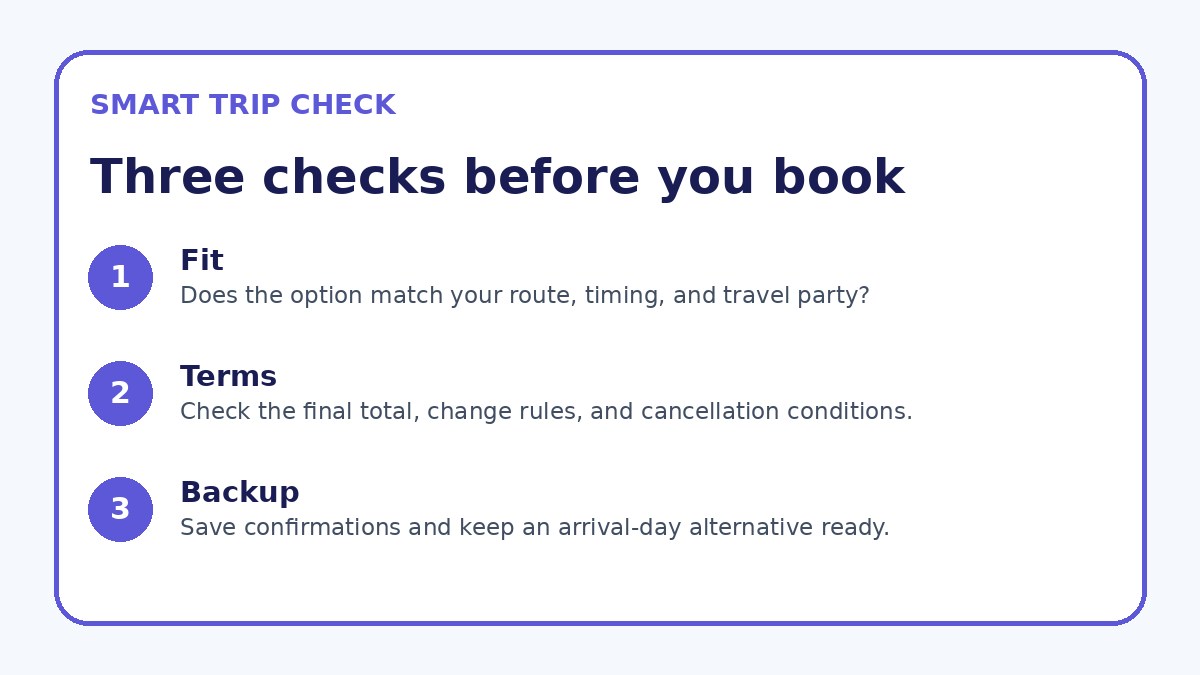
Use a short checklist while holding different options in your comparison so you don’t miss details when selecting a fare. Confirm whether a fare is refundable or nonrefundable, the exact change fee and how it’s assessed per passenger, and whether cancellations produce refunds or travel credit. Read the final terms on the airline’s checkout page because third-party summaries can lag behind the carrier’s official policy. If you intend to use a travel site like Trip.com to compare availability, always click through to the airline’s policy or the booking confirmation page and save the legal terms displayed at purchase.
Before you click pay, decide on two outcomes—what to do if one partner cancels and what to do if both must change dates—and map those outcomes to each fare option. Check the time window for free changes (if any), whether the agent or airline covers the change fee for schedule disruptions, and how long-issued credits remain valid. Finally, note the refund process and expected timelines, then set a calendar reminder for any deadlines where fee waivers or change windows expire so you aren’t blindsided by policy cutoffs.
Frequently asked questions
Can I change only one passenger on a joint Osaka to Taipei booking?
Many airlines allow changes to individual passengers on the same reservation, but fees and fare-difference rules will usually apply per ticket. Whether you can change a single traveler without affecting the other depends on fare class and the airline’s reissue policy. For couples, confirm at booking whether the airline treats changes per passenger or per reservation, and ask how seat assignments and connections are handled after a single-person change. Always verify the precise change process and fees on the airline’s final payment or policy page because that is the operative rule.
If I cancel an Osaka to Taipei flight, will I get a refund or travel credit?
Refunds versus credits depend entirely on the fare rules and the carrier’s policy for the itinerary you purchased. Refundable fares typically return money to the original payment method, while nonrefundable tickets often produce travel credits or vouchers with expiration dates. If you booked through an agency, the refund flow may involve the agent first; check who is responsible for issuing refunds or credits. Before completing a purchase, read the cancellation paragraph on the booking page and save it with your confirmation so you know the expected remedy if you cancel.
How do I compare connecting versus direct options for flexibility?
Direct flights can simplify changes because there’s only one carrier or flight segment to adjust; connecting itineraries may involve multiple carriers and differing rules. When comparing options, examine each segment’s fare rules, whether the itinerary is ticketed on one airline code or involves separate tickets, and whether the carrier offers through-rebooking protections for missed connections. For couples, a single-ticket direct or through-ticket is usually easier to manage. If considering connections to save money, be prepared to accept more complex rebooking rules and verify protection policies before booking.
Final planning note
For couples traveling Osaka to Taipei, flexibility comes from choosing the right fare type and confirming the fine print before paying. Decide together whether you prioritize lower upfront cost or predictable rebooking and refunds; that decision drives whether to buy lowest-cost separate tickets, a shared flexible fare, or a credit-issuing option. Always verify change fees, refund rules, and whether policies apply per passenger or per reservation on the airline’s final booking page. Use saved screenshots and confirmation emails as proof of terms, and set reminders for any time-limited waivers or credit expirations. Doing this simple homework minimizes stress and keeps travel plans aligned.
Continue planning
Check current options and final conditions
Use the provider page to confirm live availability, the final total, cancellation terms, and every condition that matters to your trip.
This evergreen planning guide was created with AI-assisted drafting and a structured quality review. It does not display live prices, schedules, availability, visa guidance, or provider rankings. Verify current details before booking. Some links are affiliate links; we may earn a commission at no additional cost to you.