If you’re a business traveler who wants to take advantage of Bali travel deals without giving in to impulse bookings, start with clear rules and a short decision window. Set price alerts for flights and hotels but pair them with a checklist that forces comparison and verification before purchase. Use alert tiers — a soft alert for monitoring, a firm alert for serious consideration — and schedule fixed times for decision-making that fit around your work commitments. Avoid instant “buy now” reflexes by requiring at least two comparison checks (other providers and cancellation rules) and a minimum wait time. This way you capture useful price signals for Bali without compromising schedule, policy, or budget. Below I explain tradeoffs, how to set practical alert criteria, and what to verify on the final booking page before you click confirm.
See current options before you compare the details
Availability and final conditions change. Open Trip.com now or keep reading for the practical comparison.
Design alert rules that reflect business priorities
Don’t let alerts be random nudges. Start by defining what matters for your trip to Bali: flight times that fit meetings, hotel locations near your venues, and cancellation flexibility tied to your corporate policy. Create separate alerts for each component (outbound, inbound, hotel, and any intra-island flights or car rentals you might need) and assign a priority level — for example, priority A for firm meeting dates, B for optional post-meeting leisure, and C for spare days. Prioritizing alerts helps you act only on changes that matter rather than reacting to every price dip.
Next, attach a simple action rule to each alert: what you will do if the alert hits a threshold. An example rule: if a flight drops X% and fits my meeting schedule, mark it for deep comparison; if it is nonrefundable or change fees exceed my company allowance, ignore it. Keep these thresholds documented in one place so push notifications don’t force split-second decisions. This structure turns alerts into decision tools rather than temptation triggers.
Compare objectively before committing
When an alert triggers, don’t assume it’s the best move. Open at least two additional tabs or apps: one for a different aggregator and one for the airline’s or hotel’s official booking page. Look at total cost, baggage or service fees, change and cancellation rules, and any corporate travel policy constraints. If a fare requires a name-change fee or has strict time windows, weigh that against the nominal savings. Also check connection times and potential overnight layovers — for business travel, timing often matters more than a small price difference.
If your company allows it, consider refundable fares or flexible tickets for critical meetings. Otherwise, prioritize the lowest-change-fee option you can accept. Always verify what is included (seat selection, checked luggage, meals) on the provider’s final booking screen before you proceed. This is the place where surcharges and terms that affect your decision are shown, so read it carefully; Trip.com can be one of the places to compare live availability, but verify any policy details on the provider’s final booking page before confirming.
| Approach | Best for | Tradeoff to check |
|---|---|---|
| Immediate purchase on first alert | last-minute schedule changes that require certainty | Higher risk of regret and less time to verify fees, policy, or better alternatives |
| 24–72 hour cooling period with checklist | most business trips where dates are flexible or approval is required | May miss very short-lived low fares but reduces impulse mistakes |
| Reserve refundable/flexible fare immediately | critical meetings where cancellation would be costly | Higher upfront cost, requires confirmation of refund processing and policy |
| Monitor multiple alerts and buy when two match | travelers balancing price sensitivity with schedule stability | Requires more time and attention to manage alerts and comparisons |
Ready to check the option that fits your plan?
Use your exact dates and traveler details so the provider page can show the current total and conditions.
Manage cognitive traps and impulse drivers
Price alerts are built to create urgency. To counteract cognitive bias, design barriers that force deliberation. Use a cooling-off period that matches the trip’s flexibility — for non-urgent travel, a 48–72 hour rule helps; for tight meeting schedules, a shorter, documented approval from your manager may replace the cooling period. Turn off push notifications for low-priority alerts so your attention isn’t hijacked by every dip, and batch decision-making into a single short session daily or weekly.
Also use objective comparison criteria: distance to the meeting venue, earliest arrival time, potential overtime costs, and changes to your itinerary. Attach a quick scoring sheet to each option (for example, time fit, cost, flexibility, and convenience), and require a minimum score before purchase. This keeps emotional reactions in check and makes it easier to justify or cancel a booking when your plans change.
Before you book
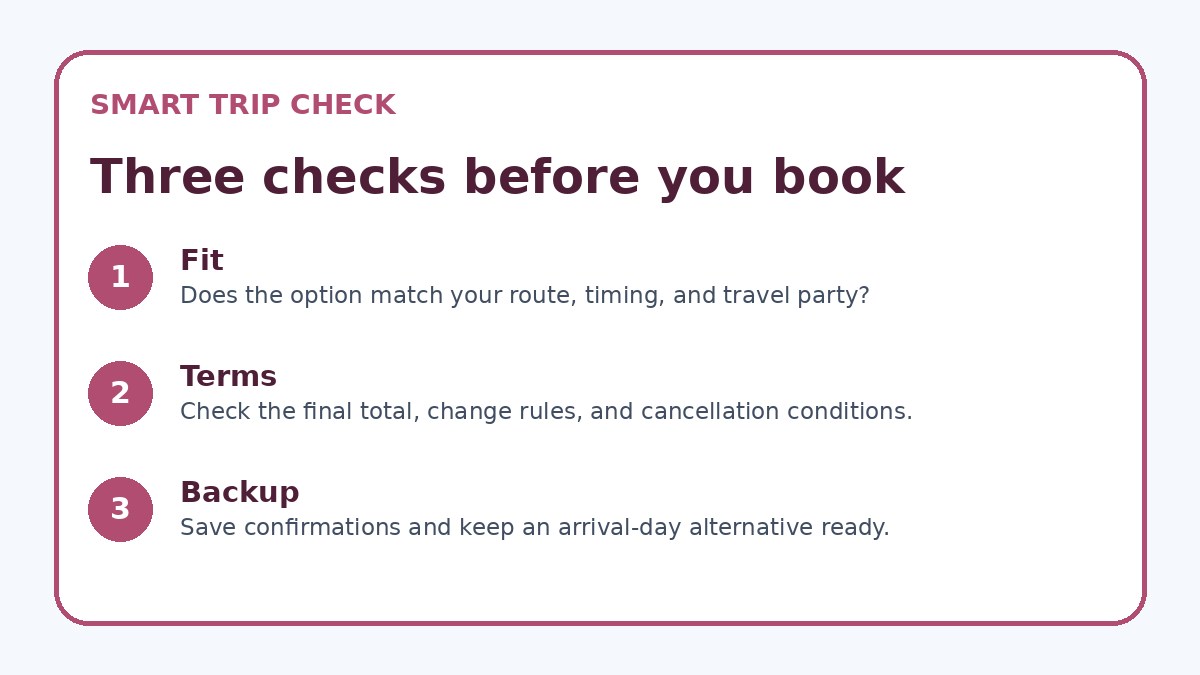
- Open the provider’s final booking page and confirm total price, taxes, and any mandatory fees before proceeding.
- Verify change and cancellation terms, including who issues refunds and typical processing times for refunds to your payment method.
- Compare the same itinerary on at least one other reputable platform and the airline or hotel official website for discrepancies.
- Check meeting times and local logistics in Bali (hotel distance, transport options) to ensure the itinerary meets business needs.
- Ensure corporate payment or invoicing requirements are supported and that expense documentation will be available after booking.
- Take screenshots or save PDFs of the final booking terms and confirmation for expense reporting and potential disputes.
Verification steps to complete before booking
Before you confirm any Bali booking triggered by an alert, run a final verification checklist. Confirm travel dates, passenger names, and whether your company’s payment method or invoice requirements are supported. Check change and cancellation fees, and whether refunds are processed to the original payment method or as a voucher. Look for blackout dates or seasonal surcharges and ensure any loyalty points or corporate discounts are applied. Don’t assume terms shown in an aggregator match those on the provider page — always read the provider’s final terms.
Finally, verify entry requirements and time-sensitive constraints separately from the booking page; booking platforms may not show the full list of travel documents or any recommended health precautions. If you need a visa, extra documentation, or a health certificate for Bali, confirm how that's handled and whether expedited processing is available. Keep a copy of all booking confirmations and policy screenshots for expense reporting and potential disputes.
Frequently asked questions
How do I set meaningful alert thresholds for Bali flights?
Pick thresholds based on what matters: a percent drop for price-sensitive trips or an absolute ticket fare ceiling tied to your travel budget. Also factor in the value of time — if a lower price forces long overnight layovers that disrupt work, raise your acceptable threshold. Use different thresholds for outbound and return flights and set location-based filters (arrival times that fit meetings). Finally, automate a secondary alert for fare increases so you’re aware if a temporary low fare disappears before you decide.
Can I rely on flexible or refundable fares to prevent impulse booking mistakes?
Flexible fares reduce risk but usually cost more. Use them for flights or hotel nights tied to critical meetings; for ancillary travel, rely on clear change-fee limits instead. Always read the provider’s refund policy on the final booking page: some flexible rates limit refund methods or charge administrative fees. Remember that even refundable bookings may require time to process refunds, so confirm typical timelines and how the refund is issued so you can manage company expenses accurately.
What’s the best way to log and justify a discounted booking to my employer?
Keep a concise record showing the alert that triggered action, the comparison results, and screenshots of the provider’s final terms. Note how the trip supports business objectives, the flexibility chosen, and any approval emails. If your company has a travel or expense portal, upload both confirmations and comparison evidence there. Clear documentation reduces questions during expense review and demonstrates that you used price alerts responsibly rather than booking impulsively.
Final planning note
Price alerts are powerful tools for business travelers planning a trip to Bali — but they’re only useful when combined with rules and a verification process. Decide in advance what you need from a flight or hotel, set alert thresholds that match those needs, and require objective checks before you buy. Use refundable or flexible options where the cost of change is higher than a low fare, and otherwise enforce a cooling-off period plus at least one other price comparison. Finally, always verify the provider’s final booking terms, save evidence for expense reporting, and align decisions with your company’s travel policy so alerts save time and money, not create extra work.
Continue planning
Check current options and final conditions
Use the provider page to confirm live availability, the final total, cancellation terms, and every condition that matters to your trip.
This evergreen planning guide was created with AI-assisted drafting and a structured quality review. It does not display live prices, schedules, availability, visa guidance, or provider rankings. Verify current details before booking. Some links are affiliate links; we may earn a commission at no additional cost to you.