If you’re a solo traveler booking Paris to Rome flights, the practical question is simple: choose the fare and booking route whose change and cancellation terms match how flexible you might need to be. Start by scanning the airline or online travel agency (OTA) page for four specifics: refundable vs non-refundable status, change fees and fare difference rules, how long before departure changes are allowed, and what happens to taxes and seat fees on cancellation. Also note whether the fare includes rebooking credit or vouchers instead of cash refunds. These details determine whether you can afford to lock in a lower fare or should pay extra for flexibility. Read the provider’s final booking page carefully — that is where exact rules, deadlines, and any mandatory steps for obtaining refunds or credits are stated.
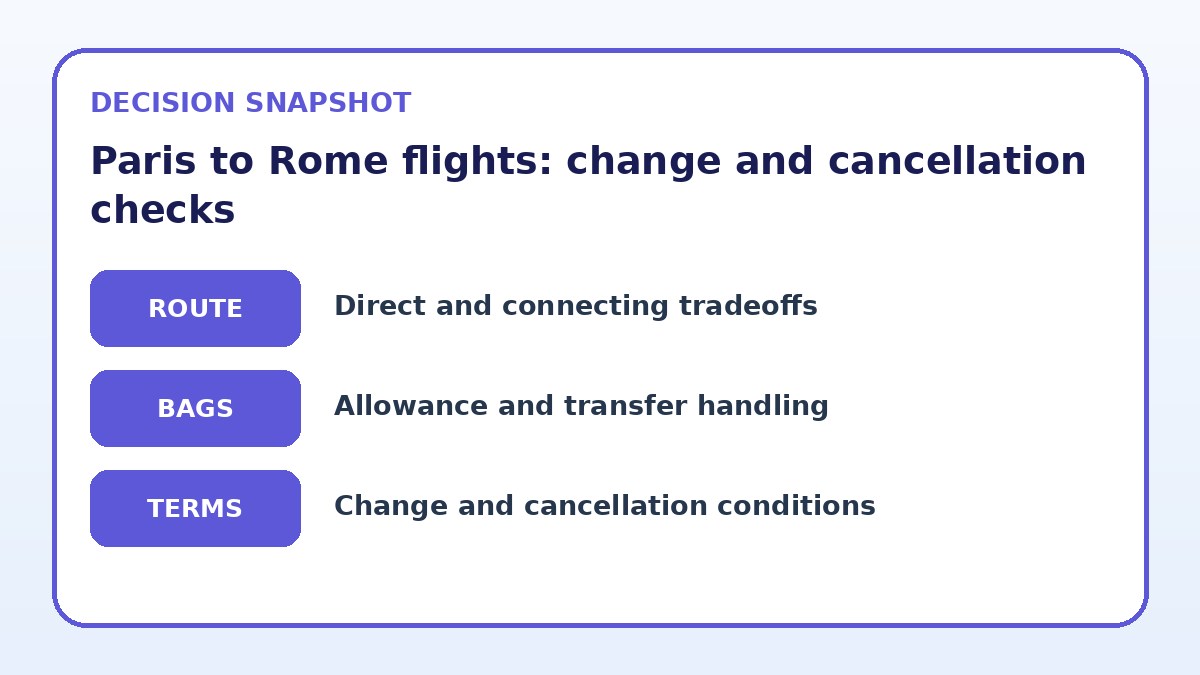
See current options before you compare the details
Availability and final conditions change. Open Trip.com now or keep reading for the practical comparison.
How to read a Paris to Rome fare’s change policy
Start by locating the fare rules on the airline or OTA booking page and, if available, the full fare conditions PDF. Look for three items: whether the fare is labeled refundable or non-refundable, whether changes are permitted, and the cost structure for changes (flat fee, percentage, or only fare difference). Many carriers list a standard change fee plus any difference between the old and new fare; others have removed change fees but still charge the fare difference. Pay attention to timing language—some rules distinguish between changes made more than 24 or 48 hours before departure and those made within that window.
Also check refund mechanics. Refundable fares usually return the base fare and any refundable taxes and fees to your original form of payment, while non-refundable tickets might return only taxes or issue a travel credit. If a travel credit is offered, read expiry and reuse terms closely: credits with short validity or restrictions on routed cities can be less useful. Finally, note whether the ticket permits name corrections, reissue fees, and how cancellations versus no-shows are handled; those details matter when plans are uncertain.
Comparing direct and connecting Paris–Rome options
For the Paris to Rome route you’ll often find both direct and connecting flights. Direct flights are simpler when changing or cancelling: you deal with a single carrier’s policy and seldom need to rebook multiple legs. With connections, check whether the itinerary is sold on a single ticket or separate tickets. A single-ticket itinerary typically allows the operating carrier to protect you in the event of a missed connection, and changes or cancellations are managed under one set of fare rules. Separate tickets mean each leg has different rules and possibly higher combined change or cancellation exposure.
When comparing price and flexibility, factor in the extra administrative risk of connections. A low-cost connecting itinerary on separate tickets might look cheap but can multiply fees if you need to change one leg. Also verify whether the fare conditions differ between the marketed carrier and the operating carrier; codeshares sometimes blend rules in confusing ways. If you value simple, low-risk recovery from delays or cancellations, prioritize single-ticket direct options or at least single-ticket connections governed by the same carrier or alliance.
| Approach | Best for | Tradeoff to check |
|---|---|---|
| Buy the cheapest non-refundable fare | Solo travelers confident in fixed dates and minimizing upfront cost | High potential change fees and limited refund options if plans change |
| Choose a flexible or refundable fare | Travelers who value low friction for last-minute changes | Higher ticket price but lower risk of unexpected fees |
| Book a non-refundable fare plus change-waiver add-on | Those seeking middle ground: lower base fare with some protection | Add-on reduces risk but increases total cost; check waiver fine print |
| Use an OTA or bundled package | Buyers wanting single-point customer service or combined extras | OTAs may have different refund workflows; verify whether airline or OTA handles after-sale issues |
Ready to check the option that fits your plan?
Use your exact dates and traveler details so the provider page can show the current total and conditions.

Tradeoffs between cheapest fares and flexible tickets
Cheapest fare buckets are attractive for solo travelers on tight budgets, but their low cost often brings restrictive change and cancellation rules. Common tradeoffs are non-refundable status, higher change fees, no rebooking credit, and limited or zero baggage refund. Conversely, more flexible fare classes—often branded “flex” or “semi-flex”—charge a premium but include free or low-cost changes, full refunds, or transferable value. Evaluate how likely your plans are to change: if dates or airports might shift, the convenience of a flexible fare can offset its higher ticket price.
Another practical consideration is the travel insurance or add-on waiver. Some cards and insurers cover cancellations for specific reasons, which can make restrictive fares more acceptable; however, insurance rarely covers voluntary changes or buyer’s remorse. Some airlines sell change-waiver add-ons at booking which reduce fees; others include free changes in their standard terms. Always calculate the out-of-pocket worst-case change cost (highest plausible fee plus fare difference) and weigh it against the premium for a flexible fare.
Before you book
- Confirm whether the fare is refundable or non-refundable on the provider’s final booking page.
- Note the exact change fee amount and whether fare differences also apply on rebooking.
- Check what happens to ancillary fees (bags, seats) if you change or cancel the ticket.
- Verify who handles post-booking service (airline or OTA) and save that contact info.
- Screenshot and save the full fare rules and booking confirmation email for future disputes.
- If using travel credit or voucher, record its expiry date and any route or carrier restrictions.
What to verify on the final booking page before purchase
On the final booking page — the one that will create your ticket — verify these exact items: the ticket’s refundability status, the listed change fee amount or 'no change fee' statement, whether seat and baggage fees are refundable or transferable, and the precise deadlines for free changes or cancellations. If the page mentions a travel credit in lieu of refund, read the credit’s expiry date and any city or fare restrictions. If a promo or code applies, confirm that the fare rules shown on the confirmation reflect the promotional terms; promotional fares can carry unique restrictions.
If you're booking through an OTA, note which entity will handle post-booking service: the airline or the OTA. The final page should identify the ticketing airline (important for operational problems) and provide a link or text for the fare conditions. Take screenshots or save the booking confirmation email including the fare rules. If anything on the final page is ambiguous about refunds, changes, or penalties, contact the airline or OTA by phone or chat before completing payment to get clarified terms you can reference later.
Frequently asked questions
Can I change a low-cost Paris to Rome fare without a fee?
It depends on the airline and the specific fare bucket. Some carriers have eliminated change fees for many economy fares but still require payment of any fare difference between the original and new flights. Low-cost carriers often keep strict rules and may charge higher fees or permit only travel credits. Always read the fare conditions on the final booking page: look for phrases like 'no change fee' and then confirm whether fare differences or administrative charges still apply. If in doubt, contact the airline before purchase to get the exact out-of-pocket cost to change.
If my Paris to Rome flight is cancelled by the airline, what should I expect?
When an airline cancels a flight, standard practice is to offer rebooking on the next available flight or a refund. The provider’s cancellation policy on the booking confirmation explains your options. Note that if you booked a single-ticket itinerary with connections, the airline typically handles rebooking for the entire journey. If you purchased through an OTA, the OTA may assist but the airline controls operational rebooking. Save all communications and insist on written confirmation of the remedy offered so you can track timelines for refunds or rebooked travel.
Is it safer to buy direct from the airline or through an online travel agency for flexibility?
Buying direct from the airline can simplify changes and refunds because you deal with the carrier managing operations and fares. However, some OTAs negotiate waivers or offer consumer-friendly change policies, and they can be convenient if they provide clear, fast support. The key is to confirm on the final booking page who will handle post-booking service and where refunds will be issued. If flexibility and rapid help are priorities, choose the seller—airline or OTA—that explicitly states favorable change or refund mechanics and offers reliable customer service channels you trust.
Final planning note
For solo travelers on the Paris to Rome route, your best booking choice balances the probability of change against how much you are willing to pay upfront for flexibility. Read fare rules carefully on the final booking page and record the refundability, change fees, and any rules about travel credits or ancillary refunds. Favor single-ticket direct options when you want lower operational risk; consider flexible fares or add-on waivers if your plans are uncertain. Keep booking records, confirm who will provide post-sale support, and use the checklist above to avoid surprises. Trip.com can be used as one place to compare current availability and conditions, but always verify the decisive terms on the airline or seller’s confirmation.
Continue planning
Check current options and final conditions
Use the provider page to confirm live availability, the final total, cancellation terms, and every condition that matters to your trip.
This evergreen planning guide was created with AI-assisted drafting and a structured quality review. It does not display live prices, schedules, availability, visa guidance, or provider rankings. Verify current details before booking. Some links are affiliate links; we may earn a commission at no additional cost to you.